


Interview by Asma Al Fahim
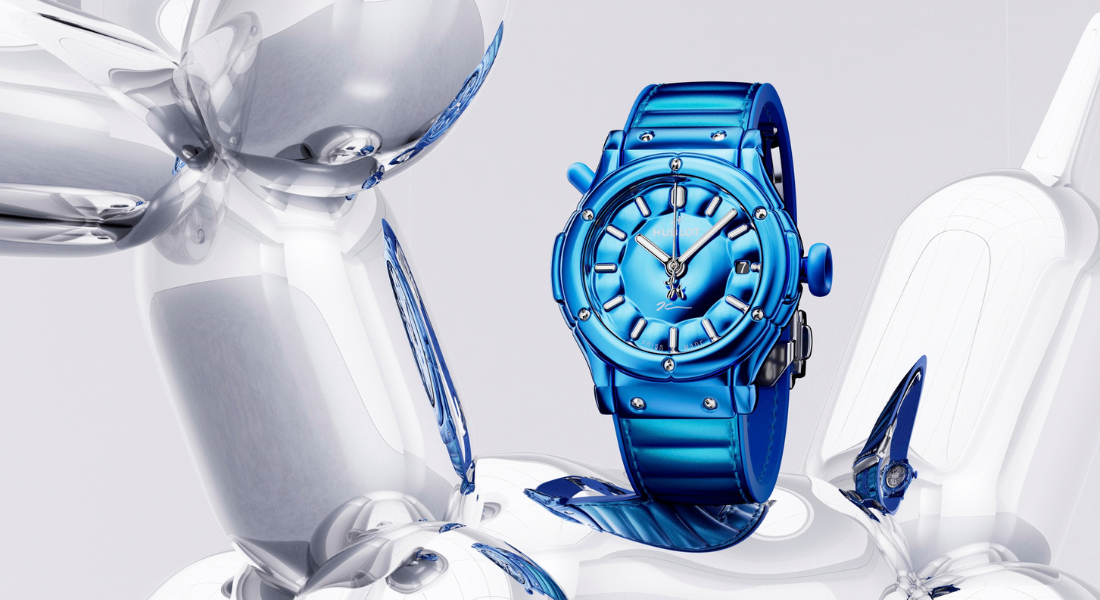
Hublot and Jeff Koons challenge the culture of quiet luxury with something far more interesting: a point of view.

In New York, Hublot and Jeff Koons offer an antidote. Two forces that have never believed in disappearing quietly come together to create something technically complex and impossible to mistake for anything else.
But beyond the colour and spectacle lies the real proposition: in a world drowning in beautiful things, true luxury may no longer be about what you can afford to own. It is about what remains rare enough to desire and powerful enough to remember.
New York feels like the only appropriate place for this conversation.
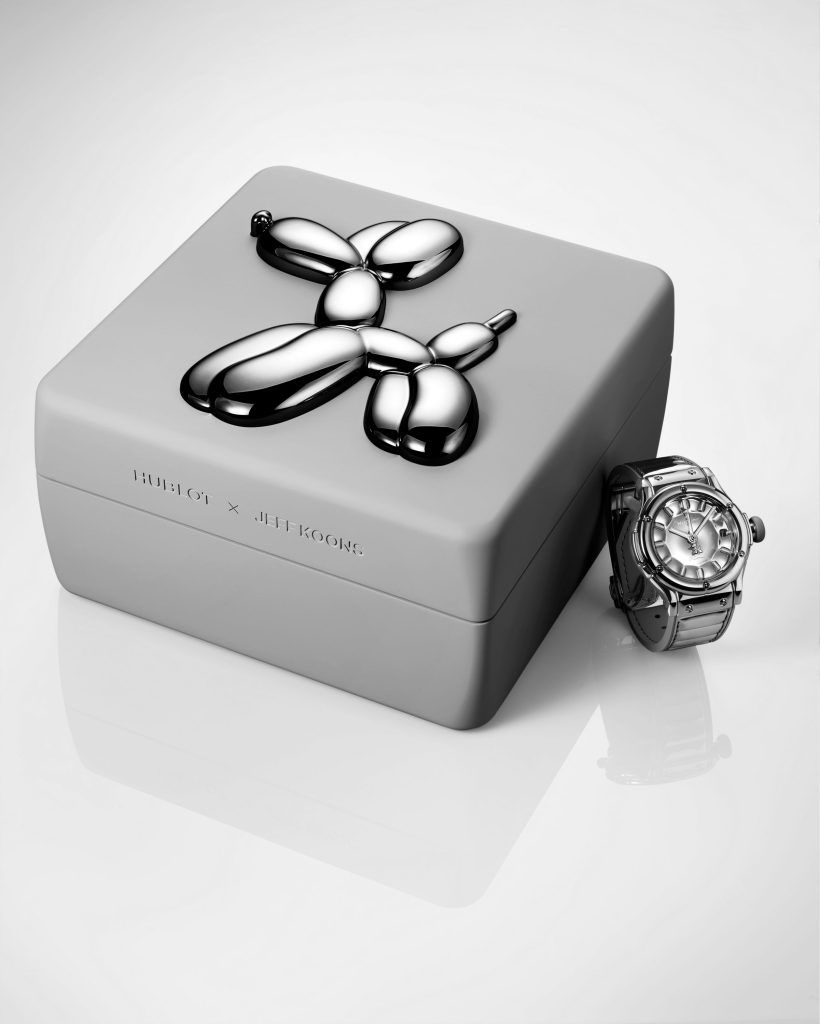
Jeff Koons has spent decades turning the familiar into the extraordinary, challenging the distinction between high art and popular culture and creating objects that are, above all, impossible to ignore. Hublot, in its own way, has built its identity around a similarly unapologetic instinct. This has never been a watchmaker particularly interested in restraint for restraint’s sake.
So, when the two come together, the result was never likely to be quiet. And that may be precisely the point.
Luxury has become exceptionally good at being beautiful. Perhaps too good.
Perfectly calibrated campaigns and increasingly sophisticated product launches have created an industry in which almost everything is aesthetically accomplished, but considerably less is genuinely memorable.
The Hublot x Jeff Koons collaboration enters that landscape with a different ambition. It wants a reaction.
“It is a statement,” Julien Tornare, CEO of Hublot, tells us in New York. “When you wear this on your wrist, you notice it. It is a Hublot by Jeff Koons. It cannot be anything else.”
That last sentence matters.
Because in a luxury industry increasingly populated by collaborations, the distinction between a meaningful creative exchange and an exercise in logo placement has become increasingly important.
This one began with two icons.

When Tornare joined Hublot two years ago, he inherited a long relationship between the house and contemporary art. Looking back at what the brand had created over the previous two decades, including its work with Takashi Murakami, he saw an opportunity to push that relationship further.
“I believe art is a fantastic field of exposure and communication for the brand,” Tornare says. “But it is also a great playground for both us and the artists.” Jeff Koons was quickly placed on his shortlist.
Their first meeting was deliberately informal. Koons was travelling in Europe and stopped in Nyon.
Tornare later travelled to New York to continue the conversation.
“First of all, it is always people to people,” he says. “Very quickly, we clicked.”
The proposition he put to Koons was almost disarmingly simple.
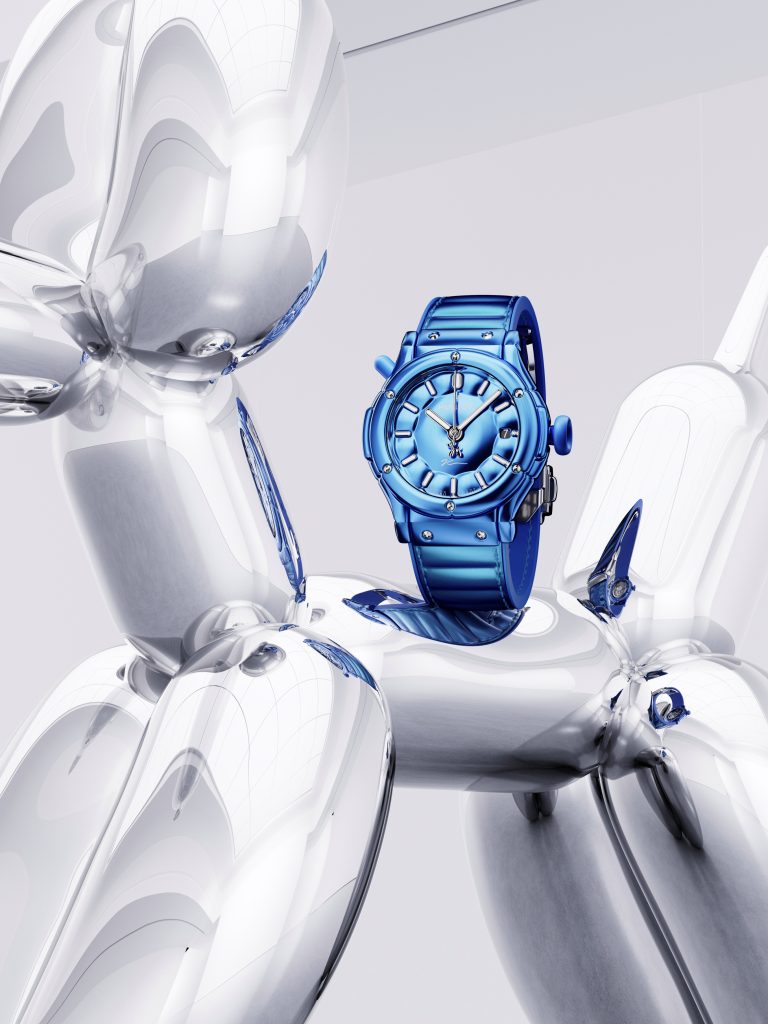
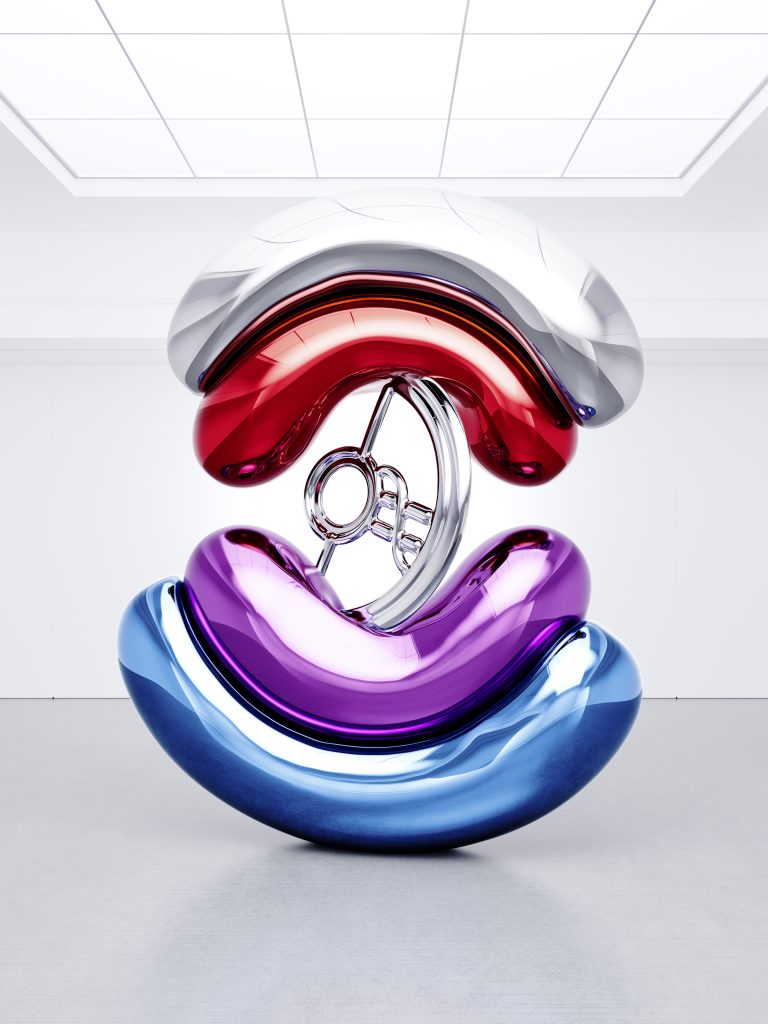
“You have an icon. Your icon is definitely the Balloon Dog. You have done so many great things, but this is the one people know. And we have two icons: the Big Bang and the Classic Fusion.”
What happens, then, when one icon is translated through another?
It sounds simple, but it was anything but.
THE FREEDOM TO LOSE CONTROL
The most interesting element of the collaboration may not be what Hublot asked Koons to create, but what it deliberately chose not to tell him.
Rather than asking the artist to adapt himself to Hublot, the house created the space for Koons to remain entirely himself.
“I told him Hublot is a great brand for artists to express themselves,” Tornare explains. “We leave the doors very open. I don’t put constraints in terms of colour or shape because if you prevent artists from expressing themselves, they will run away.”
It is an unusually sensible observation in an era when the word collaboration is applied liberally.
The best collaborations should involve some degree of surrender. Invite an artist into a house and then control every decision, and what remains is not really collaboration at all. It is endorsement.
Hublot was prepared to accept the possibility that the process might become uncomfortable.
“Maybe we agree, maybe we disagree. That is the risk,” Tornare says. “But I’m not going to put constraints on the table.”
For a luxury house, relinquishing that degree of control is significant. For an artist, it is essential.
And for Hublot specifically, it makes sense. A brand whose long-standing philosophy is to be “first, unique and different” would hardly benefit from inviting Jeff Koons into its universe only to ask him to behave conservatively once he arrived.
WHEN SIMPLICITY BECOMES THE MOST DIFFICULT THING
There is something almost deceptive about Koons’s work.
A Balloon Dog is instantly understandable. It is playful, reflective and familiar. A child can recognise its form without knowing anything about contemporary art.
But simplicity at that level is rarely simple.
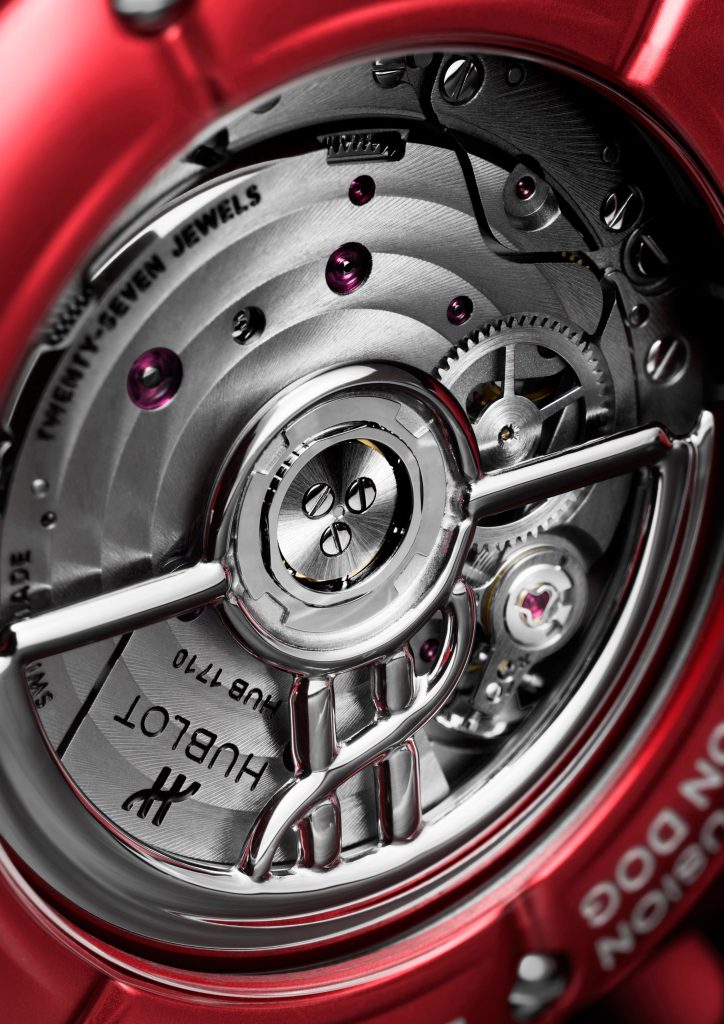
Behind the apparent effortlessness lies an extraordinary degree of engineering, material experimentation and precision. The same contradiction became central to translating Koons into watchmaking.
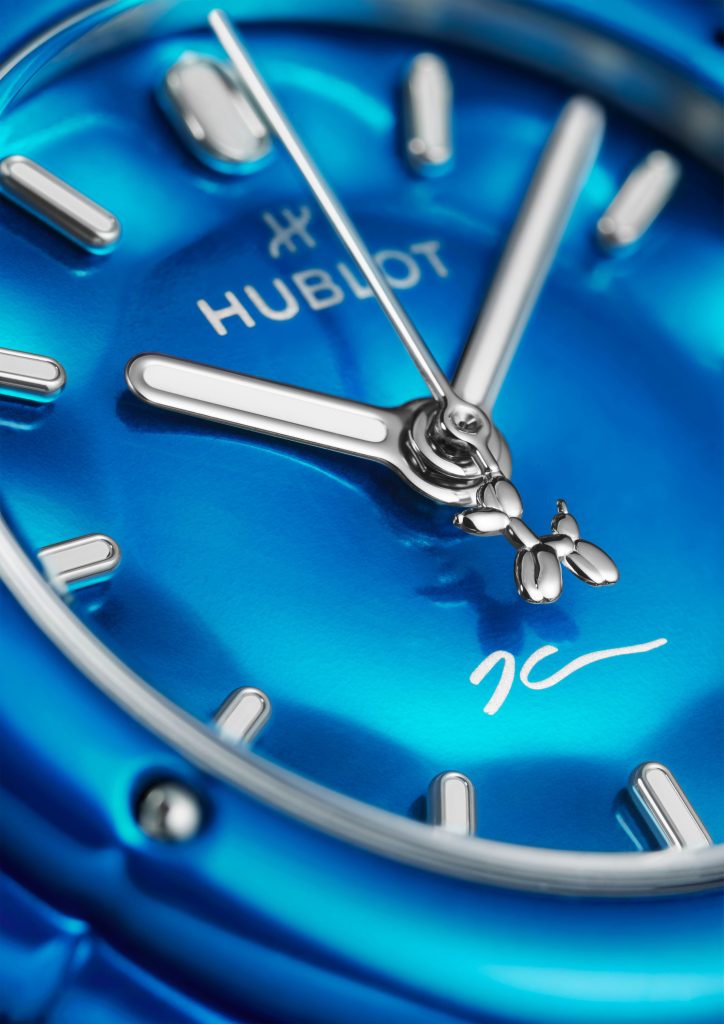
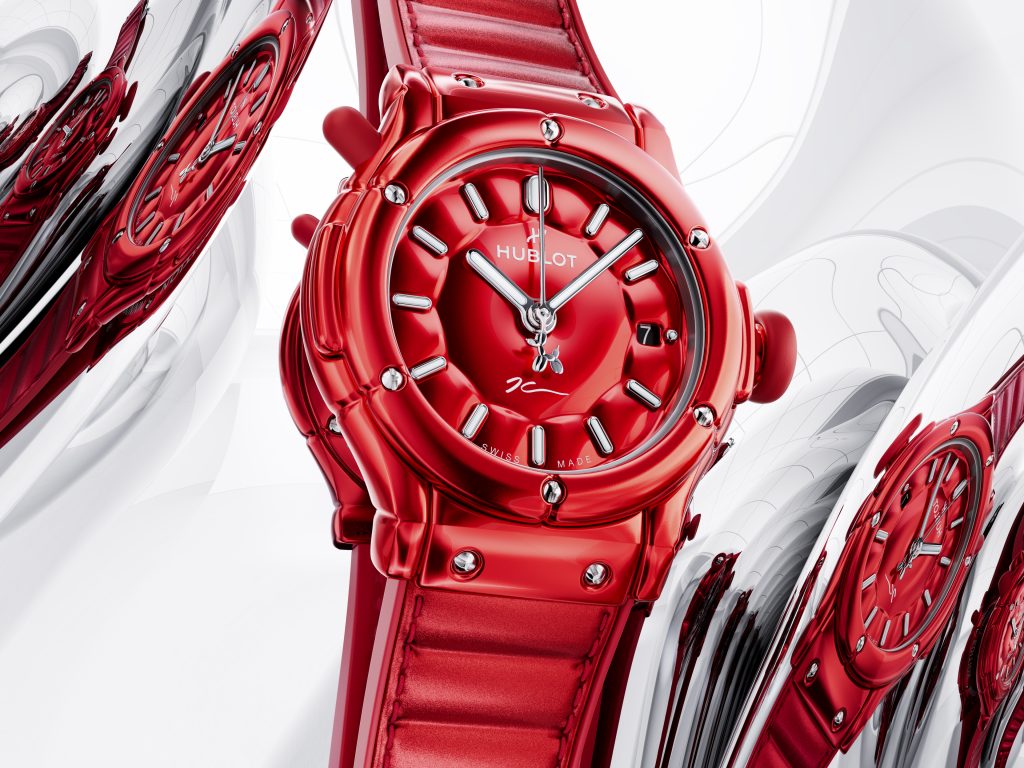
“How do we give this inflated effect to a watch so that people recognise that it is linked to a balloon?” Tornare recalls. “That was something we had never done.”
Then came colour.
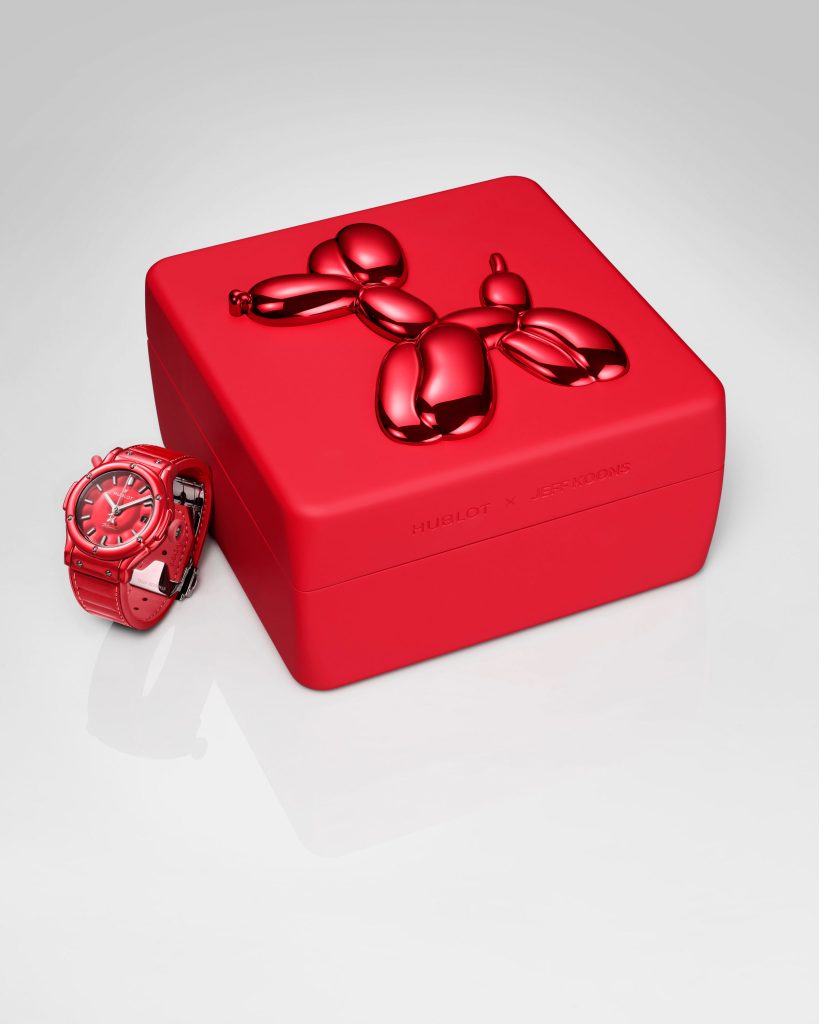
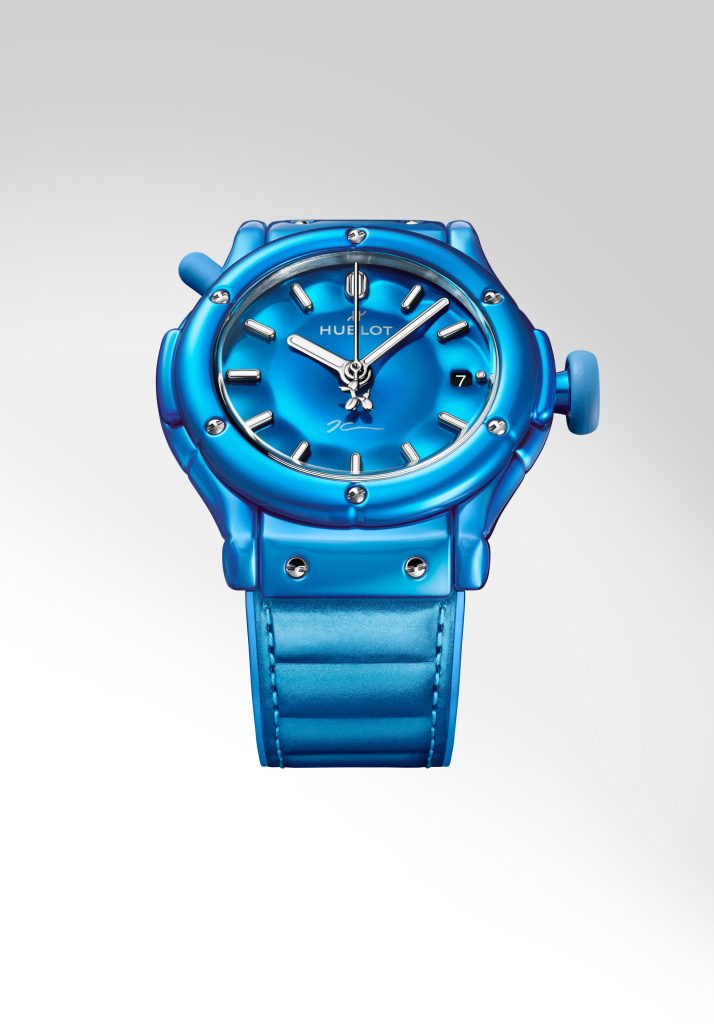
Hublot did not simply want colours inspired by Koons’s work. They wanted the colours to correspond precisely.
“We wanted exactly the same colours as the Balloon Dogs. That was important to both of us.”
Suddenly, an artistic proposition became an engineering problem.
How do you make something appear inflated while maintaining the architecture of a mechanical watch? How do you reconcile sculptural volume with wearability? How do you take an artist accustomed to working at monumental scale and translate his visual language into an object measured in millimetres?
There were moments, Tornare admits, when the reaction internally was simply: “Wow. How are we going to translate this?”
And therein lies perhaps the most compelling parallel between Koons and Hublot.
Both create objects in which the technical complexity is supposed to disappear behind the experience.
Ask a collector what they see first, and the answer may depend entirely on which world they come from.
An art collector may see Koons.
A watch collector may immediately begin examining the movement, materials and construction.
Tornare admits that he cannot separate himself from the engineering. “I see both, but I have a bias because I’m a watchmaker,” he says. “I see the tremendous work we had to do to get this aesthetic rendering.”
There is almost a frustration in making something technically difficult look easy. If people think it is effortless, part of me would be frustrated because it is a huge amount of work.”
But that, ironically, is also what makes the project faithful to Koons.
Look at a Balloon Dog, and its immediate appeal can disguise the extraordinary complexity required to create its seamless, highly reflective surface. The object never asks the viewer to admire the difficulty of its manufacture.
The watch attempts the same trick.
Movement, materials, dial, case, colour and strap have all been engineered to serve a single visual idea. The mechanics are complicated.
The reaction should not be.
KOONS: BEYOND THE OBJECT
And this is where Koons himself takes the conversation somewhere more interesting.
For him, the collaboration is not ultimately about reproducing a Balloon Dog on a watch. Nor is it simply about bringing contemporary art into the vocabulary of Swiss watchmaking.
It is about what an object can communicate.
Koons has spoken of his fascination with material science and of the ability to transcend material itself to take something physical and allow it to carry an emotional or psychological meaning beyond the substance from which it is made.
A watch, in that sense, becomes an unusually potent object. It measures something completely intangible -time – through something intensely physical.
“A watch unites many aspects of thought,” Koons has said.
But in our conversation in New York, his message became considerably more human. Koons spoke about wanting his work, and this collaboration, to communicate something to the wider world: more caring, more love towards one another, and more respect for each other.
It is an unexpectedly tender idea behind an object of such visual confidence. And perhaps that contradiction tells us something important about Koons.
The spectacle is the entry point. It gets our attention. But attention is not necessarily the destination.
Behind the polished surfaces, exaggerated proportions and cultural provocation is an artist deeply interested in how objects affect the person looking at them and how they might communicate optimism and connection.
That changes how one reads the watch.
The Balloon Dog is no longer simply reduced from monumental sculpture to wrist-sized object. It becomes something more intimate. Something carried against the body. Something that moves through time with its owner.
The sculpture, in a museum or collection, is something we stand before. The watch is something we live with.
That distinction is small, but philosophically significant.
THE PSYCHOLOGY OF WANTING
Perhaps the strongest connection between contemporary art and fine watchmaking, however, has little to do with craftsmanship at all.
It is psychology.
Both worlds are sustained by collectors, and collecting is rarely an entirely rational activity. The object matters, of course, but so does everything surrounding it: provenance, access, rarity, knowledge and the quiet satisfaction of possessing something few others can.
“Both want a beautiful object that is going to be rare and exclusive,” Tornare says.
Which leads to one of his more interesting positions on the state of luxury today.
Hublot is deliberately limiting the watches to only 200 pieces per reference.
Could it sell more?
Almost certainly.
Does it want to?
No.
“We could do more business selling more,” Tornare says. “But that is not luxury and that is not art.”
It is a statement that cuts against one of the great temptations facing luxury houses: when demand increases, increase supply.
The post-pandemic years demonstrated just how seductive that instinct can become.
“The watch industry went maybe too far some years post-Covid, believing the sky was the limit,” he says. “I think it is wrong.”
His argument is refreshingly straightforward. If luxury is supposed to represent rarity, then growth cannot be infinite.
“If we are part of the luxury business, we should limit ourselves by definition. Yes, you do less turnover, but you create rarity, scarcity, exclusivity and, at the end, desirability.”
It may be the most important point in the conversation.
Because luxury has spent years discussing desirability while simultaneously making itself more accessible and more omnipresent than ever before.
But desire has always required distance. You cannot endlessly increase availability and expect scarcity to remain intact.
There is an uncomfortable truth here for an industry built around growth: the most desirable object may be the one a company consciously decides not to sell more of.
Scarcity, when authentic, is not simply a commercial strategy. It is restraint.
And restraint may now be considerably more radical than expansion.

SCARCITY AS A STATEMENT
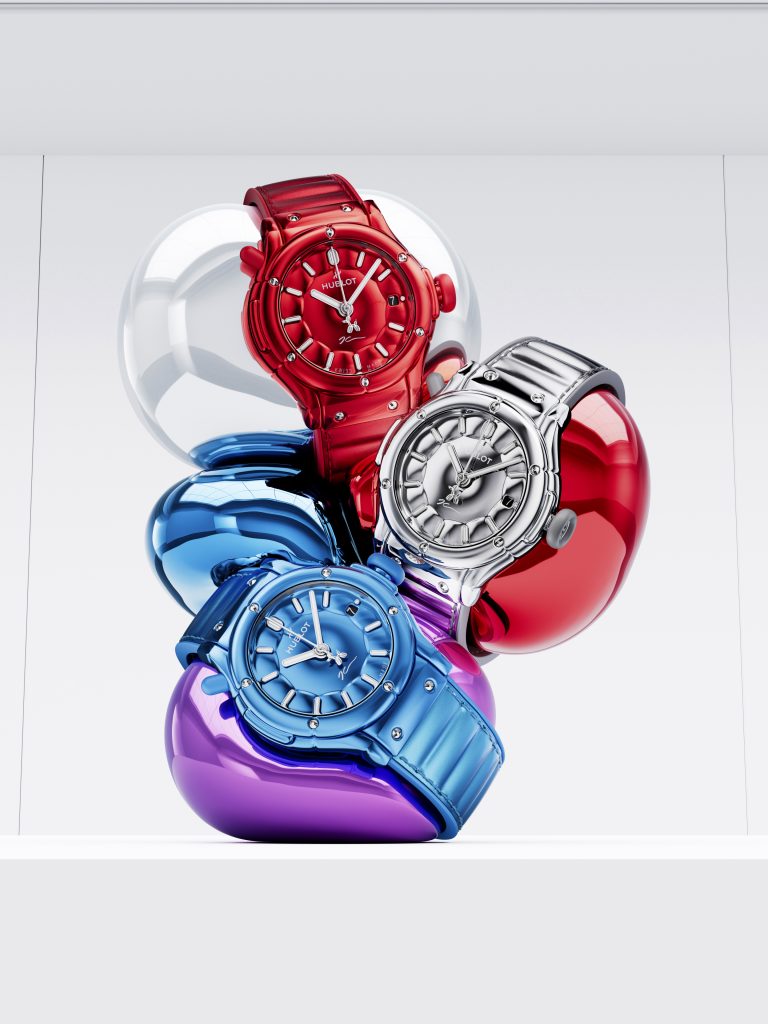
Commercially, the collaboration is deliberately small. “Sales are always important, but we are talking three times 200 pieces,” Tornare says. “You can do the maths. That is not going to change my yearly turnover.”
Its value lies elsewhere: creativity, cultural relevance and, again, desirability.
Hublot approached some of its most loyal clients before the wider release, and Tornare makes an important distinction about what clienteling should actually mean.
“If you are loyal to a brand, you should be the first to be informed.”
Access, in other words, is part of modern luxury. And the response was immediate.
Some collectors did not want to choose between the three watches. They wanted all of them.
“They said, ‘We want all three because that is the set.’”
It is collecting psychology in its purest form. The collector is no longer simply buying a watch. He or she is completing something.
And completion is a remarkably powerful form of desire.
YOU HAVE TO FEEL SOMETHING
Ultimately, Hublot x Jeff Koons is interesting because it understands something luxury occasionally forgets:
Desirability is not the same as popularity.
A truly desirable object does not necessarily need to appeal to everyone. It needs identity.
Koons understands that intuitively. So, historically, has Hublot.
Both have built recognisable visual languages precisely because neither has been particularly interested in disappearing politely into the background.
Their collaboration therefore feels less like an artist decorating a watch and more like a meeting of attitudes.
There is the audacity of Koons compressed into the technical discipline of Swiss watchmaking. There is Hublot’s engineering deliberately hidden beneath something joyful and apparently effortless. There is Koons’s belief that an object can communicate ideas far larger than itself. And there is Tornare’s conscious decision to restrict supply even when commercial logic might suggest doing otherwise.
Together, these ideas pose a larger question about luxury itself.
What are we actually looking for when we desire an object?
Price?
Rarity?
Recognition?
Beauty?
Or the feeling it produces in us?
Perhaps the answer is becoming clearer.
We live in an age of infinite images, infinite products and almost infinite access. We scroll past thousands of perfectly beautiful things and forget most of them within seconds.
In that environment, luxury cannot survive on beauty alone. It needs meaning.
And, occasionally, it needs the confidence to divide opinion. Koons speaks about caring, love and respect. Tornare speaks about emotion, rarity and desirability. They may sound like very different vocabularies, but they ultimately arrive at the same place: an object only becomes meaningful when it creates a response in the person experiencing it.
That may ultimately be the most contemporary luxury proposition of all.
As Julien Tornare puts it, the objective is ultimately very simple:
“You have to feel something.”
Luxury has become dangerously predictable. In an industry overflowing with collaborations, Hublot and Jeff Koons refuse to play it safe. Their meeting in New York is bold and deliberately divisive proof that the most compelling luxury still begins with the courage to have a point of view.