


Across the Middle East, crafts like weaving, dyeing, printing and embroidery were once part of everyday life. Over the years, changes in lifestyle, Western imports, and other socio-political factors distanced them from everyday life, with many on the verge of extinction today. Now a group of studios and craft councils is bringing them back. Some protect old skills passed down by elderly artisans, while others give those skills a new life in fashion, furniture and design.
Here are six worth knowing.
Al Sadu Society, Kuwait
Al Sadu Society was founded with a mission to protect the Bedouin weaving traditions. Its newest project, Soof, is focused on sustainable production of wool. It was launched last year as the GCC’s first sustainable wool-processing mill. It turns the wool of Kuwait’s local Naeemi sheep, which was largely going to waste, into yarn for Sadu weaving and other textiles. It leads with eco-friendly practices, including operating on solar power, water recycling, natural dyeing, and a zero-waste policy.
Al Naseej Textile Factory, Bahrain
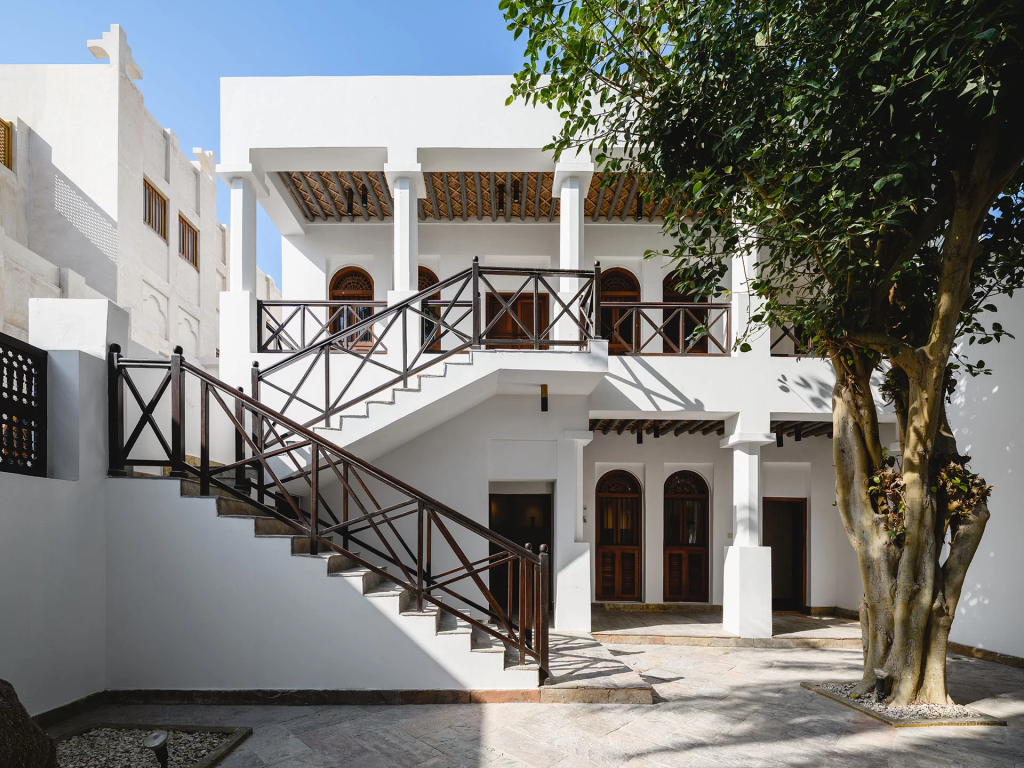
Bani Jamra is a Bahraini village long known for hand weaving. It once had more than 50 looms, but for over 20 years it relied on a single loom in a cramped room. The Bahrain Authority for Culture and Antiquities opened the Naseej Factory in late 2020 to change that. The project gives artisans three looms to weave and teach on. Swiss architect Leopold Banchini designed the factory drawing from the palm-frond “areesh” houses of rural Bahrain. It works as a production hub, a shop and an education centre, and the authority is training more than 40 young artisans.
DyeWorks, Kuwait
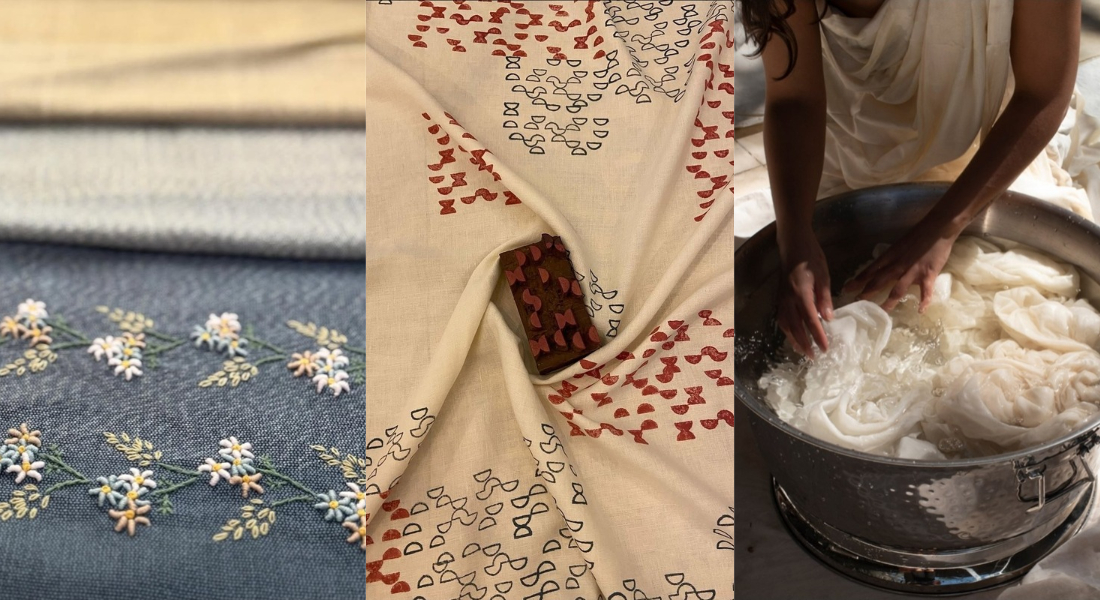
DyeWorks is a Kuwait-based studio that brings back the old craft of natural dyeing. It makes colour from plants, flowers, roots and even food scraps. Its pieces include organic cotton tea towels, silk scarves, shawls and cashmere blankets. Because natural dyes react differently to each fabric, season and plant, no two pieces come out exactly the same. The studio also runs workshops, offers custom dyeing and researches natural colour.
Studio Kunukku, Lebanon
Block printing is often linked to India, but Syria had its own tradition of printing cloth with carved wooden blocks. Studio Kunukku, founded in Beirut in 2020 by Sarah Hayes with a group of Syrian artists, is working to bring it back. The team is also archiving old Syrian blocks and reinterpreting their patterns for new prints, clothing and furniture.
Kurar House, Bahrain
Kurar is a Bahraini embroidery made with shimmering gold thread. Kurar House opened in the old town of Muharraq in 2007 and is run by the Shaikh Ebrahim bin Mohammed Al Khalifa Centre. Elderly women who still know the craft work there and teach younger women. The centre sells their pieces for the women’s benefit and describes the house as a home for reviving a craft on the edge of extinction. Visitors can watch the women at work during demonstration days.
Al Ghadeer Emirates Craft, Abu Dhabi
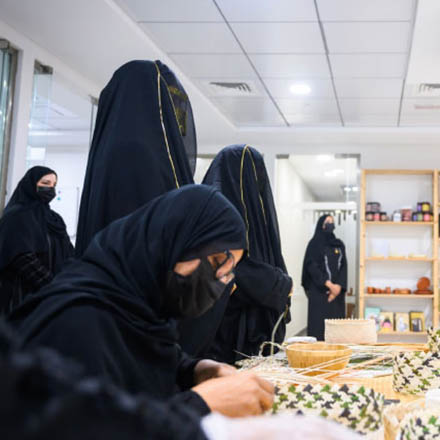
Al Ghadeer is a nonprofit that helps Emirati women earn a living from traditional crafts. Its craftswomen make Sadu weaving, Telli braiding with metallic thread and silk, Khoos palm-frond weaving, and spun wool. Its workshop is open to beginners, masters, designers and artists, and customers can order custom pieces, choosing Sadu patterns, thread colours and sizes.