


What happens when one of watchmaking’s oldest maisons turns a 42-millimetre dial into a canvas for civilisational history? The answer, it turned out, was something closer to archaeology than horology.
When Vacheron Constantin unveiled its first Métiers d’Art Tribute to Great Civilisations series in 2022, born from its ongoing partnership with the Louvre Museum, it set a formidable precedent.
Now, four new timepieces extend that conversation further.
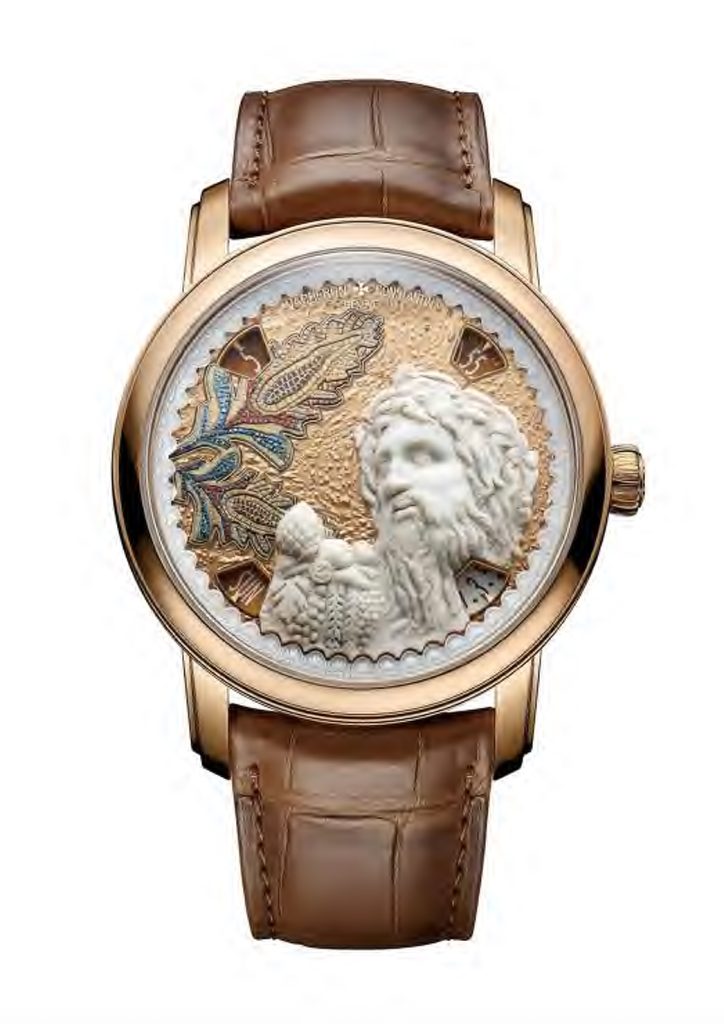
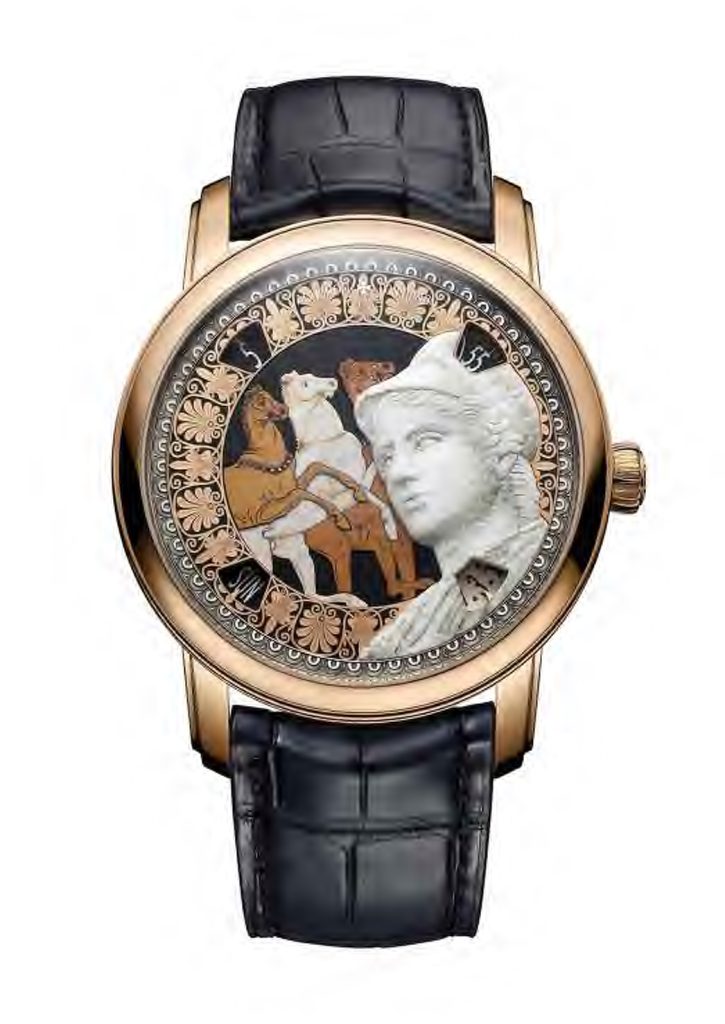
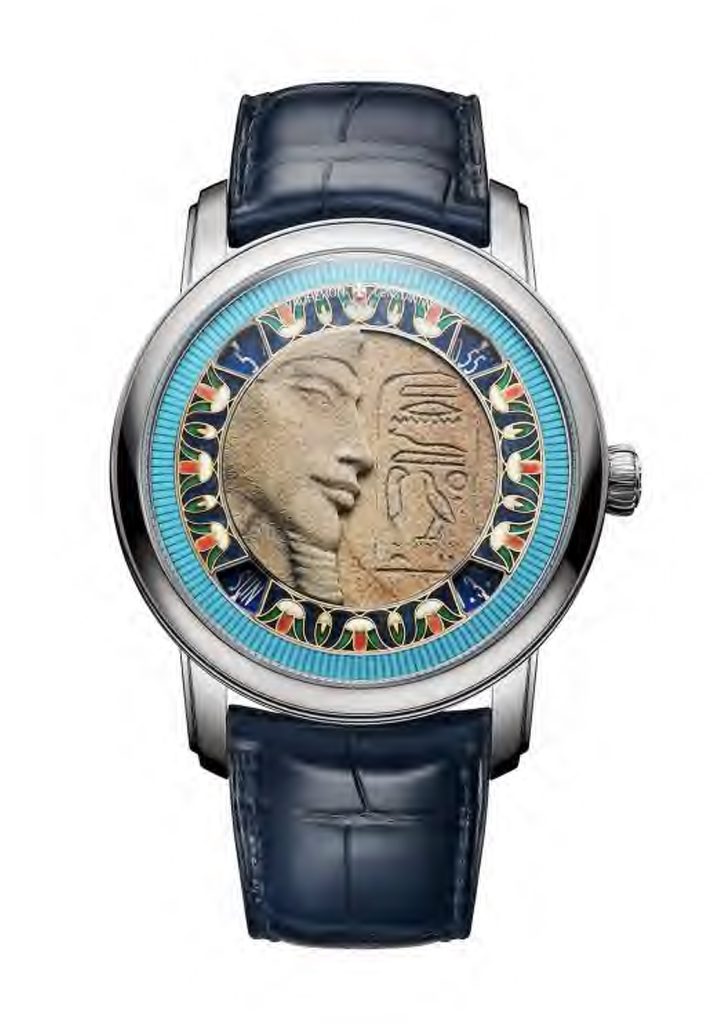
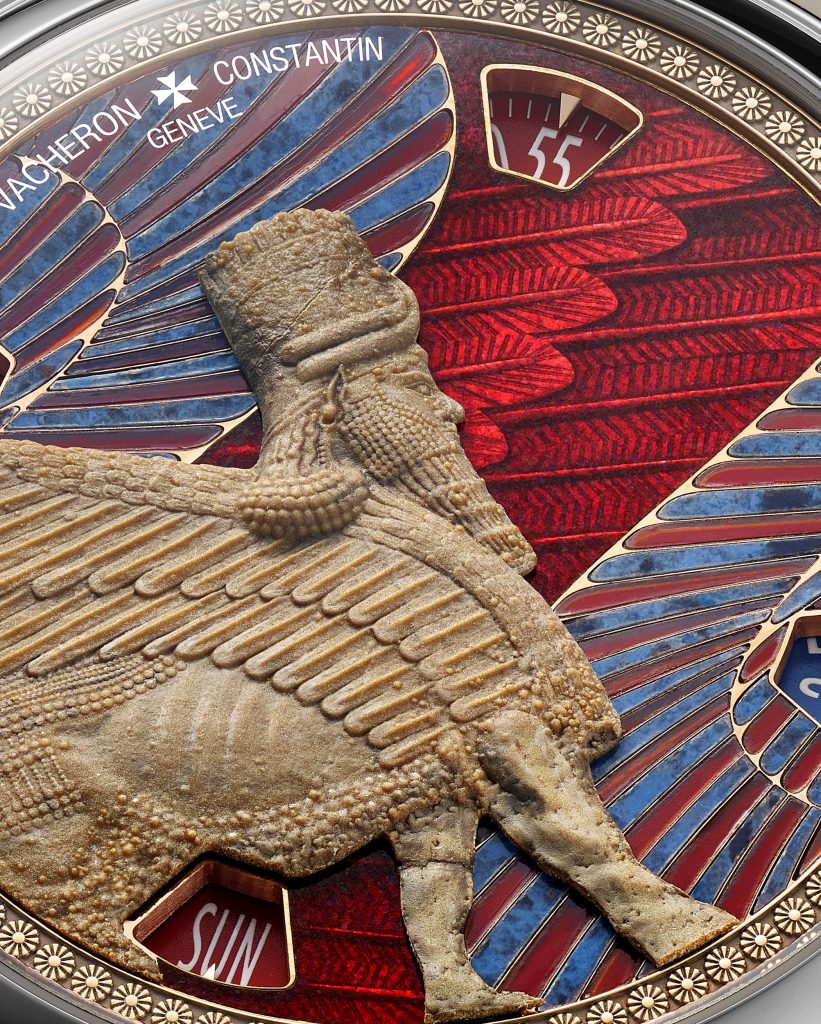
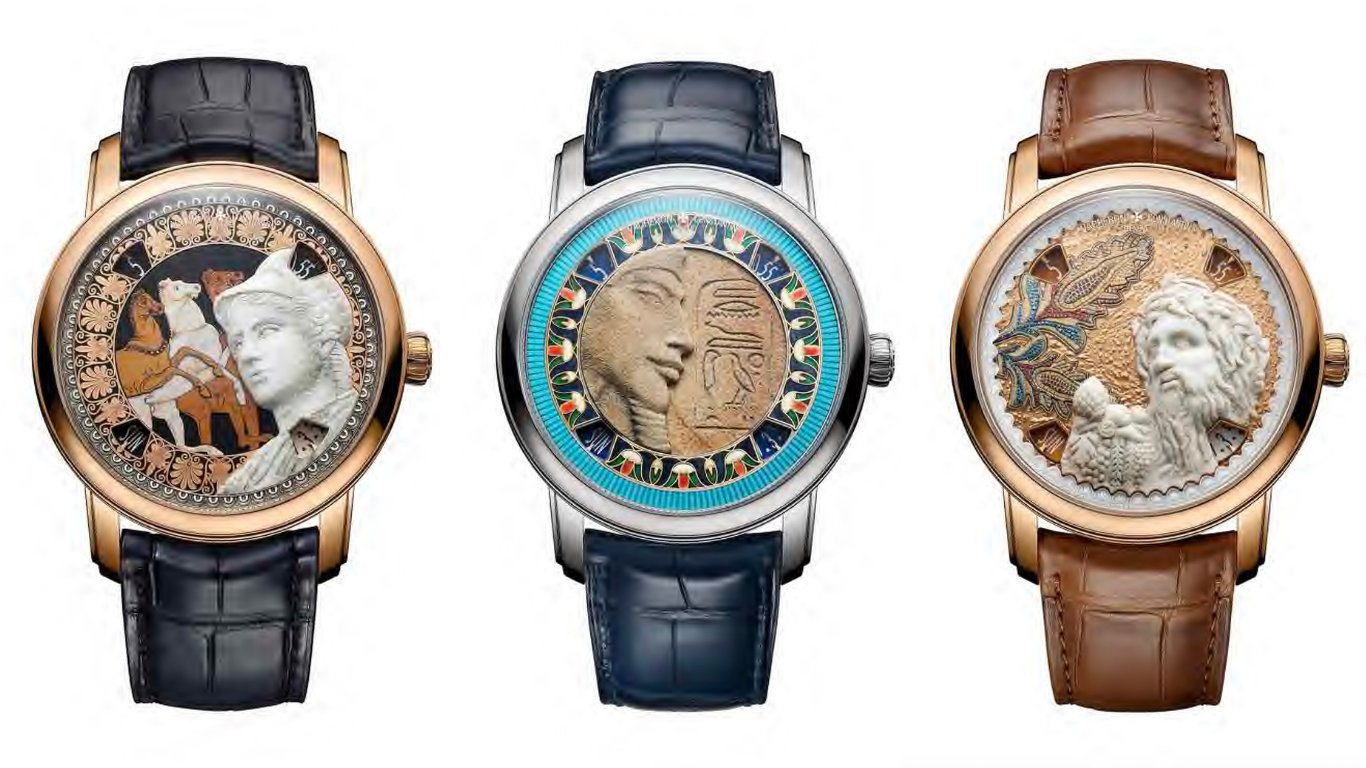
The second series draws from the Louvre’s Department of Antiquities, with each watch dedicated to a specific civilisation — Pharaonic Egypt, the Assyrian Empire, Ancient Greece, Imperial Rome — and centred on a corresponding masterpiece from the museum’s permanent collection. The Buste d’Akhénaton, the Lamassu de Sargon II, the Athéna de Velletri, and the Tibre de l’Iseum Campense each become the raw material for dials that required between 120 and 220 hours of individual craftsmanship to complete.
What distinguishes this series from its predecessor is the decision to work in stone rather than sculpted gold. The central effigies are executed in glyptics — a stone-carving technique traditionally used in cameo-making — using limestone sandstone and marble sourced to match the exact origin of the original Louvre works. The pharaoh Akhenaten is rendered in Sinai limestone; Athena of Velletri and the god Tiber in Paros marble from Greece. Each applique is hand-patinated to coax out shadow and volume across a surface only millimetres thick.
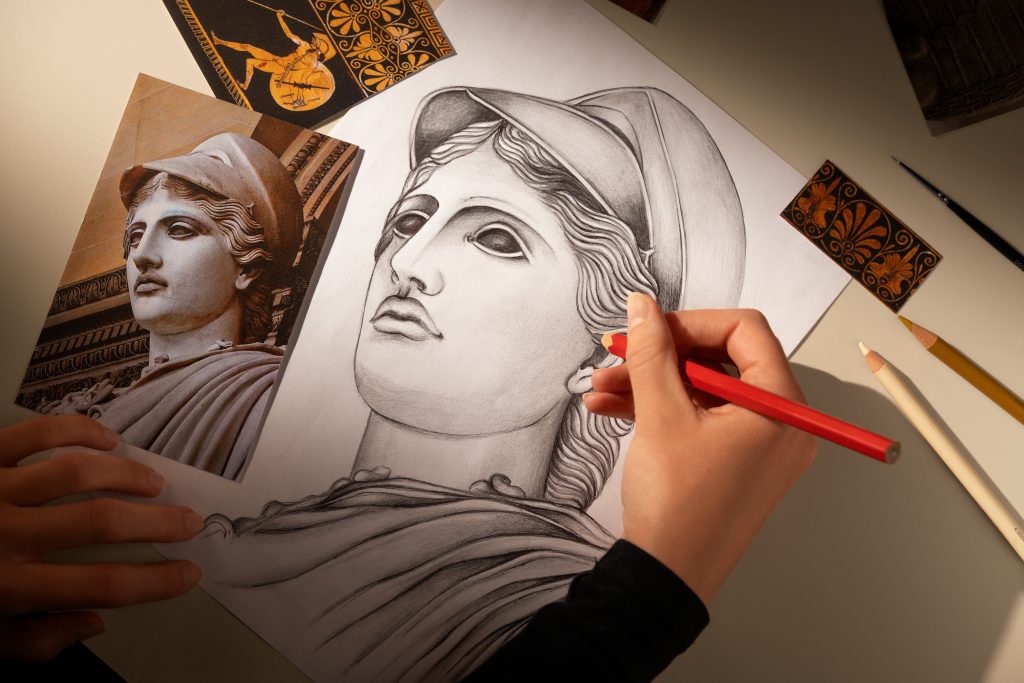
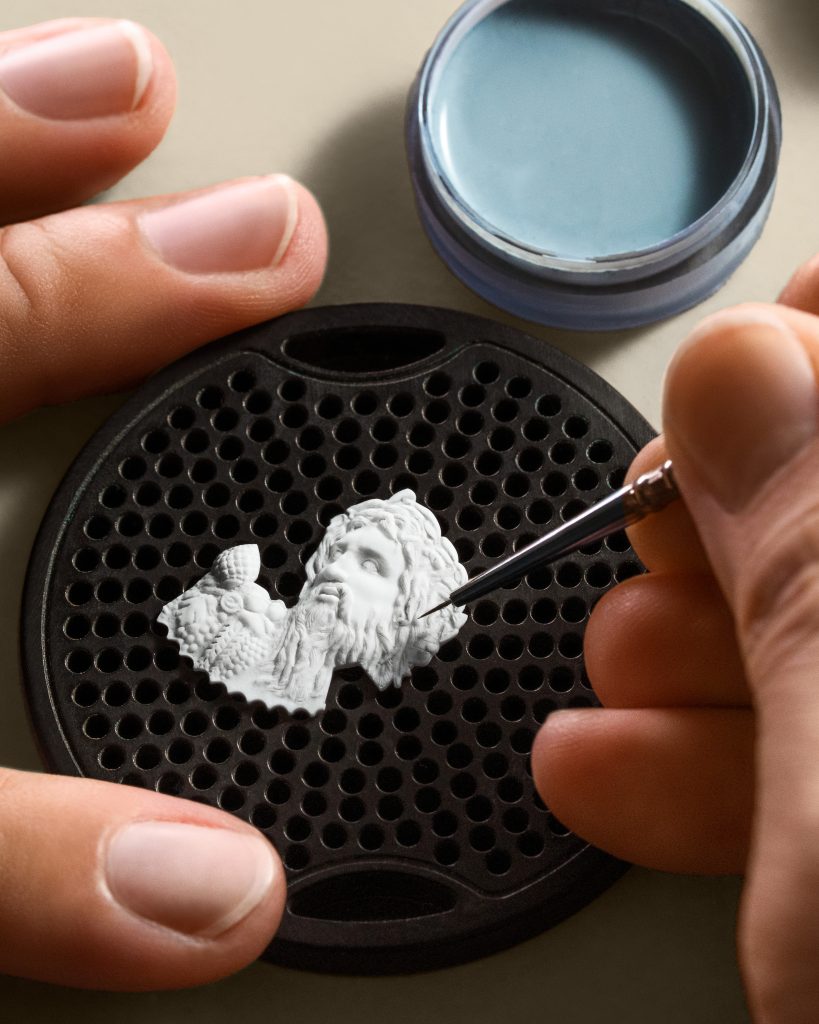
The surrounding dials are no less exacting. The Egypt watch features an inner frieze assembled from chrysoprase, opaline, sodalite and red mother-of-pearl, inspired by a 7th-century BC pectoral in the Louvre’s Egyptian Antiquities department. The Assyrian piece deploys red agate and blue dumortierite in stone champlevé, drawn from an 8th-century BC mural discovered at Til Barsip in Syria. The Roman watch pairs a micro-mosaic floral applique — built from jasper, chrysocolla and opaline fragments — with a gold leaf-textured base beneath translucent enamel.
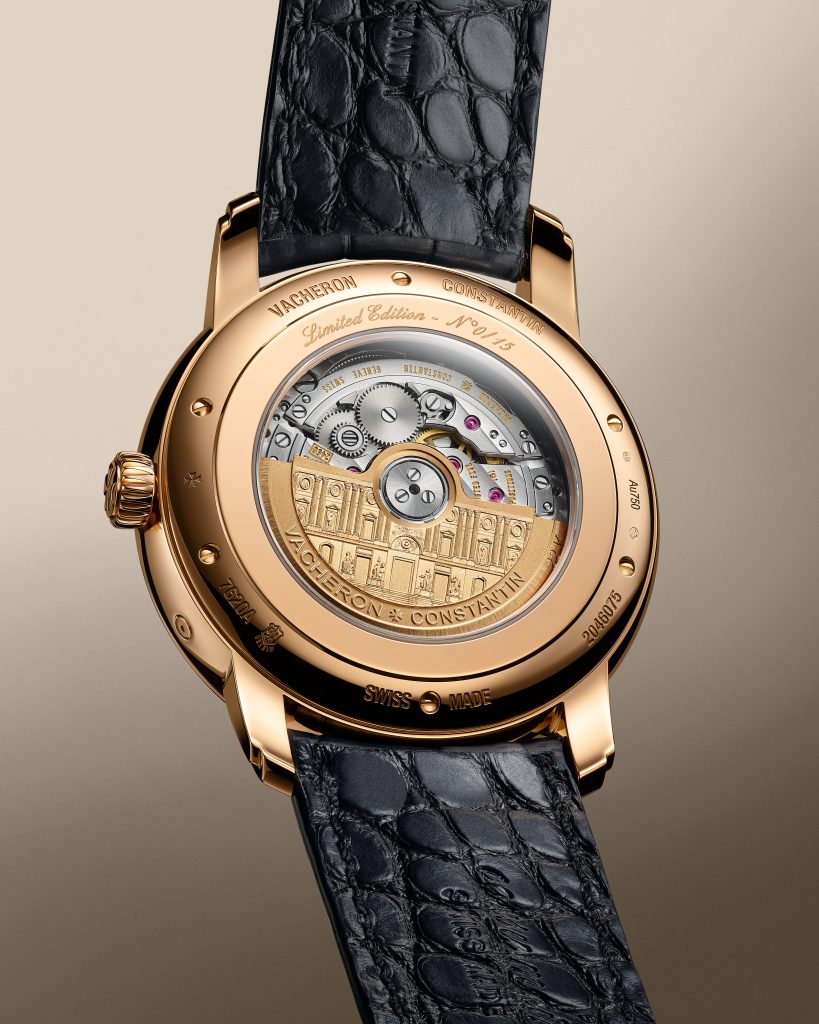
Powering all four is the Calibre 2460 G4/2, a 237-component self-winding movement whose peripheral disc display of hours, minutes, day and date frees the entire dial surface for the artisans. The oscillating weight, visible through the sapphire caseback, carries an engraving of the Louvre’s eastern façade. Each model is limited to 15 pieces.