


Once an essential fixture of the most elegant handbags, the powder compact is finding new relevance as beauty rediscovers the pleasure of objects made to be carried, used and kept.
There was a time when opening a powder compact in public was not simply a practical gesture. It was part of the ritual of getting ready.
From the 1920s onwards, as cosmetics became increasingly visible in everyday life, the compact offered women a new way to carry beauty with them. Powder, mirror and puff were contained within an object small enough to slip into an evening bag, yet often decorative enough to resemble a piece of jewellery. Innovations in cosmetic packaging during the decade helped make makeup easier to apply away from the dressing table, while the increasingly glamorous culture surrounding cosmetics transformed the compact into an accessory in its own right.
Through the 1920s, ’30s, ’40s and ’50s, the compact became increasingly elaborate. Cases appeared in polished metal, enamel and intricate decorative finishes, while advertisements presented them not merely as containers for powder but as objects to admire, carry and give as gifts.
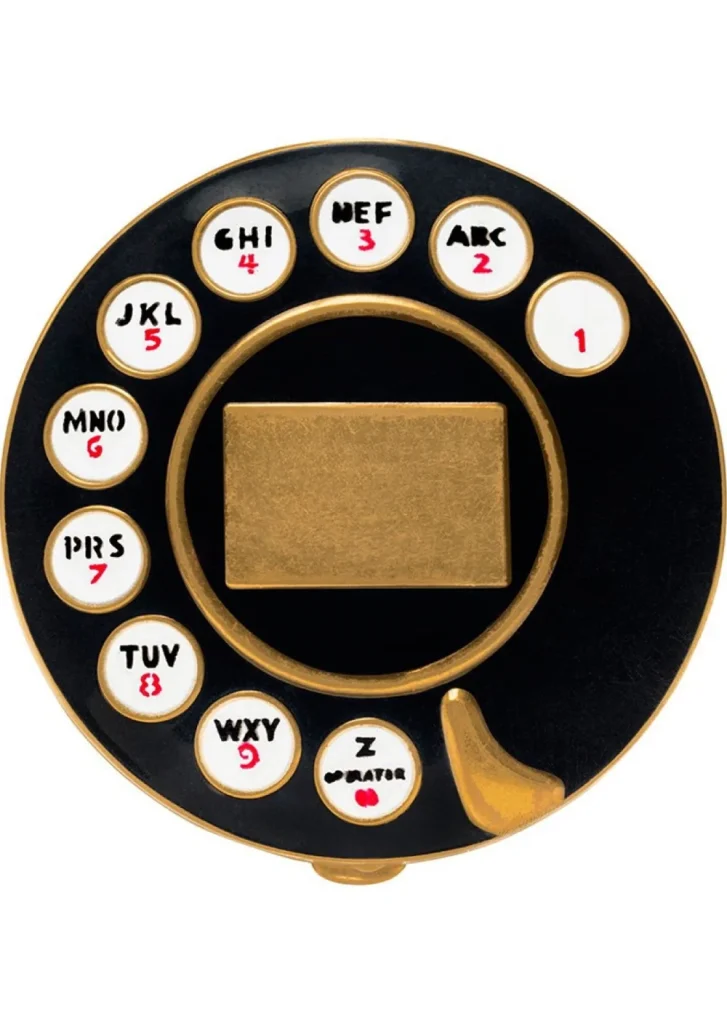
Fashion embraced the idea too. In 1935, Elsa Schiaparelli and Salvador Dalí transformed the form of a rotary telephone dial into a pressed-powder compact for Schiaparelli’s Stop, Look and Listen collection. Made from materials including lacquer, glass and golden brass, the design could even be personalised with an engraved monogram and proved popular enough to remain in production for years.
It is difficult to imagine a better expression of the compact’s status at the time: makeup packaging elevated into fashion object.
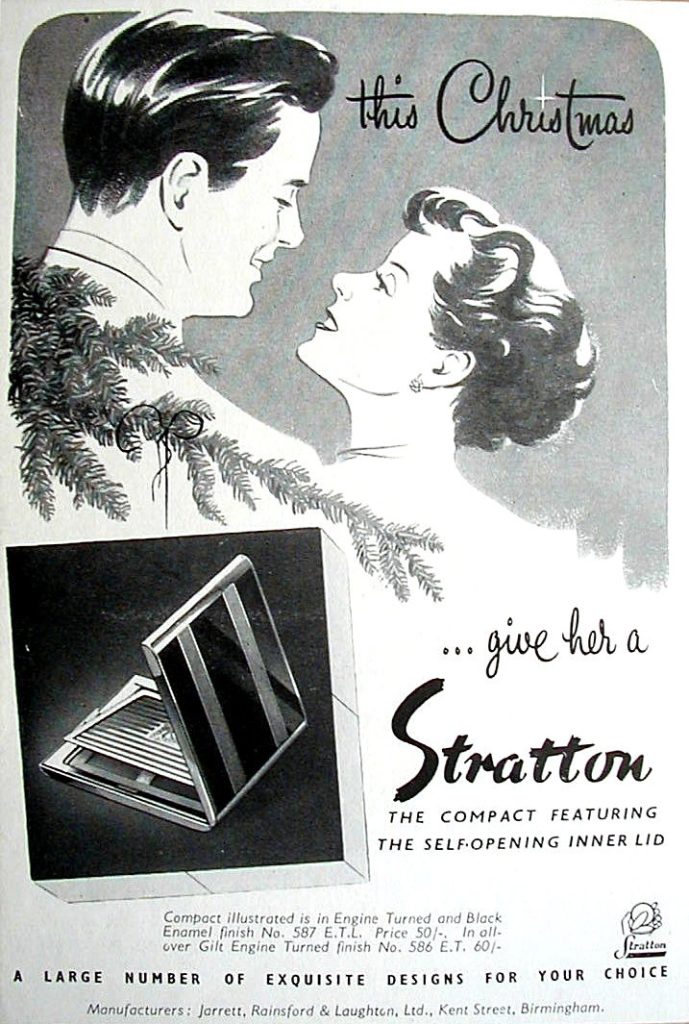
The vintage advertisements of the era tell a similar story. Women are pictured looking into small mirrors, powder puff in hand, while the compact itself is shown almost as prominently as the face powder inside it. By the middle of the century, beautifully finished versions were marketed as coveted gifts — an object intended to remain in a handbag long after the powder had been used.
Part of the compact’s enduring allure lies in the gesture itself.
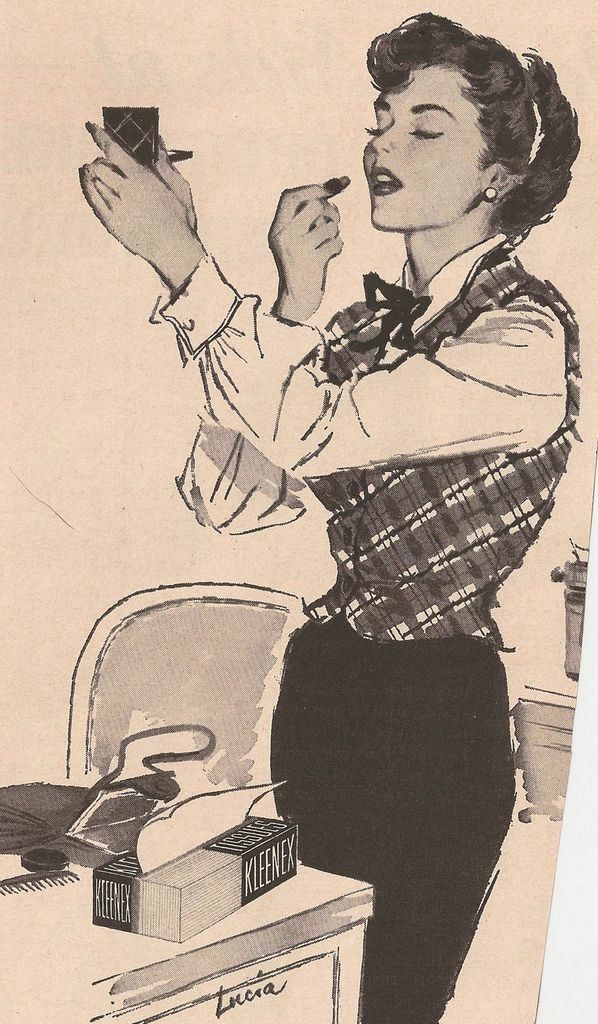
There is something wonderfully deliberate about taking one from a handbag, opening the case, glancing into its mirror and applying a light veil of powder before closing it again. It turned an everyday beauty touch-up into a small ritual — one that could happen before dinner, during an evening out or in the quiet moment between arriving somewhere and stepping into a room.
Modern beauty has, in many ways, become increasingly efficient. Products are designed to be fast, portable and disposable; routines are streamlined and packaging replaced as soon as the formula inside is finished.
The traditional compact proposed something slightly different. The case mattered almost as much as its contents. Scratches and signs of use could accumulate over years, while particularly beautiful examples became personal possessions rather than temporary packaging.
Perhaps that is why its return feels particularly appealing now.
Luxury beauty houses are once again treating the compact as an object worth keeping.
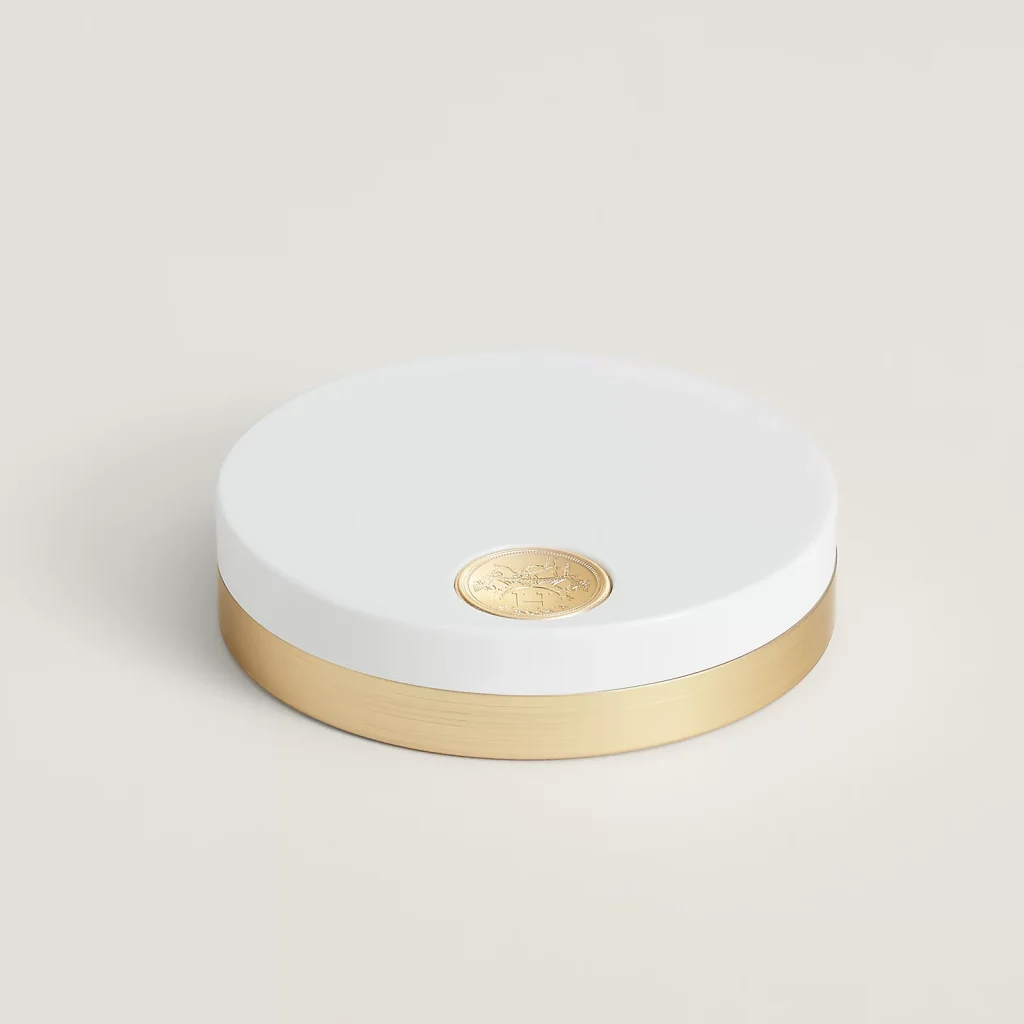
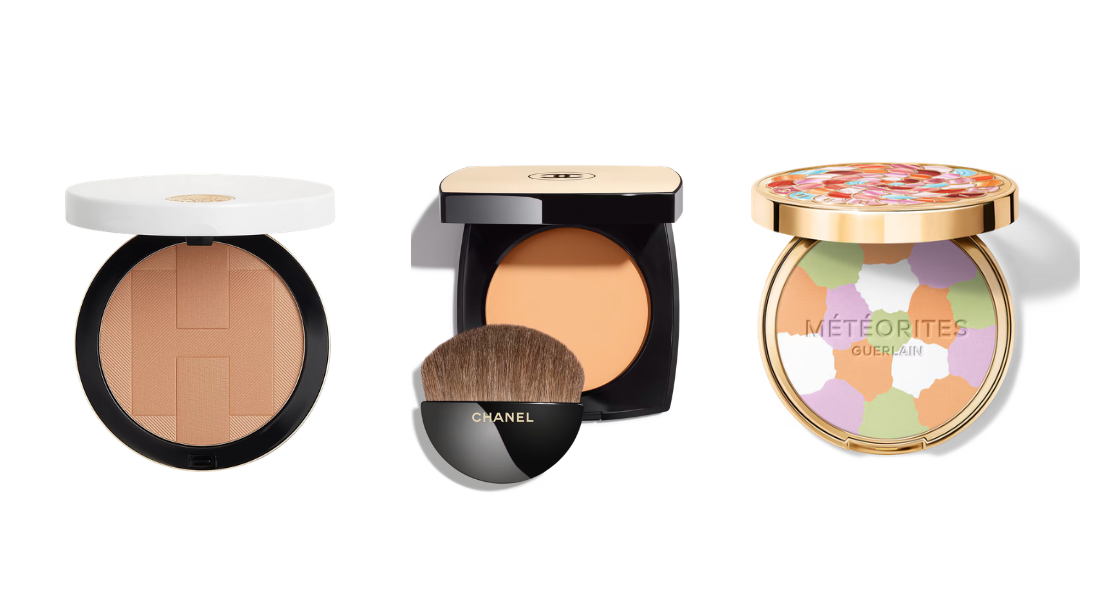
Hermès’ H Trio mineral powders arrive in a distinctive white-and-gold round case designed by Pierre Hardy, with replacement powder pans sold separately. The compact itself therefore remains while its contents can be renewed — an approach much closer to the longevity once associated with traditional vanity objects.
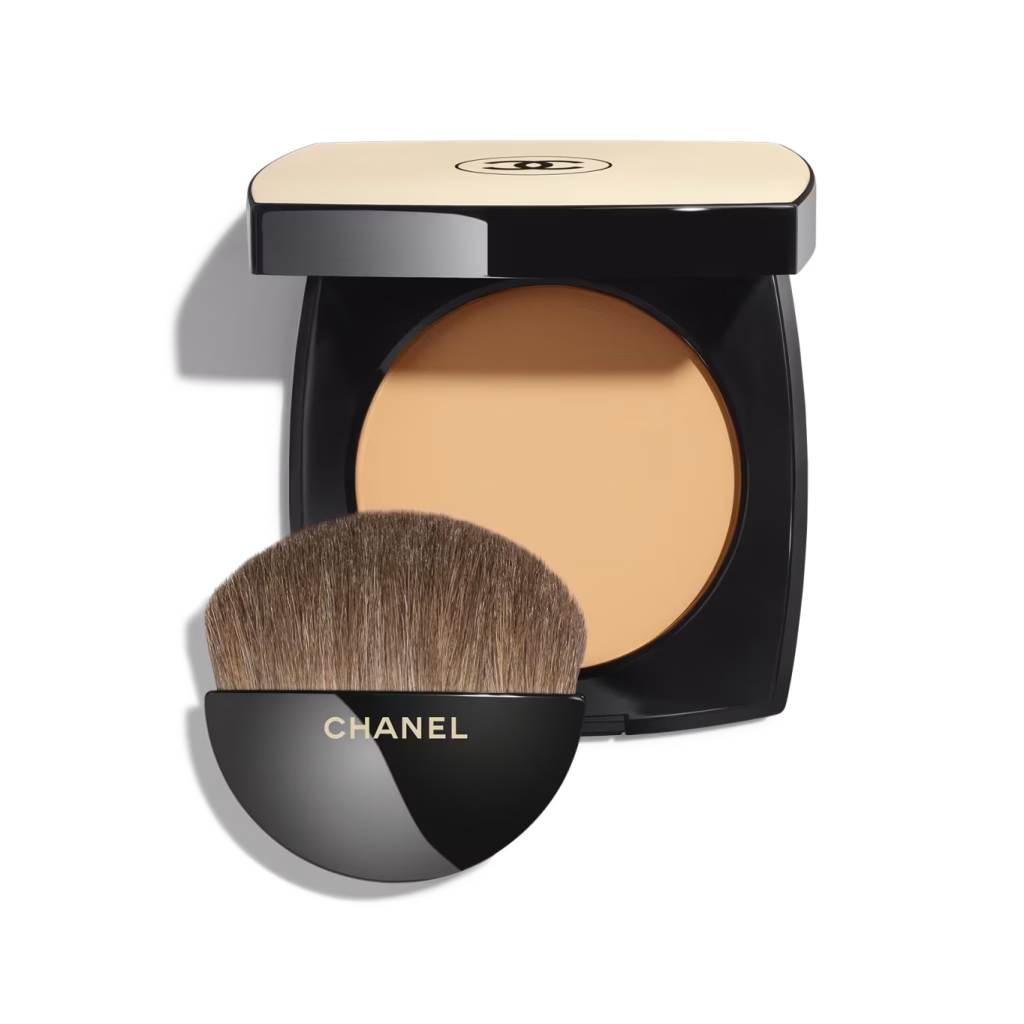
Chanel has similarly made its iconic rounded-square LES BEIGES Healthy Glow Sheer Powder case refillable, preserving the recognisable object while allowing the powder within to be replaced. The formula itself reflects how far the modern compact has evolved too: lightweight and designed to blur while maintaining a subtle satin finish rather than creating the heavily powdered complexion once associated with traditional face powder.
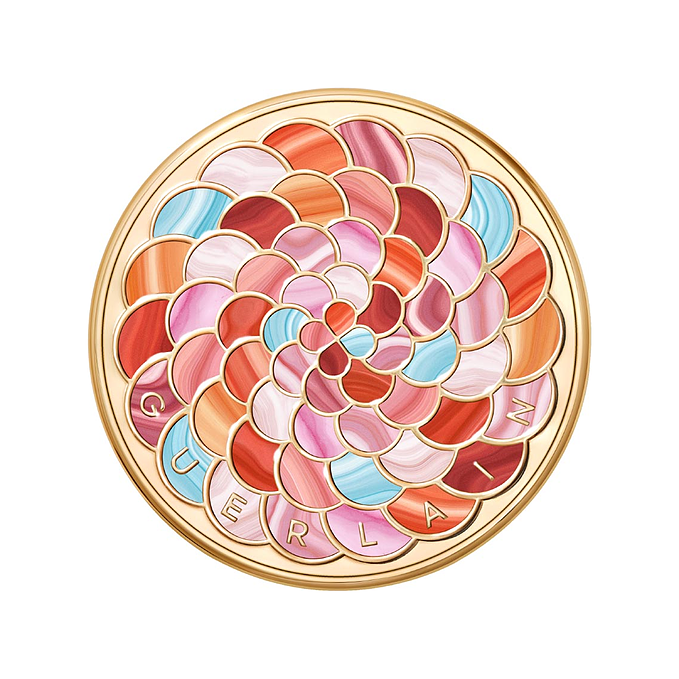
At Guerlain, the Météorites Compact brings the house’s long relationship with finishing powder into pressed form, combining multiple correcting tones within a slim modern case. The current formula is designed to mattify, set and blur while retaining a more dimensional finish — proof that the resurgence of the compact does not necessarily signal a return to flat, overly matte skin.
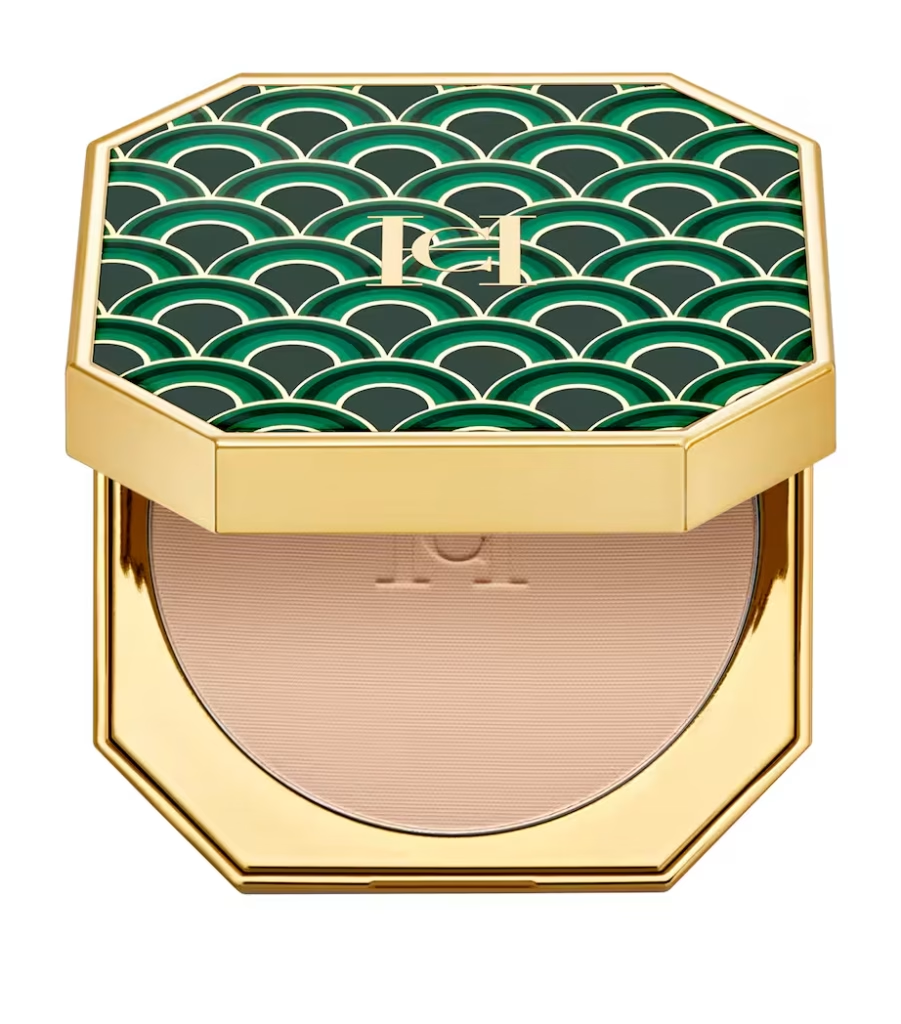
Carolina Herrera approaches the compact almost as jewellery for the handbag. Its refillable Fabulous Skin case can house the house’s face powder, highlighter or mattifier refills and can be customised with decorative accessories, deliberately restoring an element of personality to something that had increasingly become purely functional.
What makes the powder compact interesting again is not simply the return of powder itself.
It is the return of the beauty object.
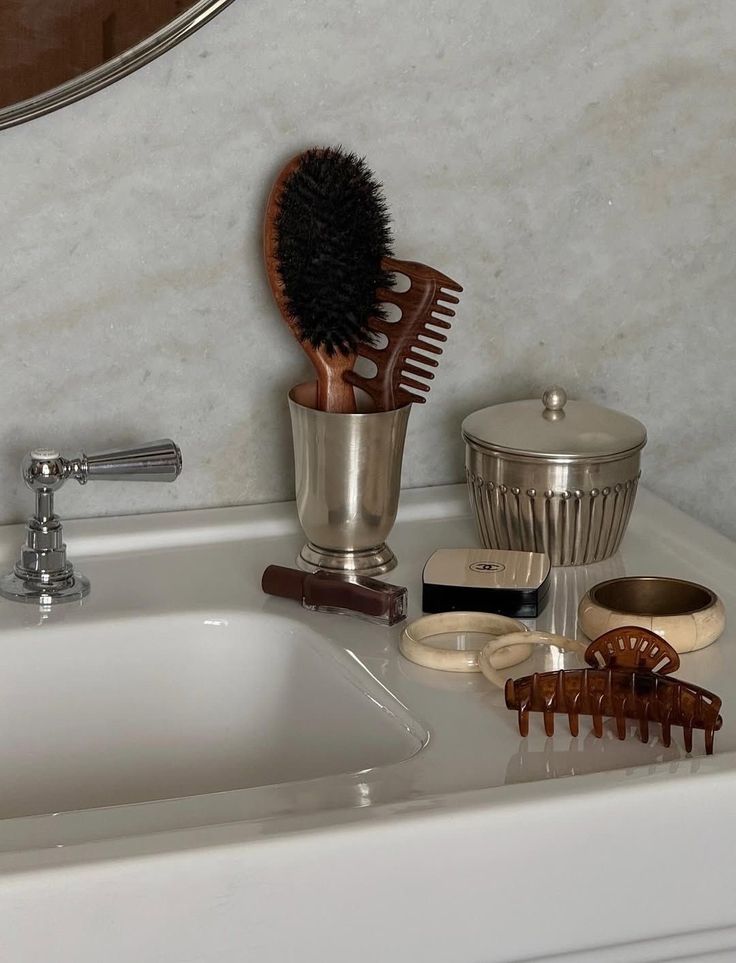
A beautiful compact asks to be kept rather than discarded. It can be refilled, slipped into a handbag, placed on a dressing table and gradually become familiar through use. In that sense, today’s most considered versions feel remarkably close to their predecessors, even if the formulas inside them are infinitely more sophisticated.
There is also something appealing about bringing a little ceremony back into beauty. Not every product needs to be purely practical or used hurriedly before leaving the house. Sometimes the pleasure lies in the object itself: its weight in the hand, the click as it opens, the mirror inside and the tiny ritual of touching up throughout the day.
The powder compact has not returned exactly as it was.
Perhaps that is why its revival feels so convincing. Refillable, beautifully designed and made for modern formulations, it has been reimagined for the way we live now while preserving the very thing that made it desirable in the first place: the idea that an everyday beauty essential can also be something worth keeping.
By Sayhrah Noor Asif-Ali