


This week’s #ForTheLoveOfTravel essay arrives from Jaipur, written as a letter to the city by Ahmed El-Gamal. Part love letter, part travel diary and part meditation on presence, his words invite us to experience the Pink City not as a destination to be conquered, but as a living story that unfolds slowly to those willing to listen.
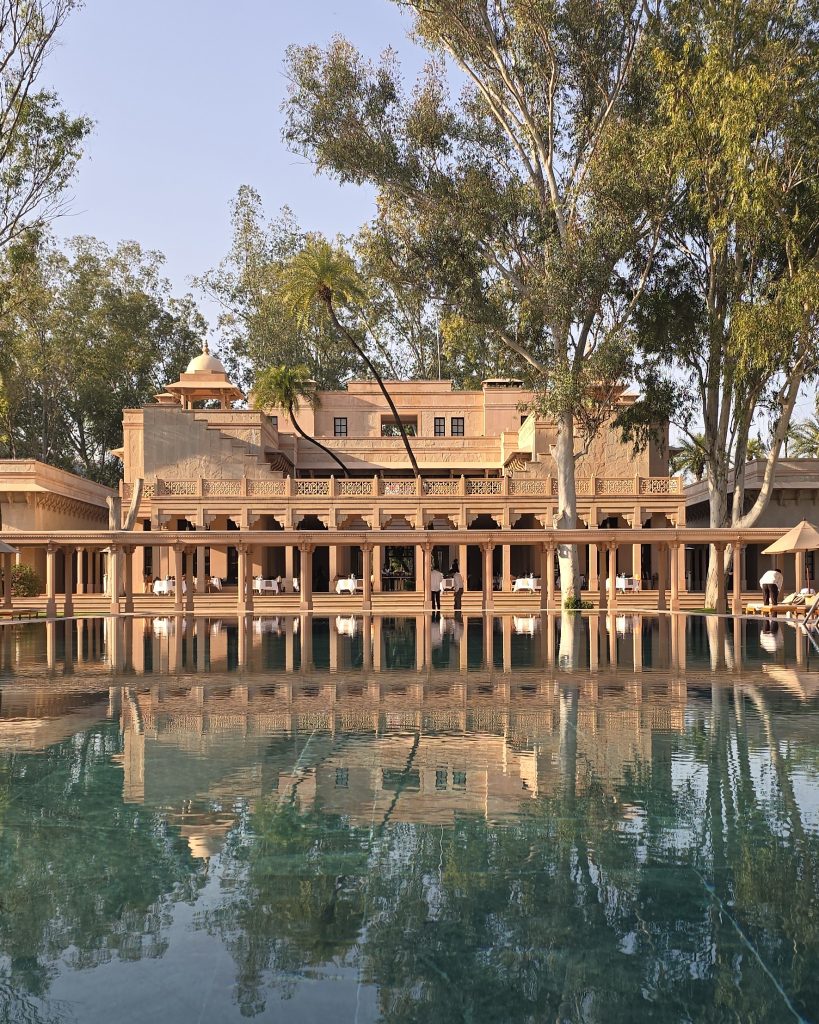
Dear Jaipur,
I arrived expecting a spectacle and found something far more disarming: a place built with genuine intention, not for visitors or photographs, but for the people who have always lived and made things inside you. My mornings at Amanbagh began in silence, yoga on the terrace as your hills emerged from the early haze, Sanskrit chants rising softly behind me, a sound so ancient and unhurried that my usual morning ritual felt like a rehearsal for this moment.
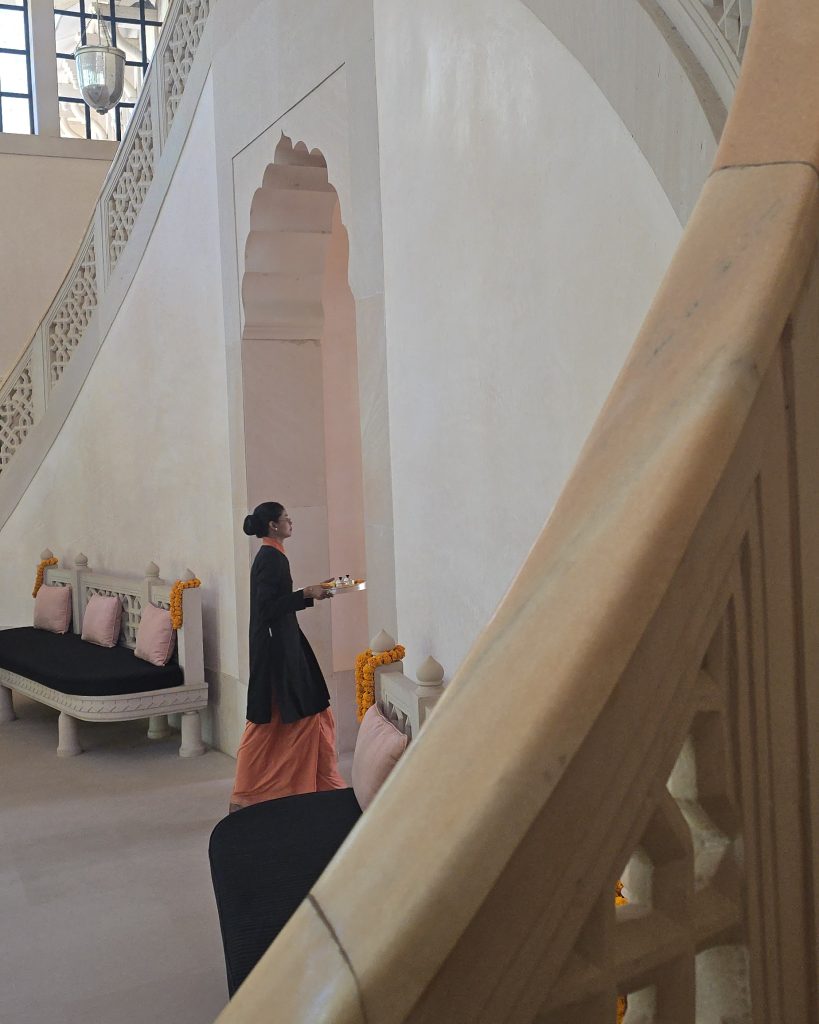
Aman does something quietly radical: it refuses to announce itself. The architecture borrows from you without ever quoting you directly, and the people who move through it match the property in that same quality: unhurried, present, and entirely unconcerned with performing hospitality for someone watching. Two mornings waking inside it with the Aravalli Hills as my view and birdsong as my alarm convinced me that some guests arrive once and simply never stop returning.
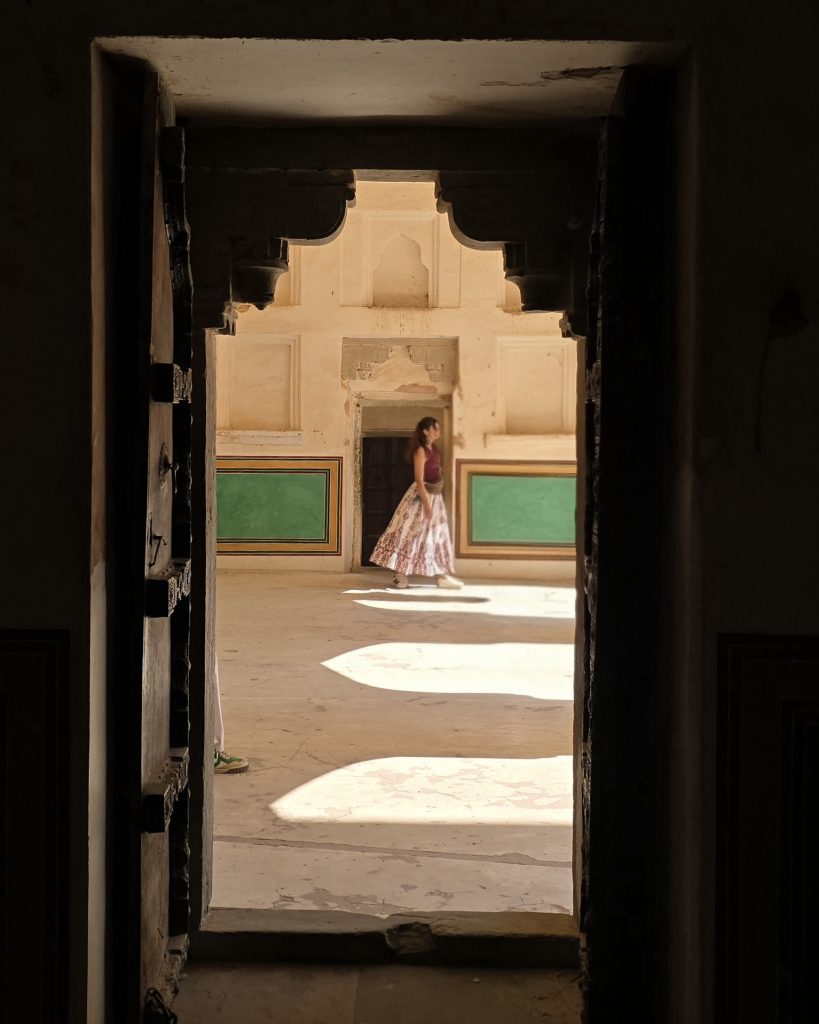
Your Mughal arches and Hindu carvings share the same wall without apology or explanation, coexisting with a mutual dignity that feels quietly instructive about everything a civilization can be when it is confident enough to make space for what is different. Your history is not preserved behind glass. It is lived within and breathed through, and I walked through four centuries of coexistence without once feeling that either tradition had been diminished by the proximity of the other.
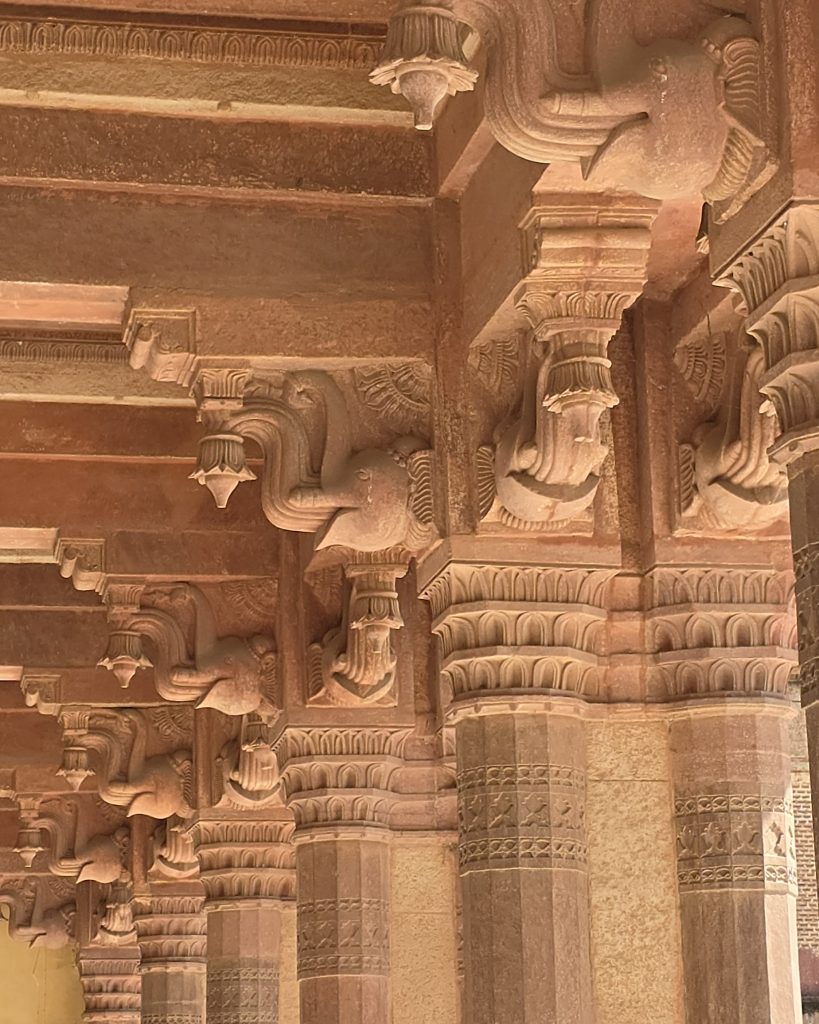
The Hindu architecture of Jaipur operates on an entirely different logic from the Mughal work beside it. Less about geometry and symmetry, more about accumulation: surface upon surface of carved sandstone that reads as dense and warm and somehow alive in the afternoon light. The brackets above the columns look less like structural elements and more like a language that someone has been speaking continuously for twelve hundred years without once seeing the need to pause.
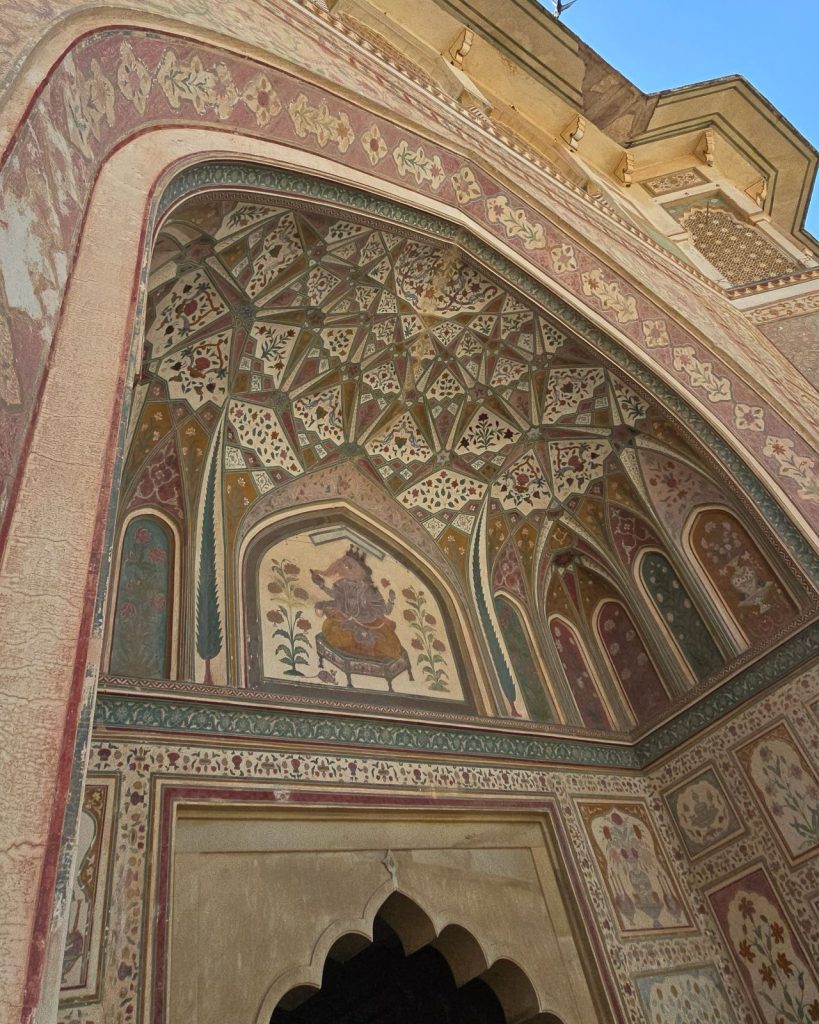
The Amber Fort did not ease me in. The painted gateway opened and my eye had no idea where to settle first, botanical motifs pressed into stone in colours that have been bleaching quietly for four centuries and are still vivid enough to stop you mid-step. A Ganesh presided from within the arch with the calm of something that has witnessed everything and remained unmoved by all of it. I found that combination of antiquity and serenity far more moving than I had anticipated.
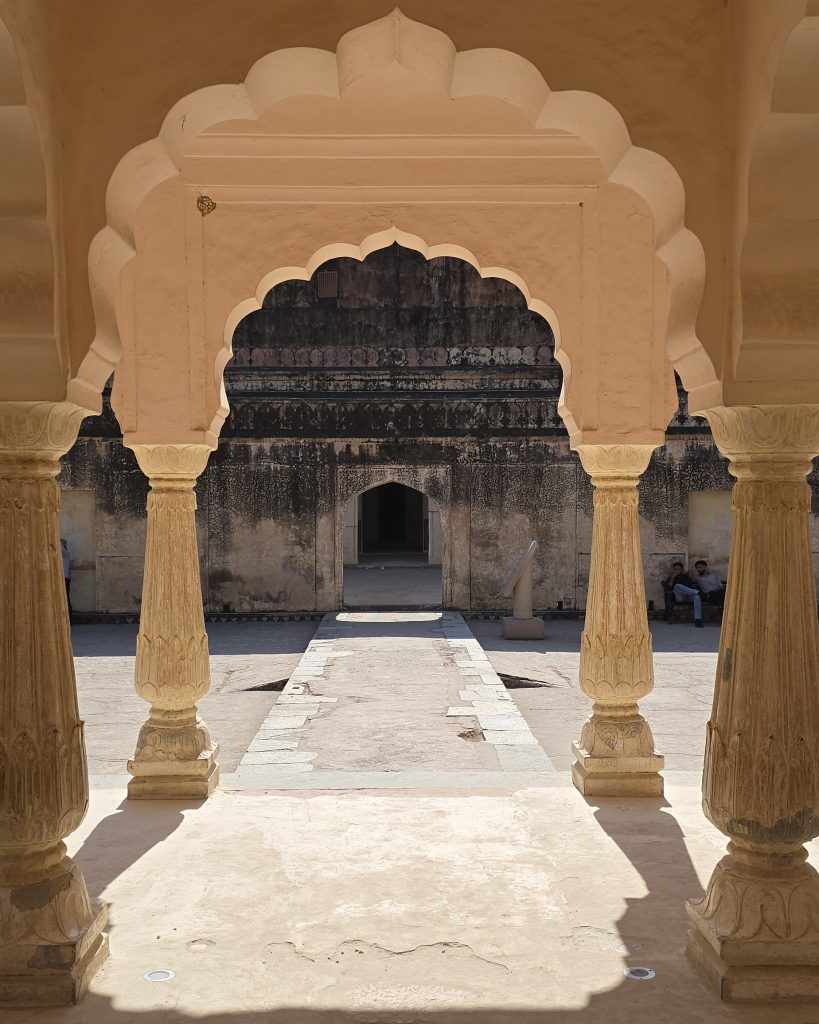
Deeper inside the fort, the architecture shifts from spectacle to something quieter and more confident. Arch opens through arch to reveal another courtyard beyond, and the geometry is so clean and patient that it feels less like a building and more like an extended thought that someone had across several centuries and never saw fit to rush.
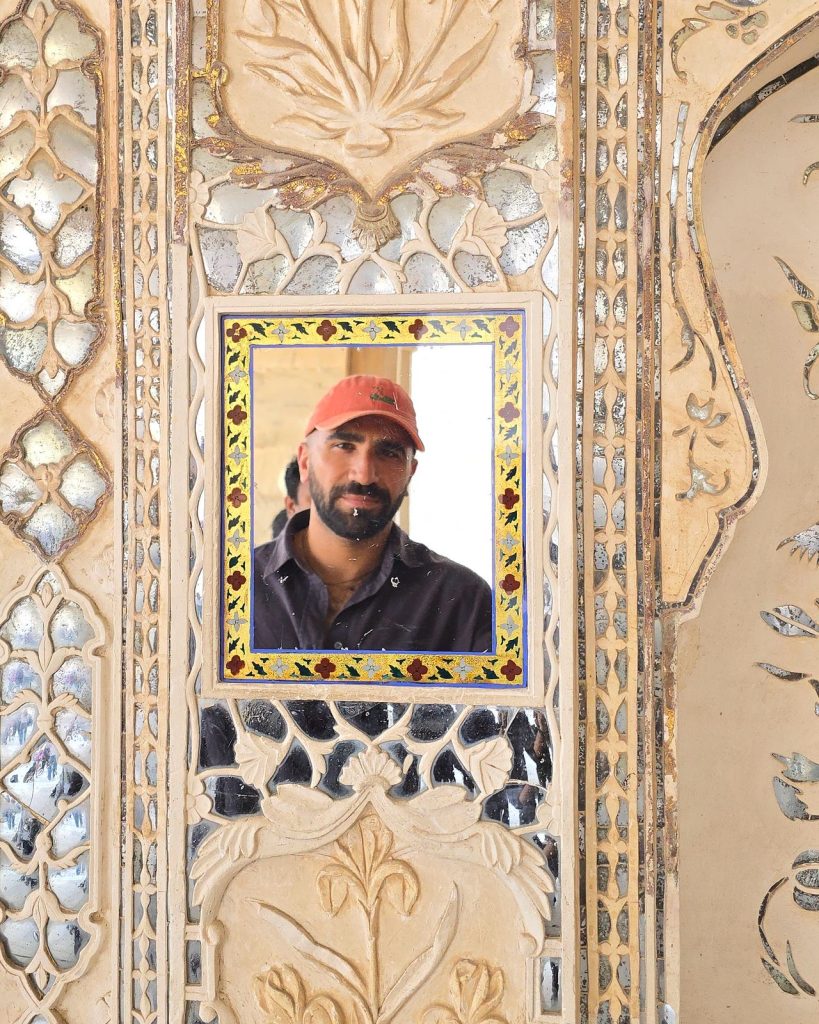
Inside the Sheesh Mahal, every surface is covered in thousands of convex glass fragments set into intricate plasterwork, and the effect even in ordinary light is overwhelming. The craftsmen who built it did not build it for a photograph. They built it so that a single candle lit inside would appear as a thousand, so that one person standing there would feel, for a moment, like the entire universe was reflected back at them. Standing there centuries later, framed in gold and plaster, I can confirm: it still works.
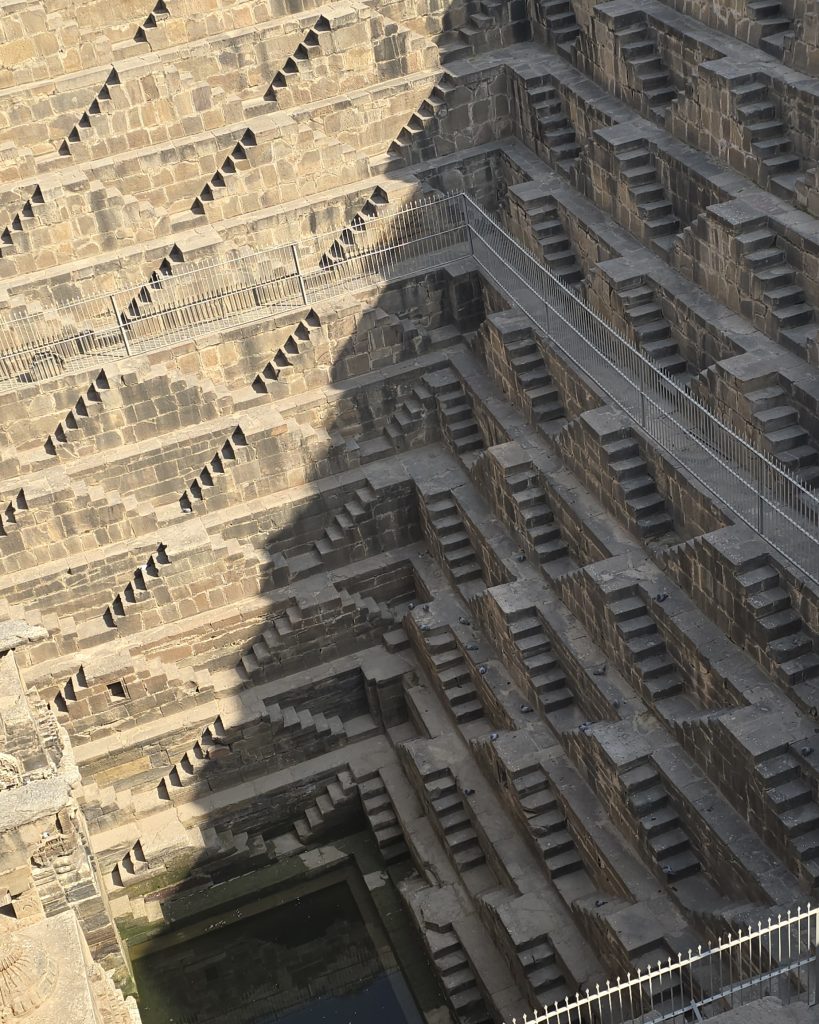
Then there is Chand Baori, which is either the most beautiful piece of engineering I have ever stood inside, or the most beautiful piece of art, and possibly both. Thirteen levels of steps descend into the earth in perfect geometric symmetry, and the effect is something between a dream and a mathematical proof. The craftsmen who built this in the eighth century had no brief beyond water and survival, and yet they decided that utility and beauty were not mutually exclusive. That decision is perhaps the most Jaipur thing about Jaipur.
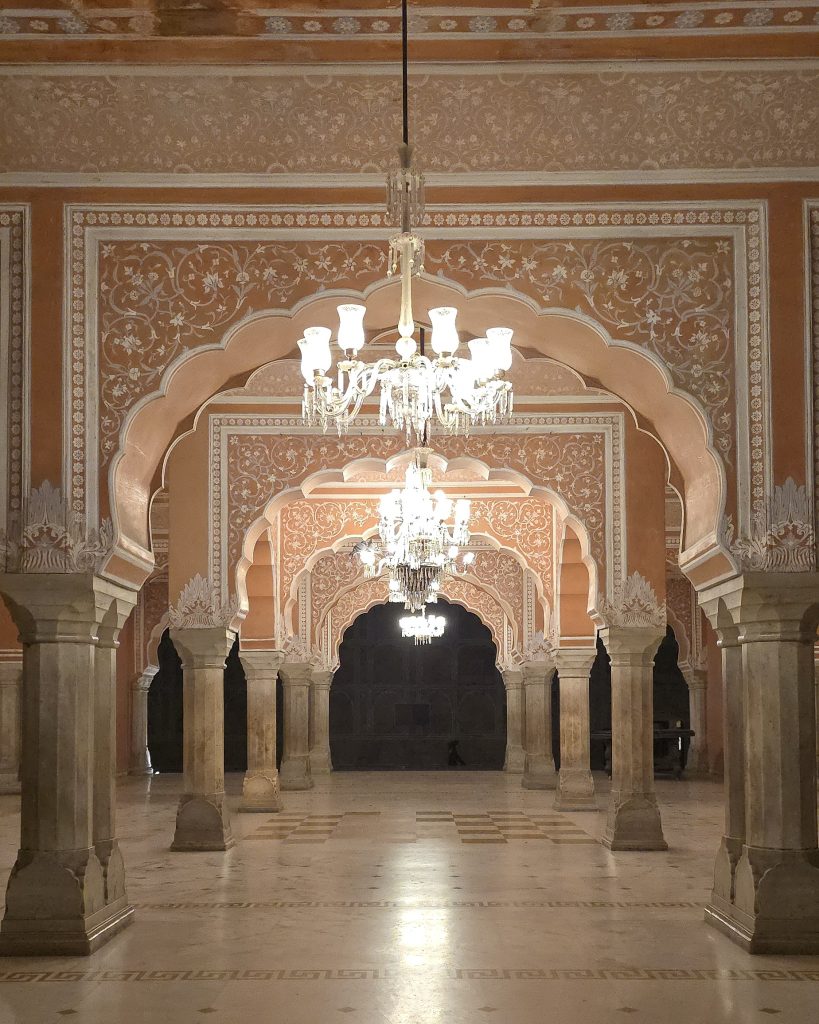
The City Palace does not ease you in either. Crystal chandeliers recede into the distance through arch after arch of painted pink stone, each one framing the next in a composition that feels less like architecture and more like an argument about infinity. Three centuries of footsteps have worn these marble floors to a polish that no contemporary hand has replicated, because it comes from years and use rather than intention, which is the deepest kind of beauty.
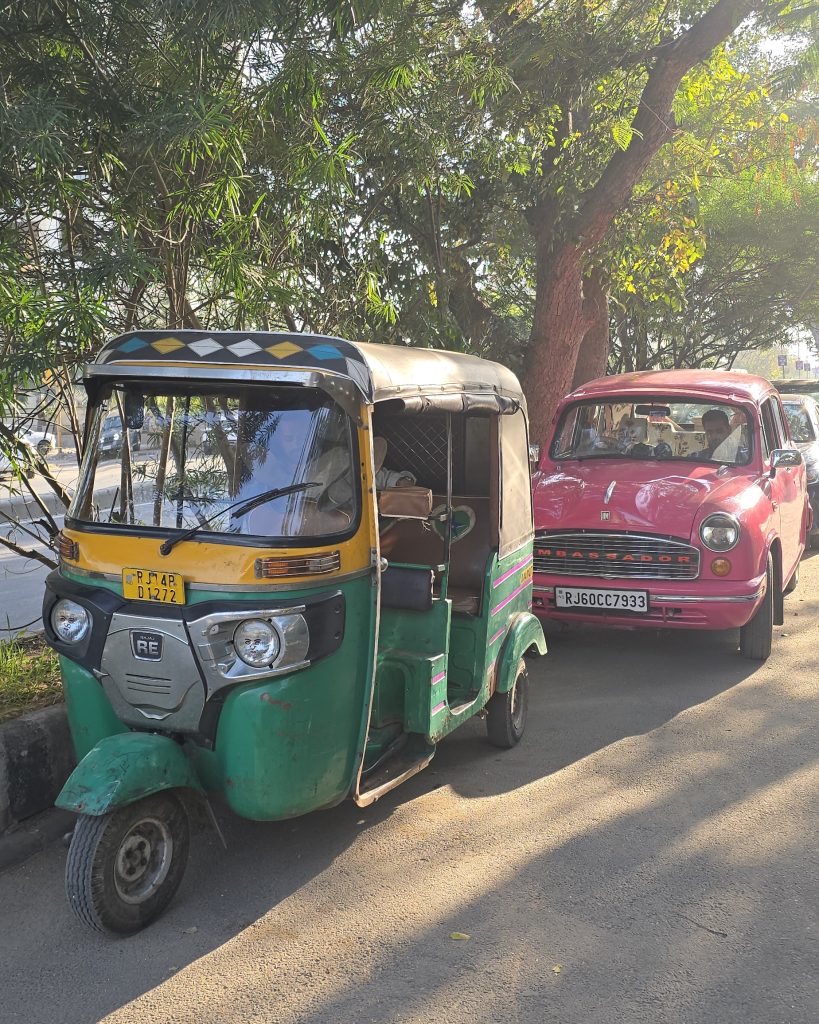
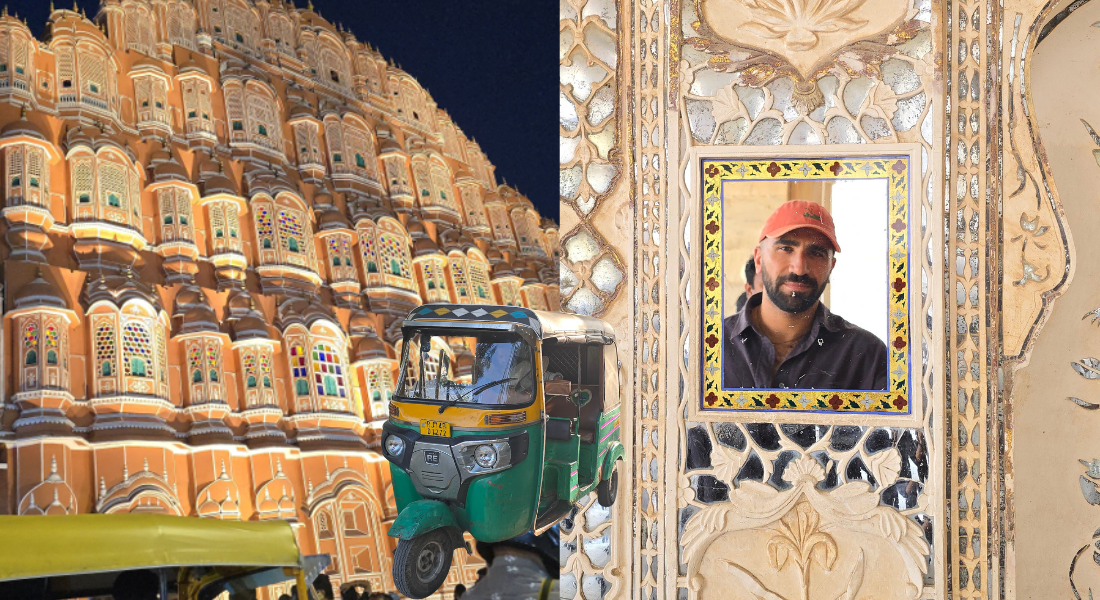
Your roads should not work. A green tuk-tuk, a cherry-red Ambassador, a motorcycle loaded with cargo twice its own weight, all negotiating the same lane with the casual fluency of an orchestra that has never once rehearsed together and yet never misses its cue. I have driven in cities that call themselves organized and felt far less safe. Your chaos, Jaipur, operates on a logic that cannot be taught, only trusted.

Your relationship with heritage is not sentimental, Jaipur. It is practical. The royal family’s vintage car collection sits behind the City Palace the way a great library sits behind a reader: not for display but for the daily confirmation that the past is not somewhere else but still here, still functioning, still relevant to the present tense. A Cartier rally badge on a pre-war grille says everything about a city that has always understood that refinement is not a phase but a disposition.
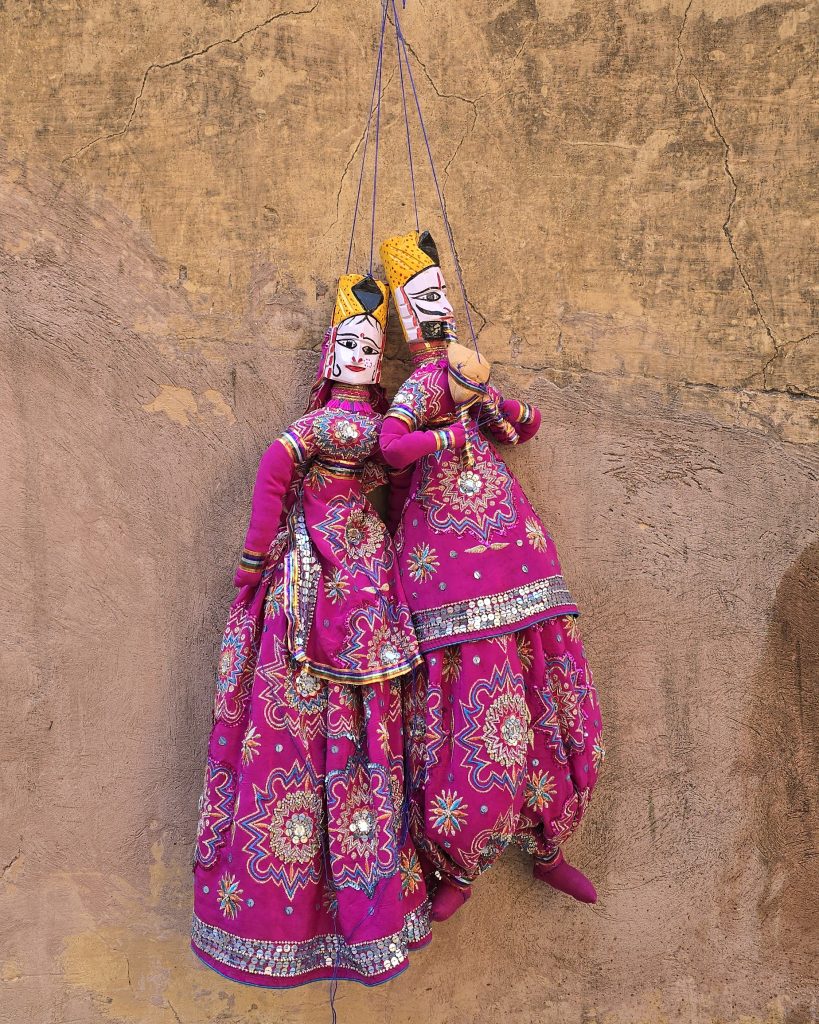
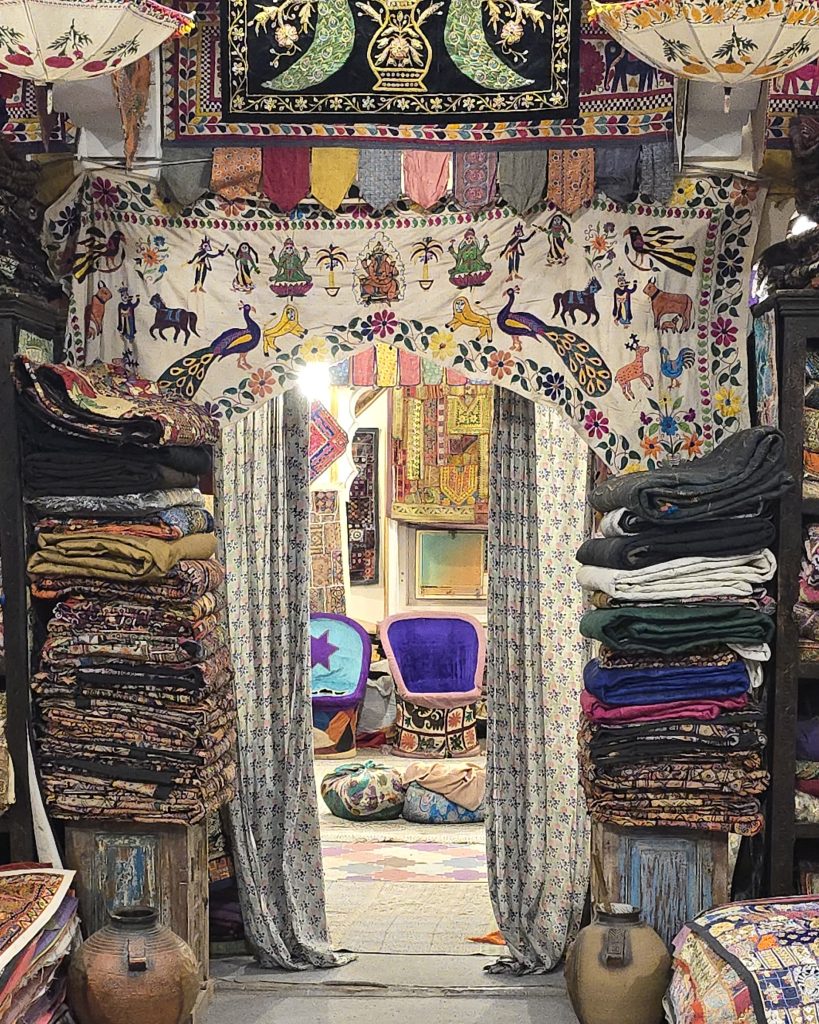
In your bazaars, the craft tradition is not performed for your benefit, it simply exists, as it always has. Two Rajasthani puppets hang against an ochre wall, their magenta skirts embroidered with a precision that no machine has replicated, their painted faces carrying the same expression that artisans here have been making for generations. Jaipur does not preserve its craft in museums. It hangs it on walls and sells it in corners and wears it into the street.
Your food deserves its own letter. I dined at tables that earned Michelin recognition and at corners of the city with no sign above the door, and I ate under your open skies with stars above me that felt close enough to touch. The smoked aubergine arrived as simply as a poem and hit as hard as one. The dal makhani had clearly spent the better part of a day becoming itself. Rajasthani cuisine knows exactly what it is, and what it is, is magnificent.
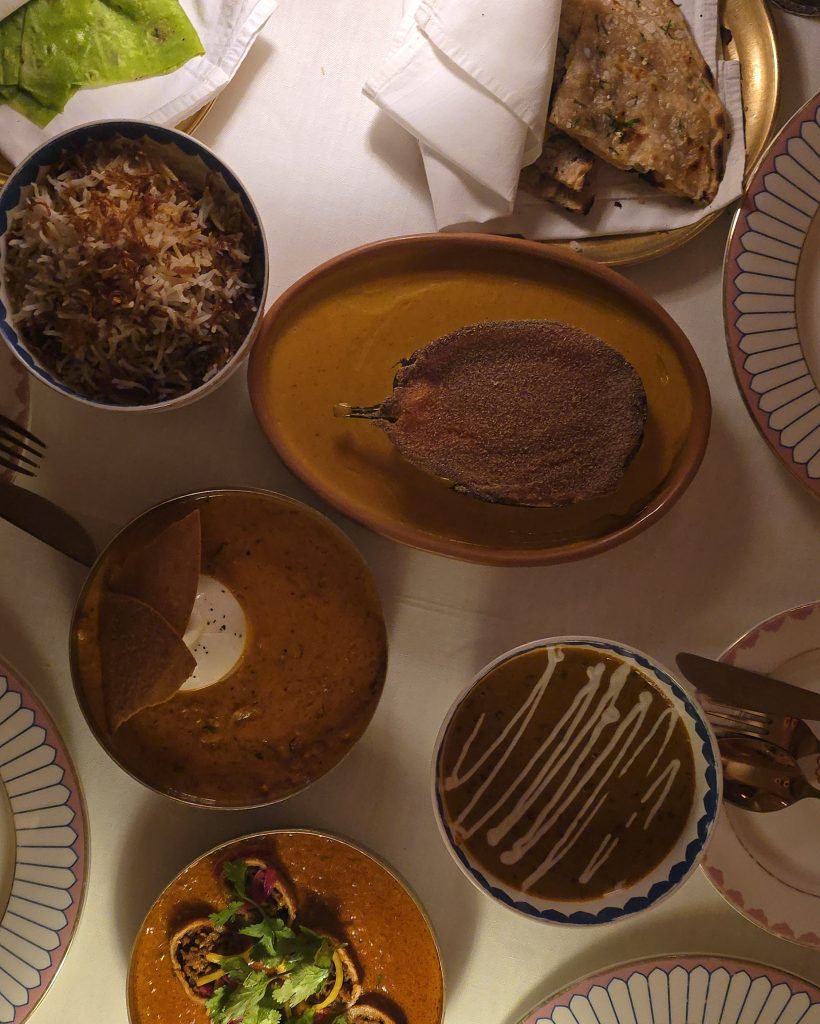
What you do and do better than almost any city I have visited, is refused to separate these things from each other. The craft is in the architecture, and the architecture is in the food and the food is in the ritual and the ritual is in the music and the music is in the street.
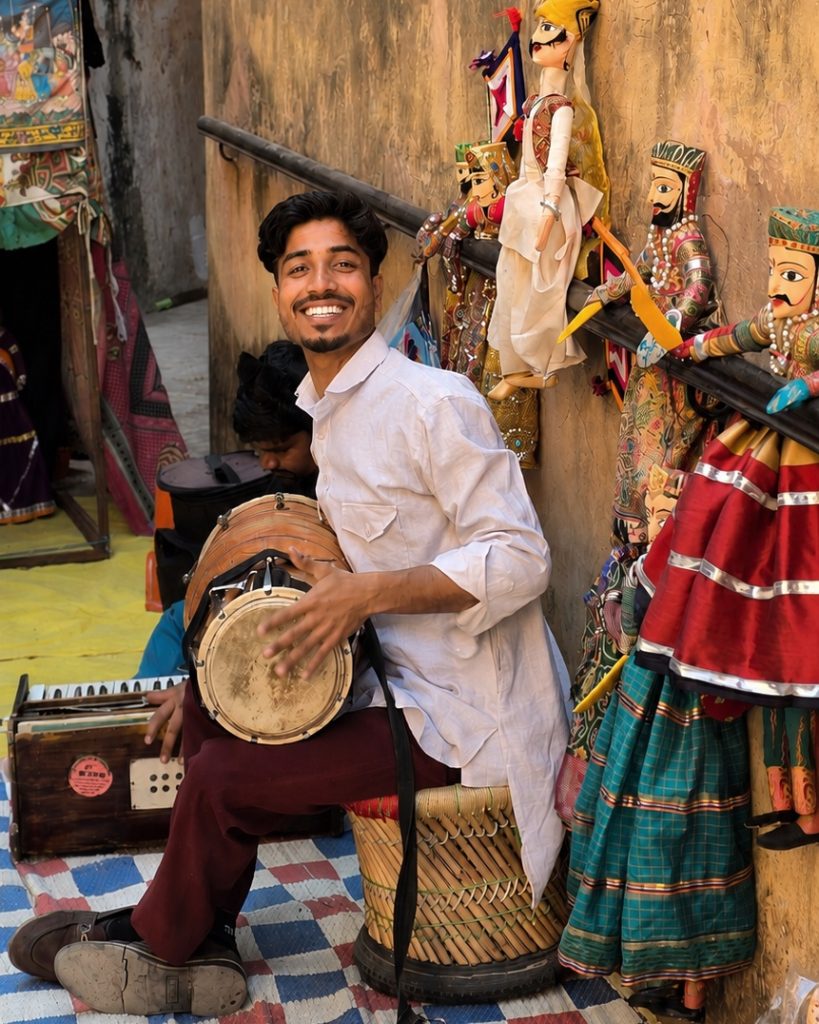
Every sense is working at once, and nothing feels accidental. I have been to cities that are beautiful and cities that are stimulating and cities that are culturally rich, but Jaipur is the rare place where all of these things arrive simultaneously, like a symphony where every instrument enters at exactly the right moment and nothing is ever louder than the whole.

At the Gem Palace, I touched jewelry designed for royalty and celebrities, pieces so extraordinary in their craft that they belonged as much in a museum as on a neck or a wrist. Cascades of pearl strands, uncut diamonds, polished rubies, pieces that Maharajas commissioned and Maharanis wore, all available to touch and try, framed by a painted Mughal arch that makes the entire experience feel less like shopping and more like stepping briefly into another century.
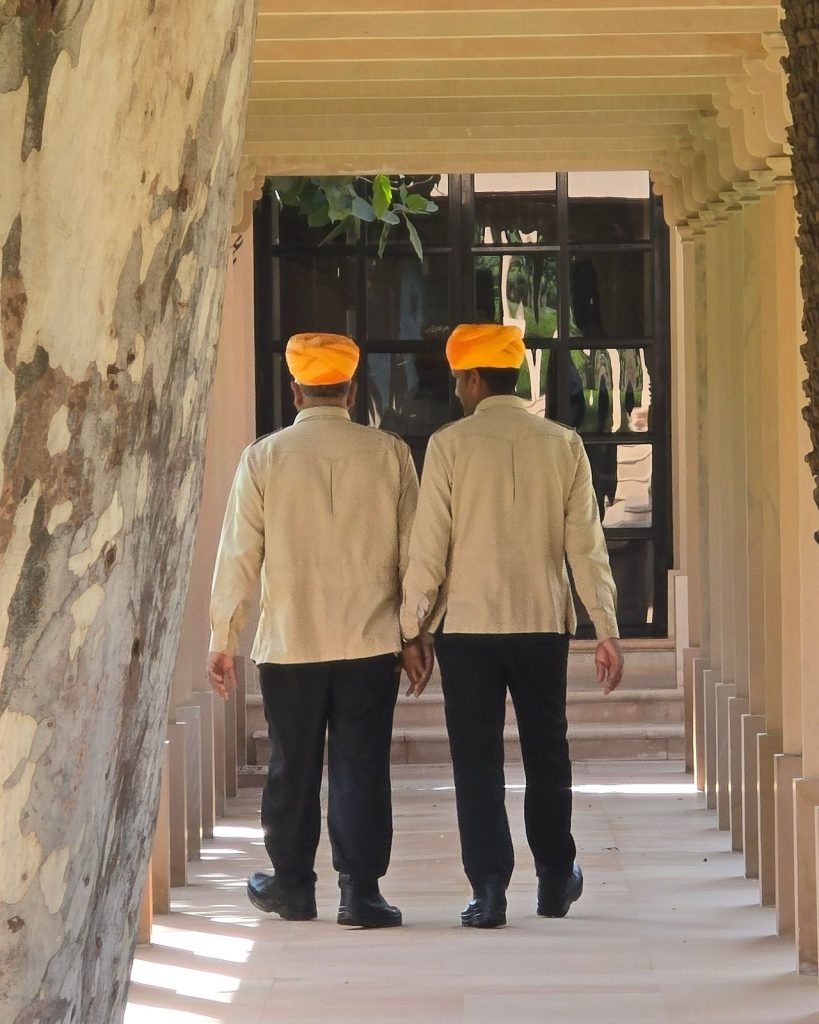
What stayed with me most across those seventy-two hours was not the architecture, though that came quickly enough. It was your people, Jaipur, in the bazaars and the streets and the corners where nobody performs for an audience. They greeted you not as a transaction but as a genuine encounter, with both hands pressed together and a warmth that did not feel rehearsed. Your hospitality has not yet learned to make a business of itself, and in a world that has commodified almost everything, that distinction is worth the journey alone.
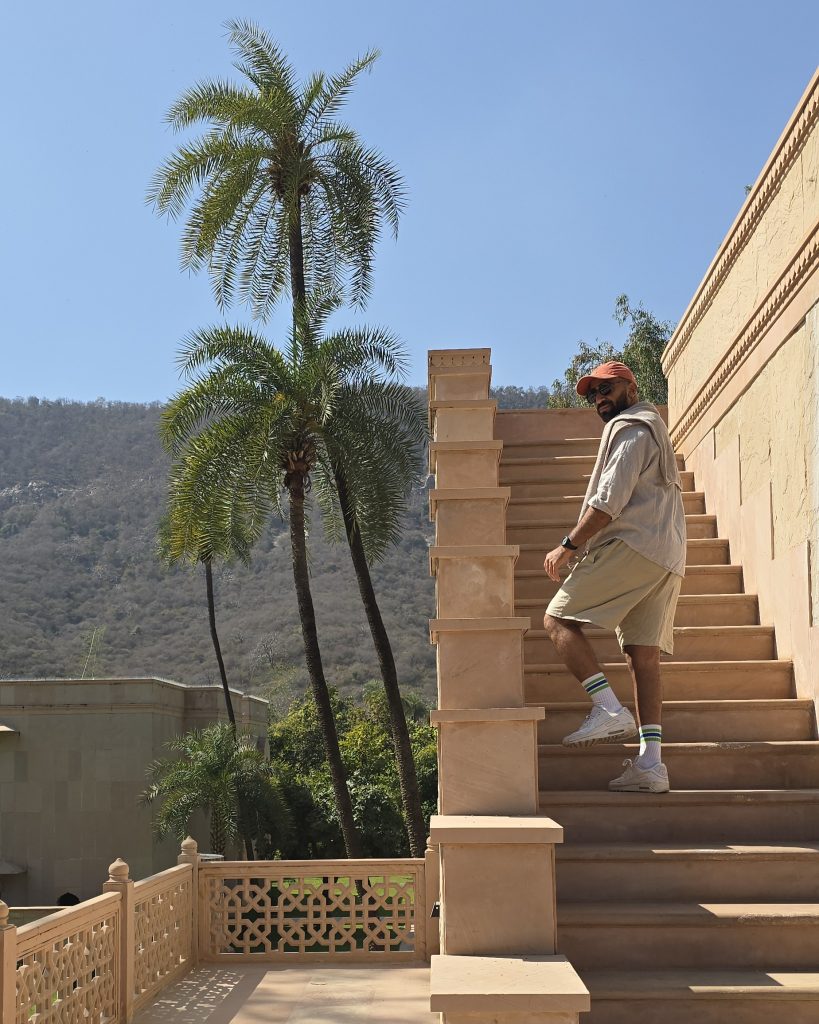
Seventy-two hours is not enough. I knew this before I left Dubai, and you confirmed it within the first few. But there is a specific kind of trip that does not need to be long to leave a permanent mark, the kind where a city gets inside you fast and simply stays. I left owing you more time than I gave, which is perhaps the best kind of debt a traveler can carry, because it comes with the absolute certainty of a return.
Yours,
Ahmed