


From Egypt’s royal court to Hollywood’s most famous collections, discover the Van Cleef & Arpels jewels whose remarkable stories have made them part of jewellery history.
The recent theft of Queen Nazli of Egypt’s historic Van Cleef & Arpels diamond necklace from Vienna’s Museum of Applied Arts has once again drawn attention to the Maison’s remarkable legacy and the extraordinary histories behind its most significant creations.
But beyond the headlines, the incident has brought attention to the Maison, whose jewels have travelled through royal courts and private collections for generations. We look back at some of Van Cleef & Arpels’ most extraordinary historic jewels and the stories behind them.
Queen Nazli’s Diamond Parure
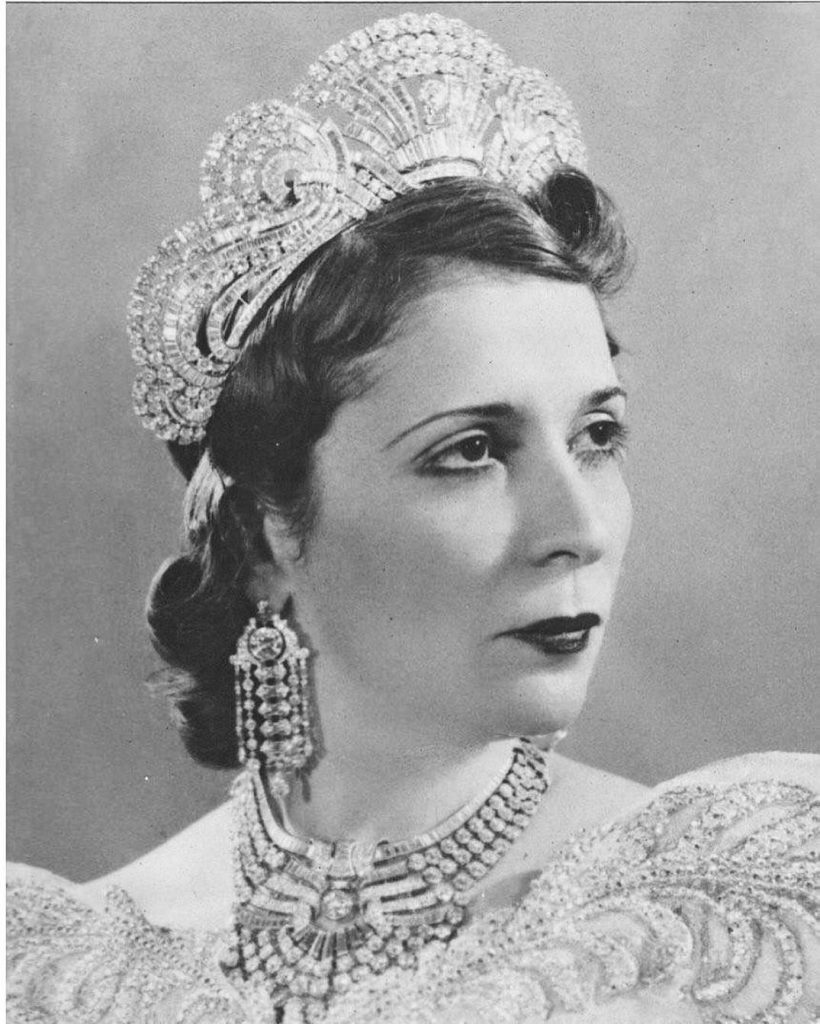
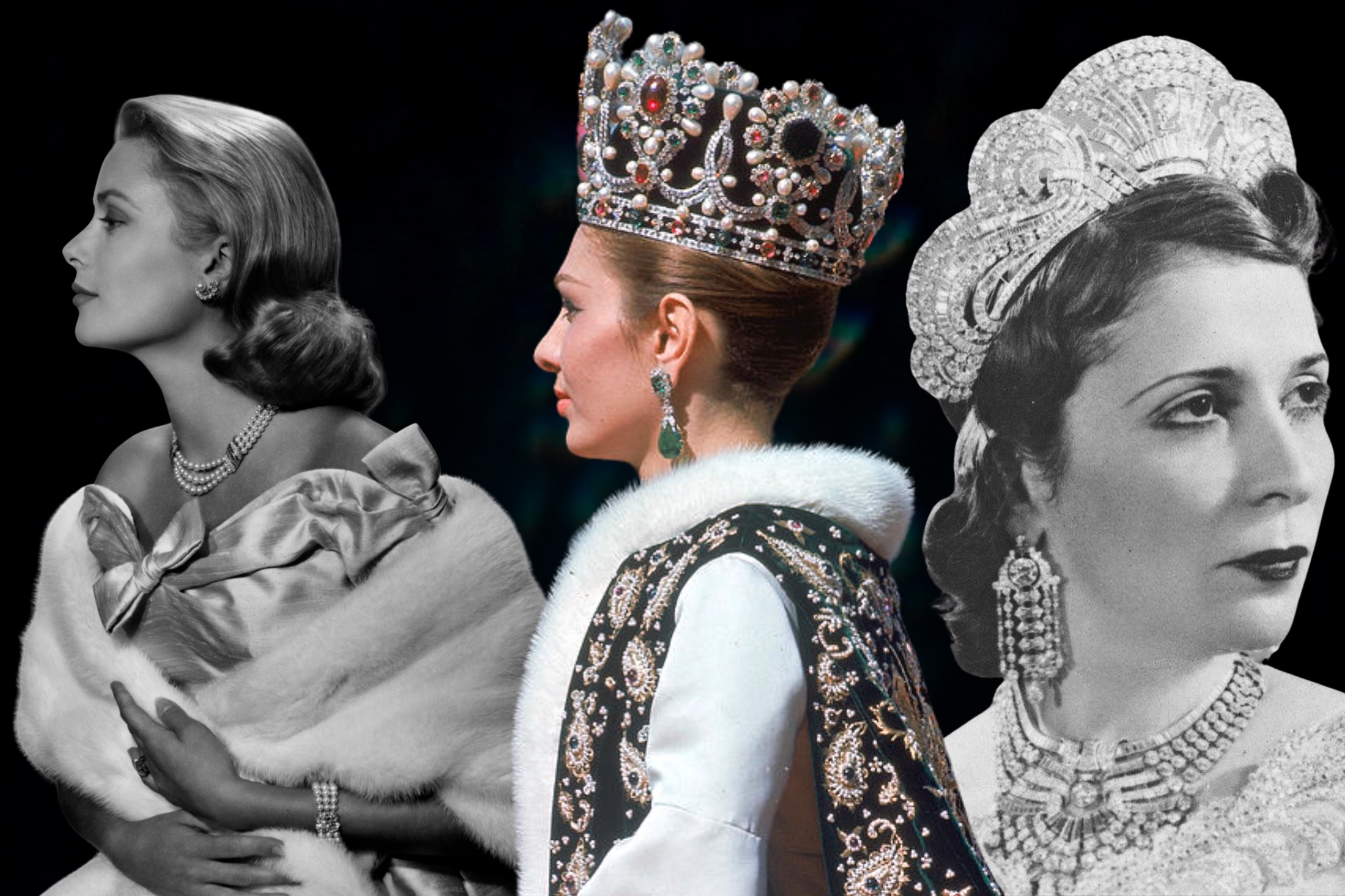
In 1939, Queen Nazli of Egypt commissioned Van Cleef & Arpels to create a diamond parure for the wedding of her daughter, Princess Fawzia, to the future Shah of Iran. The set included a spectacular tiara featuring more than 700 diamonds and a matching bib necklace set with around 600 diamonds. Both jewels reflected the geometric elegance of the Art Deco period, combining baguette-cut diamonds with rows of brilliant-cut stones.
In 1975, Queen Nazli was forced to auction much of her jewellery collection at Sotheby’s Parke Bernet in New York. The Van Cleef & Arpels tiara sold for $127,500, while the necklace achieved $140,000. The necklace resurfaced at auction in 2015, where it sold for more than $4 million.
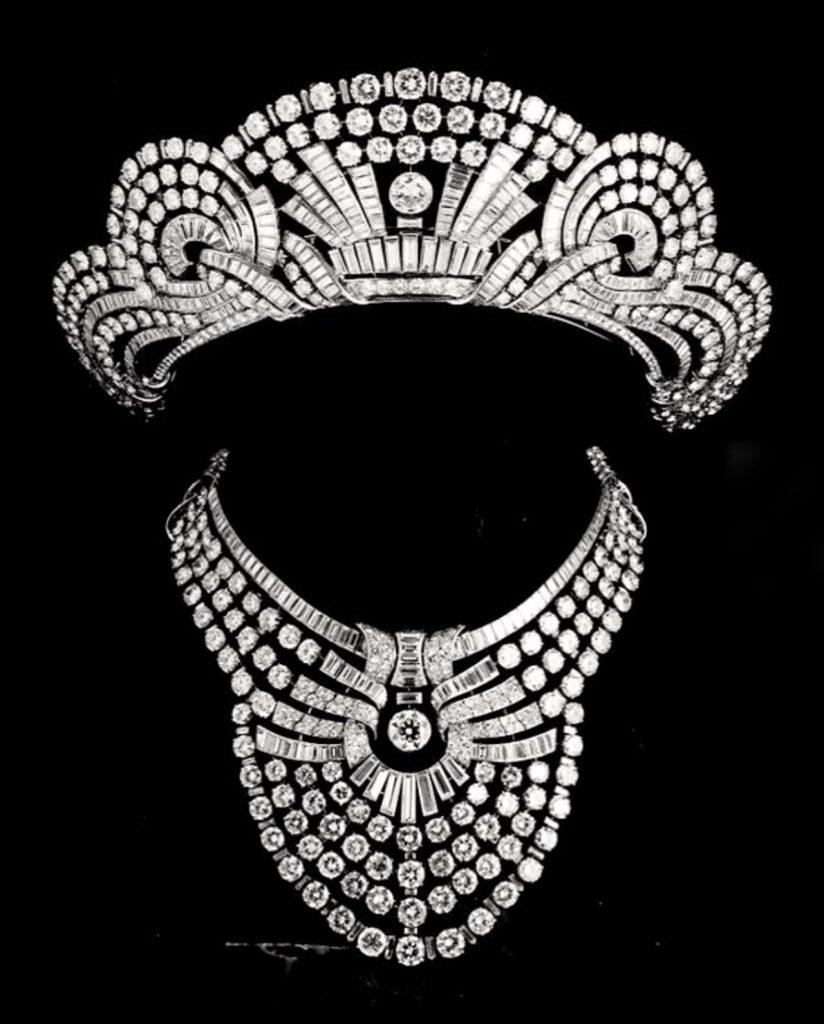
In August 2026, the historic necklace was stolen from Vienna’s Museum of Applied Arts, where it was displayed as part of the Van Cleef & Arpels Collection, leaving its fate unknown.
Princess Grace’s Pearl Parure
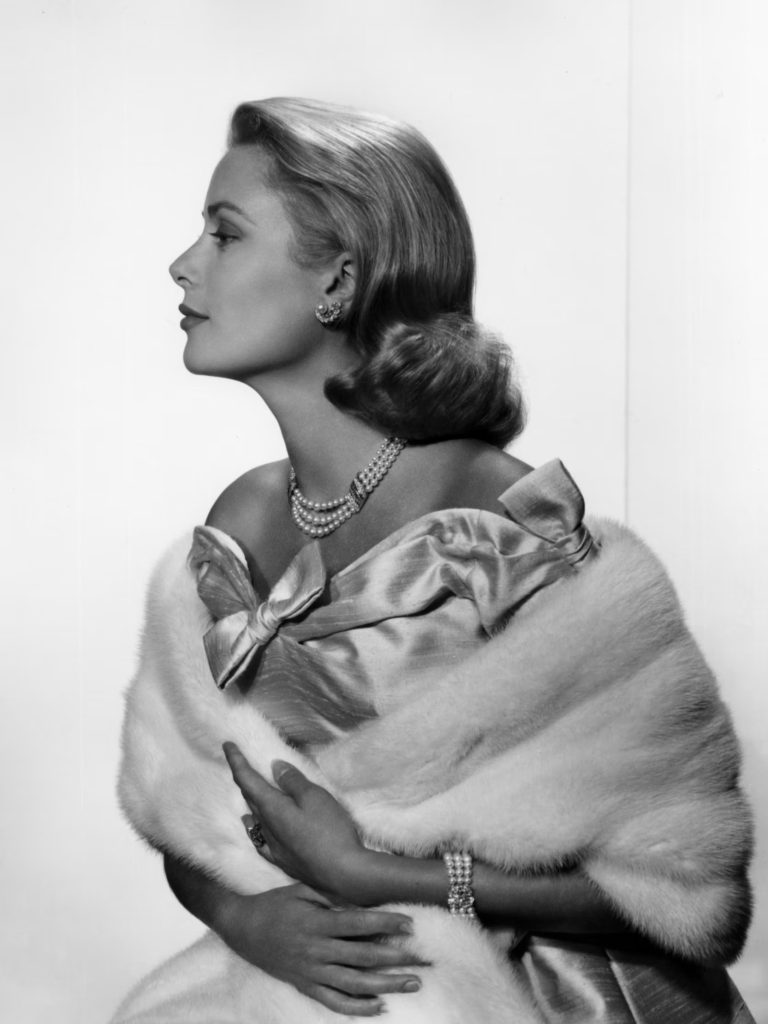
In 1956, Grace Kelly became Princess of Monaco when she married Prince Rainier III. To celebrate their union, the Prince visited Van Cleef & Arpels’ New York boutique, where Louis Arpels helped him select an elegant pearl parure for his bride.
The set included a three-strand pearl necklace with diamond scroll motifs, a matching three-strand bracelet with diamond blossom motifs, pearl earrings framed by baguette- and marquise-cut diamonds, and a diamond blossom ring centred on a pearl.
A few months later, Van Cleef & Arpels was appointed an official supplier to the Principality of Monaco. Princess Grace would go on to wear the pearl parure on numerous occasions throughout her life, making it one of the most recognisable jewels associated with her royal wardrobe.
Princess Faiza of Egypt Emerald Necklace
Princess Faiza of Egypt’s emerald necklace is a striking Art Deco collaret crafted in platinum, featuring 10 drop-shaped Colombian emeralds weighing 165 carats in total. Set with diamonds in varying shapes and sizes, the necklace was originally designed in 1929 and later modified in 1937.
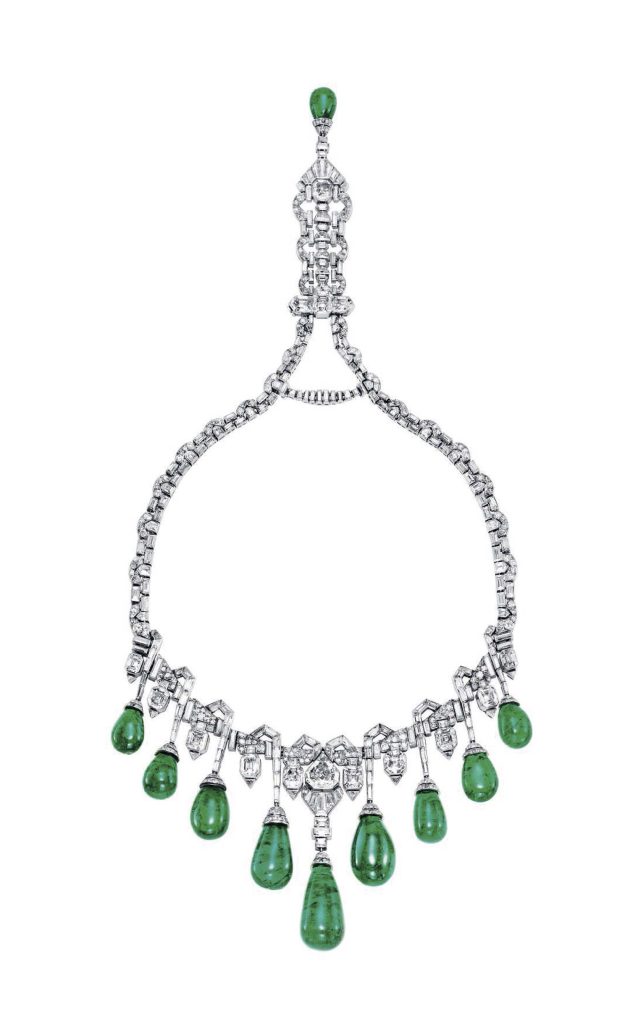
It was acquired for Princess Faiza in 1947 by a representative of the Egyptian royal court in France, adding to the historical significance of this exceptional Van Cleef & Arpels jewel.
In November 2013, Van Cleef & Arpels acquired the necklace at Christie’s Geneva for its Heritage Collection, bringing the historic jewel back to the Maison. Today, the necklace remains part of the Maison’s Heritage Collection and has been displayed in exhibitions and museums around the world.
Empress Farah Coronation Tiara
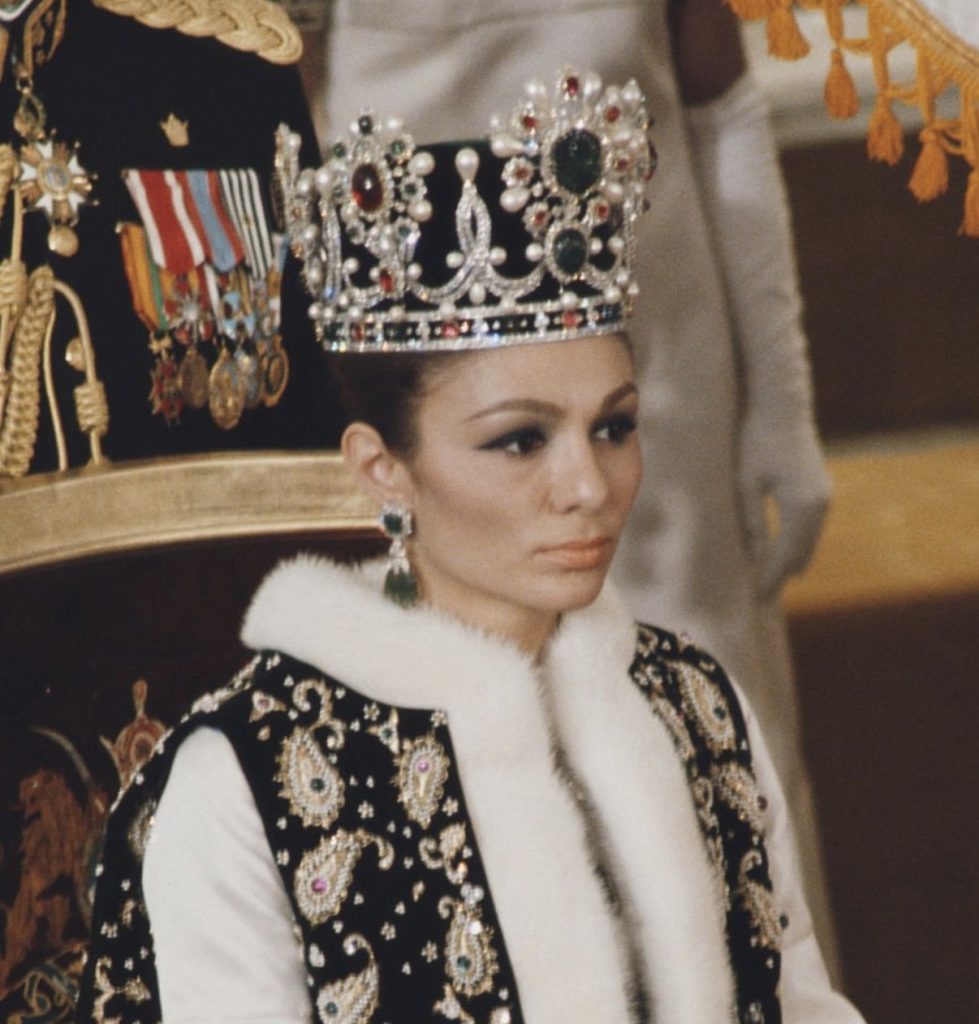
In 1966, Van Cleef & Arpels was chosen to create the coronation jewels for Farah Pahlavi, Empress of Iran, ahead of her coronation the following year. The occasion marked a significant moment in Iranian history, as Farah became the country’s first empress.
Given the importance of the ceremony, the jewels had to meet an equally exceptional standard. In keeping with Iranian tradition, they were to be set with gemstones from the Iranian Crown Jewels, held in the royal vaults of the Central Bank of Iran.
Over six months, Pierre Arpels made 24 trips to Tehran to select the stones for the commission. The project was so closely tied to the country’s national treasures that Van Cleef & Arpels established a temporary workshop inside the Treasure Chamber, where a maison supervisor and designer worked alongside Arpels to create the pieces.
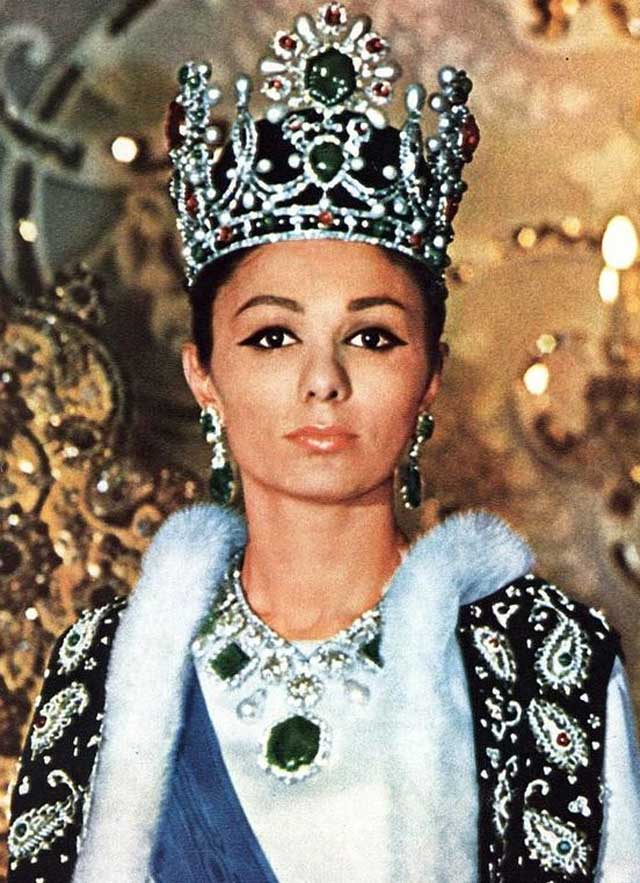
The crown worn by Empress Farah at her coronation is set with 36 emeralds, 36 spinels and rubies, 105 pearls and 1,469 diamonds. The complete parure also includes a pair of earrings featuring two emerald pendants, as well as a necklace centred on an engraved hexagonal emerald pendant. The necklace is further adorned with four emerald-cut emeralds, four pear-shaped pearls, 11 cushion-cut yellow diamonds and a selection of antique-cut diamonds.
Maharani Sita Devi of Baroda’s Hindu Necklace
In 1949, Her Highness Maharani Sita Devi of Baroda commissioned Van Cleef & Arpels to create an extraordinary fringe necklace using emeralds and diamonds she had received from Pratap Singh Rao Gaekwad. Completed in 1950, the jewel became known as the ‘Hindu Necklace’ and is distinguished by a cascade of 13 emerald drops weighing approximately 150 carats in total.
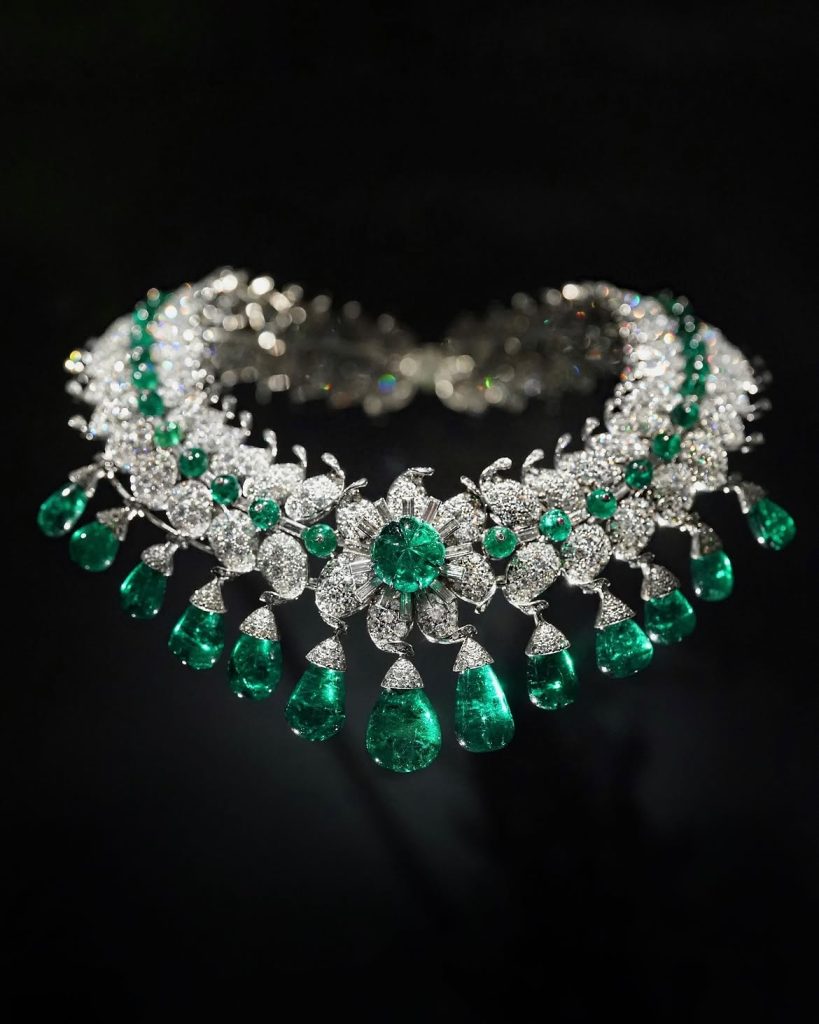
The design is composed of pavé-set diamond lotus leaves, accented with fluted emerald beads and graduated emerald drops. The result is a striking interpretation of Indian-inspired jewellery, combining the Maison’s craftsmanship with the rich colour and scale of the historic emeralds.
The necklace has appeared at auction twice, in 1974 and 2002, and is now part of the Van Cleef & Arpels Collection.
Princess Fawzia’s Parure
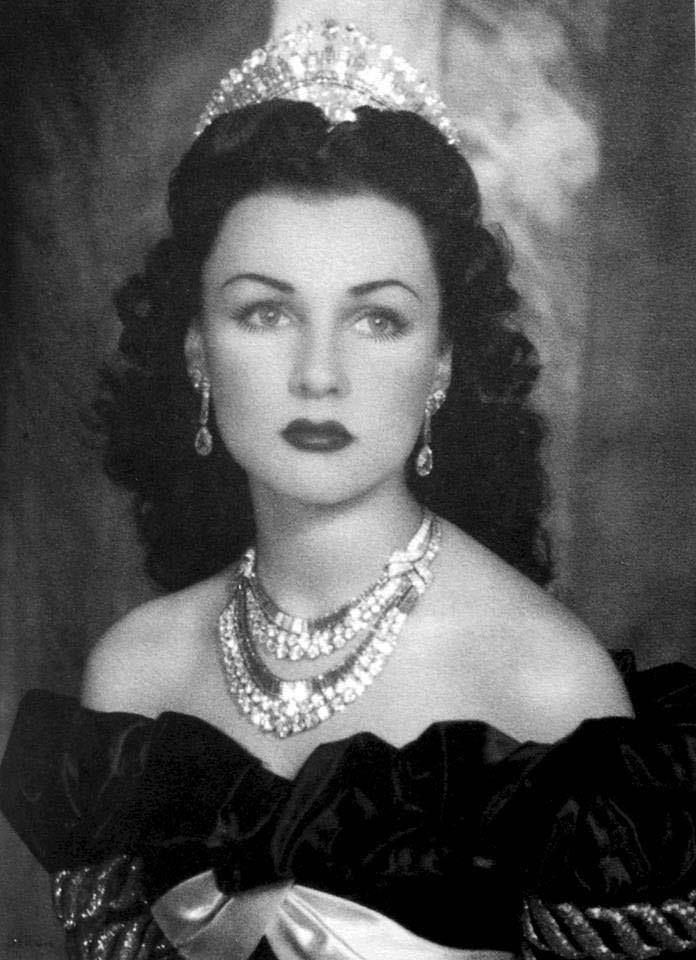
For the 1939 wedding of Princess Fawzia of Egypt to the future Shah of Iran, Van Cleef & Arpels created an extraordinary diamond bridal parure comprising a tiara, double-strand necklace, earrings and ring. Designed in platinum and diamonds, the set captured the streamlined elegance of the Art Deco period, with geometric forms allowing the stones to take centre stage.
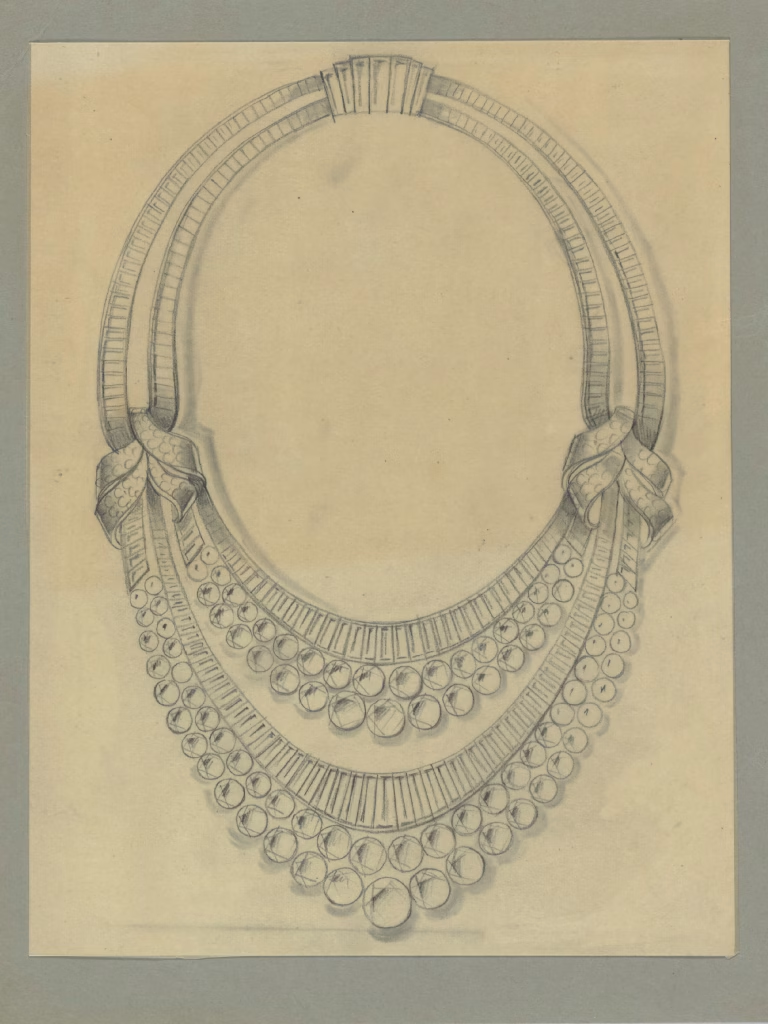
The tiara is the standout piece, set with 54 pear-shaped diamonds weighing 92 carats, alongside 530 baguette-cut diamonds totalling 72 carats. Together, the jewels formed one of the Maison’s most important royal commissions of the 1930s, created for a wedding that brought together the Egyptian and Iranian royal families. Since the Egyptian Revolution of 1952, no one has seen these fabulous jewels. The earrings, however, have since returned to the Van Cleef & Arpels Collection.
The Princess Shahnaz Pahlavi Emerald and Diamond Set
Princess Shahnaz, the Shah of Iran’s eldest child, wore an emerald and diamond set at the 1967 coronation. The jewels were splashed across international magazines throughout the 1960s, making her one of the most recognised royal figures of the time. The historic set was created by Van Cleef & Arpels and commissioned by Mohammad Reza Shah.
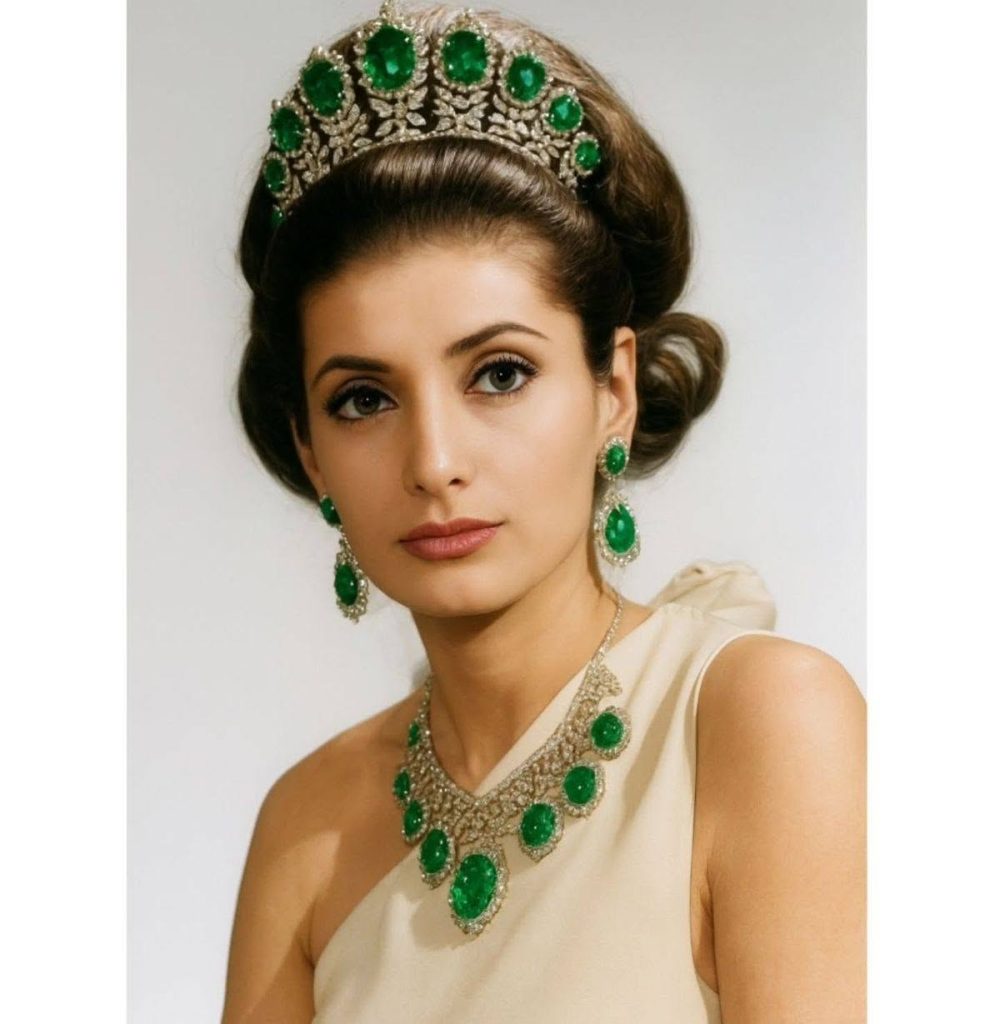
The design seamlessly fused ancient Persian heritage with the modernity of the 1960s. Van Cleef & Arpels incorporated historic cabochon-cut emeralds, many of which had been mined in Colombia centuries earlier and collected by past Iranian dynasties, into geometric arrangements of marquise- and hexagonal-cut diamonds.
The resulting parure comprises a tiara, matching necklace and ear pendants. The tiara is crowned with nine large emeralds, while the necklace features seven. The ear pendants are set with round and pear-shaped cabochon emeralds, completing the striking ensemble.
The Duchess of Windsor’s Zip necklace
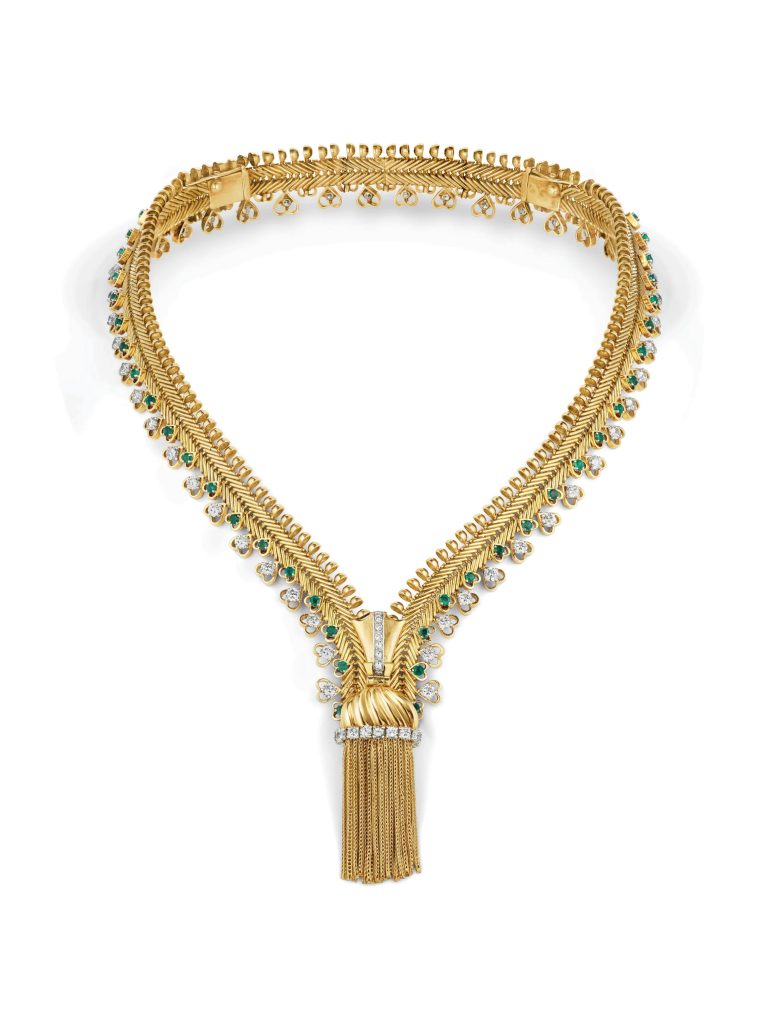
The Duchess of Windsor’s Zip necklace is one of Van Cleef & Arpels’ most innovative creations, originally conceived for Wallis Simpson. Made from articulated gold or platinum links joined by tiny hooks, the necklace features a gemstone-set tassel that allows the mechanism to slide smoothly open and closed. This ingenious construction allows the jewel to be worn either as a necklace or transformed into a bracelet.
The Begum Aga Khan’s Indian-Inspired Necklace
Created by Van Cleef & Arpels in 1971, this Indian-inspired necklace is a remarkable example of the Maison’s mastery of transformable jewellery and its fascination with Indian motifs.
Set in yellow gold, the jewel can be worn as a necklace or separated into two bracelets and a pendant clip. An ingenious mechanism allows its components to slide along gold rails, transforming the piece into different forms.
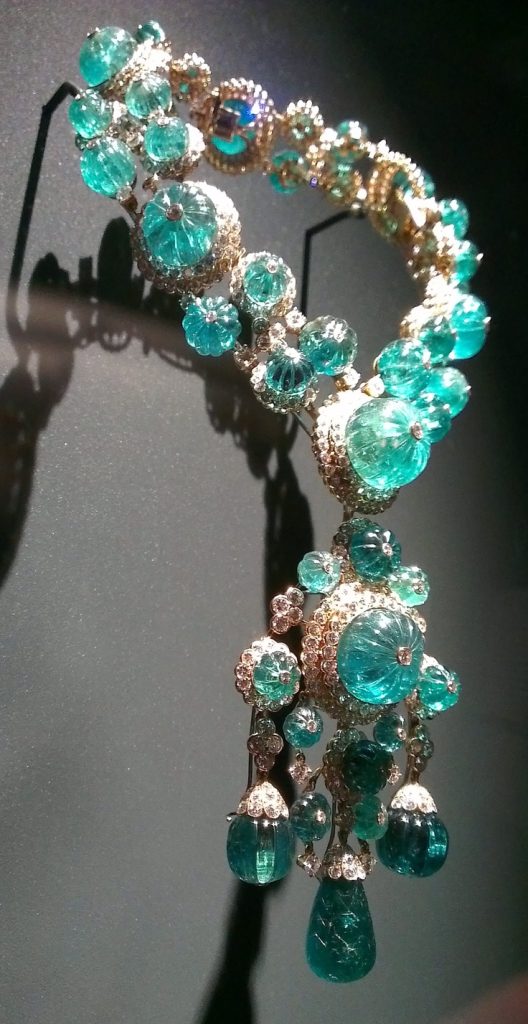
The necklace is set with 44 carved emeralds weighing 478 carats, illuminated by 745 diamonds totalling 52 carats. The emeralds feature rounded, fluted forms inspired by Indian jewellery, with diamond-set details creating stylised floral motifs.
The jewel was formerly part of the collection of Begum Salimah Aga Khan, a prominent society figure and passionate collector of art and jewellery. Today, it stands as a striking example of Van Cleef & Arpels’ interest in unusual gemstones, transformable design and the ancient art of glyptic.
By Sondos ElGebaly