


History
Many of the art forms we see around us emerged to meet a practical need which later transformed into a discipline. The story of Arabian weaves like Al Sadu is no different. In the deserts of the Arabian Peninsula, communities needed strong textiles that could be quickly folded, transported and stored in the shifting desert sands. This practical ingenuity gave rise to a weaving technique that not only served the purpose but also turned into a record of the local lives.
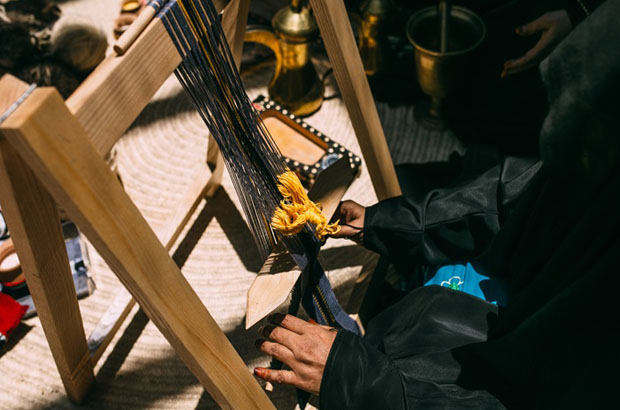
The craft, even though born as part of the wider desert culture, took to tribal tastes and even technical nuances per region. These textiles were not mere decorations or utility garments; they were part of the living environment of the desert homes. It represented the shared lives and identity of the people, bringing together women in workspaces, exchanging conversations and knowledge, defining the social fabric of the region and the times.

Materials and Technique
Al Sadu made use of materials that were readily available in the environment. Known for their strength and durability, sheep wool, goat hair, and camel hair were hand-spun and woven into textiles. Materials like pomegranate husk, onion skin, roots, stems and local plants imparted warm earthy shades to these textiles, enriching them with a visual depth that was tied closely to their environment.
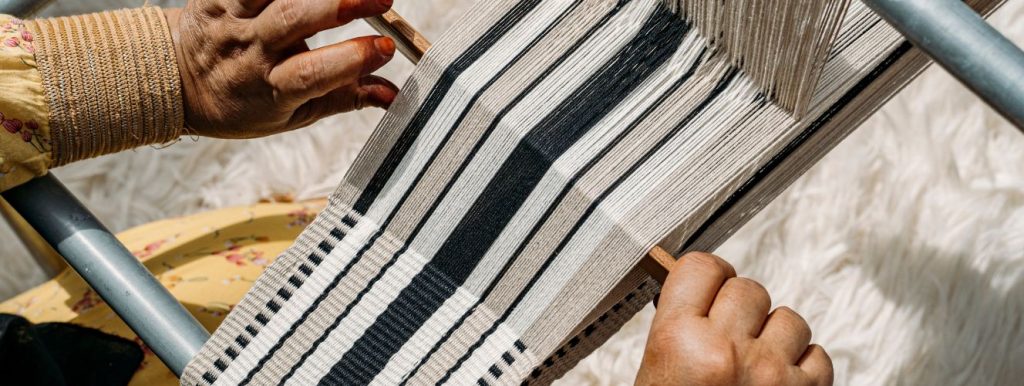
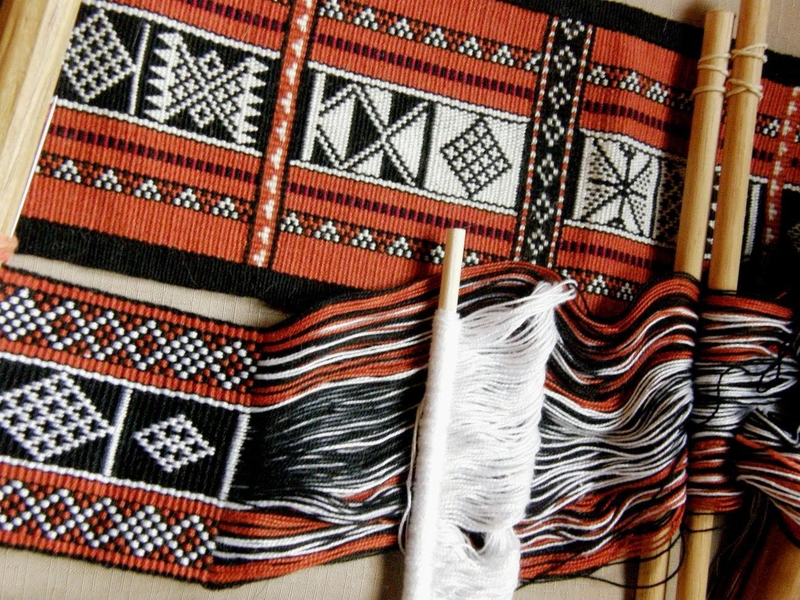
Woven on a horizontal ground loom with a warp-faced plain weave, the method created a strong surface that was versatile. Adorned with distinct stripes, triangles, dots, and other patterns formed using different threads and arrangements along with the use of vibrant colours, the textile comes together with great character and style.
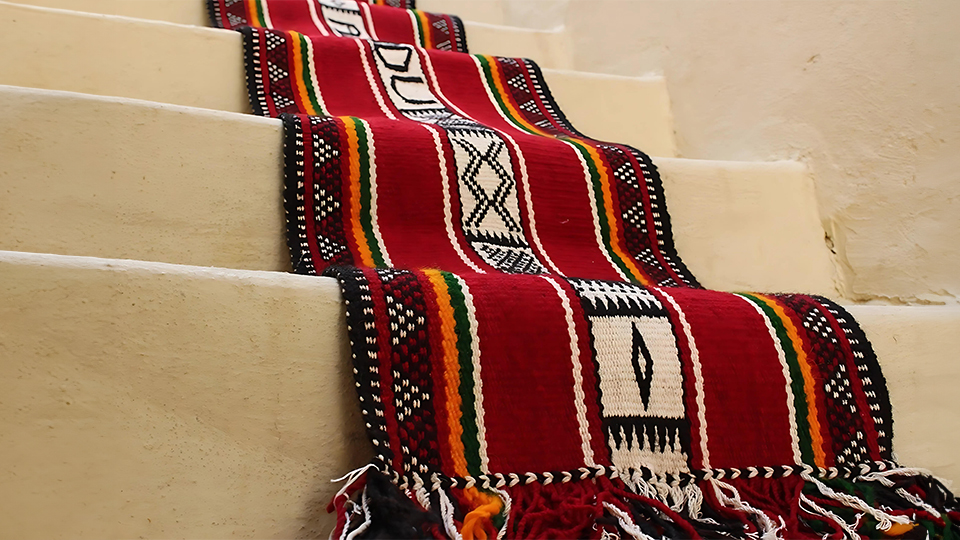
Renaissance and Incorporation Into Modern Spaces
Today, these traditions are experiencing a breathtaking renaissance guided by institutions dedicated to preserving cultural identities and rewarding artisans. Organisations like Qasr Al Hosn and the Fatema Bint Mohammed Initiative are leading these movements by reviving local traditions, empowering female artisans and communities through employment and livelihoods, and producing museum-quality handwoven tapestries that celebrate regional art. In 2011, UNESCO added the art form to its list of Intangible Cultural Heritage in Need of Urgent Safeguarding. Dubai Design Week has previously hosted workshops teaching the craft to modern connoisseurs to keep the culture alive in contemporary spaces.
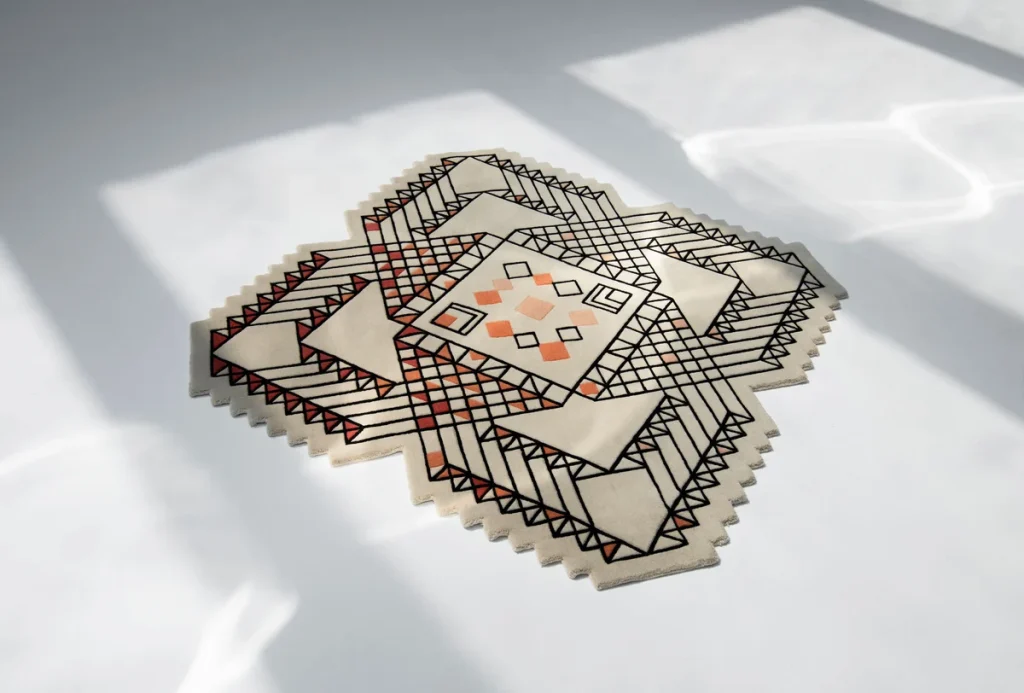
Luxury lifestyle designer Aljoud Lootah reinterprets Sadu’s sharp geometry into minimalist furniture and porcelain dinnerware, giving new life to the craft. By bridging ancient Bedouin heritage with modern luxury, Al Sadu demonstrates how nomadic craftsmanship can seamlessly inhabit high-end design.
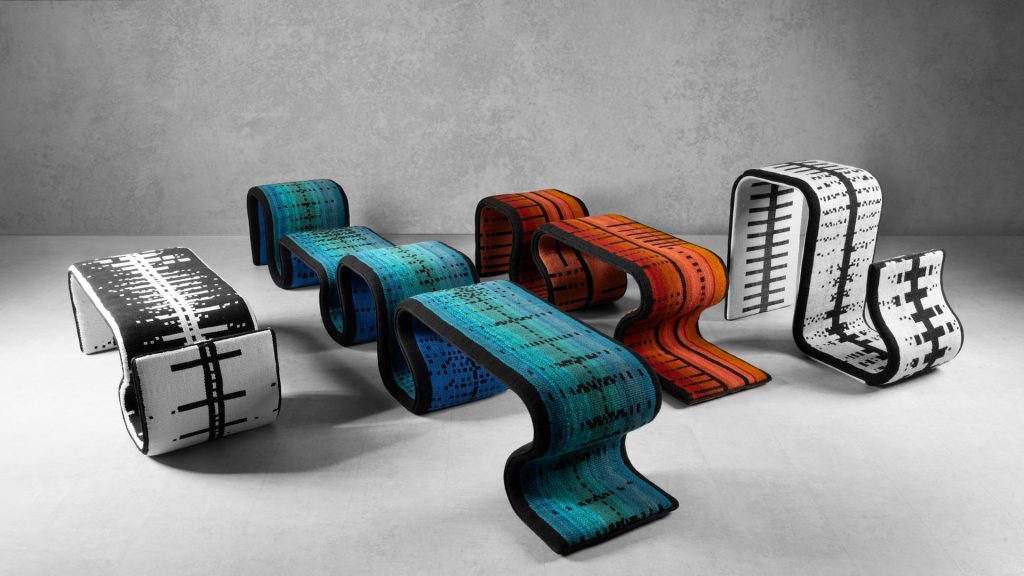
Lithuanian-born designer Loreta Bilinskaite-Monie created the Trihal collection in partnership with the Al Ghadeer Emirati Crafts, honouring the age-old traditions of Al Sadu. The Collection was presented at London Design Fair in 2023.