


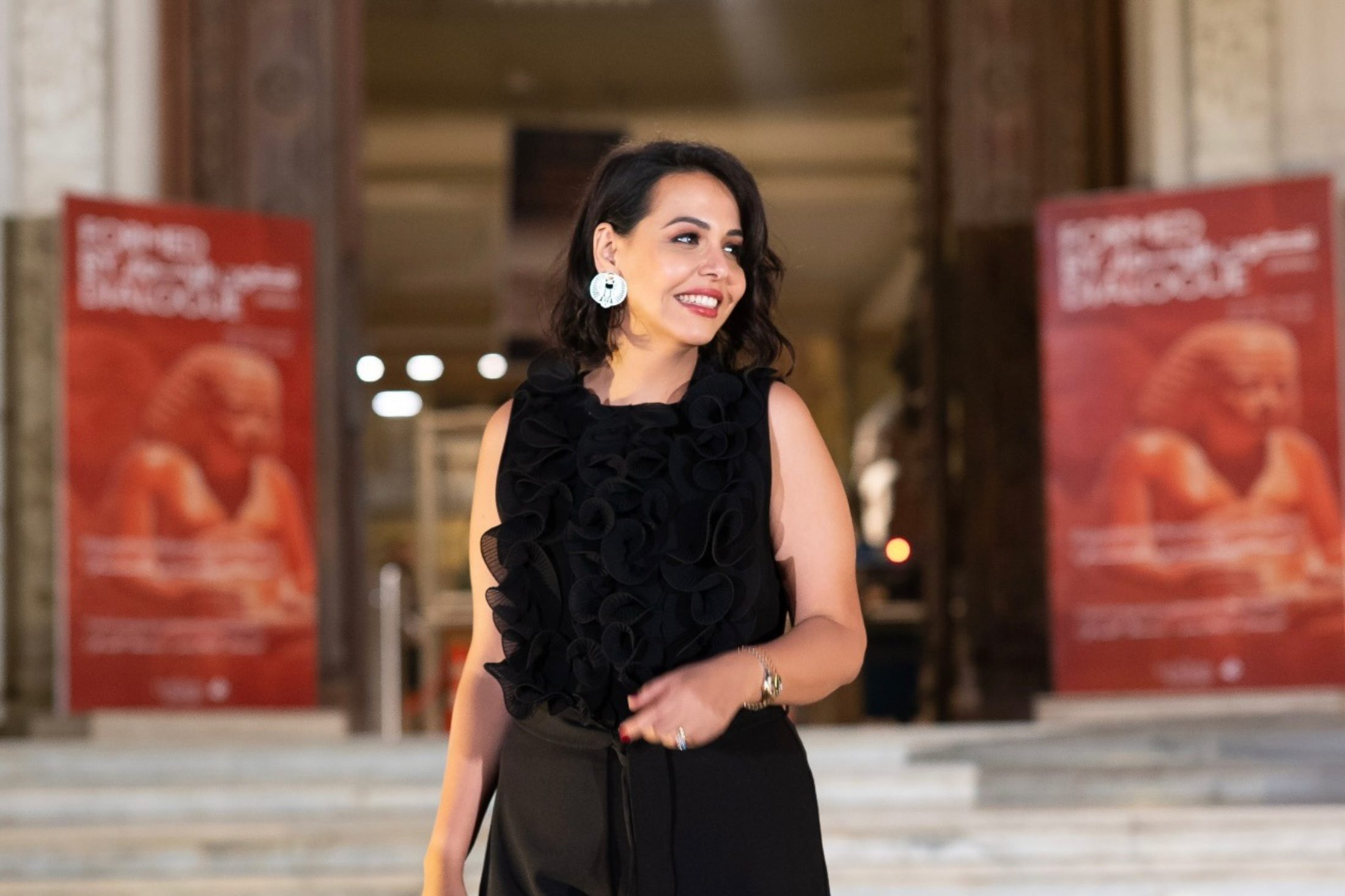
By Sondos ElGebaly
From the landscapes of AlUla to the architectural traditions of Oman, award-winning Egyptian designer Mai Wahdan has built a practice that moves between cultures, materials and disciplines. At Art D’Égypte’s Formed by Dialogue exhibition, she returns to her roots with two collectible furniture pieces that explore the enduring legacy of Tura limestone.
At the second edition of Art D’Égypte’s Formed by Dialogue, award-winning Egyptian designer Mai Wahdan, co-founder of Luxentti Design House and founder of KŪN, joins 16 other designers at the Egyptian Museum in Cairo, exhibiting her designs.
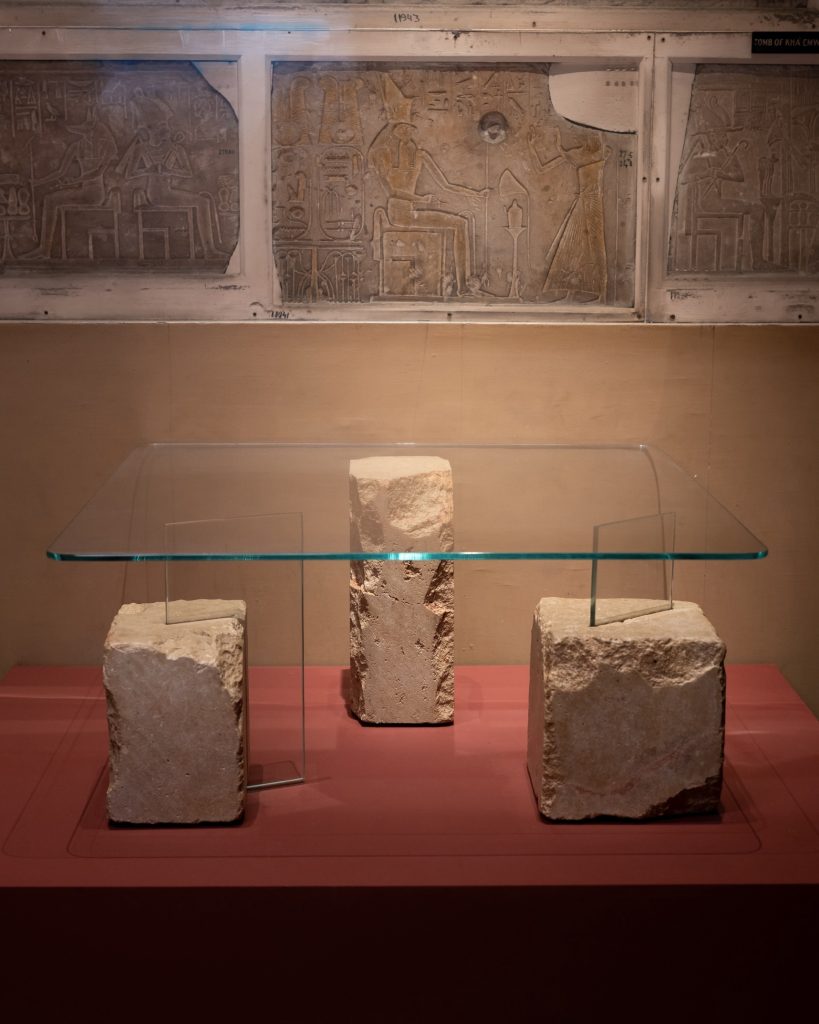
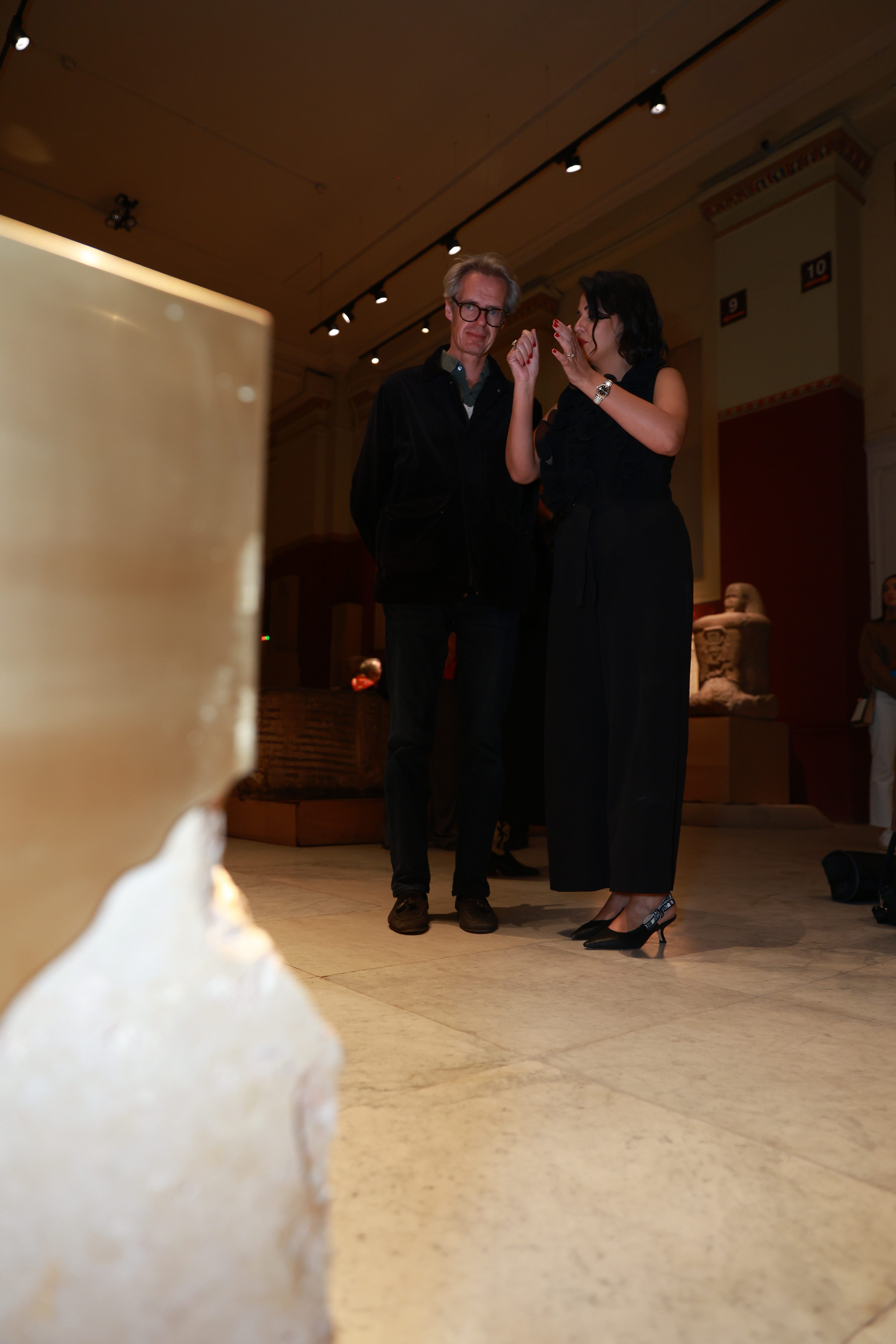
The exhibition features two pieces, the Tura Table and Serr, both inspired by Tura limestone, the stone historically used for the outer casing of Egypt’s pyramids. Her Tura limestone table, first shown in Italy, makes its debut in Egypt at the country’s first national museum, marking the public debut of Mai’s collectible design brand, KŪN.
A Conversation with Designer Mai Wahdan
What does being part of this year’s exhibition mean to you, and how did you feel when you were invited to participate?
Being part of Formed by Dialogue means a great deal to me. The Tura Table was first shown in Italy, but this is the first time it is being exhibited in Egypt, and its Egyptian debut is taking place at the Egyptian Museum. That was huge for me. It is also the public debut of KŪN, my collectible design brand. When Art D’Égypte invited me, I was so excited. It is not easy to get the opportunity to show your work at the Egyptian Museum.
Your work draws on Tura limestone, a material deeply embedded in Egypt’s architectural history. What inspired the pieces you are presenting, and what story would you like visitors to take away?
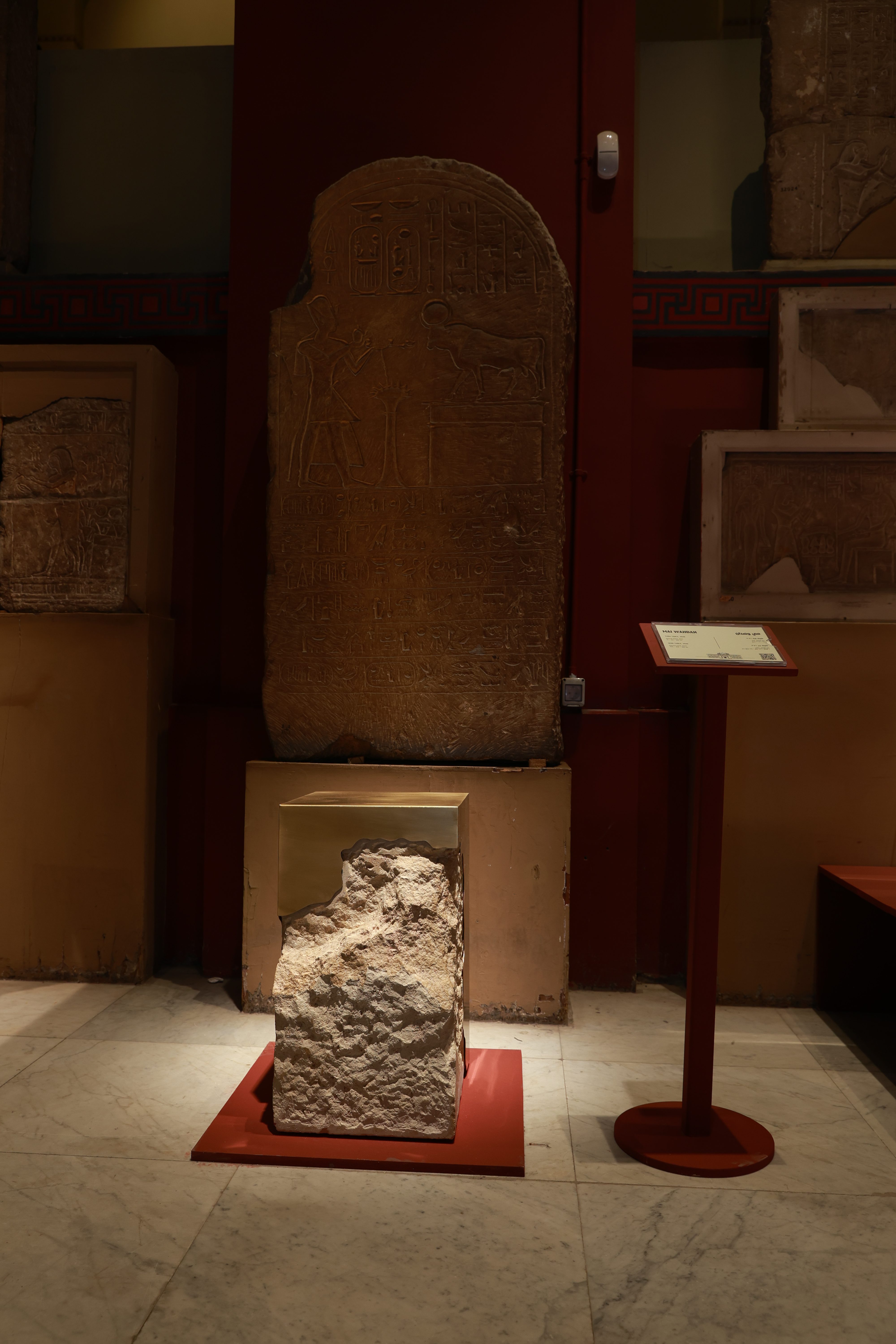
Both pieces begin with Tura limestone, the stone ancient Egyptians chose for the outer casing of the pyramids. The Tura Table is made of hand-fractured limestone blocks, with glass passing through them and held in place without glue. Serr is a side table where the stone breaks open to reveal brass, almost like a treasure it has kept hidden for a very long time.
The story I would like people to take away is simple: nature shaped the material, and the human hand shaped the monument. My work sits in the conversation between the two.
How does presenting your work in Egypt, surrounded by such an extraordinary history and cultural heritage, influence the way you see your own creative practice?
It makes you humble about time. Most furniture is designed to last ten or twenty years. In the museum, every object around my pieces has lasted thousands. That pushes me towards fewer and stronger decisions, honest materials, and nothing added just for decoration.
What was your first reaction when you saw the exhibition space and the setting for your work?
I was so happy. My pieces sit among ancient reliefs and carved stone, the same family of stone they are made from. It felt like the material had come back to where it belongs.
Is there a particular element of Egyptian culture, history or craftsmanship that continues to inspire you?
The way ancient Egyptians worked with stone: the precision, the patience, and the belief that what you make should outlast you. That craft is still alive today. My pieces were carved by hand by craftsmen in Cairo, and working with them reminded me that this knowledge never really left Egypt.
Looking back on your participation, what has been your most memorable moment?
Installation day. I had drawn the moment the glass slides into the stone so many times, and seeing it happen inside the museum was very emotional. Another moment I won’t forget was standing at the pyramids during Forever Is Now and seeing the original casing still in place at the top of Khafre’s pyramid. It is the same stone that is in my work.
When visitors encounter your pieces, what do you hope they will feel, discover or perhaps reconsider?
I hope they slow down. I want them to look closely at the fractures and the texture and to feel that something ancient can still live in a home today. If someone leaves thinking differently about a material they thought they already knew, that is enough for me.
Do you believe exhibitions such as Formed by Dialogue create meaningful opportunities for cultural exchange between artists and designers from different parts of the world?
Yes, very much. Formed by Dialogue brings Egyptian and international artists and designers into the same rooms, with heritage as common ground. The conversations that happen there are real. It also shows the world that Egypt has a strong contemporary design scene, not only a great past.
Looking ahead, what are you currently exploring creatively? Are there any upcoming projects or collaborations you can share with us?
I am working on two new pieces for KŪN: a mirror and a table, both bringing wood together with Tura limestone. They will be revealed soon.
If you could dream up your next creative project anywhere in the world, where would it be, and what would you love to create?
In front of the pyramids. Tura limestone once covered them, so showing pieces made from the same stone right there, under the open sky, would bring the story full circle.
If you had to describe your experience of exhibiting in Egypt in just one word, what would it be?
Homecoming.
Has this experience changed the way you think about your work or your creative journey?
Yes. As an interior designer, I usually design for a space and a client. This experience made me think about objects that outlive both. It confirmed that KŪN should be about pieces made slowly, in small editions, designed for time rather than for trends.
What is one thing you are taking away from Egypt that you will carry into your future work?
Patience and confidence. Our materials and our history belong in contemporary design, not as decoration but as substance. I am taking that with me into everything I make next.