



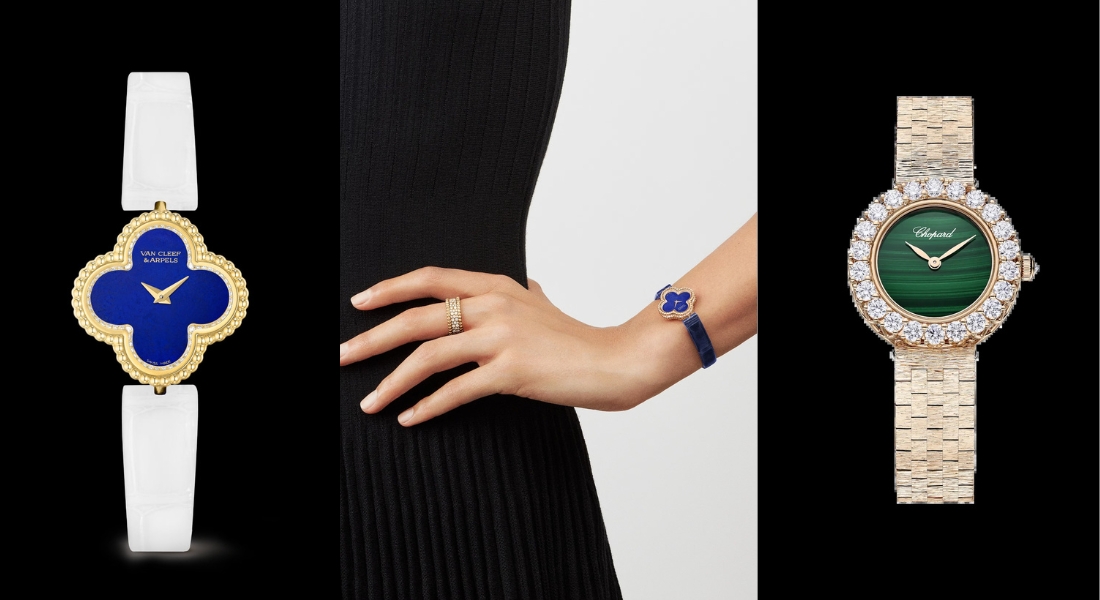
Natural stone dials bring colour, craftsmanship, and individuality to fine watchmaking, with contemporary interpretations drawing on a history of decorative artistry.
No two pieces of malachite share exactly the same pattern. Lapis lazuli can reveal delicate flecks of golden pyrite, while carnelian offers warm, translucent tones. These unique characteristics have long fascinated jewellers and continue to inspire watchmakers, bringing distinctive colour and texture to some of the world’s most recognisable timepieces.
The relationship between ornamental stones and watchmaking began in the early sixties when Piaget began experimenting with stone dials. In 1963, the Maison developed an aesthetic that became synonymous with the house. Its ultra-thin movements allowed designers to create elegant jewellery watches, pairing colourful stones with elaborate gold bracelets and sculptural cases.
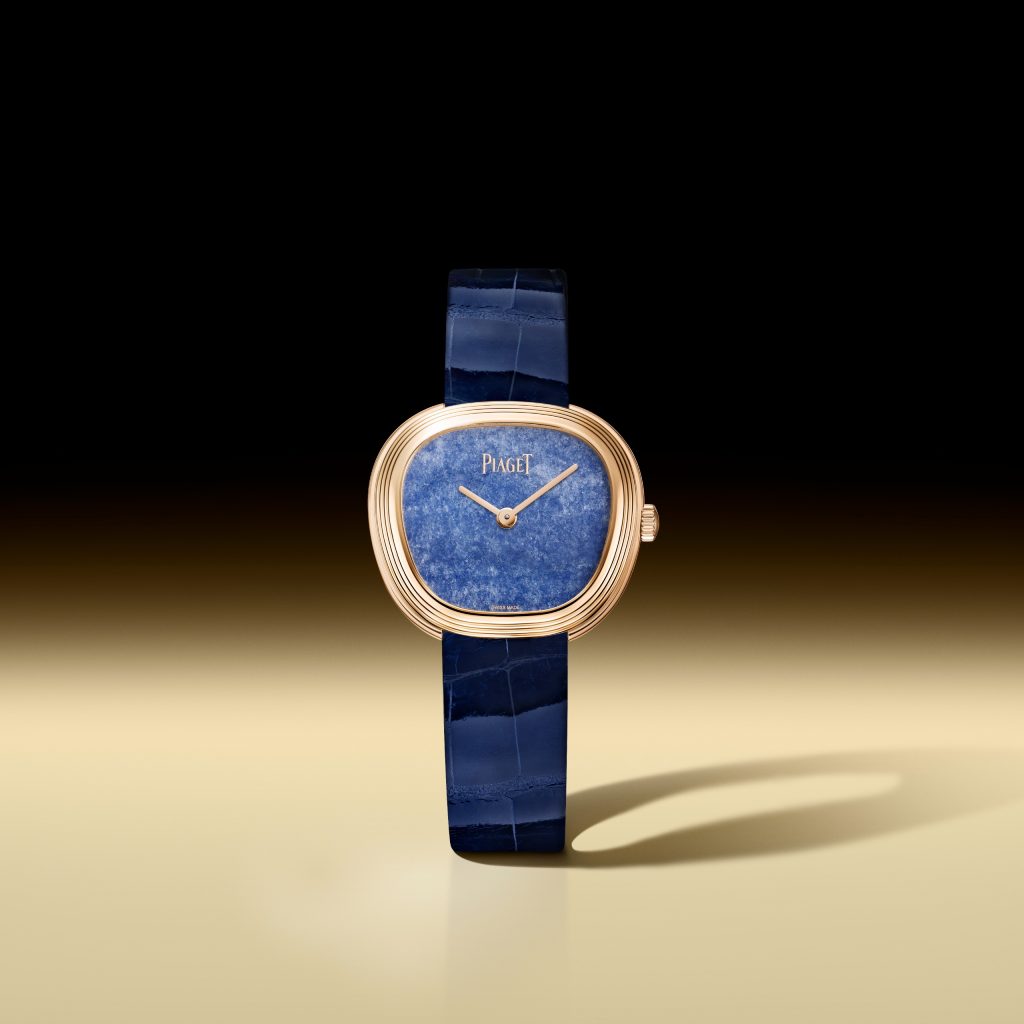
Piaget’s Sixtie watch brings a distinctive geometric approach to natural stone dials. Its 29mm trapeze-shaped case, crafted in 18K rose gold, frames a striking blue quartz dial, complemented by a navy blue alligator leather strap. Powered by the Maison’s 57P quartz movement, the design combines jewellery-inspired elegance with Piaget’s longstanding expertise in ornamental stones.
Creating these dials requires considerable precision. Artisans select stones for their colour and markings, then cut them into exceptionally thin sections, shape them, and polish them. Natural fissures and hardness variations can complicate the process, especially with fragile materials. The challenge is to preserve the stone’s character while achieving the exact dimensions required for a watch dial.

At Rolex, ornamental stones give the classic Day-Date a different character. The Day-Date 36 with a carnelian dial pairs the stone’s warm orange tones with yellow gold and diamonds, adding unexpected richness to one of the house’s most established designs.
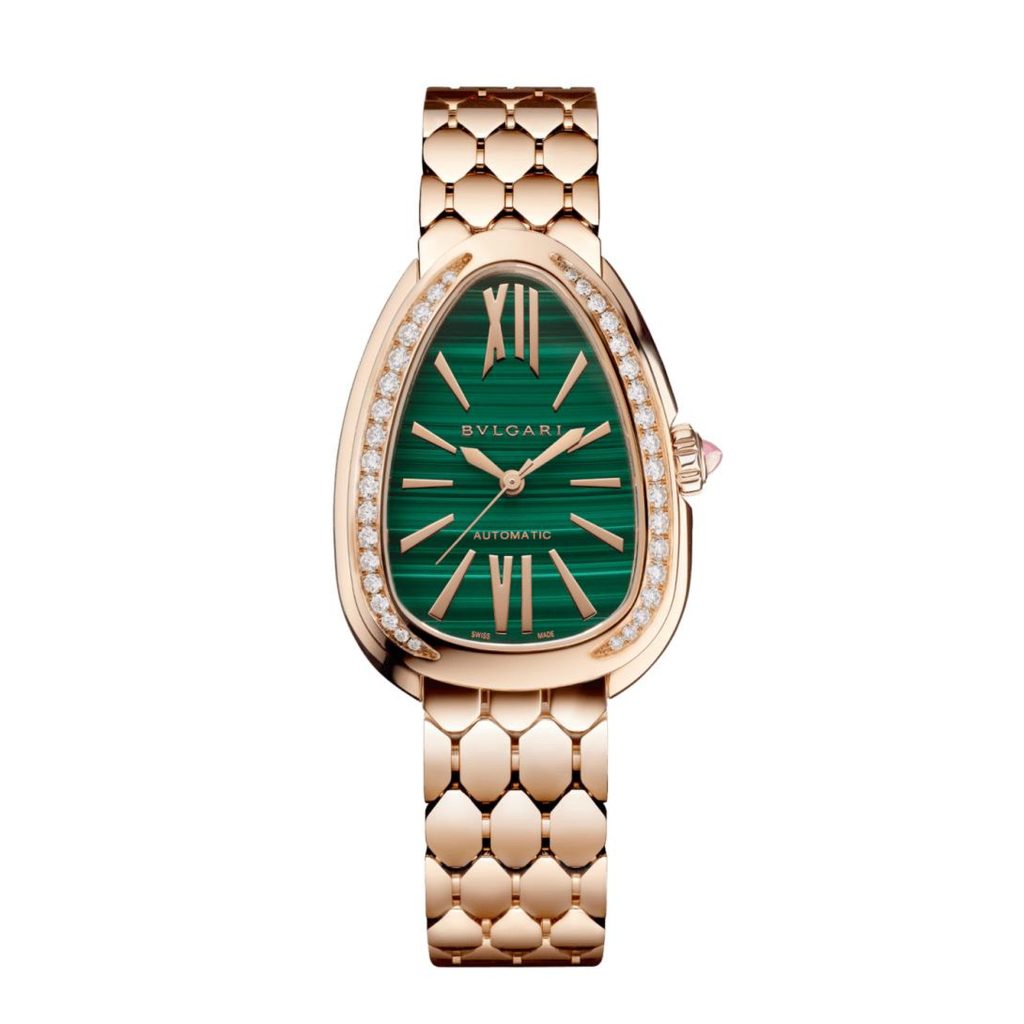
Bvlgari draws on its jewellery heritage with the Serpenti Seduttori Automatic, pairing a malachite dial with a rose gold case and fluid bracelet. The stone’s graphic green bands complement the watch’s serpentine silhouette, while the mechanical movement adds another dimension to its jewellery credentials.
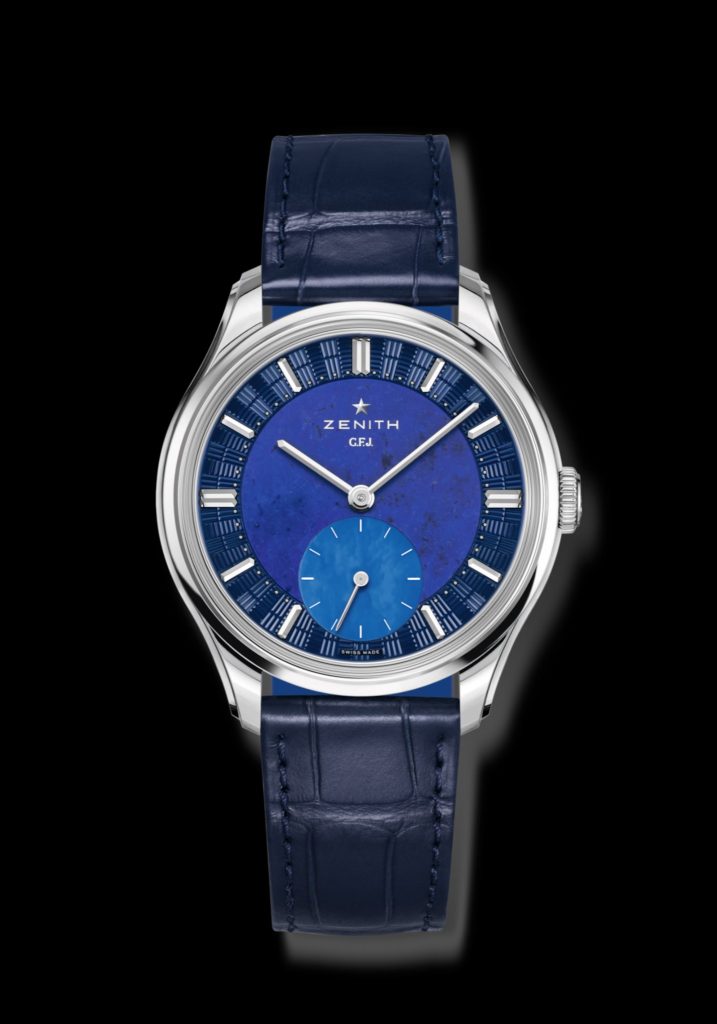
A more traditional horological approach appears in the Zenith G.F.J., which pairs a deep blue lapis lazuli dial with the revived Calibre 135. The contrast between decorative stone and mechanical sophistication is particularly striking.
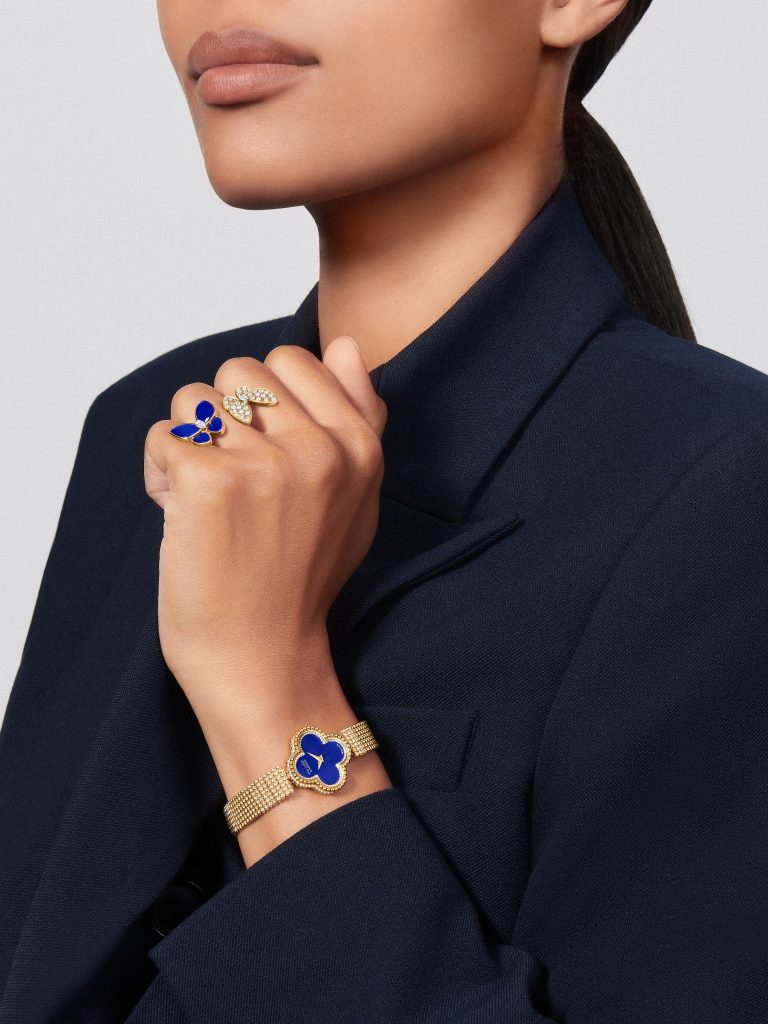
For Van Cleef & Arpels, ornamental stones have long been integral to the house’s jewellery vocabulary. The Sweet Alhambra watch incorporates lapis lazuli into its signature quatrefoil design, creating a delicate timepiece that sits comfortably within the Maison’s wider jewellery collections.
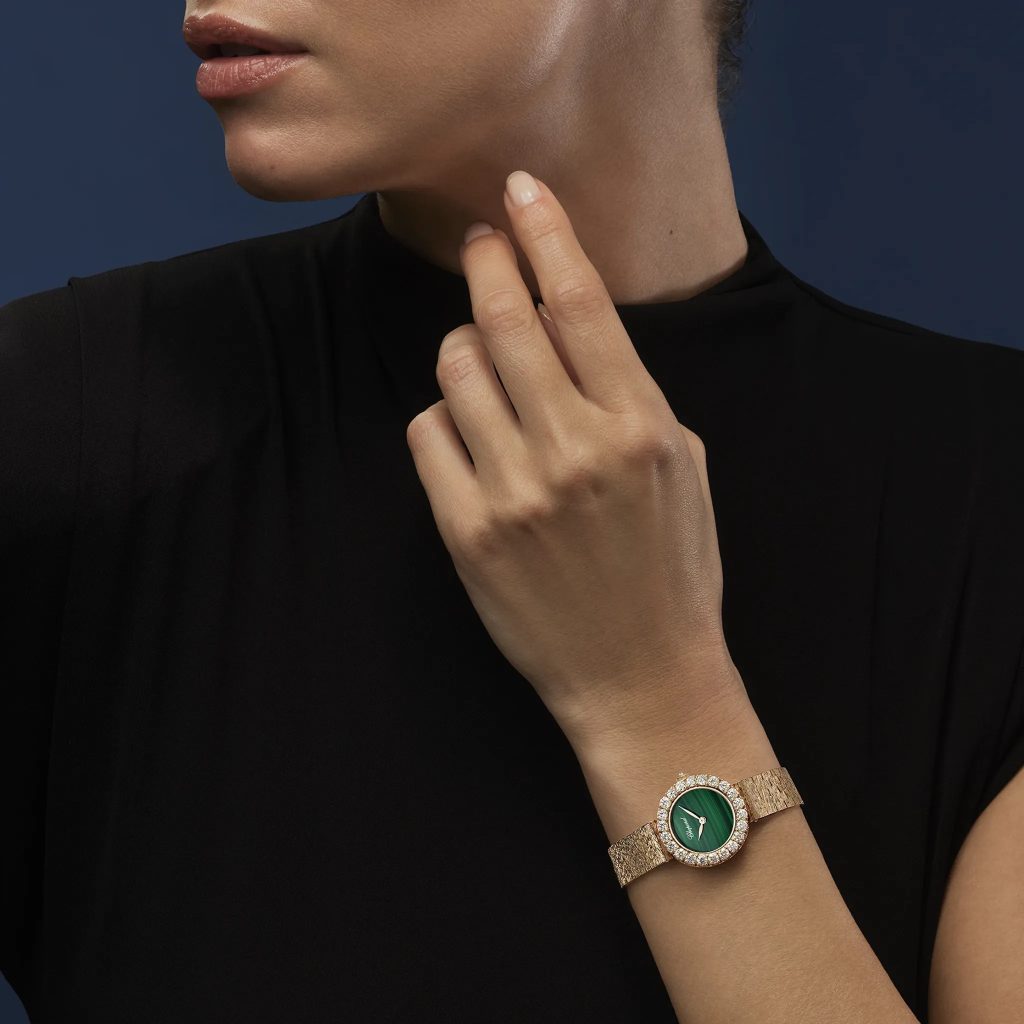
Meanwhile, Chopard’s L’Heure du Diamant pairs malachite with brilliant-cut diamonds, letting the stone’s natural markings take centre stage in an elaborate jewellery setting.
In an industry defined by exacting standards and mechanical consistency, natural stone adds an element that cannot be replicated precisely. The movements may be engineered to perfection, but nature has the final say on the dial.