



The relationship between the Middle East and fine watchmaking is hardly new. Collectors across the Gulf have shaped demand for decades, commissioned unusual pieces and built some of the world’s most significant private collections. But today, that influence is beginning to appear in the watches themselves.
Watchmakers are increasingly drawing on the region’s visual language, landscape, and creative community for design cues and backstories for timepieces. Arabic numerals are a regular go-to for designers, but they are no longer the whole story. Calligraphy, desert tones, architecture, and collaborations with regional artists give the idea of a Middle East edition considerably more depth.
There is historical precedent. Rolex was producing specially commissioned Day-Date watches for clients in the Gulf as far back as the 1950s, including rare examples with Arabic day and date displays and, later, Eastern Arabic hour markers. These watches have since become highly sought-after by collectors, but at the time they showed that maisons were already prepared to adapt their most recognisable designs for an influential regional clientele.

Today, that relationship is considerably more visible. Dubai Watch Week has become one of the industry’s key international meeting points, bringing independent watchmakers, major maisons, collectors and designers together in the UAE. Its influence extends beyond the event itself, creating a space where brands are exposed directly to collectors’ tastes, conversations, and cultural references in the region.
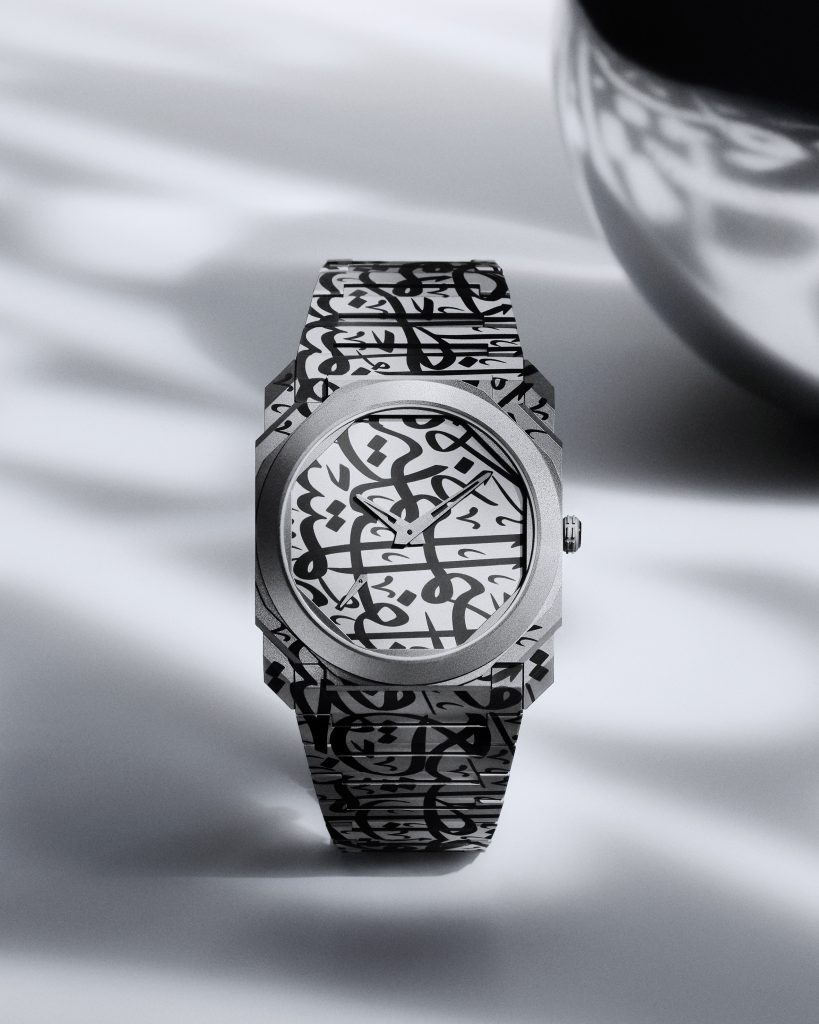
One of the clearest recent examples came from Bvlgari at Dubai Watch Week 2025. The house collaborated with Emirati artist Mattar Bin Lahej on an Octo Finissimo covered in his distinctive Arabic calligraphy. Rather than simply replacing conventional numerals with Arabic ones, the script stretches across the dial, case and bracelet, changing the appearance of an already familiar watch.
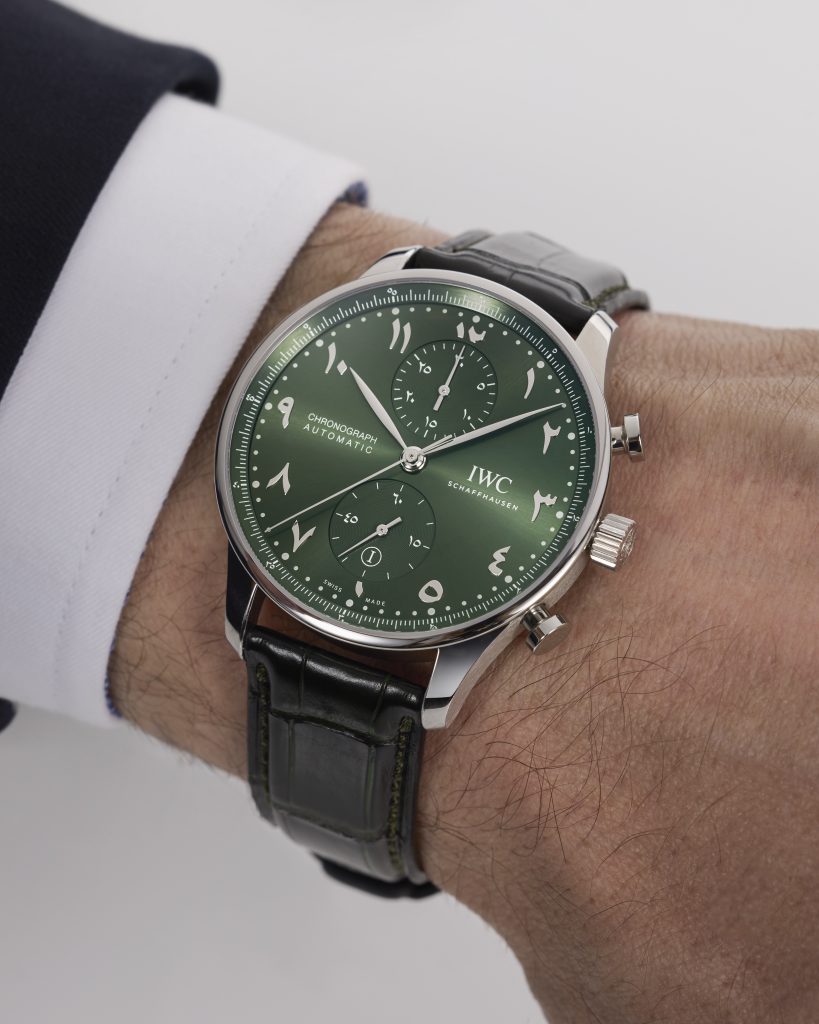
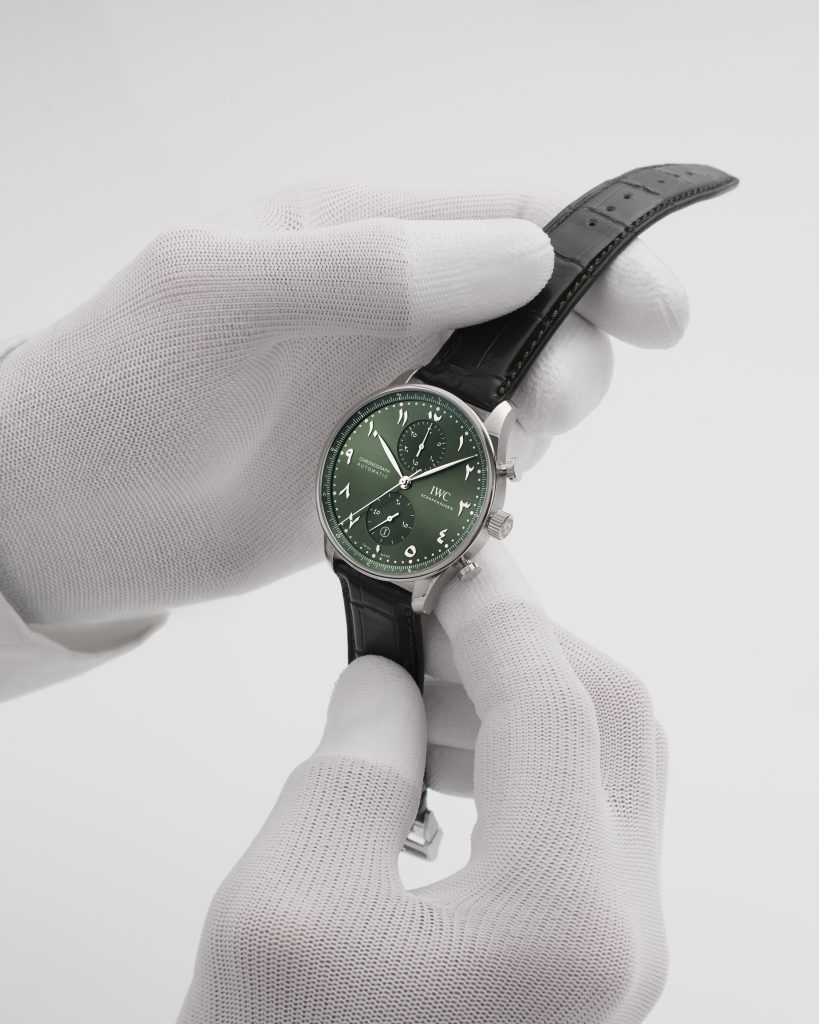
More recently, IWC Schaffhausen introduced a new UAE-specific expression of the Portugieser Chronograph, distinguished by an Arabic numeral dial and a broader sense of personalisation. Unveiled in Abu Dhabi at the Congress of Arabic & Creative Industries, the stainless steel model comes in ten dial colours, each carrying Arabic numerals across both the main dial and chronograph counters. The watch retains the familiar proportions and restrained elegance of the Portugieser, while the Arabic typography gives it a strong regional identity without overwhelming the design.
It is an important distinction. The Middle Eastern reference is not an afterthought added for a regional release; it becomes the design.
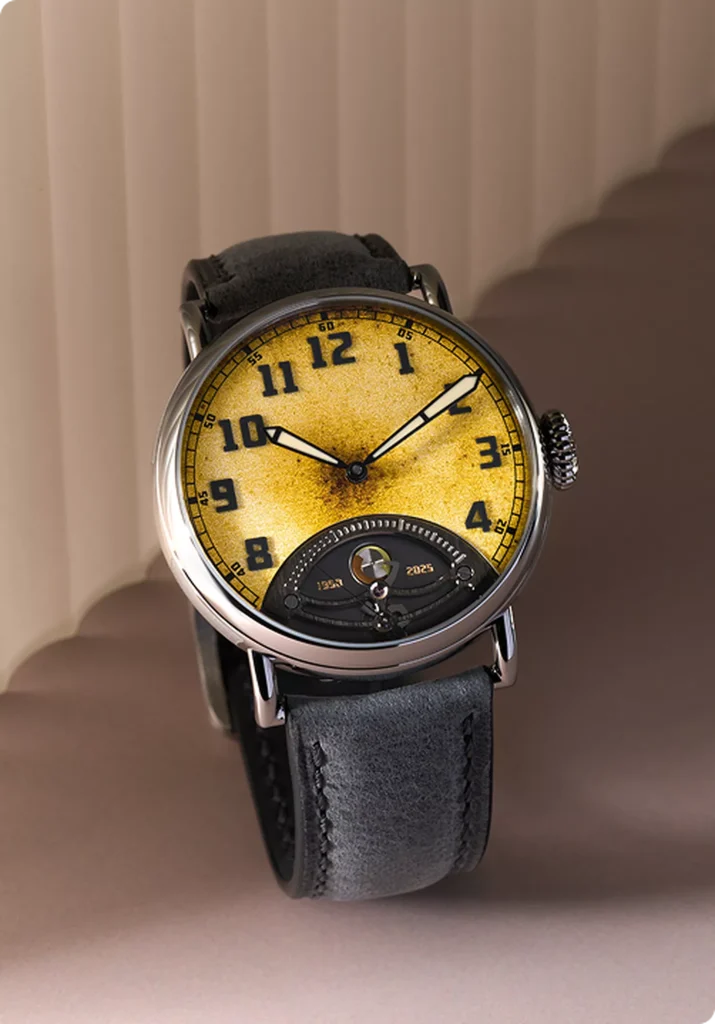
A similar shift appears in the growing use of landscape and colour. H. Moser & Cie.’s Heritage Retrograde Seconds, created for Ahmed Seddiqi’s 75th anniversary, uses a sand fumé dial informed by the region’s tones, while Chronoswiss incorporated a textured sand-coloured dial and Eastern Arabic numerals into its limited Strike Two edition for the same anniversary.
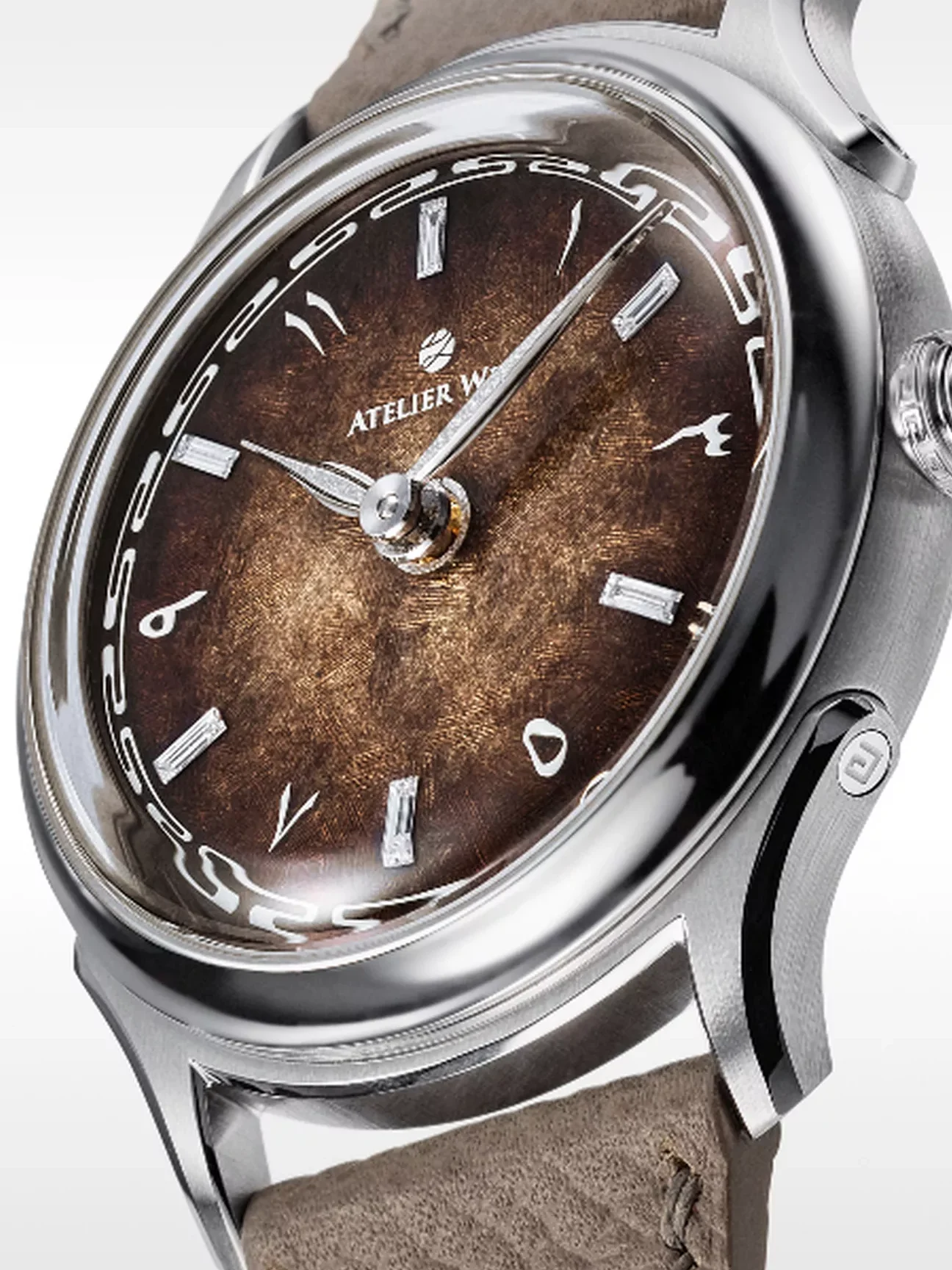
Elsewhere, Atelier Wen’s Ancestra Yáo, unveiled at Dubai Watch Week in collaboration with Ahmed Seddiqi and Revolution, approached the region through a wider cultural exchange. Its enamel dial shifts between sandy beige and deep brown, with textures and colours that reference desert landscapes and the historic trade routes that once connected China with the Arab world.
These watches also reflect the Gulf collector’s growing sophistication. Exclusivity still matters, of course, but simply producing a tiny edition and attaching a city name is no longer particularly interesting. The stronger pieces tend to have a genuine relationship with where they launch, who makes them, or the culture they reference.
Local partnerships have consequently become more important. Ahmed Seddiqi’s long-standing relationships with both established and independent watchmakers have resulted in a considerable number of regional editions, while collaborations with artists such as Bin Lahej introduce a perspective that a Swiss design studio alone could not necessarily replicate.
For collectors, that makes the latest generation of Middle East-inspired watches considerably more interesting. And for watchmakers, looking towards the Middle East increasingly means doing more than changing the numerals on a dial.