


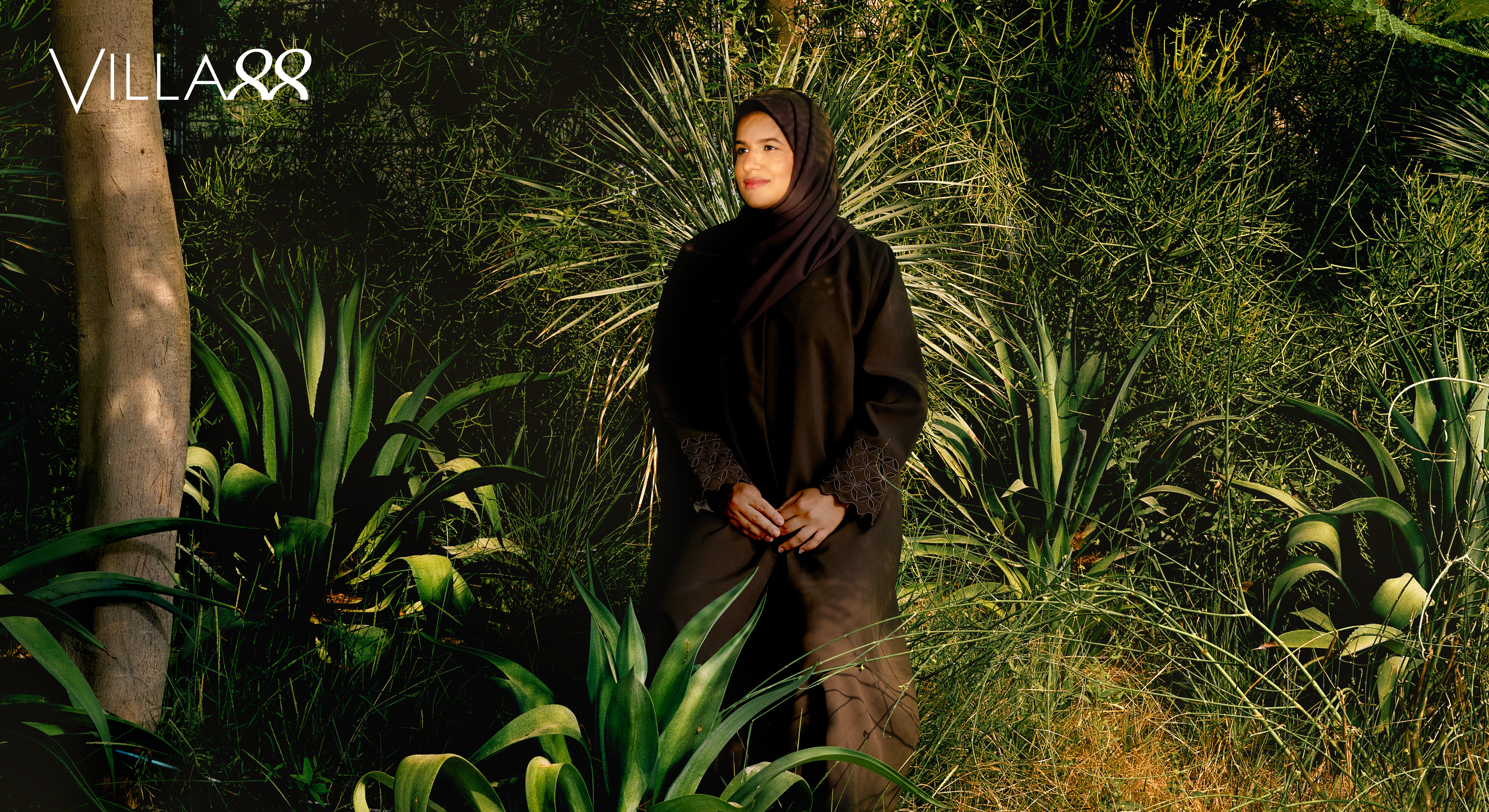
Zainab Alkhajeh, Manager of Education Communications at Expo City Dubai, shares how culture, nature, and education are helping inspire the next generation of environmental change-makers.
Words by Lindsay Judge
Zainab Alkhajeh’s deep understanding of sustainability developed gradually through her experiences and memories of growing up in the UAE. The scent of henna during Eid, family trips into the desert after rainfall, and afternoons spent picking fruit from the garden are just some of the memories she recalls that taught her nature is more than a landscape. “It is part of culture, identity and belonging,” she tells Villa 88.
In her current role as Manager of Education Communications at Expo City Dubai, Zainab draws on those early experiences to shape how people discover sustainability through storytelling.
Formerly the Sustainability Pavilion at Expo 2020 Dubai, Terra is now an immersive science museum, designed to operate as a net-zero building for energy and water. Today, it takes visitors on an emotional journey through ocean depths, forest canopies, and the realities of climate change, encouraging them to experience sustainability rather than just learn about it.
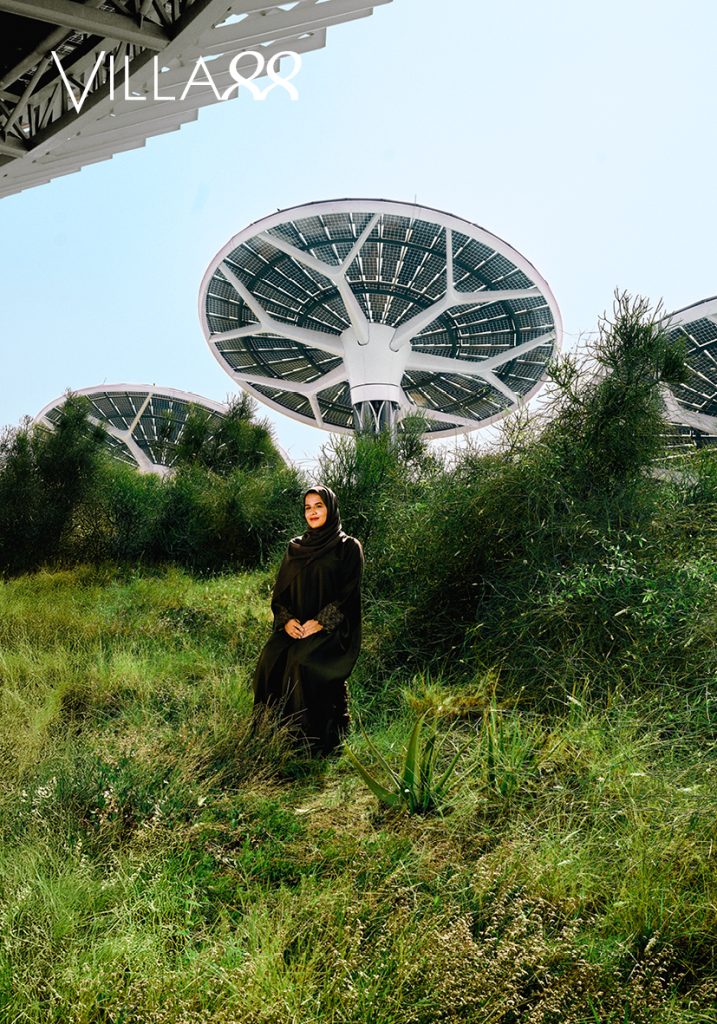
“At Terra, the strongest moments are often the simplest,” Zainab explains. “An educational experience becomes memorable when people forget they are being taught. People remember what made them feel something, what surprised them, what made them curious, or what enticed them to stay a little longer.”
Zainab’s own journey into this world was far from conventional. Having studied architecture, she quickly realised it wasn’t buildings themselves that fascinated her, but the emotions they could evoke. That curiosity gradually led her away from traditional architecture and towards cultural experiences, exhibition design, and education, where space could become a powerful storytelling tool.
“I have always been drawn to the way places can make people feel – how somewhere can make someone stop mid-step, become curious, feel proud, remember something, or see the world differently,” Zainab explains. “I was never interested in buildings only as structures, but rather in atmosphere, movement, and the relationship between people and place.”
Working on projects such as Vision Dubai and later Terra only strengthened that belief. Rather than viewing exhibitions simply as physical spaces, she began to understand their ability to shape memories and encourage meaningful conversations.
“Through Vision Dubai and the story of His Highness Sheikh Mohammed bin Rashid Al Maktoum, I began to see how powerful spatial experiences can be when they are used to tell stories,” she shares. “It became about much more than the building. It became about memory, identity, and creating moments that stay with people.”
That philosophy underpins much of Zainab’s work today. While sustainability is often communicated through statistics, climate targets, and scientific data, she believes that genuine behavioural change begins with emotion.
“For me, the most personal way to think about sustainability is through what we leave behind,” she says.
“When we speak about sustainability only through numbers, targets, or crises, it can feel very heavy. People may understand that it matters, but they do not always know where they fit into it.”
Becoming a mother only deepened her understanding of the importance of promoting a sustainable future. “What scares me is the thought that my children may grow up with less nature to play in, less of the natural world to interact with, and less space to be curious and free. That makes sustainability very real for me,” she states. “It is about what they will inherit and what they will love enough to protect.”
This belief is reflected throughout Terra, where visitors are encouraged to connect emotionally with the natural world through immersive experiences rather than traditional classroom learning.
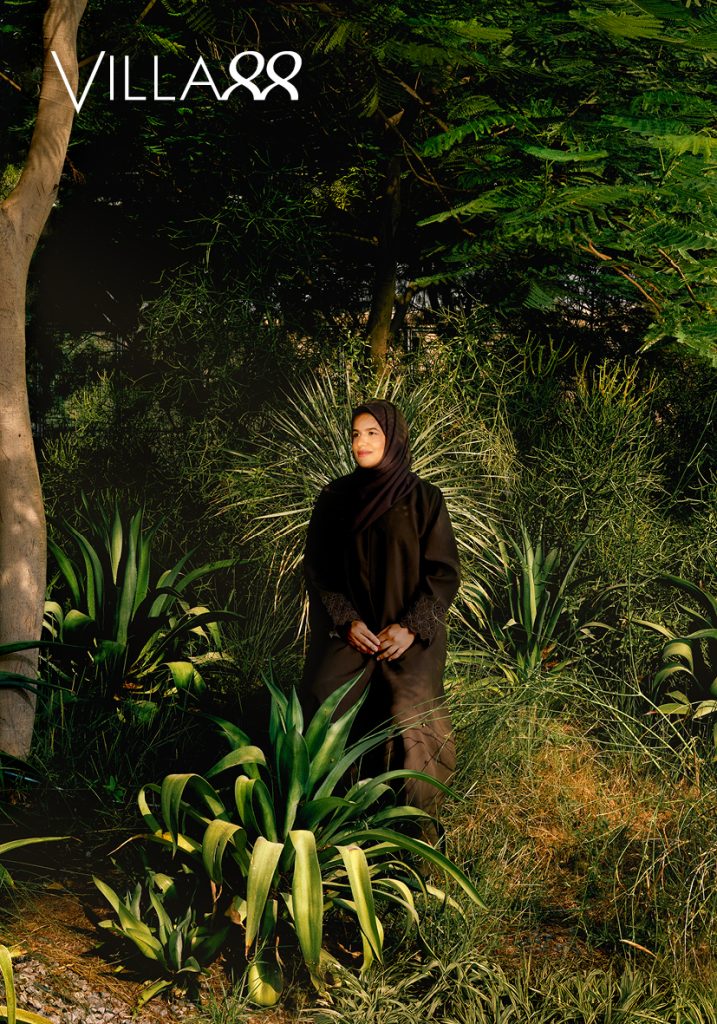
It is also a perspective that mirrors the UAE’s evolving approach to sustainability. While the country is recognised internationally for ambitious renewable energy projects and environmental initiatives, there
is also a growing emphasis on the importance of reconnecting its communities with native landscapes, biodiversity, and cultural heritage.
“The UAE is often seen through its cities, architecture, and pace of development,” Zainab says, “but the natural change has always been part of its story. For generations, people here lived closely with the land.”
“They understood seasons, water, shade, plants, and survival,” she adds. “That knowledge shaped daily life, and it is still part of our cultural memory.” Know Your Roots, an initiative developed at Terra, encourages families to reconnect with native plants and the traditions surrounding them. Exploring the relationship between people, plants, and culture, it demonstrates that preserving biodiversity is also about safeguarding stories, memories, and knowledge passed down through generations.
“There is a real fear that some of this knowledge may disappear with the people who carry it,” she says. “Often, when elders pass away, we realise too late that they held details no one else knew – how a plant was used, how it was prepared, when it was picked, what it smelled like, and what it meant to the family.”
Being an Emirati woman also gives Zainab a unique perspective on the country’s extraordinary transformation. Having witnessed the UAE’s rapid development first hand, she sees herself as part of a
generation responsible for ensuring that progress does not come at the expense of cultural memory.
“We grew up watching the UAE change so quickly, while still carrying memories, stories, and ways of life that connect us to where we come from,” she says.
“How do we build the future without losing the stories, landscapes, and knowledge that shaped us?”
Zainab believes creating curiosity is the answer. Her three-year-old son reminds her of this every day. “He is fascinated by animals and dinosaurs, and he always wants the full story. What do they eat? How do they
move? How big are they? But he also notices plants and asks about palm trees and the names of yellow flowers because yellow is his favourite colour. This curiosity is where sustainability begins,” she says.
“Children need the opportunity to fall in love with nature before they are asked to protect it.”
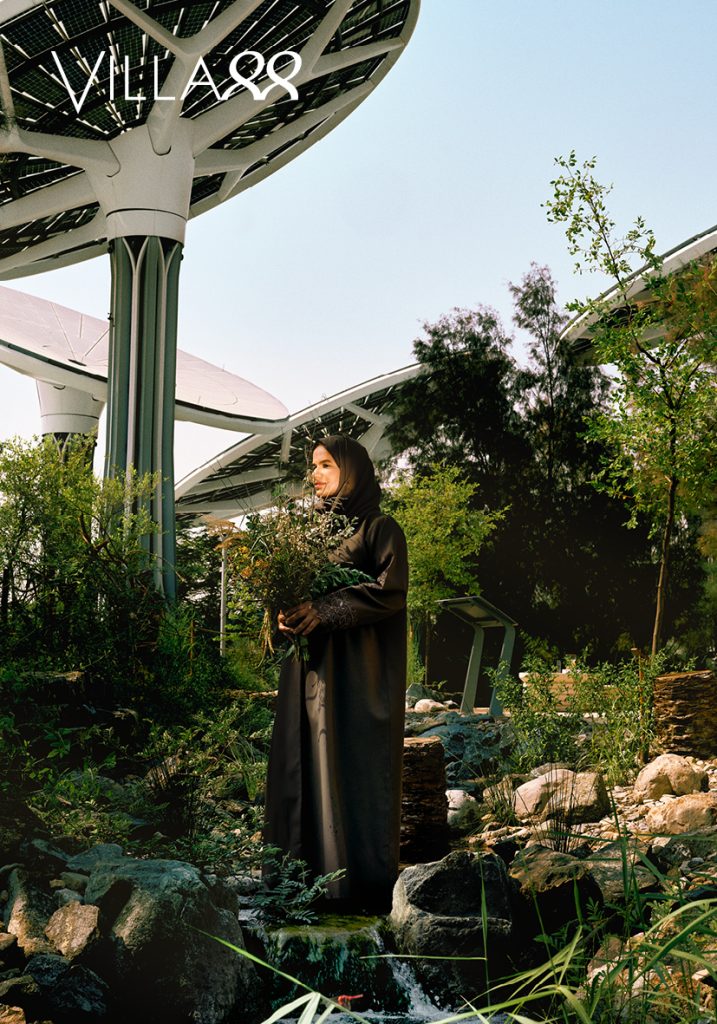
As the UAE continues to place sustainability at the centre of its future, Zainab believes the country’s greatest achievement will be measured by the everyday relationship people build with the natural world.
By helping children discover native plants, encouraging families to preserve the wisdom of older generations, and creating experiences that inspire curiosity, she hopes sustainability becomes something that is lived rather than simply discussed.
Zainab concludes, “I am excited by the idea of a future where culture is not only preserved, but lived – where children grow up understanding the natural environment of their country, and where sustainability becomes part of how we care for our homes, our communities, and the generations after us.”