


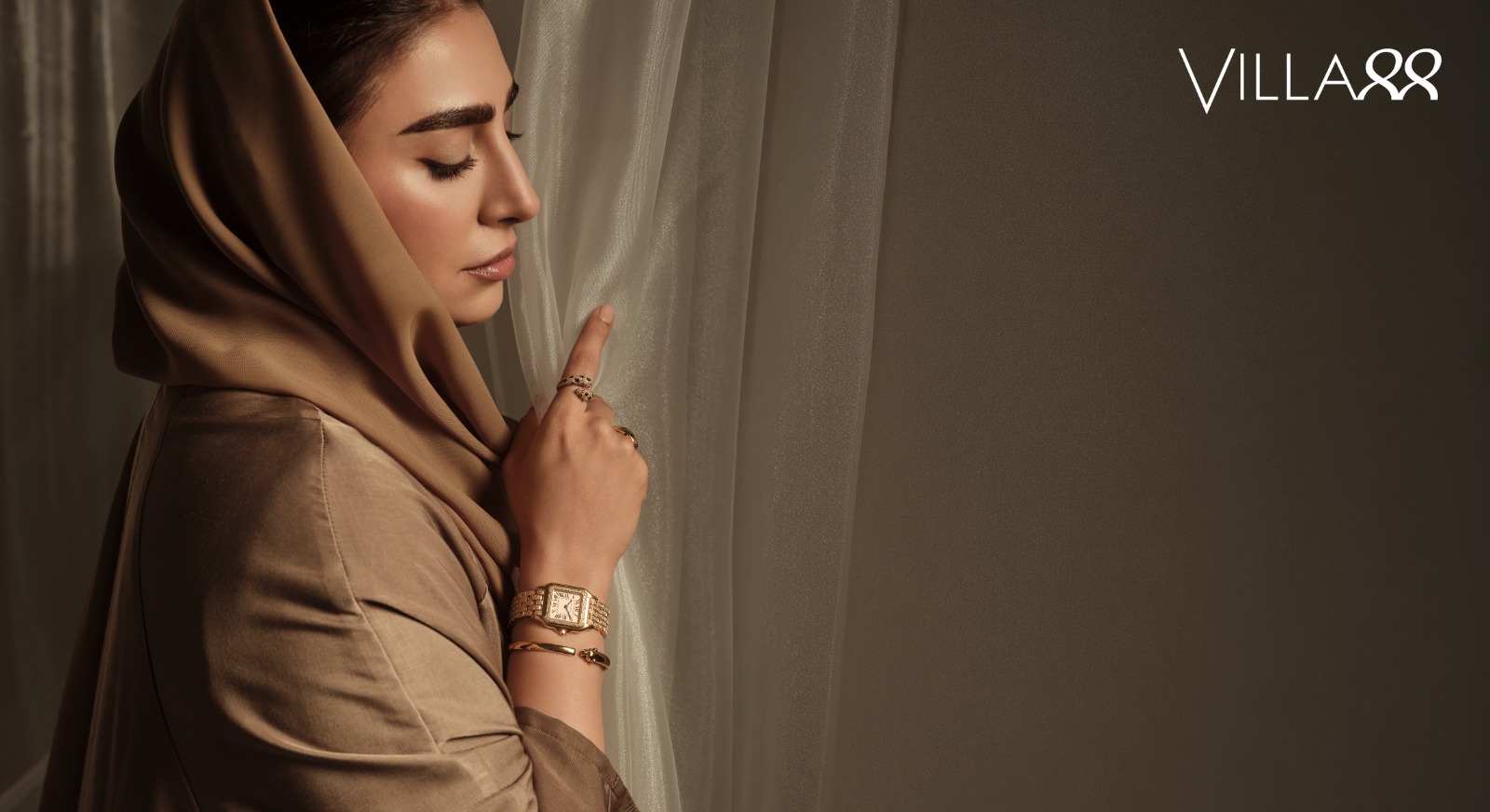
Through her work in the arts, education, and cultural storytelling, Elham Khairalla is ensuring that the UAE’s traditions can be shared and carried into the future.
Editor-in-Chief: Asma Al Fahim
Words by Lindsay Judge
Photographer: Žiga Mihelčič
Creative Direction & Production: Beya Bou-Harb
Talent: Elham Khairalla
Art Director: Egor Andryushin
Hair and Make-up: Safiyah Cassim
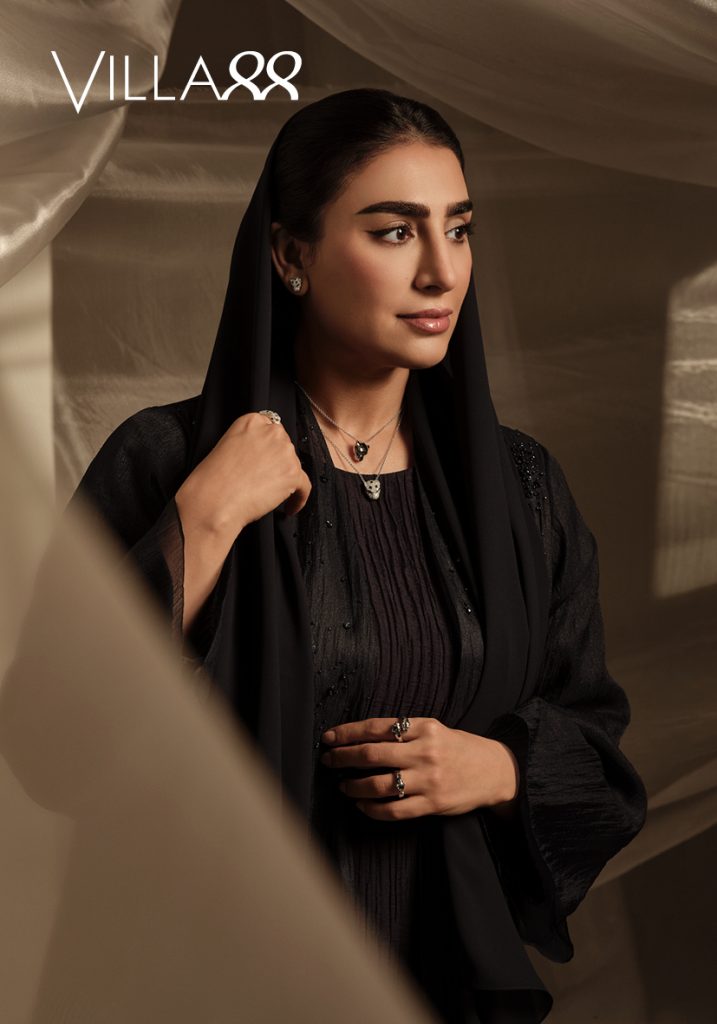
Long before heritage became the focus of her career, weaver and cultural storyteller Elham Khairalla understood that the things people made by hand carried stories of their own. A woven piece can hold the memory, emotion, and imprint of its maker, preserving experiences that might otherwise never have been recorded.
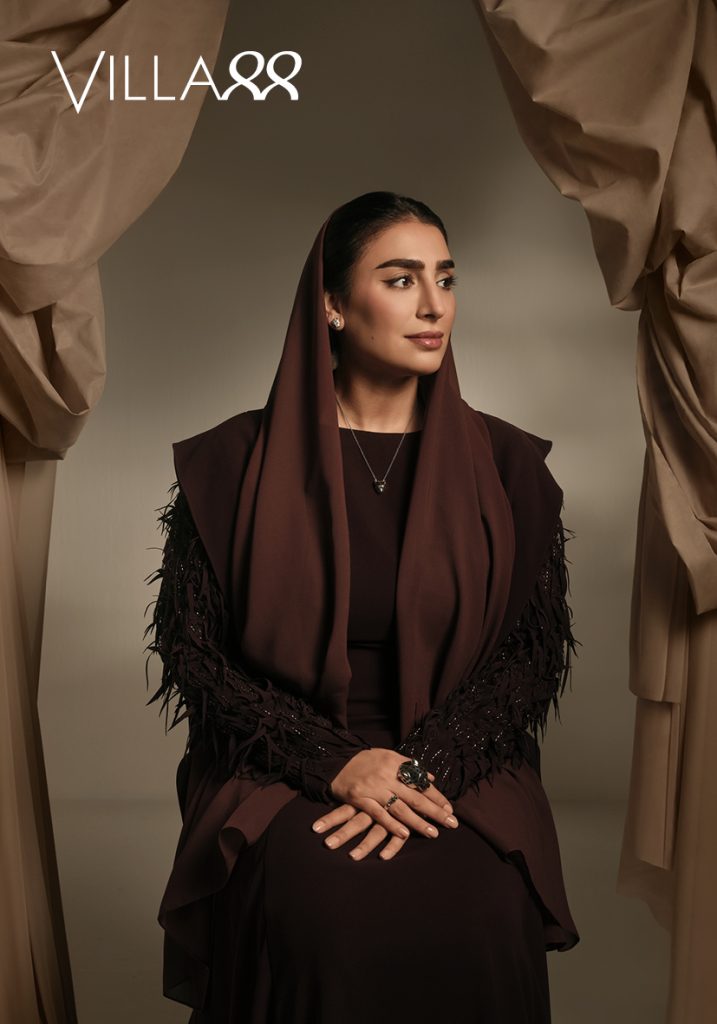
“I don’t believe we always choose our passions. Sometimes, our passions choose us,” Elham reflects. From a young age, she recognised that handmade objects possessed a significance extending far beyond their physical form.
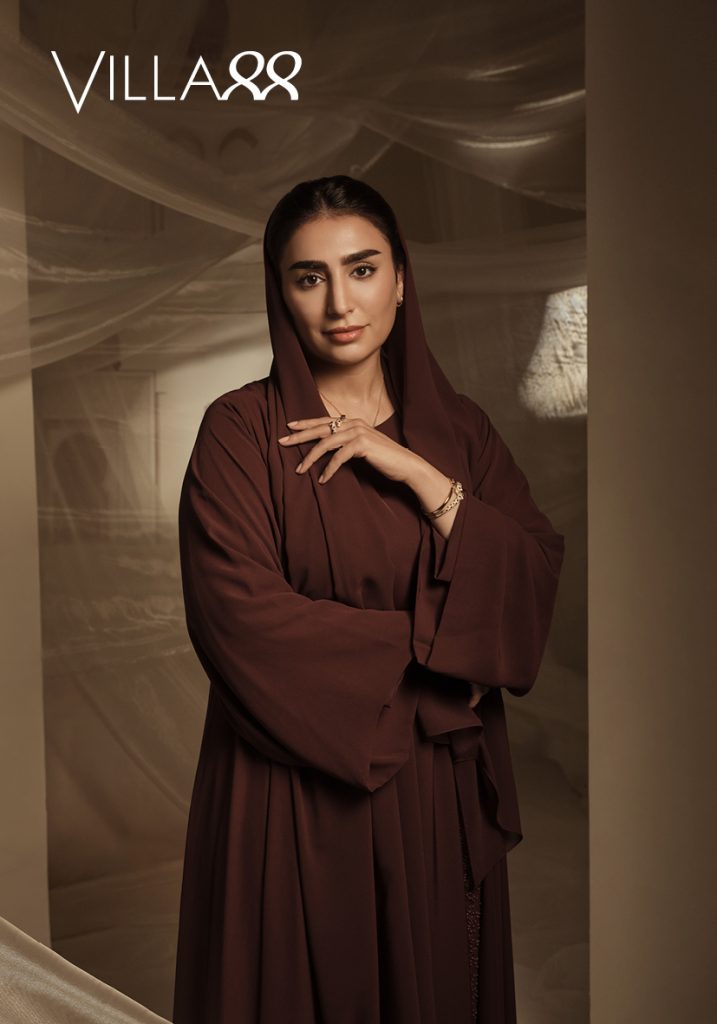
“They carried a part of the people who created them,” the storyteller says. “To me, weaving was never just threads crossing one another – it was a silent language through which we spoke to our ancestors. Every knot told the story of a woman who once sat in the desert, or outside her home, weaving something that reflected her own life.”
“I never planned for this to become my career,” she adds. “Yet, the deeper I immersed myself in it, the more I realised that my purpose was not simply to keep the craft alive, but to ensure that the human spirit woven into it continues to live through future generations.”
Armed with that passion, she has combined an understanding of people and development with a deeply personal commitment to cultural preservation. Over the course of her career, Elham has trained more than 300 people in weaving and participated in cultural events across the UAE.
In an earlier chapter of her journey, she co-founded the Sjadna Heritage Artwork Centre in Dubai’s historic Al Fahidi neighboorhood. The Centre’s commitment to craftsmanship and cultural engagement continues to inform Elham’s evolving vision.
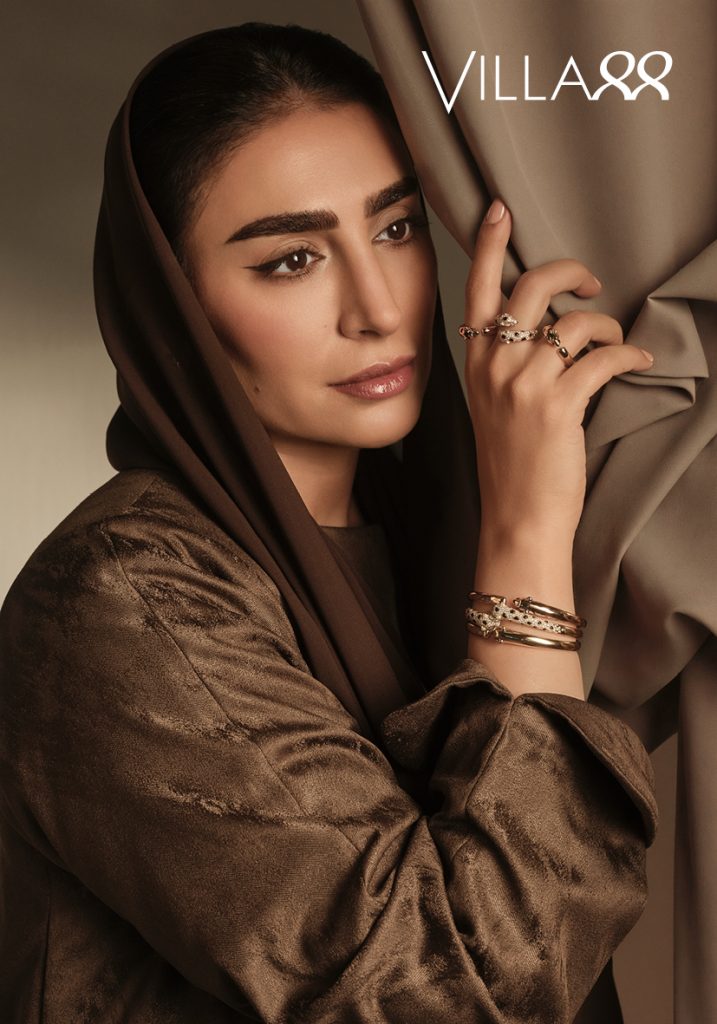
Today, she is developing a new cultural and creative space that builds on her experience in heritage and craftsmanship while embracing a broader focus on education, creativity, and community. Still in development, the project remains deliberately under wraps for now, but Elham describes it as “an exciting new chapter that I am currently working towards”.
Asked to describe herself in three words, Elham says she is “reflective, faithful, and patient”. “Reflection allows me to see what others often overlook in the smallest details,” she explains. “Faith gives me the strength to continue, even when the destination is not yet clear. And patience is perhaps the greatest
lesson weaving has ever taught me. No beautiful carpet is woven in haste, just as no meaningful life is built overnight.”
It is a philosophy that speaks not only to her creative practice but also to her journey as a woman. Progress, like weaving, is achieved thread by thread. It requires discipline, consistency, and the confidence to trust a process before its complete pattern has emerged.
For all that she has accomplished, Elham does not measure success through awards or individual projects. She is at her proudest when another person begins to view traditional craftsmanship differently.
“It might be a child, a young adult, or an elder who touches a woven piece and realises, perhaps for the first time, how many stories it contains,” the artisan says. “Those moments remind me that our true legacy is not measured by what we create, but by the hearts we inspire and the perspectives we help transform.”
Her ability to connect heritage with the present feels particularly relevant in the UAE today. The country’s creative landscape has undergone remarkable growth, offering artists and cultural practitioners the freedom to explore spaces where tradition and innovation meet.
“The UAE has never asked us to choose between our past and our future,” Elham states. “Instead, it has shown us that both can grow side by side.”
“It is possible to stand in a museum surrounded by thousands of years of history and, moments later, enter a laboratory devoted to shaping tomorrow,” she notes.
“This proximity gives creatives the confidence to honour their roots while imagining new possibilities. Emirati artists, in particular, create from a place rich with inherited memory – the colours of the desert, the rhythm of the sea, and the stories of those who shaped the nation before them. These are things no university can truly teach.”
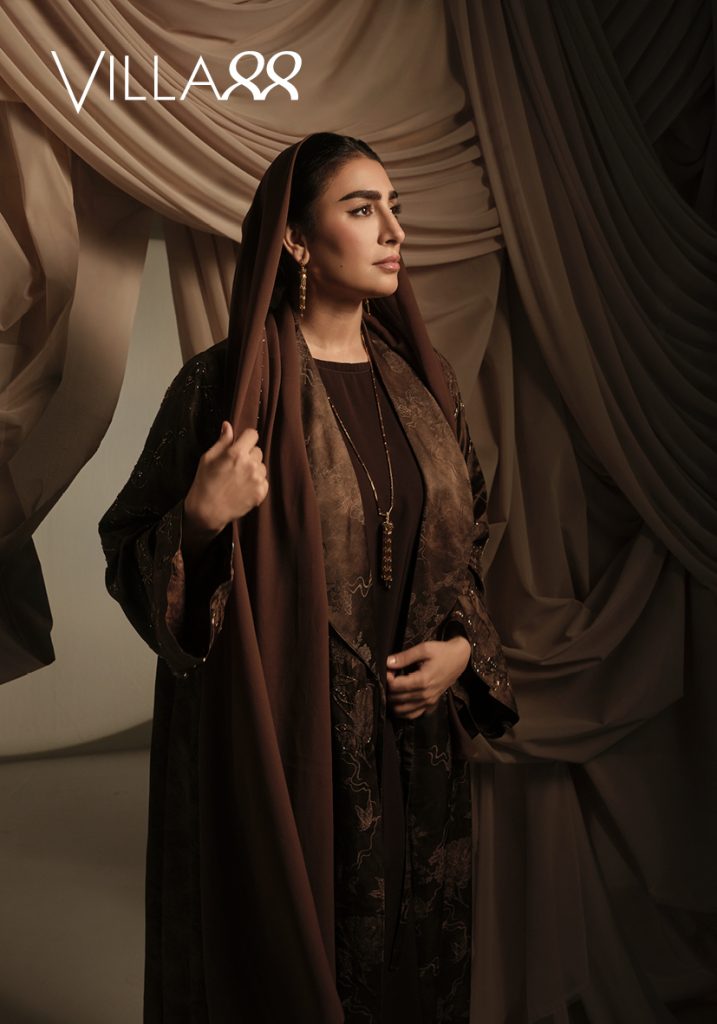
What emerging artists need, Elham believes, is not simply instruction, but belief. “They require mentors, institutions, and communities willing to encourage experimentation, [teach them to] accept failure as part of the creative process and give them space to express their identity without diluting its authenticity,” she shares.
This is also why Elham resists the idea that heritage should be preserved in an unchanging form. Preservation may protect an object, but it does not necessarily keep a tradition alive. Each generation must be able to engage with heritage, reinterpret it and see its own experiences reflected within it.
“Heritage is not a museum we visit once a year,” she says. “It is a living presence. It breathes with us. It changes with us. It grows with us. The moment heritage stops evolving, it stops being alive.”
That same appreciation informs her view of exceptional craftsmanship across different disciplines. “The true value of a piece does not lie only in gold, silver, or precious stones. Its value lies in the hands that shaped it,” she says.
For example, although weaving and jewellery may appear distinct, Elham sees them as expressions of the same values. “Both remind us that true beauty cannot be rushed, and that the most precious creations are those that take time to become what they are,” she explains.
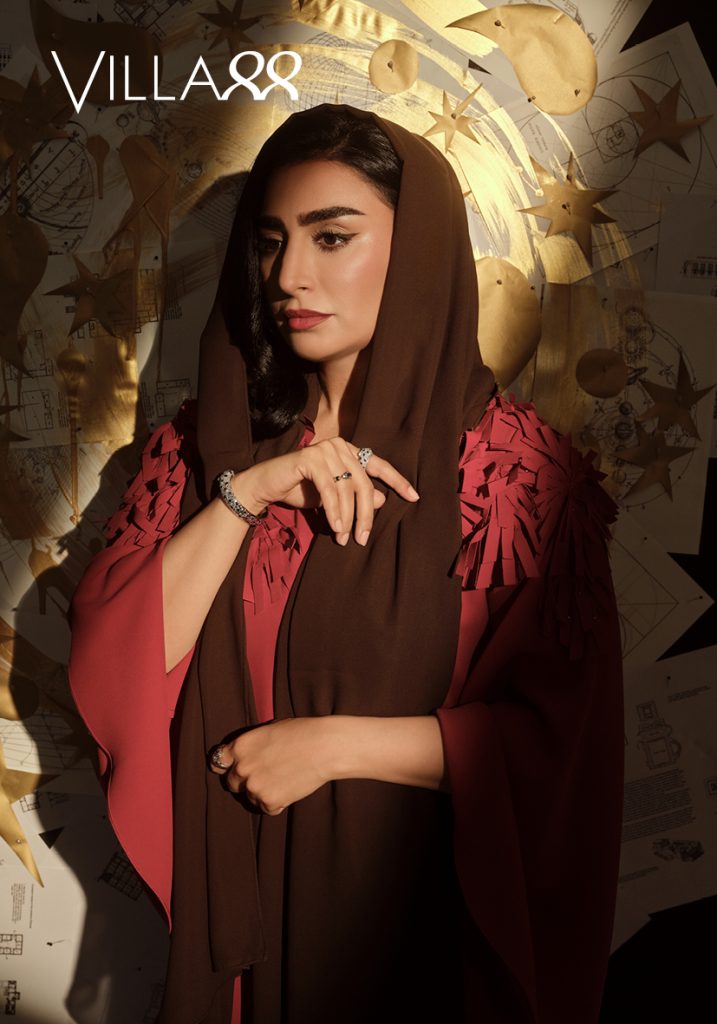
As an Emirati woman, Elham’s relationship with heritage is inseparable from the generations of women who safeguarded it. Emirati Women’s Day therefore carries profound personal meaning.
To her, it represents an occasion rooted in gratitude for the women whose labour, creativity, and resilience were always part of the nation’s story, even when their names were not recorded. “She wove. She nurtured. She created. She persevered. And she safeguarded our collective memory,” Elham says.
“Today’s Emirati woman continues that same journey through different paths,” she adds. “She leads companies, builds institutions, innovates, and inspires, yet remains deeply connected to her roots. To me, that is the most beautiful expression of strength.”
Her own contribution extends beyond preserving techniques to creating opportunities for others. Having taught and mentored hundreds, Elham strongly believes in women’s ability to support one another.
“I have never believed in competition between women as much as I believe in their ability to uplift one another. A candle never loses its light by lighting another candle,” she says. “Knowledge, when kept to ourselves, slowly fades. But when it is shared, it becomes a legacy that continues to grow through others.”
Despite the many roles she occupies, Elham remains motivated by the knowledge that she is still learning. Her ambition is to see heritage become a natural part of young people’s lives, embraced not through obligation but through genuine affection and recognition.
She also dreams of “seeing Emirati craftsmanship recognised around the world, not merely as a cultural product, but as a philosophy of life”. Ultimately, the legacy she needs is not one defined by buildings, titles, or accolades. It can be found in what her work awakens within others.
“If I can inspire even one person to look at heritage with love, to respect traditional craftsmanship, and to understand that handmade work is not merely a skill to be mastered, but a language that preserves memory, tells the story of humanity, and connects us to those who came before us,” she says in conclusion, “then that, to me, is a legacy more than enough.”