


Few spaces carry as much soul as the majlis in Arab architecture and social life. The term literally translates to “a place of sitting” and extends far beyond just a leisure space. A living sanctuary of hospitality, community governance, and oral heritage, the majlis has anchored Arabian culture for centuries.
History
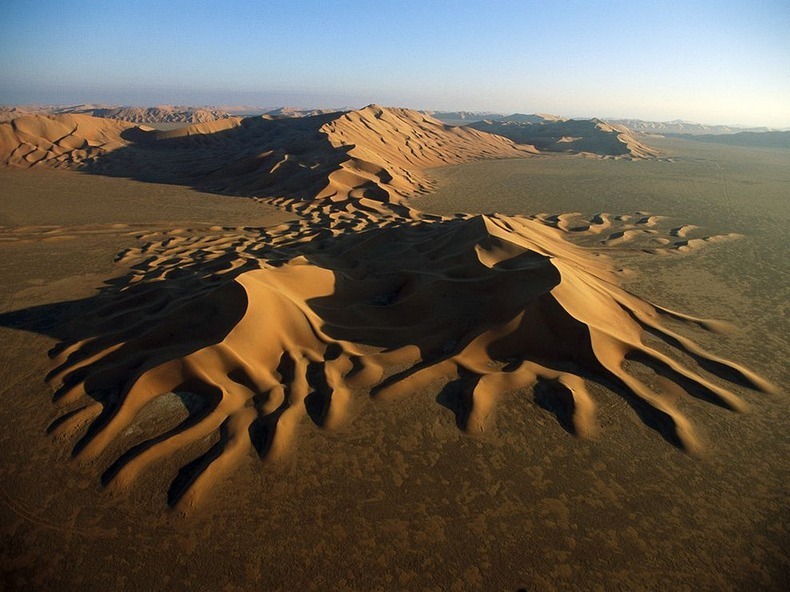
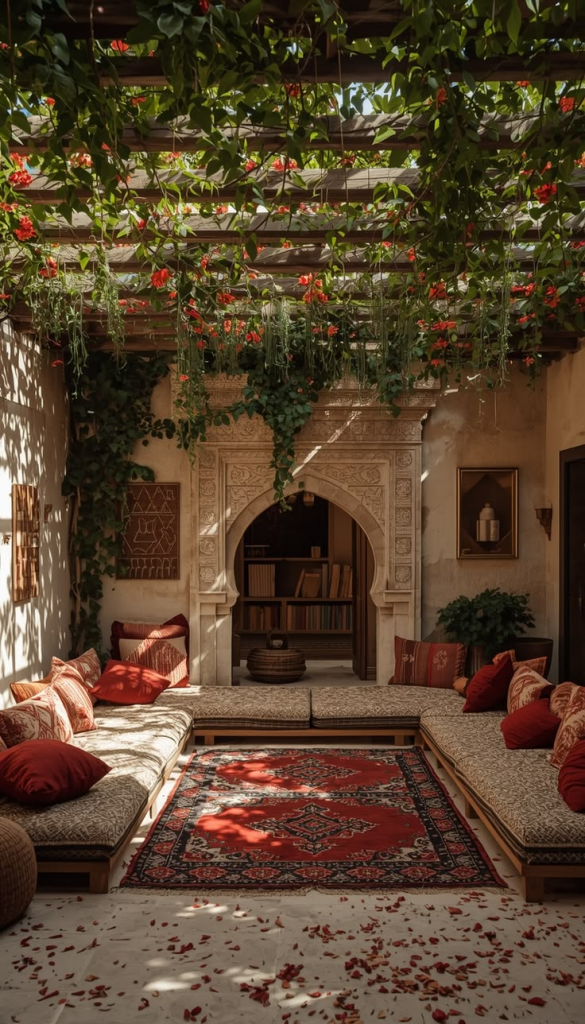
The tale of the majlis dates back thousands of years. Historically, the majlis originated as a central tent or open fireside where community members gathered around to discuss local affairs, resolve disputes, recite poetry, and welcome travellers when the Silk Routes were established. In the majlis, guests are welcomed with local fragrant incense, comfortable cushions, and refreshing beverages. The space itself can be considered synonymous with the generous nature of Arab culture.
Cultural Significance
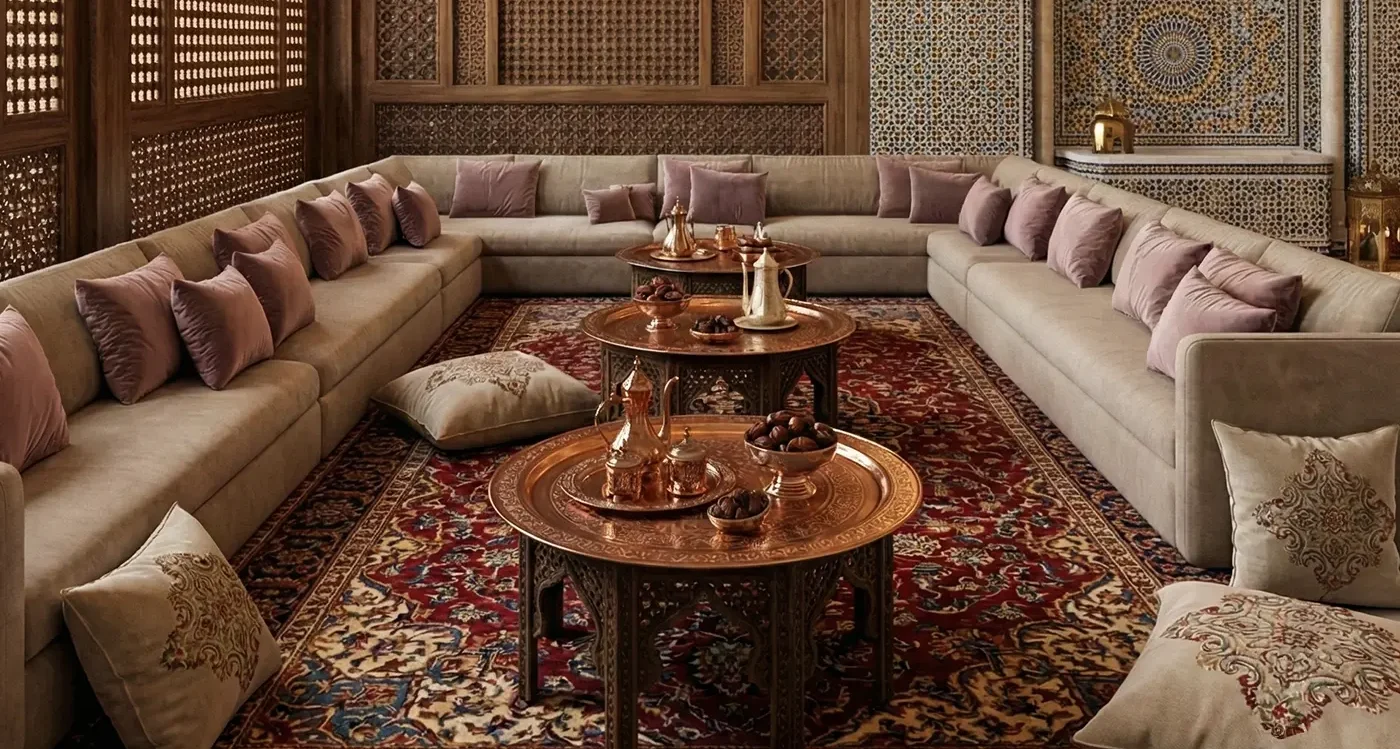
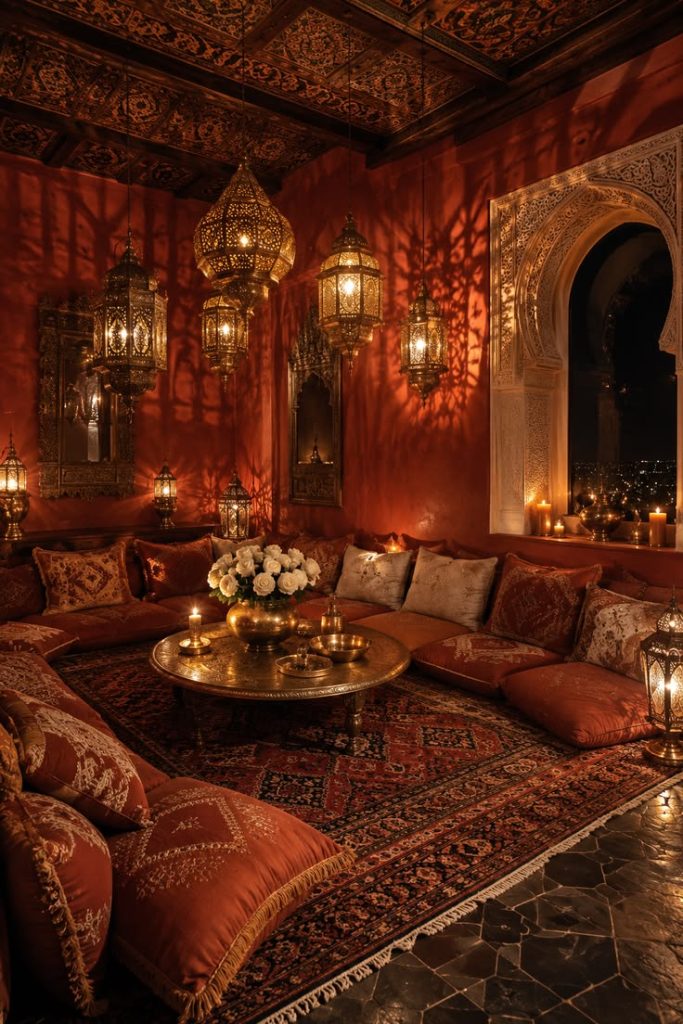
Featuring low seating, woven carpets, and soft cushions placed along the wall, the space ensures that everyone sits at an equal level. Added to the UNESCO Intangible Cultural Heritage List, the majlis fosters open dialogue, active listening, moral ethics, community wisdom and engagement.
It is a space that helped build community bonds where caring for one another became part of culture. With local members gathering to celebrate cheerful occasions, offer condolences and comfort during times of sorrow, and sing and relish during seasonal festivities, the majlis witnessed the society in all its facets, holding it together.
Modern Reiteration
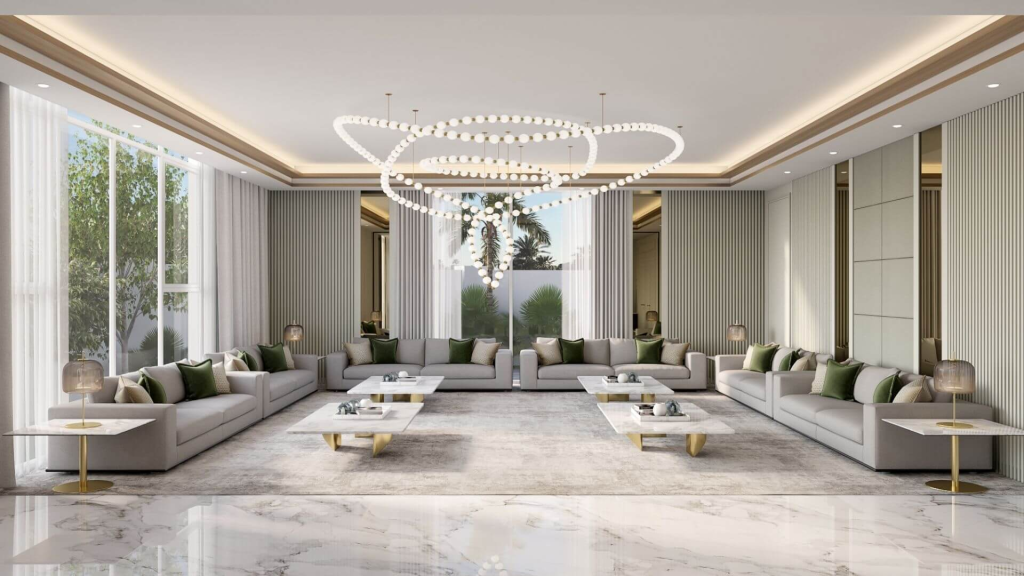
When rooted so strongly in culture and society, a space like the majlis will find its place irreplaceable, even with time. As Gulf cities transform into futuristic metropolises, the majlis has evolved alongside them. They extend beyond just homes and can be found in contemporary spaces like cultural centres and government institutions.
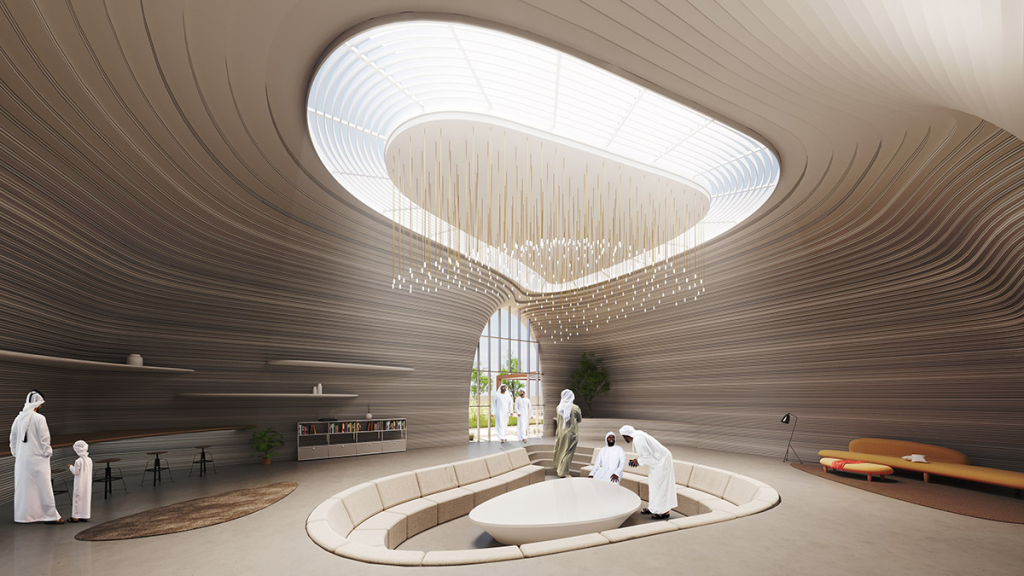
In a modern context, a majlis-style lounge helps establish a non-hierarchical social space where collaborations and dialogues are free-flowing. Contemporary interior designers integrate traditional geometric motifs, heritage weaves, and warm ambient lighting with modern marble and glass structures, allowing these age-old staples to evolve with time.
Ultimately, whether centred around a desert campfire or inside an urban penthouse, the anatomy of the majlis remain unchanged. It serves as a reminder that meaningful human connection, shared stories, and sincere hospitality remain central to Arab society.