


WORDS BY PRIYANKA PRADHAN
Beyond Sicily’s crowded postcard towns lies Ragusa, a baroque hill city best discovered slowly, through arterial streets, old rivalries, and lingering afternoons.
There’s no salty sea breeze, no music pouring out of speakers from raucous after-parties, no signboards with whimsical names of restaurants in English. Sicily’s Ragusa is the diametric opposite of a tourist trap.
I sit outside a sunlit pasticceria on a late morning, working my way through a slice of Scaccia Ragusana – a homegrown flatbread that sits midway between a calzone and lasagna. A local couple squabbles loudly across the piazza, soap-opera style, much to the amusement of an elderly audience, grinning from their benches. I squint into a pink oleander tree in full bloom, pretending not to watch.
The thunder of church bells above the piazza breaks the melodrama, much to my relief, even though the rest of the spectators look disappointed that the show’s over. The hitherto-squabbling couple walks hand-in-hand onto the grand steps of the Cathedral of San Giovanni, looking deeply into each other’s eyes. You’ve got to love the Sicilians.
The spring air is warm and still, spiced with fresh aubergine and tomato, as I follow the couple into the Cathedral – the focal point of Ragusa Superiore. Rebuilt after the tragic earthquake of 1693 that devastated most of southern Sicily, its baroque façade has drawn global attention. Its unique interior architecture manipulates natural sunlight to illuminate ornate sculptures of angels watching over worshippers at different times of the day. Unparalleled in drama, symmetry, and scale, the cathedral’s cinematic setting and ingenuity in construction have earned worldwide fame, yet somehow remains refreshingly non-touristic. This Sunday, locals throng inside for morning mass, children giggling as they chase pigeons on the chequered terrace.
“Ragusa has twin souls. Ragusa Superiore is a city built after the earthquake, with a modern urban plan, a stronghold of ‘Sangiovannari’ people,” says Serena Pizzo, a local resident and curator I met on the Cathedral’s grounds. “Ragusa Ibla, the original city, existed before the earthquake. It was completely reconstructed in the late Baroque style in the old urban plan – narrow streets and houses perched on top of each other – the city of ‘Sangiorgiari’ people and nobility. The two have been divided for a long time, in constant competition due to that parochialism that’s very common everywhere in Italy, often leading to rivalry between the two neighbouring cities.”
The daily rush of mid-day visitors from Noto and Siracusa swim across the cobbled arteries of Ragusa as they frantically tick off some of the 18 UNESCO-listed World Heritage sites in this town. Not on the checklist is the quiet, alluring soul of this unique Sicilian gem.
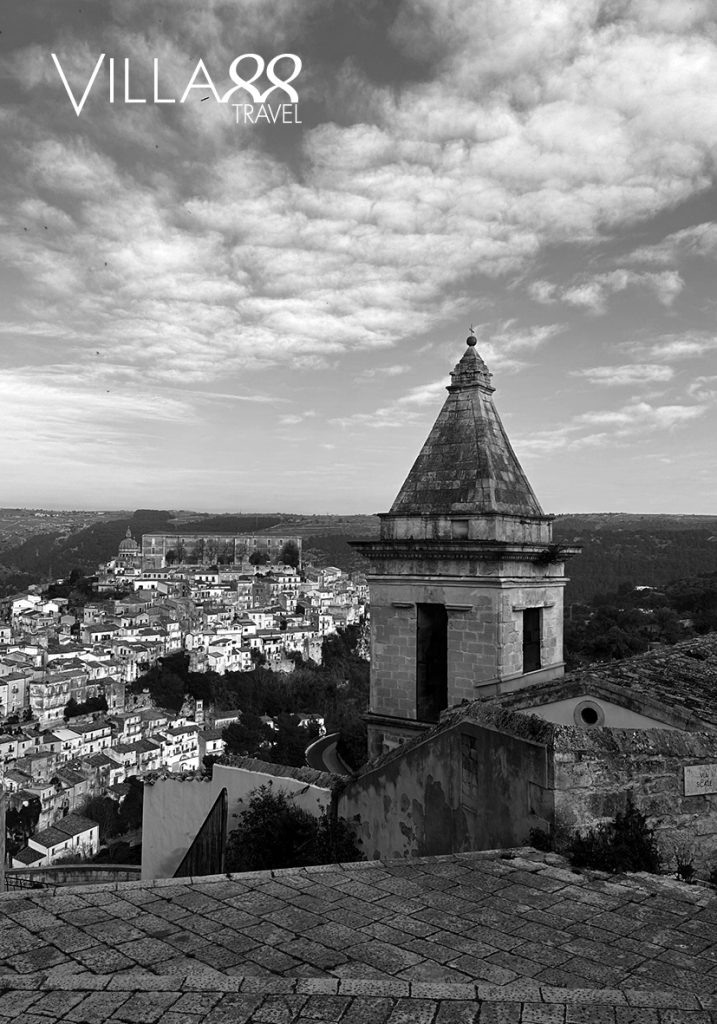
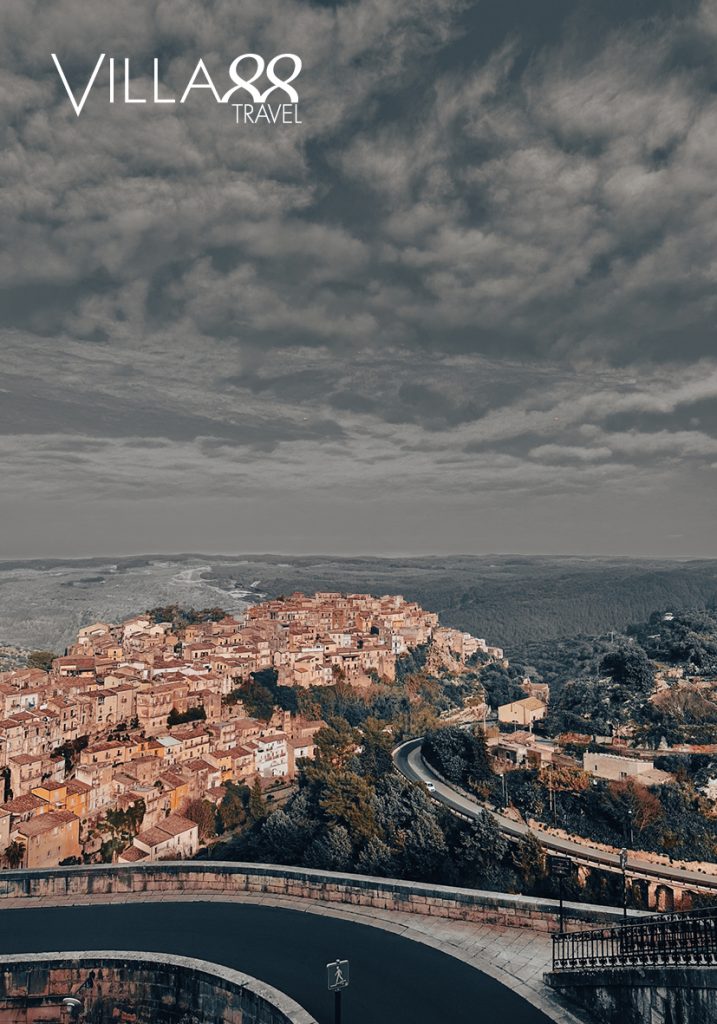
Few tourists linger long enough to acquaint themselves with its quiet charm – I realise I’m in the minority as I trek alone towards the old city of Ragusa Ibla. I follow impossibly narrow but well-trodden pathways, punctuated only by flowering creepers climbing out of crevices or bursts of wild daisies. Ibla’s colourful, stacked homes stand in stark contrast with aged limestone walls and the cloudless, bottomless sky.
“You’ve seen this, right?” says the chef and owner of Scale Del Gusto. The restaurant, arguably the town’s most famous, has sweeping views of the valley overlooking Ragusa Ibla. As I settle in for a bite, I’m told I’m at the filming location of Inspector Montalbano, Italy’s beloved TV series. In the show, Ragusa Ibla stands in for the fictional town of Viagata, and the much-loved main character navigates the same narrow streets, solving crimes and nabbing thieves. The series is so popular in Italy that people actually come here especially for ‘Montalbano tours’ to see filming locations across Sicily.
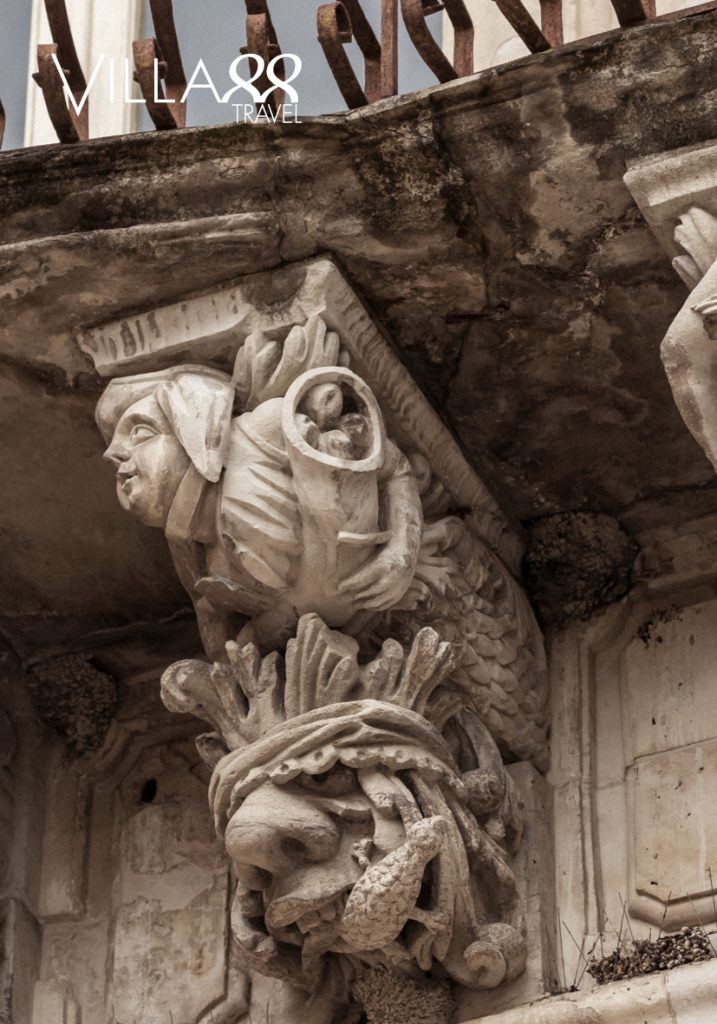
After this brief brush with glamour, I head deeper into the alleyways, where elaborate, sometimes grotesque faces, carved under balconies, guide me like spirits of the land. Called ‘mascaroni’, these are one of the most distinctive features of Sicilian baroque architecture from the late 1600s and early 1700s. Instead of using brackets to hold up balconies, sculptors of the time used these faces for structural support and as protective talismans. Some sport grimaces or smiles, while others stick out their tongues out or bare their teeth. This playful detail makes the town almost theatrical, but some of these ghoulish musicians and jesters from Palazzo Cosentini haunt my dreams later at night.
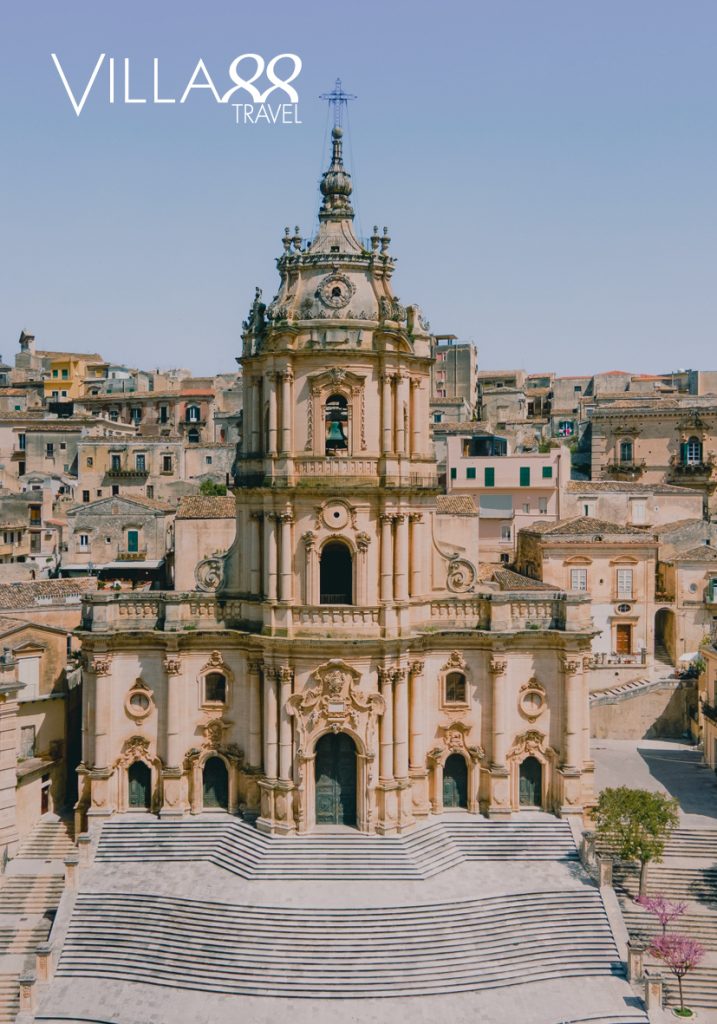
As I reach the Cathedral of San Giorgio in the other twin town of Ragusa, the sun begins its journey down into the horizon, shining dramatically on the main square, whose sweeping staircase and honey-coloured limestone façade rise into the fading sky. The graceful vertical rhythm of columns, statues, and curving lines are crowned by an elegant dome that dominates the skyline of the old town.
I marvel at it from the foot of the staircase, dwarfed by its exuberance, an olive-oil ice cream in hand. I never thought I’d ever put the two terms together in a sentence, let alone a cone, but here in Ragusa, it’s a staple. The peppery, gold green, intensely aromatic olive oil is the pride of Ragusa, as is the emblematic Ragusano, its renowned cow’s-milk cheese. Together, they represent the flavour of the land.
“Here in Ragusa, the pace of life has remained slower – people still take time to chat with the passers-by, slowly sip coffee outdoors, and linger long enough to enjoy the sunset,” says the person I buy the cheese from.
I realise the true character of Ragusa cannot be discovered in a few hurried hours. The city rewards those who wander without purpose, and emerges slowly in long conversations with strangers. It takes willingness to make friends with its ghosts.
Just like the squabbling couple I saw earlier in the day, I see how the twin souls of Ragusa can never be far apart in spirit. They must come together each day to become this beautiful, mysterious town waiting to be discovered.
As I head back to my hotel, I pass an epitaph by one of Ragusa’s most prolific writers, which sums up what Ragusa is probably too shy to say.
“You have to be smart to come to Ibla. It takes a certain quality of soul, a taste for silent and ardent stones, the blind alleys, the useless twists, the stairs, streams, and squares with adventurous shapes, and a peeking gaze behind the closed shutters.” – Translated from the book Light and Mourning by Gesualdo Bufalino (1920-1996)
Few tourists linger long enough to acquaint themselves with its quiet charm – I realise I’m in the minority as I trek alone towards the old city of Ragusa Ibla.