


“Something that’s genuinely original and innovative is really resonating with people.”
On the surface, Ian Douglas’ words seem hyperbolic. But he has been a luxury jewellery maker for more than 40 years and, being a Kiwi, is not known for boasting.
Ian and The Village Goldsmith, the company he co-founded with wife Christine in Wellington, New Zealand, have created a way of displaying diamonds that seems to defy gravity, dubbed the Floeting Diamond (spelt that way because, like the innovation itself, it’s completely original).
“It looks so simple, but there’s so much that’s gone into it,” he says. “It’s all about the gem, free of impediments of metal or bezels.”
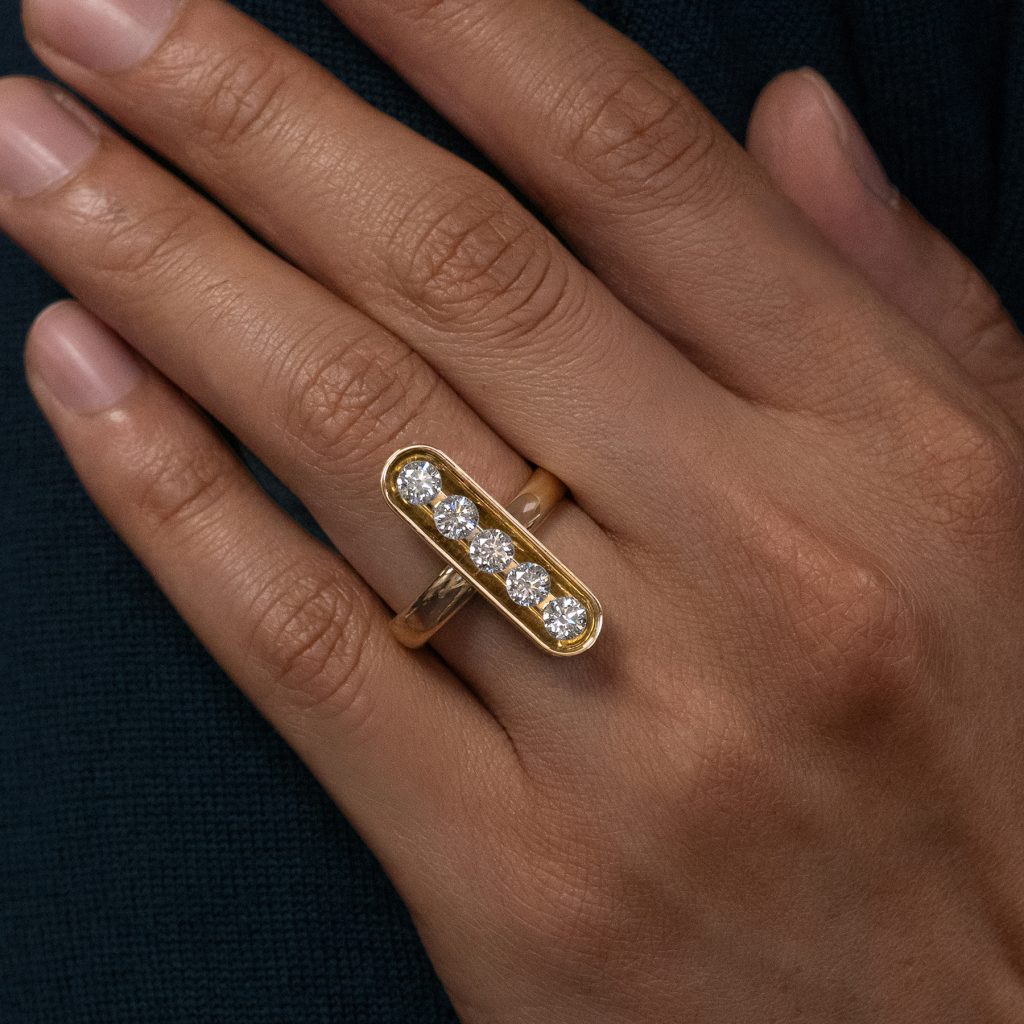
Individually crafted in New Zealand, each ring, earring and pendant features a prongless, clawless, and claspless setting that maximises brilliance while ensuring security, creating the optical illusion of a diamond “floating” above the band. Each diamond has 89 facets, 50 per cent more than the average round brilliant-cut diamond.
It took nearly 20 years to go from the initial concept to the launch of Floeting. At one point, an ex-Formula-One process engineer, Grant Lumsden, was brought in to help with the physics of the patented invention.
“The traditional design barriers are now reduced,” Christine Douglas says of the Floeting’s design.
“It allows you to create the purest of designs and really just opens up the whole diamond,” adds co-director Chris Benham.
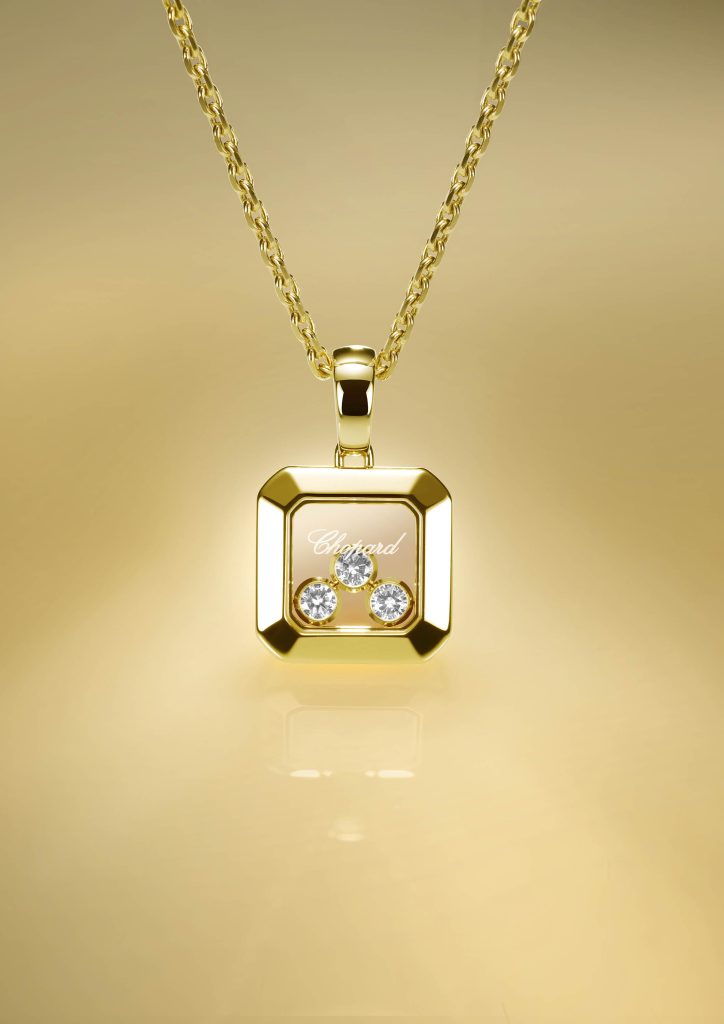
Other jewellers have tried defying gravity with their stones in different ways. Chopard’s Happy Diamonds have been one of their most iconic collections for decades, seeming to twirl and dance to reflect light and express a carefree joie de vivre.
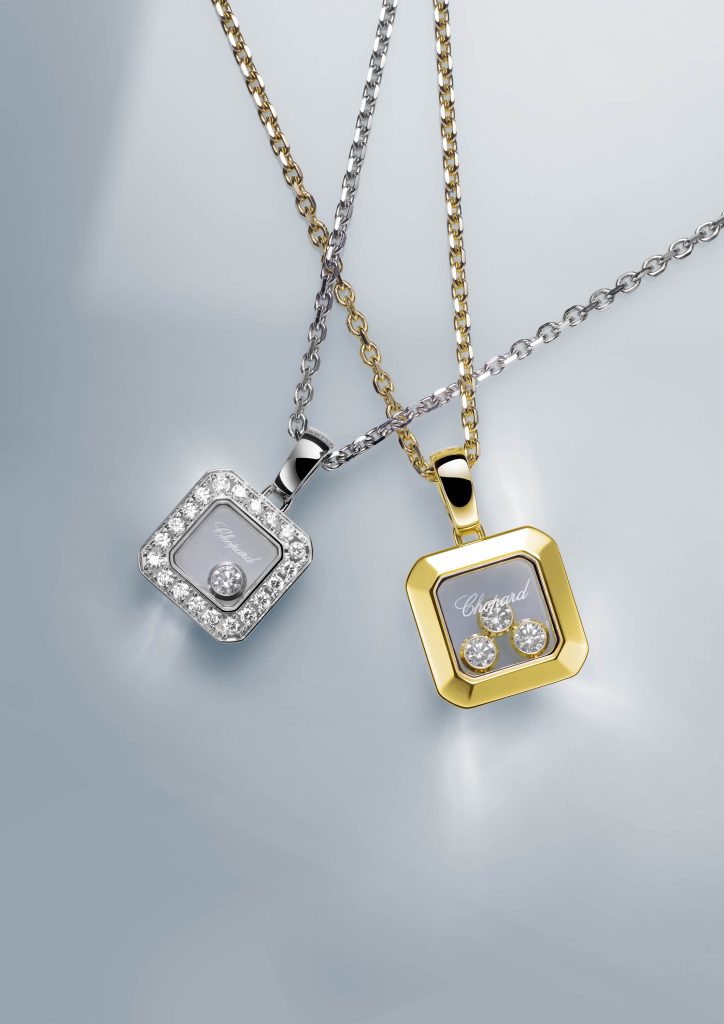
The Happy Diamonds range has expanded to include bangles, pendants, and more. In 2022, the brand launched a Happy Diamonds – Happy Me capsule collection, pendants combining diamonds housed between two sapphire crystals in a spinning gold top with letters of the Arabic alphabet.
There’s also Happy Sport, watches “for women who move boldly through life”. One timepiece draws inspiration from safari aesthetics with a khaki green dial and rose-gold-toned hour markers and hands, encased in 36 mm Lucent Steel with subtle golden accents.
In Belgium, Baunat has developed L’Atypique. French for “unconventional”. Here, ultra-minimal prongs are used to create the appearance of diamonds floating above slim, 18K gold or platinum bands. Visual lightness, clean lines, and modern silhouettes further help pieces stand out. In addition to single-stone solitaire rings, the range includes pendants and earrings.
Family-run Schaffrath, based near Frankfurt, Germany, has developed a setting that makes a solitaire appear to hover inside a minimal metal structure. The Liberté, a patented setting introduced in 2002, gives the diamond full, 360-degree freedom of movement. It required more than 1,000 hours to perfect.
As more brands create floating-type pieces, retailers are taking notice. The Village Goldsmith has recently partnered with Tiffany & Co., which means Floeting Diamonds can be found at Tiffany’s boutiques worldwide, including in the Gulf.
Happy Diamonds remain one of Chopard’s biggest sellers. The list of celebrity fans of the designs is also lengthy, including Julia Roberts, Bella Hadid, Rihanna, Léa Seydoux, Julianne Moore, Angelina Jolie, Dorra Zarrouk and Cate Blanchett, while royals seen wearing the collection include Sophie, the Duchess of Edinburgh. A Happy Diamonds watch was also made for King Fahd of Saudi Arabia.
The Village Goldsmith has celebrity and royal fans who have bought pieces, too. Pharrell Williams has used the Floeting platform to create solitaire necklaces, rings, and earrings as part of his Titan Setting collection, which debuted in early 2025.
Beyond the jewellery world, Floeting Diamonds won a Gold Pin at Australasia’s Best Design Awards. They also won Most Innovative Hi-Tech Creative Technology Solution and Most Innovative Hi-Tech Manufacturer of the Year at New Zealand’s Hi-Tech Awards in May. It’s the first time a jeweller has won, beating out multinational tech companies with multimillion-dollar research and development budgets.
Ian Douglas says the accolades prove the Floeting, along with similar physics-challenging designs, is more than a trend.
“We always try to innovate, to think outside the box. It’s in our DNA,” he shares. Chris Benham adds, “We’re only touching the surface of the possibilities.”