


“I feel this is turning into a therapy session!”
Omar Al Gurg is laughing. In a classic writer/artist conversation, we had been discussing the importance of not getting drawn into the drama of other people’s schedules, and how deadlines can stifle creativity, leaving us amused at how deep the conversation has suddenly become.
It’s an occupational hazard though, because it’s so easy to get drawn into Omar’s world, filled as it is with accessible art talk, nature’s inspiration, and his exploration of the intimacy of inanimate objects. One minute you’re talking about his anthropomorphic tendencies towards furniture, and the next you’re discussing how moody his pet cockatoo, Butter can be.
What can we put this down to? Mostly his easy charm, good humour, and natural, boyish curiosity, the heady, warm mix of which will make for a delightfully effervescent and esoteric experience when he takes the helm at the inaugural Jumeirah Marsa Al Arab x Omar Al Gurg x Villa 88 Travel event.
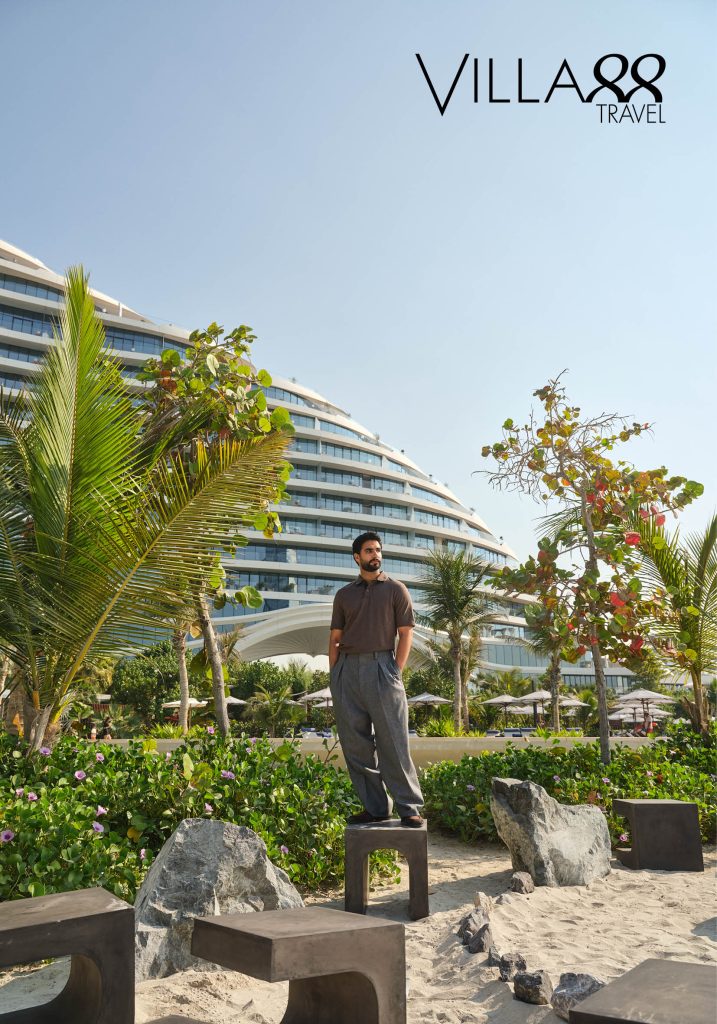
From January 23-26, 2026, at the invitation of Villa 88 Travel, Omar will be in residence at the Jumeirah Marsa Al Arab, where, across three days, the feted Emirati multi-disciplinary artist will take an exclusive group of invite-only guests on a journey through his creative processes. Using photography, storytelling, and selected curation to encourage active participation and build a sense of closeness – not only between artist and audience, but between person and product – Omar will be creating “intimate moments for people to be able to interact with the furniture.”
“It’s really exciting,” he says of the event. “This is not just about seeing the art pieces; I want people to use them. We’re kind of like an interactive residency for people to be able to explore our brand and see how they fit into spaces, whether at the hotel or at their house; that’s why I lean into the whole intimacy aspect.”
As well as a guided tour of his artworks, the residency also includes spontaneous photography sessions and a highly anticipated sunset ritual each evening hosted by the artist himself at the hotel.
“The sunset ritual is a storytelling session,” he reveals. “People will sit around the fire, and I will be telling stories. Luckily, my father is a storyteller, so I will also be sharing stories from his book of life. I want it to be a learning experience. What I want guests to take from the sunset ritual is anything they could learn from the process of the storytelling.”
Chronicling looms large in Omar’s life. Not just the act itself, but the myriad genres and offshoots the art form has spawned. “I love literature and learning,” he enthuses, twin passions that are evident in the imagination he has brought to Modu Method, his creative, community hub-style atelier in Jumeirah. In Omar’s world, the inanimate – coat stands, bookshelves, chairs, those everyday items we use without noticing but without which we could not function – are given deep interior lives and personalities, igniting conversations around furniture that go beyond form and function. The creativity he lavishes on the fixtures, fittings, and applications which silently support us throughout the day allows us to consider the possibility that our longest. and deepest, relationships are with the objects we surround ourselves with.
“You take them for granted,” he says. “We use furniture almost one hundred percent of the time. We’re in bed, sitting on a chair or perhaps holding a plate, which is an accessory and something people would consider to be furniture. We’re always using something, so always there is that moment of interaction between us and that object. So, I think we should respect those objects and ensure people appreciate them in the right way.”
Furniture could not find itself a bigger champion than Omar, although he didn’t get his start in that discipline. Initially, there was the bachelor’s degree in architecture from Queen’s University Belfast, Ireland which gave him a foundational appreciation of spatial awareness and how things come together. Time spent as an intern at Zaha Hadid Architects must have been illuminating for a young man with a love of aesthetics and erudition, while his ongoing involvement in the family firm, Easa Saleh Al Gurg Group, keeps him grounded in family dynamics along with his brother.
The shift to product design was one that had been percolating for a few years before he started Modu Method in 2020 (“but officially 2021”). Now in its second Jumeirah home, after he was gently evicted from his first villa (“they said they were going to demolish it, but it’s still there!”) the space has become over the past few years, a hub of aesthetic activity.
“You see the whole house decked out in Modu because we want people to interact with the furniture,” he explains. “We didn’t want a white cube or a gallery-esque showroom. We wanted it to be a villa, a community space where we also host events and collaborate with others.”
Invariably attracting taste-makers, designers, and fellow creatives, Modu Method aficionados flock there to experience the future through an experimental lens Omar has trained firmly on the past.
“There are two eras from which I draw inspiration: mid-century style and the 1970s,” he says. “Technology was very limited in the 70s, it was there because we needed to use it, not because we wanted to. People had very limited options when it came to technology which I think made them more social, more confident, happy, and grounded. Life is very convenient now, especially in Dubai where we are very spoilt. Don’t get me wrong, we’re very lucky to be able to live this way, but it’s important to realise that things that are not convenient can also make us happy.”
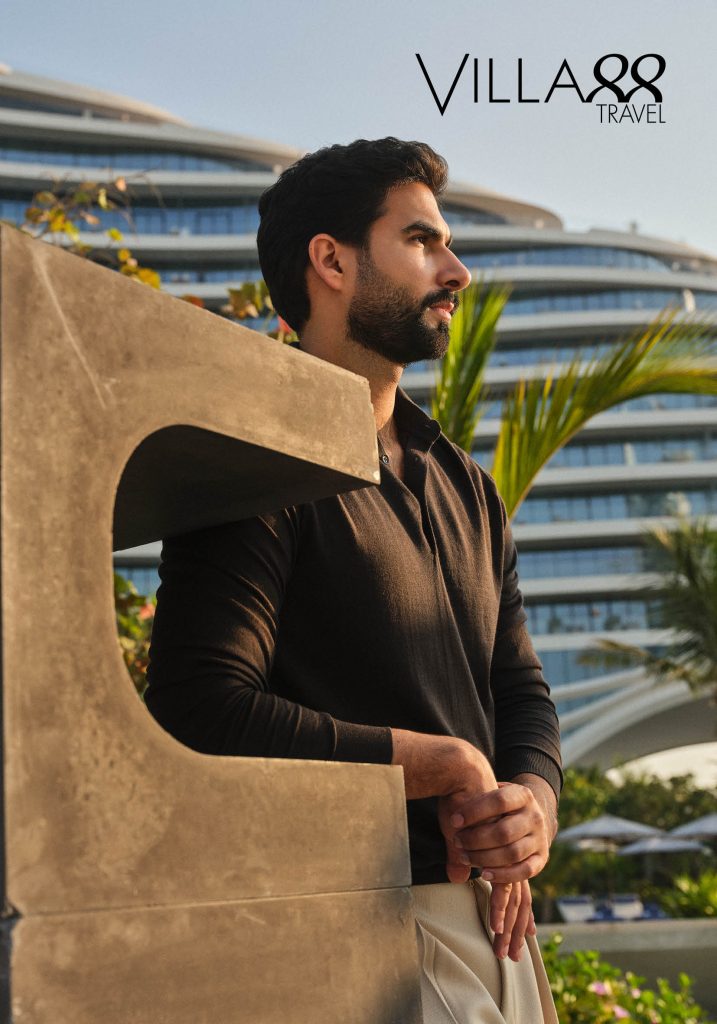
The ’70s might have been disco-ing their way through history two full decades before ’90s baby Omar was born, making him a cuspy Millennial/ Gen Z, but his outlook, calm demeanour, and preference for “getting away from the hustle, bustle” of daily city life adds layers of maturity that bely his 30 years. One gets the feeling that, chatty and equanimous as he is, he could easily take or leave social company, being as at home with himself as he is amongst his friends.
“I used to keep to myself as a child,” he recalls thoughtfully. “I would spend a lot of time in the garden, collecting plants and making little potions.”
This affinity with the natural world, fuelled by a private joke with his friends, would eventually find Omar at the bottom of Mount Kilimanjaro in northeastern Tanzania.
“Me and my friends went hiking in Ras Al-Khaimah which turned out to be more of a bouldering trail,” he laughs. “We ran out of food and water, and the sun was starting to hit us badly, so by the time we finished we said: ‘Hey if we can do this, we can do Kilimanjaro’. We were joking, but three weeks later we were booking the trip.”
The 2021 adventure resulted in an exhibition in August this year at Lawrie Shabibi gallery in Alserkal Avenue. Titled Everyman’s Mountain, it documented his visit to the mountain, the organic-ness of the trip exacerbated by the images which were printed on simple cotton rag and pinned frameless to the walls, lending a gentle starkness to the audience experience.
“When I would see people’s pictures of Kilimanjaro, there would be all these images of them at the top saying: ‘Hey, I made it’, and I never found ones that showed me exactly what the landscape was,” he says. “When I went, I was like: ‘There’s an entire rainforest here!’ There are moorlands and heathlands, all of these things I got to experience that people don’t talk about. I also wanted to showcase how important the porters were because without them we would not have made it up the mountain.”
Omar’s thirst for knowledge, his need to know goes part way to explaining his predilection for giving his furniture human names. In this way, he not only gets to meet them himself, but also to introduce them to others. After all, a chair is a chair, but a chair named Coco? Well, she’s practically part of the family. “Everybody loves Coco,” he declares. “It’s a rocking chair on the ground and it looks a bit like a coconut shell or bathtub. People love to rock around in Coco.
“I like to humanise the pieces of furniture,” he adds. “It pays homage to how important they are to our daily lives and how we should interact with them. When you give a piece a human name and say ‘he’ or ‘she’ instead of ‘it’ or ‘they’, it helps you appreciate and build a relationship with it. That is the most important part to me, to create that sentimental relationship people have with their items.”
Now seems like a good time to introduce some of these members of Omar’s extended family. There’s Spike the coat hanger (“the first piece I ever designed”) and Triss the coffee table, Gene the stool-slash-side table, Shelly the console, and Ned the floor-level sofa.
From what he reveals next, one would surmise that if Ned and Coco were human, they would be Omar’s top tier-level friends; his besties.
“I’m super fidgety,” he admits. “So, I like to sit in Coco. Plus, when I do, I’m practically sitting on the ground which is my favourite place to sit. Even if I’m at somebody’s house and there’s a couch right behind me, I’m still going to get off the couch and sit on the ground.”
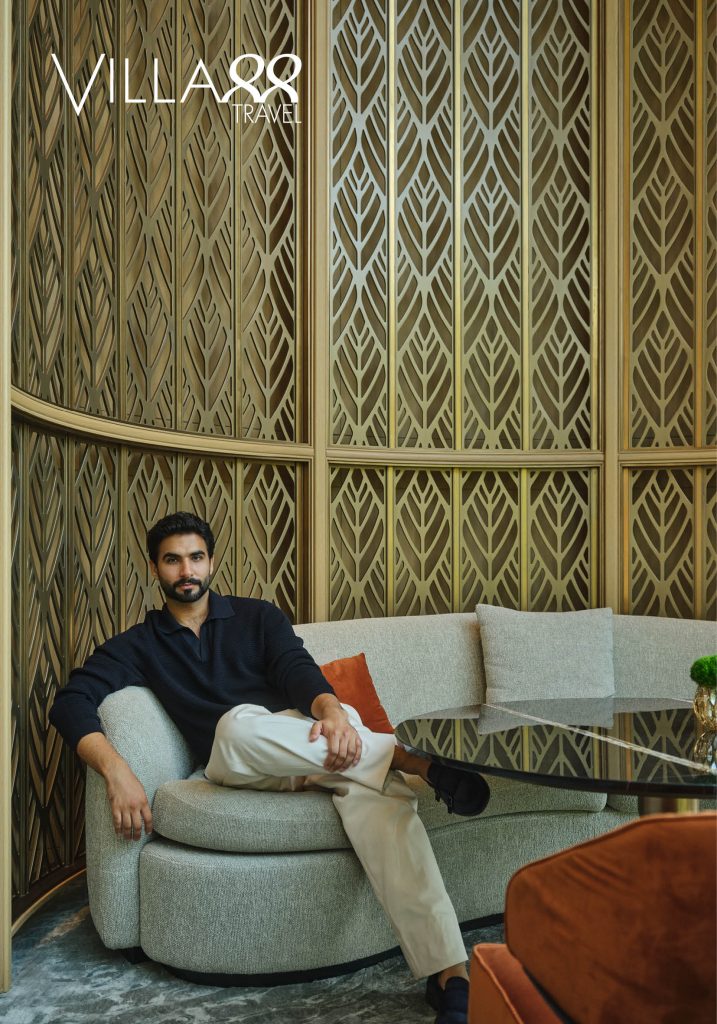
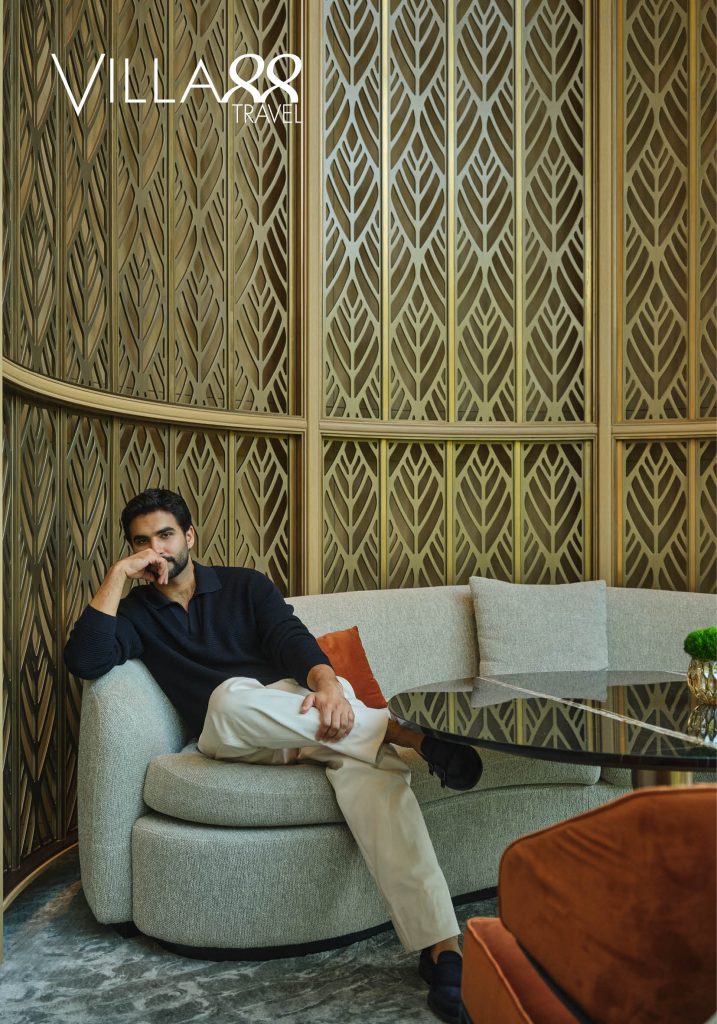
The artist has been portrayed through many iterations throughout history in art, literature, film and beyond. The classic image of the tortured soul locked in their ivory tower as they grapple with their creative genius is a classic, but one which could not be further from Omar’s experience.
“Everyone hangs out with everyone, and everyone knows everyone,” he says of the friends and connections he has forged through furniture. “We’re always sitting with each other and exchanging ideas, it just happens naturally. Without the community, I wouldn’t have been able to grow my studio and have this much recognition, because the people around me always said: ‘If you need something let us know’.”
Modu Method was created to welcome all, and it is testament to Omar’s generosity of creative spirit that he prefers to hear others’ interpretations of his work before offering his own.
“I like to hear people’s first impressions,” he says. “I prefer that they decide in their own way, because I think that most of the work I do is, I don’t want to say vague, more open to interpretation.”
Open-endedness might be a suitable approach when it comes to expounding on an artistic theme, but there’s a precision in Omar’s work that points to a razor-sharp awareness of the world around him and how he and his designs fit into that environment.
“By nature, I’m a problem solver,” he shares. “I think of a common household inconvenience – something that slightly annoys me or is a pet peeve – and I find solutions. For example, I dislike going to somebody’s house and putting my coffee on the coffee table and then not being able to reach it when I sit on the couch. People don’t think about this, but for me I’m like: ‘How do we solve this?’”
For the non-designer, the choice is stark: either lean forward out of your chair every time you want a sip or hold the cup for the duration of the drink. But if you’re Omar…
“So, I designed this coffee table that can be scattered, and you can put each of these blocks as your own side table, that’s where the idea comes from – all these pieces of furniture solve an inconvenience.”
Does this – how can I put this delicately? – make him a bit of a nuisance when it comes to visiting friends’ houses? I mean, how comfortable can you be when you suspect your friend is irked by your coffee table and silently rearranging your furniture in his head?
“My friends don’t invite me over!” he laughs. “They say: ‘The house is not ready yet,’ and I’m like: ‘I’m not going to say anything!’
“We’re all actively learning, even if unintentionally. If I’m in a space, I’m processing, looking at details in the room, thinking: ‘This is interesting, maybe I can use that detail’, or ‘I really wish there was a painting here’. And I do find it slipping off my tongue: ‘You know what you can do with this wall…’”
Omar’s Instagram (@oalgurg) bio reads: “Architecture, Photography, Furniture, Other”. As far as descriptions go, it’s a characteristic nod to the gentle opaqueness which allows him to move so easily between the material and creative worlds. So, what constitutes ‘other’?
“Diving, ceramics,” he offers. “A lot that I do in the ‘other’ makes me feel more grounded. I think of myself as a multi-disciplinarian, mostly because I’m interested in everything and if I’m interested in something, I will go and do it. This is how I started doing pottery. I was like: ‘I want to do that’, so I bought my own wheel and went all in and soon realised I don’t know how to use this thing! So, I took a couple of classes, and I became a part of a community. I also love landscaping. I ended up learning so much about plants, wildlife and ecosystems. I look out for plants in my garden which are flowering so I can see and observe the bees, butterflies and birds.”
He pauses, the parallel he is about to draw between nature and his life, community, creativity, family, work, art, everything! spontaneous in the moment and crystal clear in perpetuity: “There’s this whole ecosystem that grows when you nurture it,” he says, “and to me that’s very exciting.”
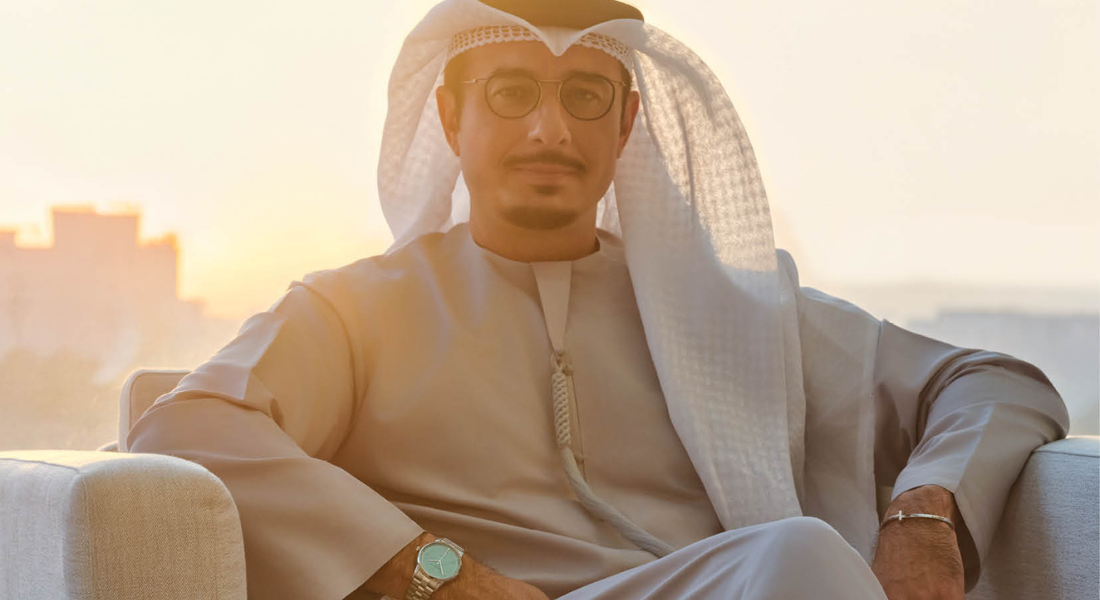
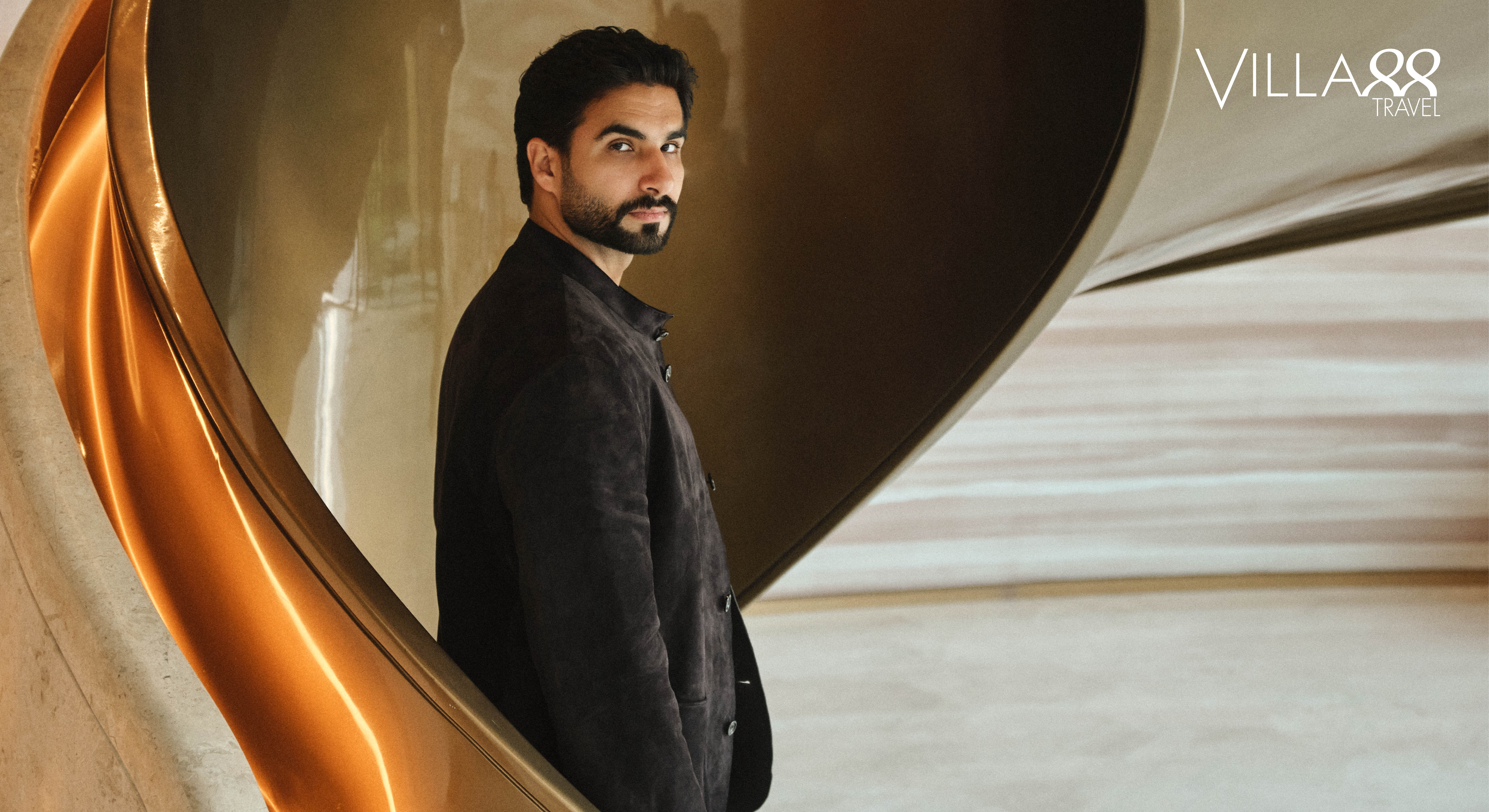
Cover image: Omar on the staircase at Jumeirah Marsa Al Arab wearing an outfit by Berluti
Words: Gemma White
Photographer: Žiga Mihelčič
Creative Direction/ Production: Beya Bou-Harb
Stylist: Polina Shabelnikova
Groomer: Mattia Esposito
Assistant Stylist: Riha Mehindi
Location: Jumeirah Marsa Al Arab