


A case for a runcation across the world.
WORDS BY LAUREN HO
There is a particular stillness to Lisbon in the hour before the city wakes. The kind that settles most completely on the Avenida da Liberdade, stretching ahead so wide and unhurried that everything feels, for a moment, entirely your own. At that hour, with the air still cool, there is nowhere
better to run, the city offering a version of itself that will be gone before most people have opened their eyes.
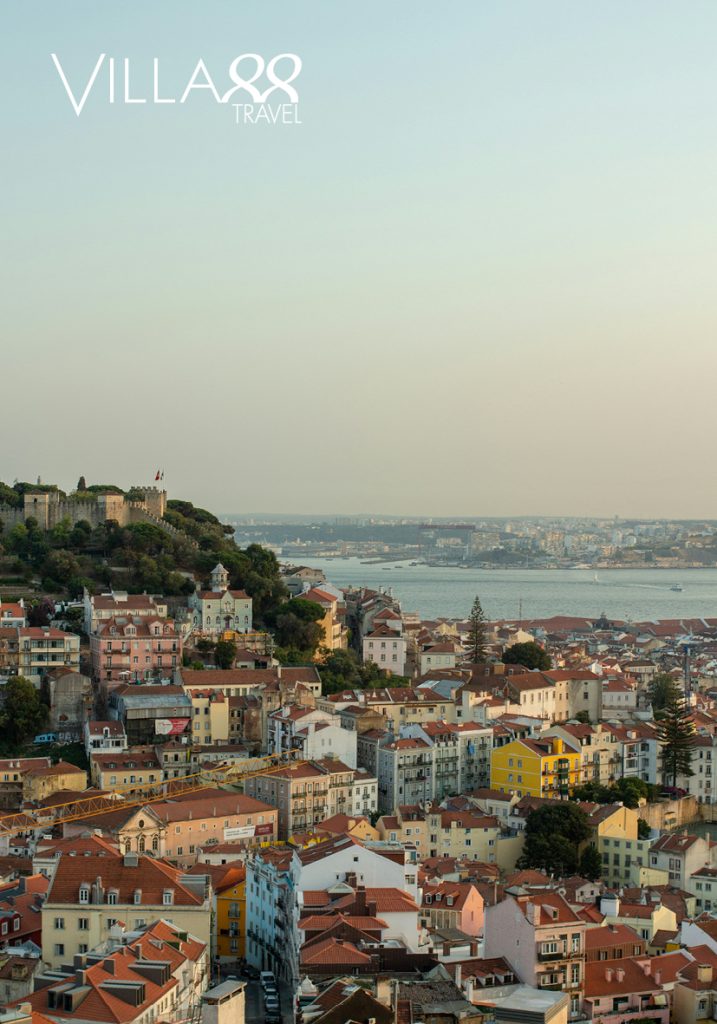
Head north and the avenue carries you up toward the Marquês de Pombal, the great circular plaza that crowns the hill, or turn south where Lisbon draws you gently downhill toward the Tagus, a river so vast that it stretches across the horizon.
From here, the city falls away behind you and the waterfront opens up, the early morning sun pouring golden light across the water, the monumental red 25 de Abril bridge hanging in the distance. There is a particular intimacy to a destination experienced this way, at this hour – the kind that seduces and lingers long after the run is over.
Running has always done this – made places personal in a way that other forms of travel do not quite manage. There’s something in the act of moving through a city on foot, at pace, with no particular agenda beyond the next kilometre, that strips the extraneous and leaves only the real.
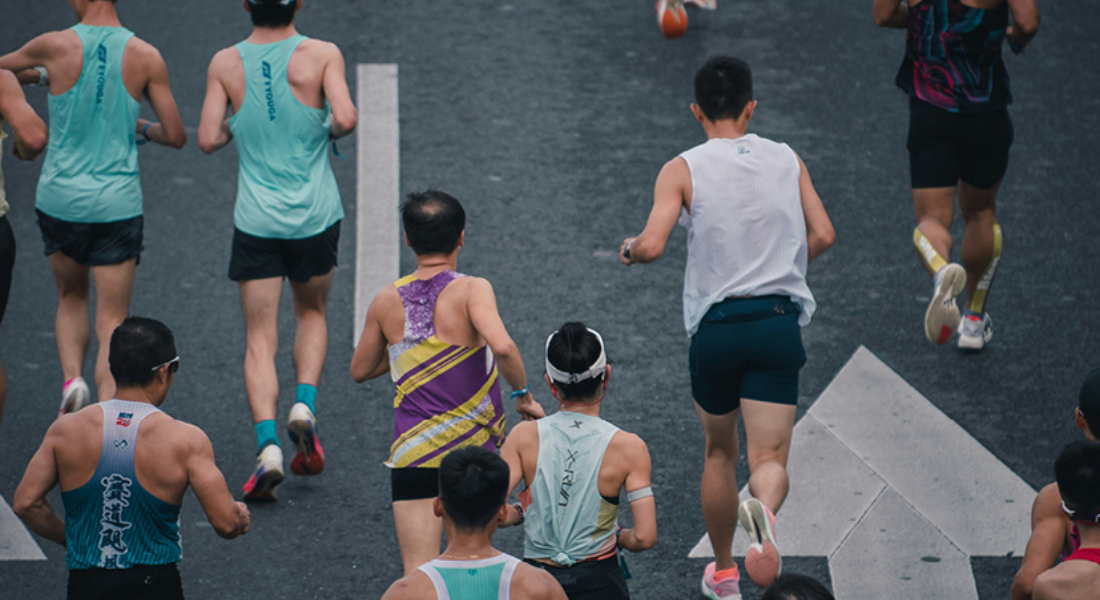
You cannot curate what you see when you are running. Everything simply unfolds around you, unrehearsed and entirely itself. What is newer, and worth paying attention to, is the way this impulse has transformed into an entire mode of travel. Running tourism is a growing phenomenon, one that has even spawned its own word – the ‘runcation’. People now arrange their years around race calendars with the same deliberateness others bring to cultural events like Art Basel or Fashion Weeks.
Tokyo in March, Boston in April, Berlin in September, New York when the leaves turn in November. These are not simply races. They are reasons, compelling and specific and deeply felt, to go somewhere, to stay longer and to let a city get under your skin in a way that a weekend rarely permits.
Aficionados book flights to Athens to run the original route, called The Authentic, the same road that has carried runners since antiquity, and feel something in the ground beneath their feet that cannot be read about or photographed.
They fly to Tromsø to run the Midnight Sun Marathon under a sky that never quite darkens in summer and cross the Great Wall of China on foot through stone that has stood for centuries, arriving on the other side having earned the landscape in a way that feels different from simply having seen it.
Dubai, of all places, has become one of the most striking examples of what this looks like in practice. In January, the city is at its most welcoming, the air cool and clear, carrying none of the weight that defines it for much of the year. And the city’s running community is one of the most committed anywhere, out before six along the Dubai Creek, at the Track at Meydan, along Jumeirah’s long, palm-lined stretches, where the skyline glitters in the dark.
The Dubai Marathon brings runners from across the world, many of whom stay on for the rest of the week – for the desert, for the architecture, for long dinners that carry on well into the January night.
A marathon route does not follow the tourist trail. It does not only take you to popular viewpoints and landmarks, but rather through the edges, the working, lived-in, unglamorous parts of a city that no curated itinerary would otherwise include.
You see Athens differently at kilometre 30 than you ever would from a terrace above the Acropolis. Running through Tokyo takes you through the city’s quieter, residential self and ordinary neighbourhoods that tourists rarely see.
New York’s five-borough route passes through corners of the city that belong to entirely different worlds, all of them compressed into a single day you won’t forget. Haruki Murakami’s memoir What I Talk About When I Talk About Running is the most honest account of what distance running does to a person, and in it he wrote that he did not take up the sport for any of the reasons people usually give.
He started because moving gave him access to a quality of thought that nothing else could, a clarity that arrives only when the body is working hard enough that everything unnecessary falls away. Pain on a long run, he observed, is inevitable, but suffering is a choice, and it is in the space between those two things that something useful tends to happen. The discipline of showing up, to a training plan, to a start line in a city you have flown to specifically for this, teaches you something about commitment that transfers slowly to everything else.
But the marathon is only the most visible form of what running gives to travel, and for many people it is not the point at all. There are those who run not for race times or finish lines but for the simple, irreplaceable pleasure of it, and who have discovered, often by accident, that a pair of trainers is the most useful travel tool they own.
A morning run in an unfamiliar city is one of the most reliable ways to get under the skin of a place, in a deeper sense of actually being there and of having it register in your body rather than just your eyes. You cover ground that a taxi would never take you through, turn corners with no reason other than curiosity, and find yourself half an hour later somewhere entirely unexpected.
A covered market glimpsed through an archway. A café on a corner you might never have noticed. A stretch of waterfront that opens up without warning and takes your breath before the running does.
This is running as instinct, as the best possible reason to set an alarm for an hour you would otherwise never see. Follow an itinerary and these things simply don’t happen. Running restores the pace at which the world becomes interesting again. At kilometre 38 of a marathon on a Tuesday morning in a city, you arrived in only yesterday, you are not a tourist. You are a person moving through a place, fully awake to it, earning it in the only way that really counts, with your body, your attention, and your willingness to be somewhere without knowing exactly what it will give you back.
The run ends, but something of it stays. The city outside is the same one you arrived in, but you are not the same person who arrived in it – and that, more than any carefully planned itinerary, is what the road offers.