


There is a sign above the entrance of La Colombe d’Or in Saint-Paul de Vence that reads, in French: “Lodging for men, horses and painters.” It tells you everything (and nothing) about what waits inside.
The story begins in 1920, when a farmer named Paul Roux and his wife Baptistine, opened a small café bar in this medieval hilltop village between Nice and the Alps Maritimes. They called it Chez Robinson. On weekends, people came to dance on the open-air terrace and artists drifted in from the neighbourhood. By the early 1930s, the café had become a three-room inn with a new name, La Colombe d’Or, the Golden Dove, and an unspoken currency: a canvas in exchange for a meal, a painting left in lieu of a room.
France had always understood something the rest of the world was slower to grasp: that artists need support before they can create. For example, on the Left Bank of Paris, Adrienne Monnier’s La Maison des Amis des Livres had turned bookselling into an act of hospitality, bringing to the trade a domesticity and warmth that encouraged friendship as well as cultural exchange. This model directly inspired Sylvia Beach’s Shakespeare and Company across the street, where Hemingway, Joyce, and Fitzgerald gathered, and which George Whitman later revived on the banks of the Seine, inviting writers, artists, and intellectuals to sleep overnight among the shelves for free , calling his guests ‘Tumbleweeds’. The cafés of Saint-Germain played their part too: at Les Deux Magog s and Café de Flore, Sartre and de Beauvoir claimed tables for their work, while La Closerie des Lilas had earlier sheltered the painters who would become the Impressionists. Across France, the gesture was the same: a table, a shelf, a room with no questions asked, with only a conviction that proximity to a creative mind was never wasted hospitality.
At La Colombe d’Or, this conviction took its most enduring form. Georges Braque and Fernand Léger were among the first to arrive, followed by Chagall, Calder, Matisse, and Picasso. During World War II, when the south of France became a free zone and artists fled Paris for the coast, La Colombe d’Or became a safe haven — a place to eat, think, and leave something behind. The poet Jacques Prévert arrived here for a film shoot and simply never left, moving into the village and becoming one of Paul’s closest friends.

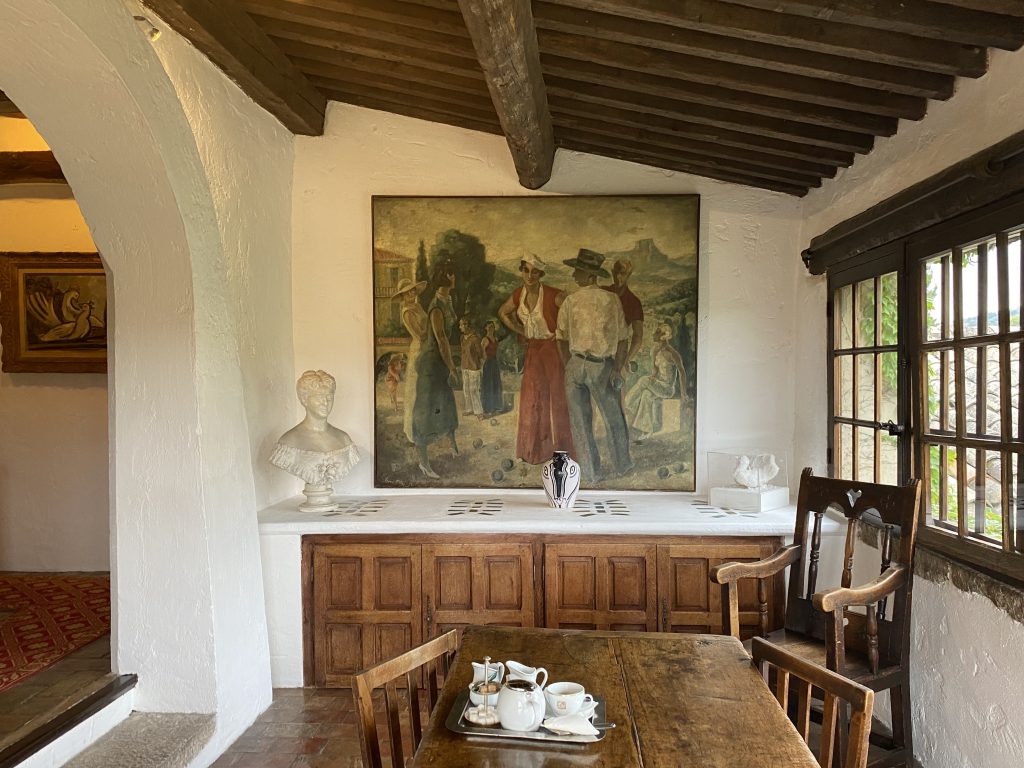
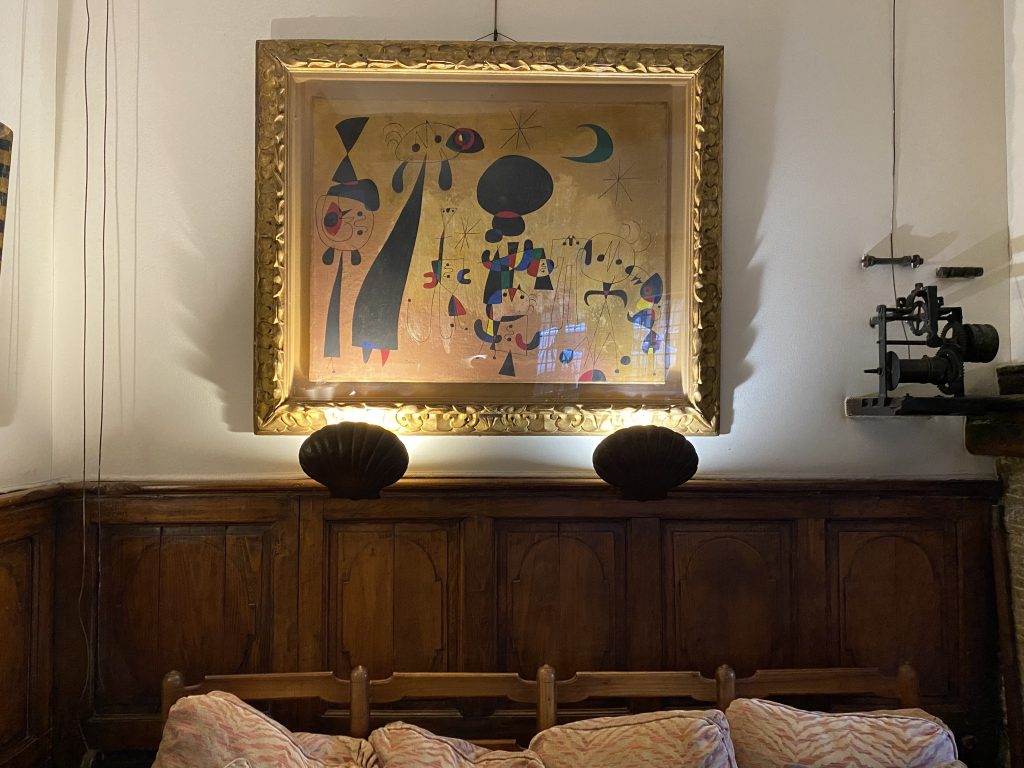
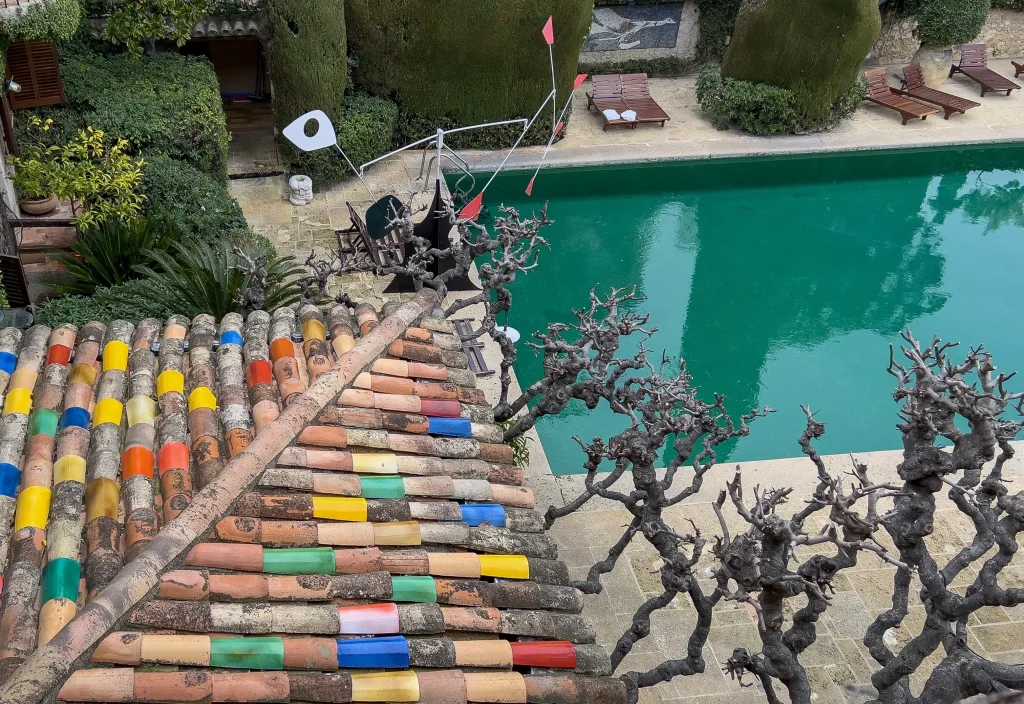
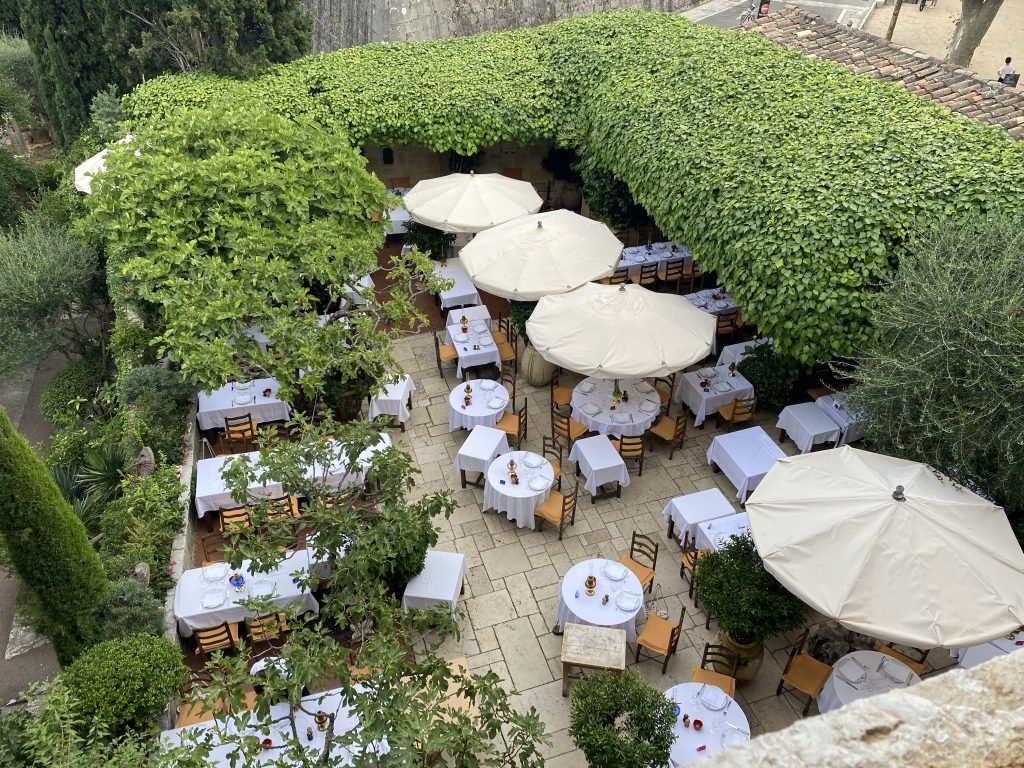
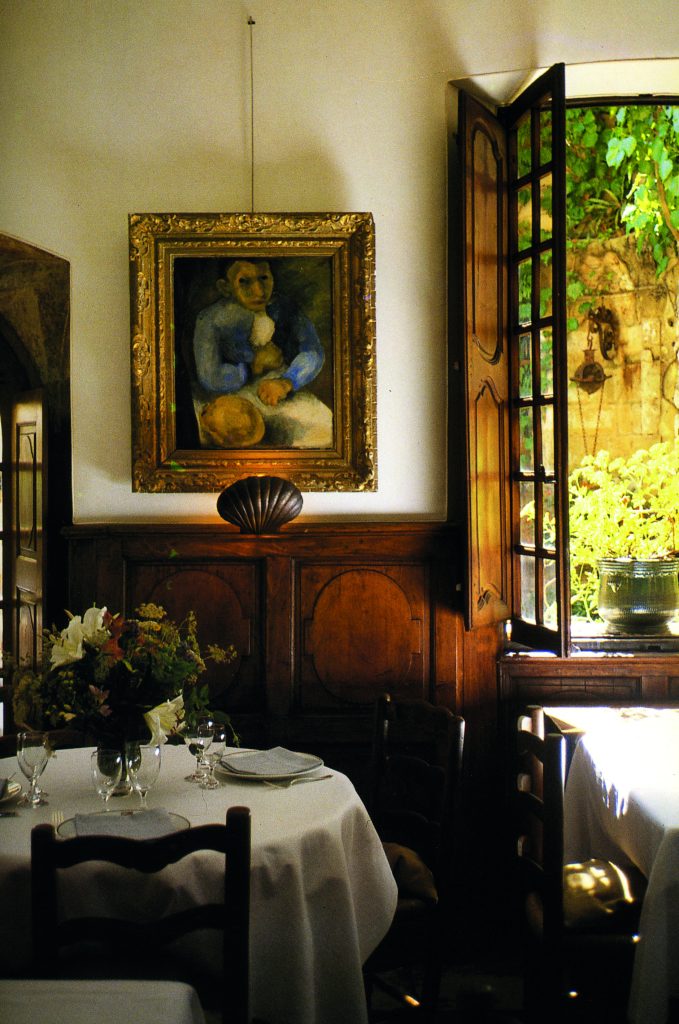
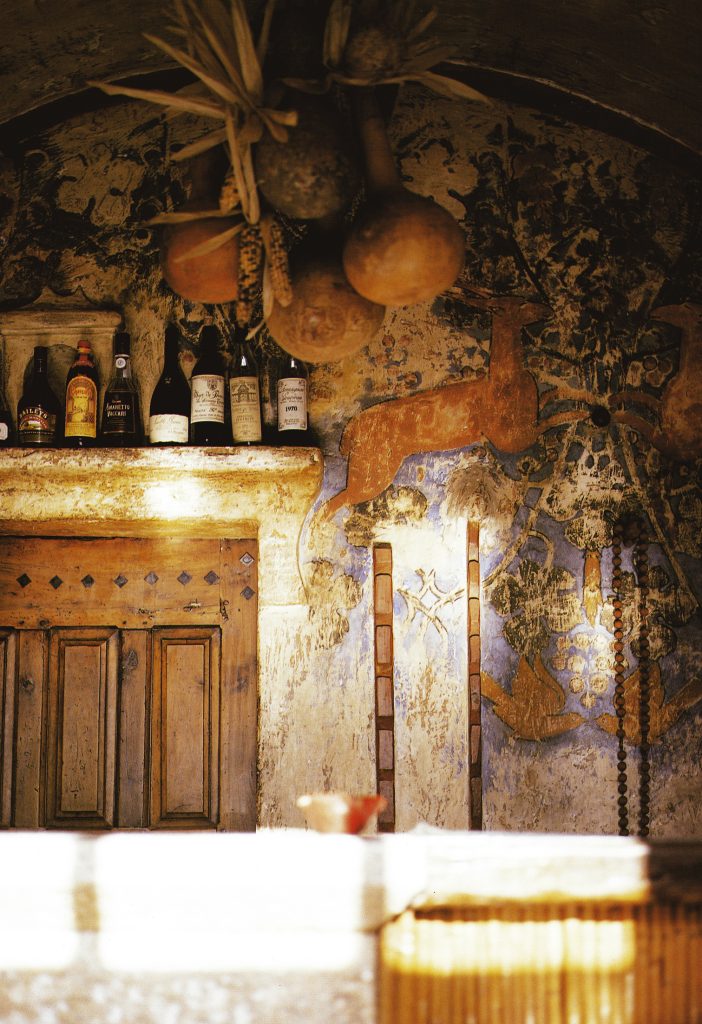
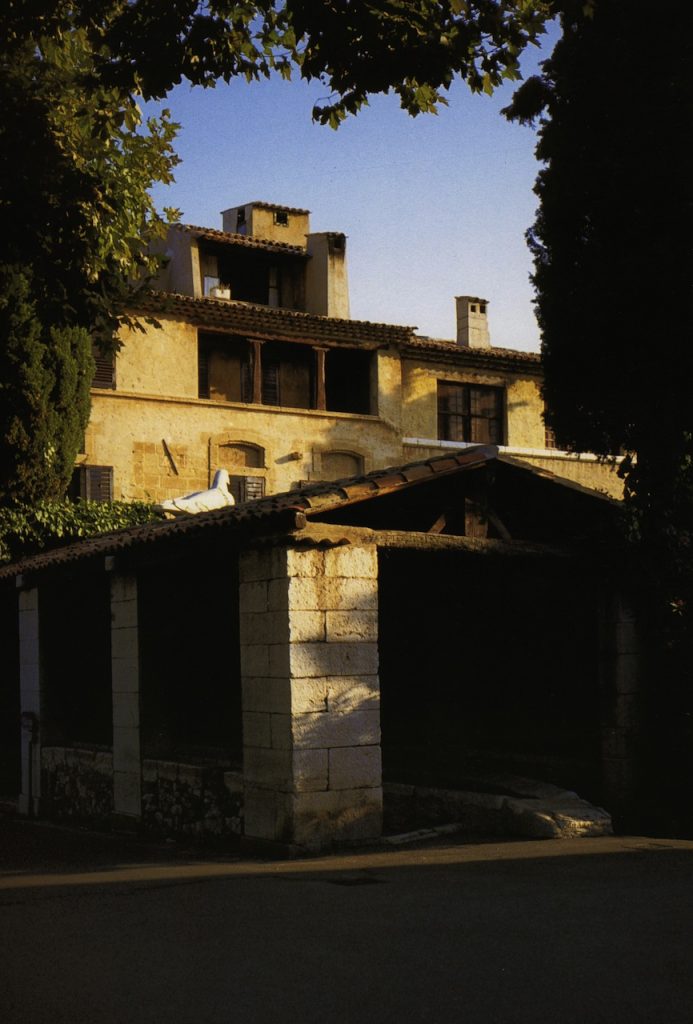
The building itself accumulated history in layers. The facade was assembled from stones salvaged from a ruined castle in Aix-en-Provence. The architect Jacques Couelle designed a sculpted plaster fireplace where the finished surface still bears the handprints of those who built it. The roof, a patchwork of multi-coloured terracotta tiles, reads from above like a painter’s palette. Inside, there are no plaques or labels — only artworks, each lit by a single lamp covered with a shell. A Picasso flower vase. A golden Braque still life. A Miró in the dining room, beside one of Paul’s own canvases, because Matisse, it is said, encouraged him to paint.
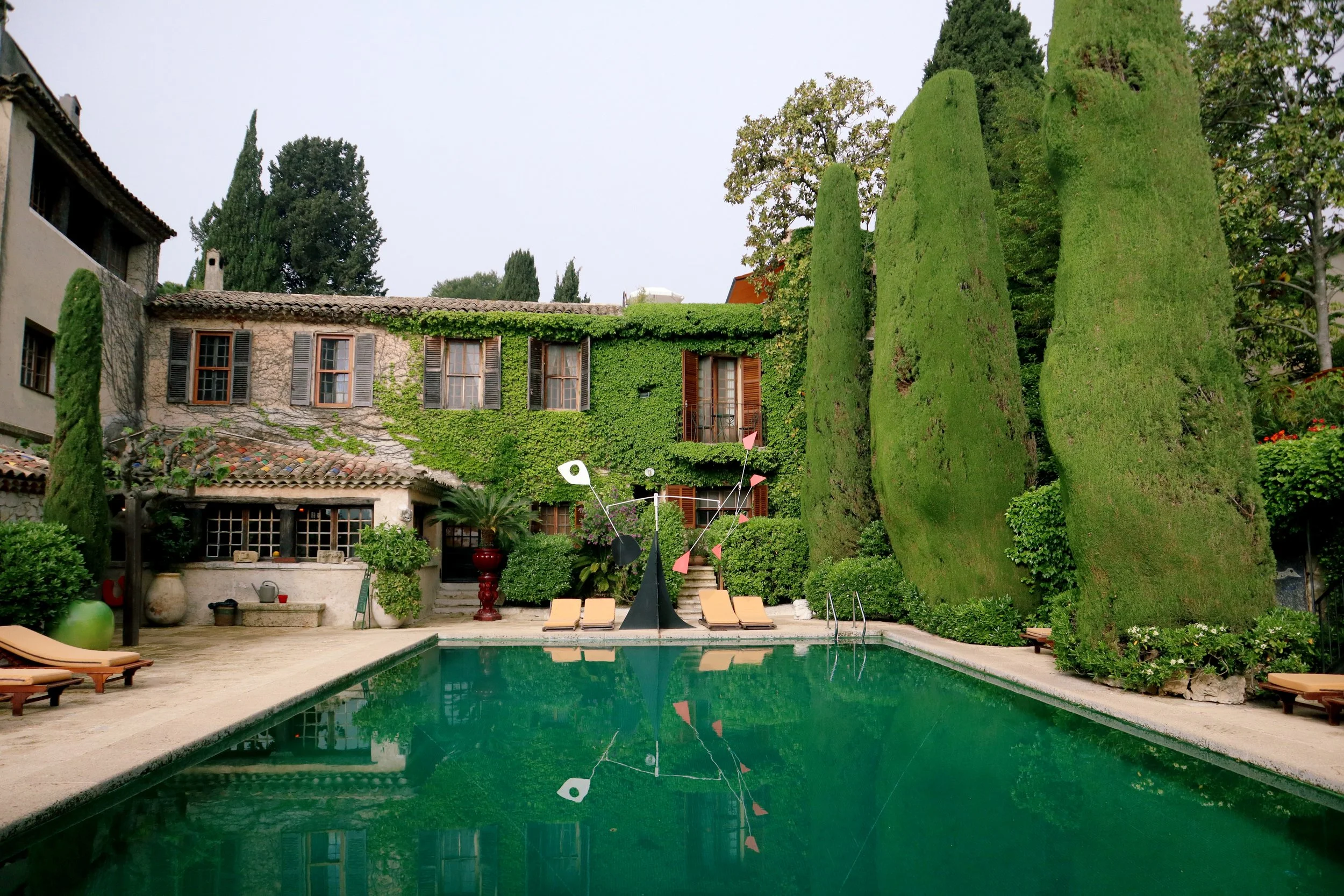
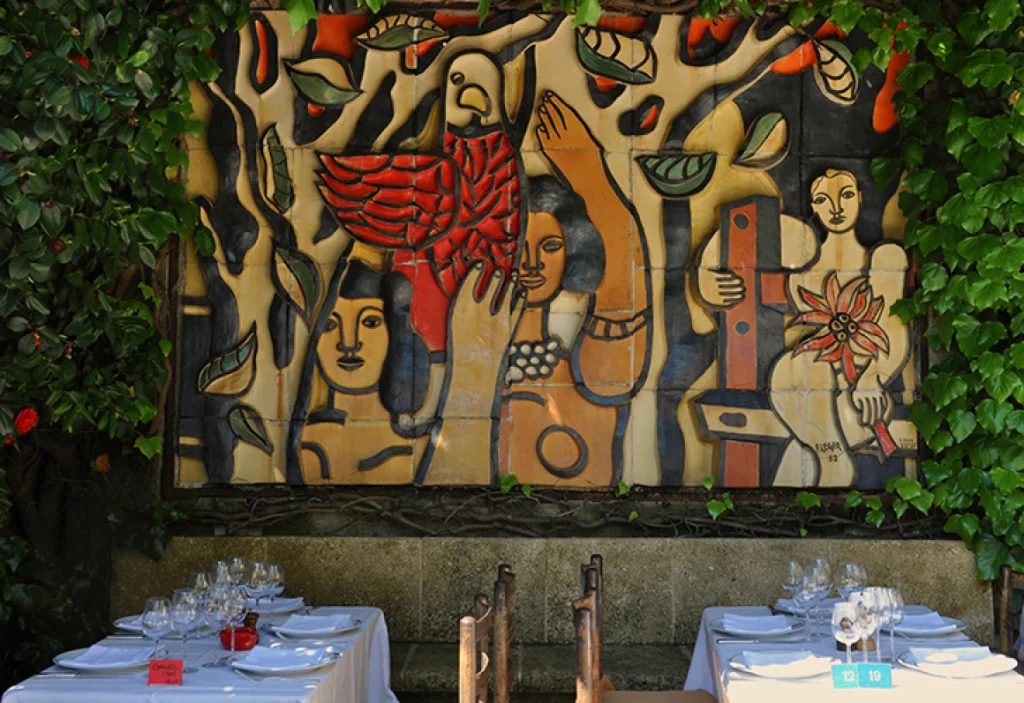
A large Calder mobile dangles over the swimming pool, while César Baldaccini’s six-foot thumb sculpture stands at the entrance. On the terrace, a Léger ceramic of the dove covers an entire wall, commissioned in the 1950s by Paul’s son Francis and his wife Yvonne. The collection has since grown to include Bonnard, Kandinsky, Delaunay, and, most recently, a large ceramic by Irish artist Sean Scully beside the pool.
The collection at the inn has never been appraised. The Roux family still runs the hotel, now comprising thirteen rooms and twelve suites. Most museums would keep these works behind glass, behind ropes, behind distance. Here, you simply live with them, as France, in its long tradition of nourishing its artists, always intended.