


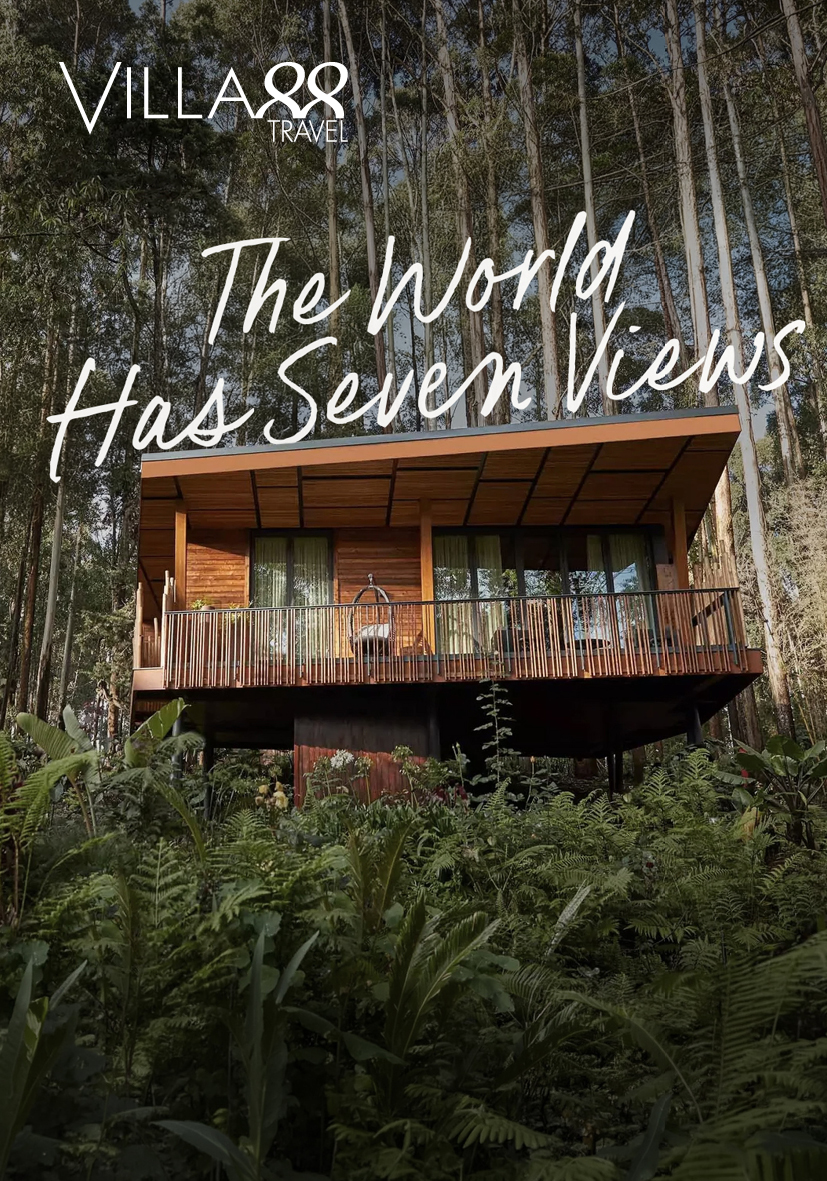
WORDS BY PRIYANKA PRADHAN
Seven continents, seven hotel rooms – each chosen for an irreducible reason no other latitude, landscape or longitude can replicate.
North America
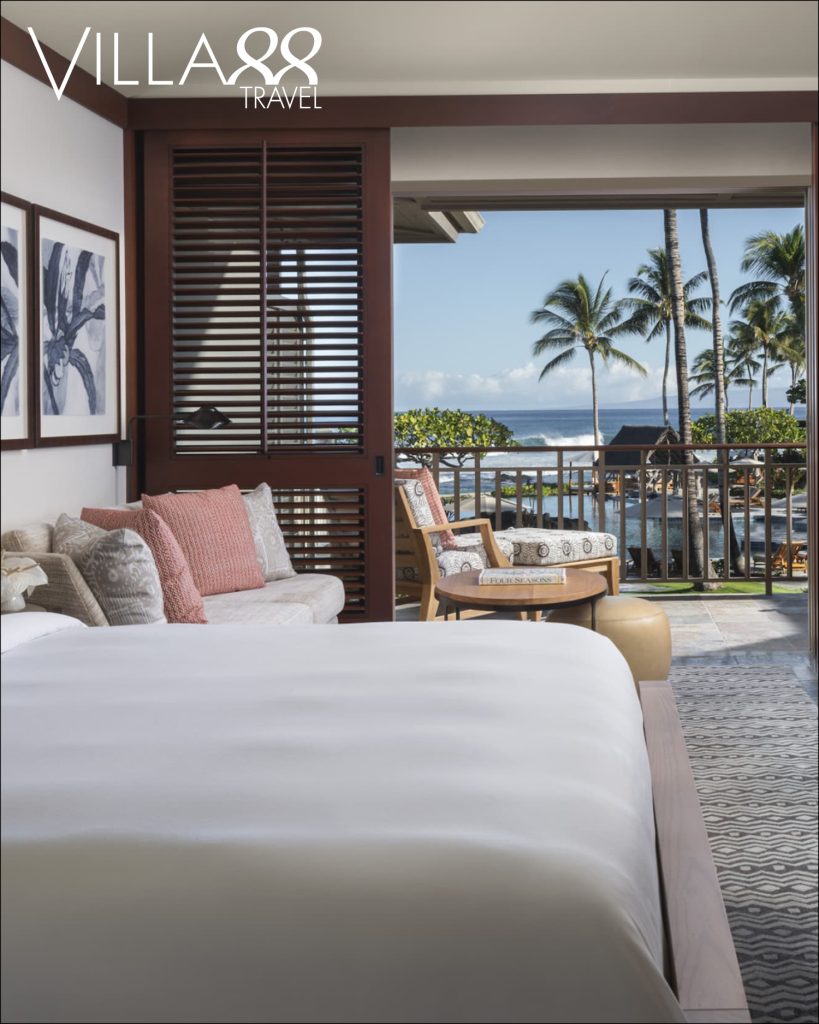
Four Seasons Hualalai, Hawaii
On the Big Island’s Kohala Coast, the land doesn’t recede to make room for the resort. Four Seasons Hualalai works with the volcanic geology rather than against it, building its pools into ancient lava fields and preserving the raw texture of the landscape throughout the property. This makes it unusual in Pacific luxury – a resort that feels genuinely of its place.
The King’s Pond, a 1.8-million-gallon natural saltwater lagoon formed by lava tubes, allows guests to snorkel alongside manta rays and reef fish without the intervention of an aquarium aesthetic. The architecture keeps a low profile, letting the drama belong to the land. Rooms open onto black rock gardens, tide pools, and the kind of coastline that has no interest in performing for visitors. It is the antithesis of manufactured resort luxury – and better for it.
South America
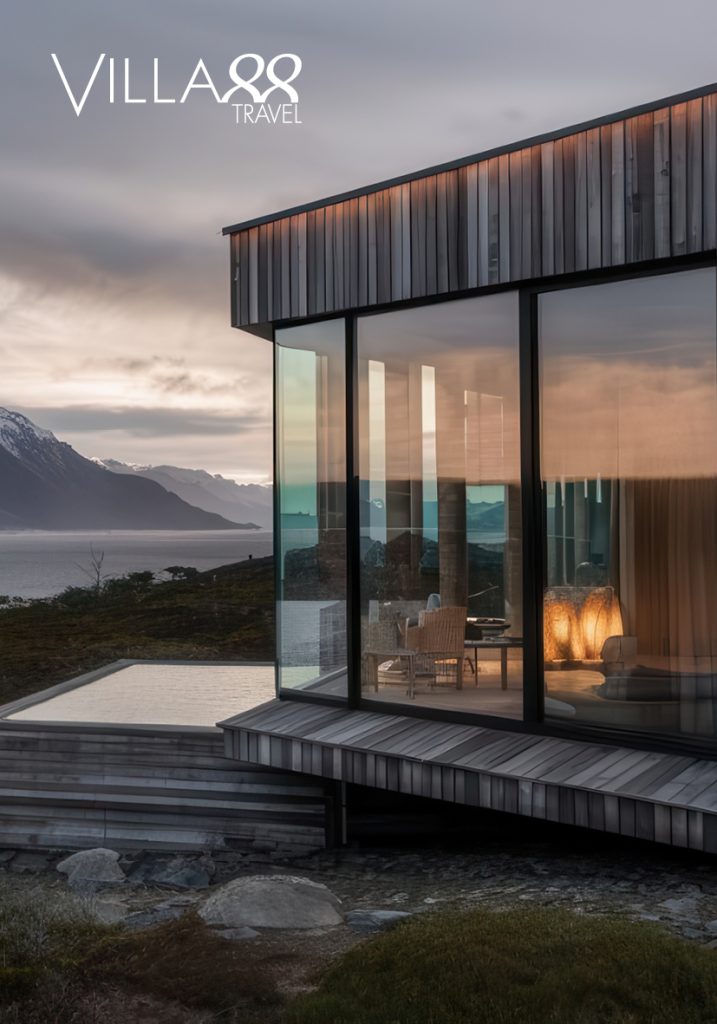
The Cormorant at 55 South, Patagonia
Opening in October 2026, The Cormorant at 55 South will claim the title of the world’s southernmost hotel, a 150-room property positioned at Puerto Williams in Chilean Patagonia, at the very threshold of Antarctica.
The Cormorant brand has operated in the Galapagos and Chilean Patagonia for years, developing a fluency with extreme, ecologically sensitive environments that most hospitality groups do not attempt. Here, the setting dictates everything – Puerto Williams sits on Navarino Island, south of Ushuaia, where the Beagle Channel meets the Tierra del Fuego archipelago. For travellers who have exhausted the conventional edges of the world, this goes genuinely further – a final address before the ice.
Asia
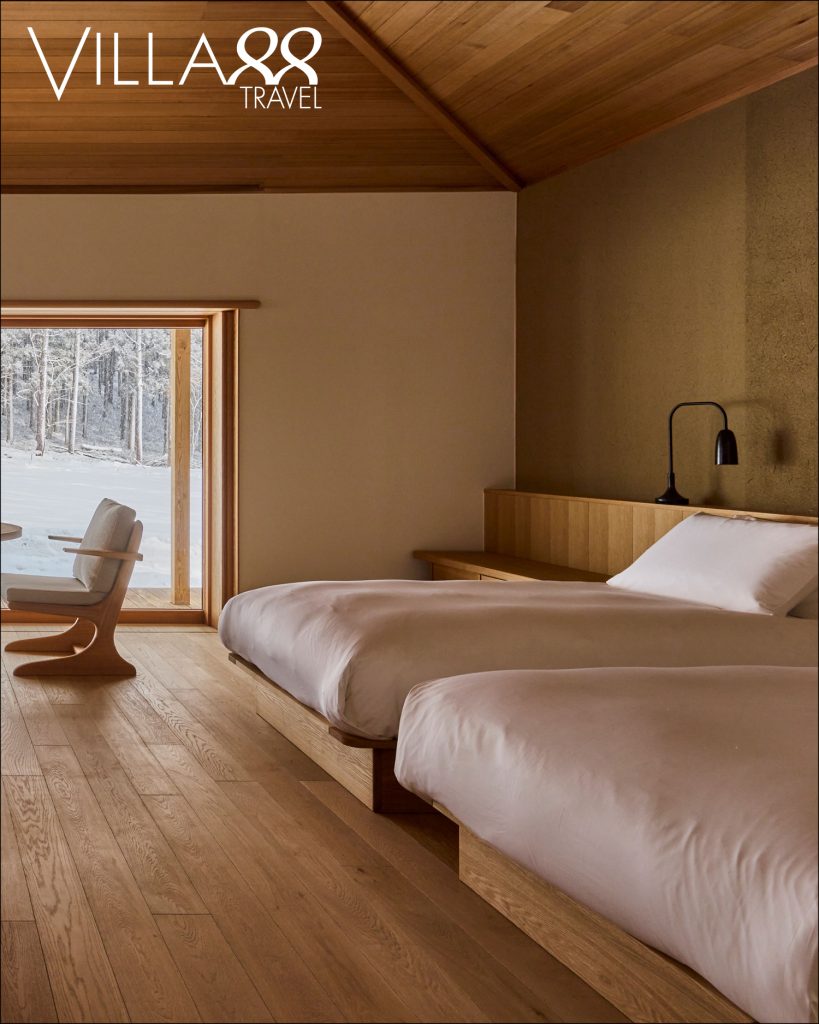
Azuma Farm Koiwai, Japan
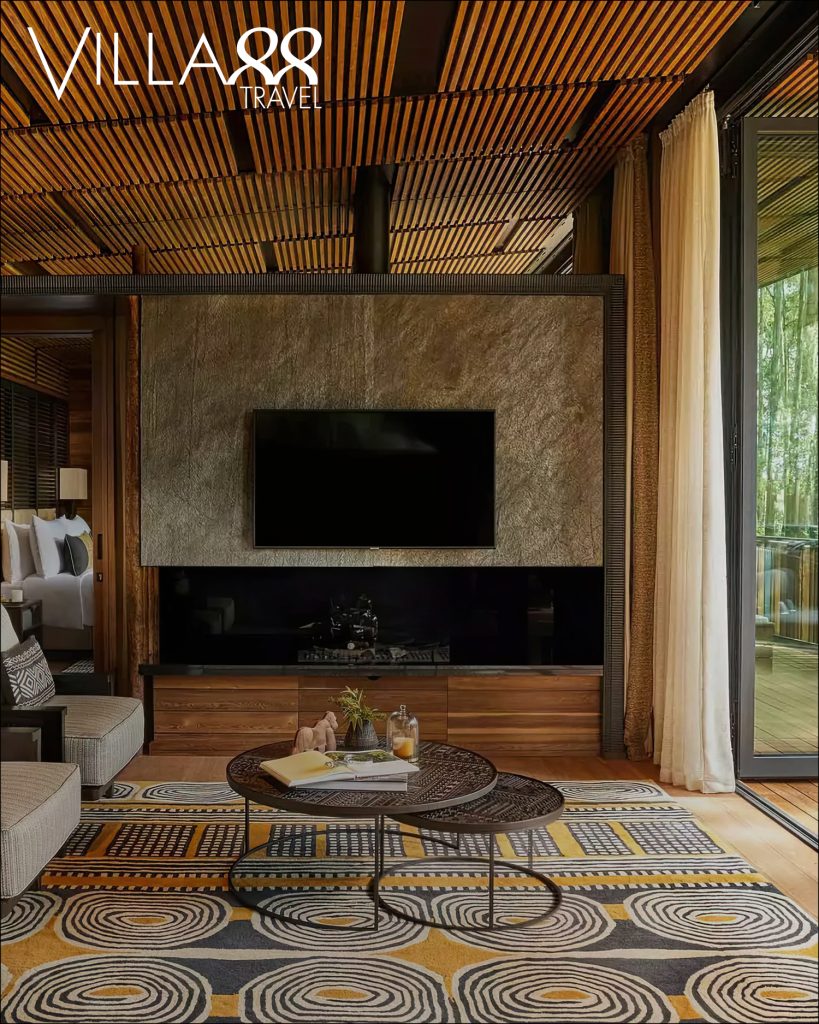
Conceived by the hotelier behind Aman Tokyo and guided by Aman founder Adrian Zecha, this 24-room retreat on a 130-year-old working farm at the foot of Mount Iwate opens a window onto a Japan most luxury travellers never see. Located in Iwate Prefecture in Japan’s Tohoku region, the Koiwai Farm sprawls across 3,000 hectares, producing dairy and featuring apple orchards and a pastoral landscape that most international visitors never encounter.
Into this setting comes Azuma Farm Koiwai, whose pre-eminent credentials signal a rigorous approach to place-led luxury. It’s not a farm-stay in the artisanal boutique sense, but something more architectural, built to let the farm’s working rhythms and the scale of Iwate’s landscape become the primary experience. For a country whose luxury travel circuit tends to loop between Kyoto, Tokyo, and Hakone, it opens a door into a Japan that rewards the detour.
Africa
One&Only Gorilla’s Nest, Rwanda
One&Only Gorilla’s Nest sits in the foothills of the Virunga Mountains, on the ground where primatologist Dian Fossey once worked. With 21 rooms, the hotel is positioned on the edge of Volcanoes National Park in Kinigi, a location that makes the surrounding landscape not a backdrop but the entire premise of the stay. Rwanda’s mountain gorillas – fewer than 1,100 remaining in the wild – share this forest. Trekking permits here are the most sought-after in the country and require advance planning. The hotel coordinates the logistics, but the encounter itself belongs entirely to the mountain.
The resort’s 14 rooms and seven suites are contemporary in design, grounded by details that reference Rwandan craft and material. The restaurant draws from an on-site organic garden, and the spa works within a wellness framework built around the property’s natural setting. Helicopter transfers between One&Only Gorilla’s Nest and its sister property, One&Only Nyungwe House, can be arranged – the two together cover Rwanda’s northern and southern wilderness in a single itinerary.
The Dian Fossey Fund’s Ellen DeGeneres Campus sits close to the resort, adding a layer of conservation context to what might otherwise read as expedition tourism. Here, the luxury and the purpose are the same thing.
Australia
Longitude 131°, Uluru
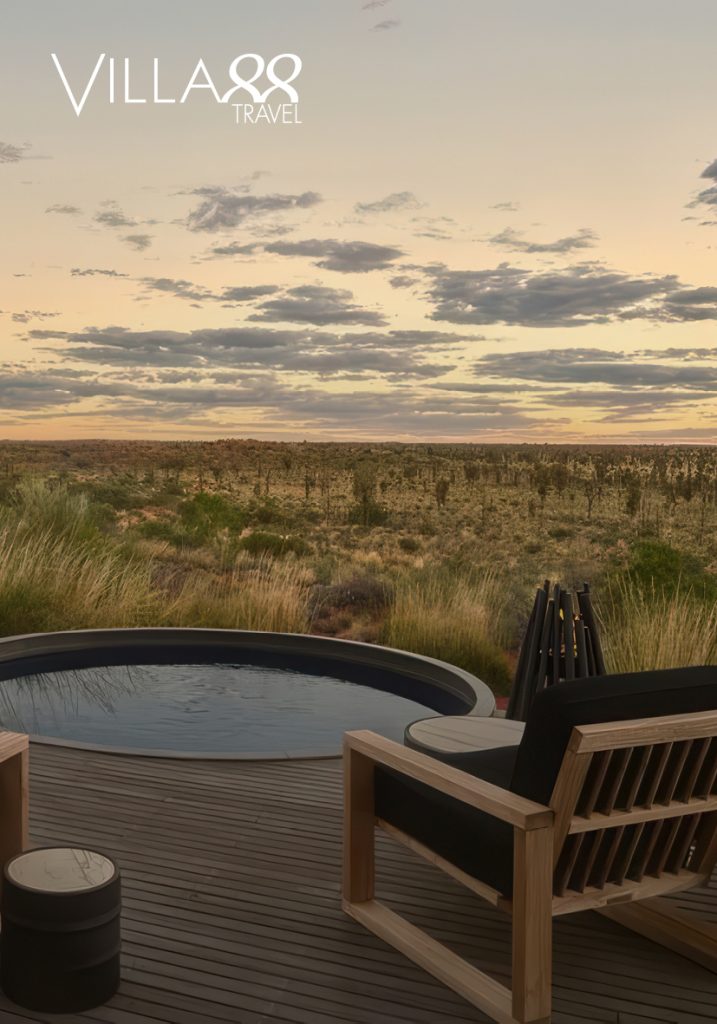
Fifteen tented pavilions rise above the red desert on the edge of Uluru Kata Tjuta National Park, each oriented for an unobstructed sightline to one of the most geologically and spiritually significant landforms on earth. Longitude 131° is the only luxury accommodation that treats Indigenous Australian land not as backdrop but as the complete and sufficient point of the experience. The Anangu people have lived on this country for more than 60,000 years, and the property’s programming reflects that – guided cultural walks, storytelling, and an engagement with place that goes beyond the scenic.
The design keeps to the landscape’s palette – ochre, rust, the bone-white of a desert sky before sunrise. Each pavilion is raised on a platform, its canvas walls filtering the light and heat of the Northern Territory in a way that feels considered rather than provisional. After dark, Bruce Munro’s Field of Light installation transforms the desert floor into a field of 50,000 illuminated stems – one of the most arresting site-specific works in the country. Days are structured around the light, with sunrise and sunset the natural anchors. Nothing about Uluru requires embellishment, and Longitude 131° has the intelligence to know this.
Europe
Belmond Castello di Casole, Tuscany
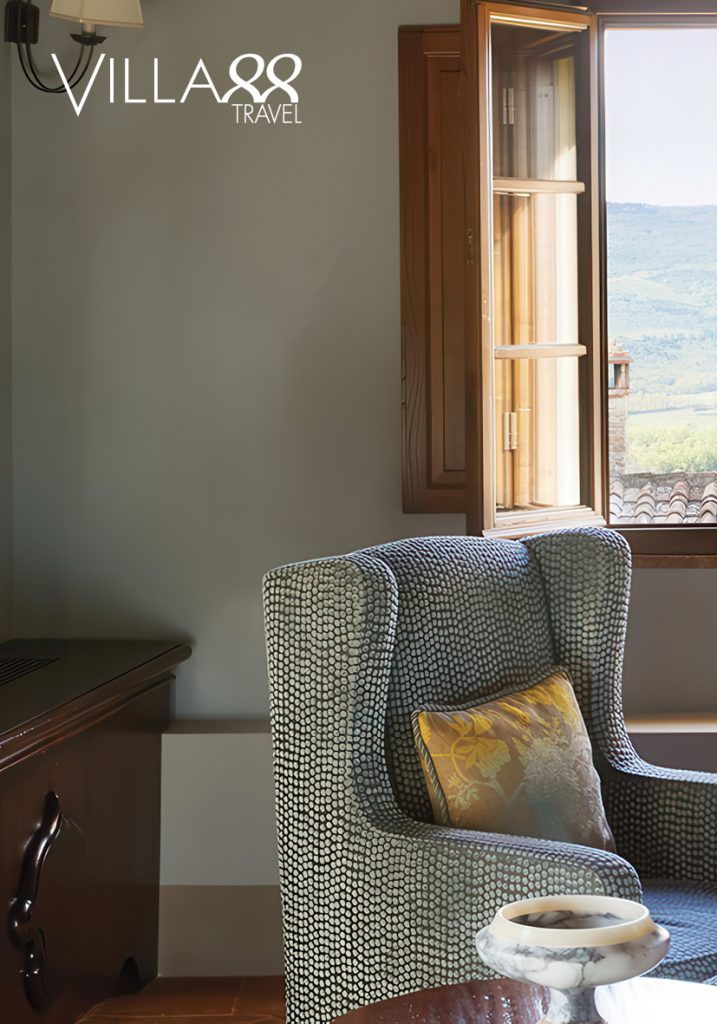
Castello di Casole stands on a thousand-year-old aristocratic estate in the Sienese hills, approached along cypress-lined lanes that give way to the main building – a medieval castle that has been restored with enough fidelity to its origins that the centuries remain legible in the stonework, and enough intelligence to make it liveable. The restoration used traditional methods and reclaimed materials – wood beams, ceramic tile, and terracotta – throughout the estate. It sits on 4,200 acres of rolling hills and vineyards, and the scale of the land is the point. This is not a hotel that happens to have countryside views, but a working estate that happens to have guests.
The newest Tinaia Suites reinterpret classic Tuscan style through bespoke Dedar fabrics and Loro Piana textiles, while the older Castello suites keep to stone floors, open fireplaces, and local antiques. The spa occupies the former wine cellar, its vaulted ceilings intact, offering treatments inspired by the estate’s own vineyards. Restaurant Tosca draws from the property’s kitchen garden and the broader Sienese larder.
From the hotel, Florence is 40 minutes by car; Siena, 20. Both feel like the right distance – close enough to visit, far enough that the estate retains its remove. Belmond Castello di Casole holds two Michelin Keys, a distinction that registers as a confirmation of everything anyone who has stayed here already knows.
Antarctica
Wolf’s Fang, Queen Maud Land
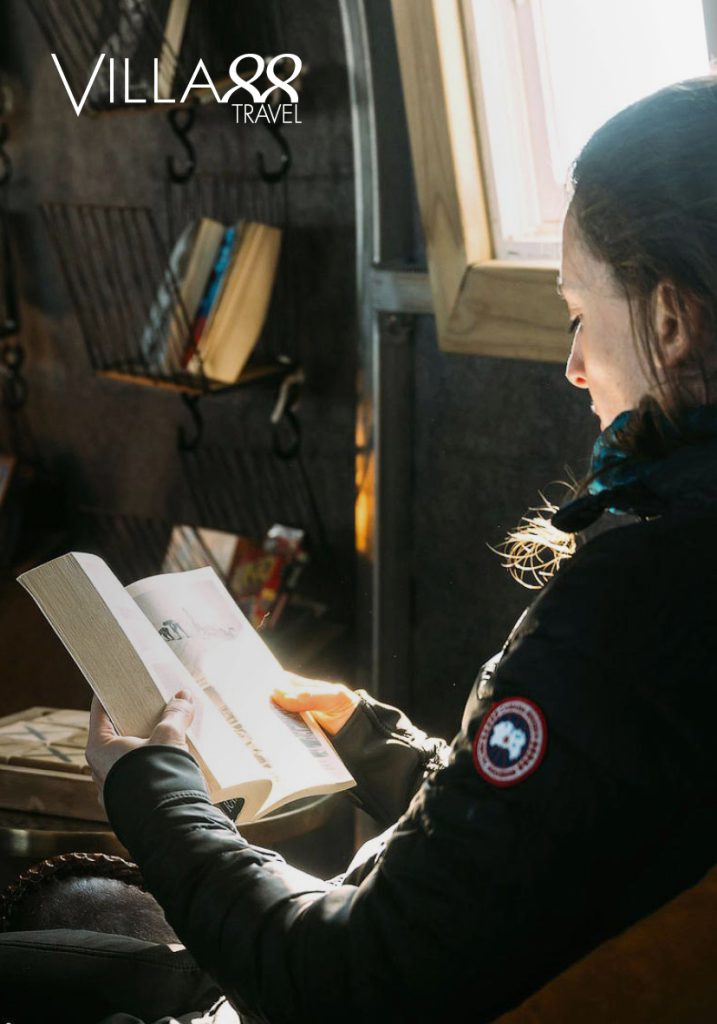
The continent’s first permanent luxury camp puts design-forward suites on the Antarctic ice sheet, making it the most architecturally astute address at the bottom of the world. Wolf’s Fang sits among a formation of granite spires rising from the polar plateau in Queen Maud Land, a landscape so extreme it reads as fictional. As the continent’s first permanent luxury camp, Wolf’s Fang arrives with a design seriousness that separates it from the expedition tents that have previously defined high-end Antarctic travel. Suites here are built for the environment – insulated, architecturally resolved, oriented toward mountain views that require no frame. The ice sheet stretches in every direction. There is nothing else.
Access is by private charter from Cape Town, a five-hour flight that marks a crossing from the inhabited world into something categorically different. Peak season runs from November to January, when the Antarctic summer delivers near-continuous daylight and temperatures that, while extreme, are manageable. Activities include skiing, mountaineering, and glacier walks guided by polar specialists – experiences that have no equivalent at any latitude further north.
White Desert, the operator behind Wolf’s Fang, has run Antarctic camps since 2005 and understands the environment with corresponding precision. This is a property that makes the strongest possible case for design as a function of place rather than an imposition on it.
All photos courtesy of the hotels