


Ben Murtagh, the force behind Usturiun Luxury Travel, has a way of reframing what modern luxury truly means. In a city where the extraordinary is routine, he leans into something quieter and infinitely more meaningful: presence. His philosophy is shaped not by excess, but by the moments that make people stop, feel, and remember. From the stillness of a Swiss lake between meetings to a family uncovering their lineage inside Westminster Abbey, Ben’s work reveals a belief that the most powerful journeys aren’t the most elaborate, but the ones that leave room for something real to happen.
When you think about the kind of luxury that resonates with you personally, how does that influence the experiences you create for your clients?
Living in Dubai does something interesting to your sense of luxury over time. The service levels, the hotels, the restaurants, the general quality of everything around you, it becomes the baseline. You stop noticing it, which is both a privilege and a quiet warning. When extraordinary becomes ordinary, you have to look harder for what actually moves you.
For me, that search has led somewhere I did not entirely expect. I am a city person at heart. I love the energy, the noise, the sense that everything is happening at once. But somewhere in the last few years I have discovered that what genuinely restores me is the opposite of all that. A few days by the lakes in Switzerland between conferences. A couple of nights on a quiet stretch of beach in Greece after an event in Vienna. No agenda, no schedule, no particular plan. Just the chance to actually be somewhere rather than pass through it.
That has changed how I think about what luxury really means. Not the level of the thread counts or the name above the door, but the feeling of having been genuinely present somewhere. Of having slowed down enough to notice it.
It influences everything I do for clients. Even when someone arrives convinced, they need to see and do and experience as much as possible, I will gently push back. Not because their instinct is wrong, but because the moments that stay with people are rarely the ones that were crammed in. They are the ones that had room around them. Savoured rather than collected. I would rather a client leaves with three experiences that changed something in them than ten they can barely remember.
Luxury, at its best, is permission to slow down. That is what I try to give people, even when they arrive not quite ready to accept it.
Can you recall a moment from your career where you felt deeply proud because you created something truly meaningful for a traveller?
There is a particular kind of client who has spent decades building something, and in doing so has quietly set aside the life that was supposed to come after. This founder was one of those. A wife, young children, a business he had given everything to. When he finally sold it, they made a decision as a family. Three months. Europe. All the places the children had watched on screen and dreamed about. And somewhere along the way, a search for where he himself had come from.
We had been planning the London day for weeks before they arrived. Not the broad shape of it, but the detail. The specific threads of his family history, the archives, the records. A historian and an ancestry team working backwards through generations while we worked forwards on everything else.
On the morning itself, there was a knock at the door of their suite at Claridge’s. An explorer stood in the corridor, fully kitted out, with backpacks and compasses waiting for the children. What followed was a treasure hunt built around real history, through the streets of London and deep into the British Museum, games and discovery woven together so that nothing felt like a lesson, and everything felt like an adventure. Then a speedboat on the Thames, the city moving past them at pace.
The day ended at Westminster Abbey. We had arranged for the abbey to be closed for an hour. Just for them. Inside, a historian walked the family through the original family coat of arms. And then came the part that had taken the most careful work to confirm. His great great grandfather was interred within the abbey. The historian explained the significance of the placement, what it meant in the context of the period, what it said about who this man’s family had been.
He rang me that evening. I could hear it in his voice before he had finished the first sentence. Not just happiness. Something quieter and more lasting than that. Some days in this work are transactions. Some are something else entirely. That one was something else entirely.
When a client comes to you with an open brief and full trust, where does your imagination take you first?
Most people assume we start with the hotel. We never do. When a client comes to us with an open brief, the first question is always why. Why now. What this trip needs to mean. A family reuniting after years of distance needs something completely different to a couple marking the end of a chapter, or a founder stepping out of a business for the first time in a decade.
The destination often follows naturally from that answer. Sometimes it surprises even the client. From there, we build in experiences first. This is where my team will tell you I go slightly off-script. I have a habit of surfacing things that do not appear on any list, a location that only makes sense at a specific time of year, an experience that sounds unremarkable until you are actually standing in the middle of it, a contact in a city who can open a door that has no official process for being opened. Some of the most extraordinary moments we have ever arranged have looked, on paper, completely ordinary. And some of the things that sound extraordinary are precisely that for one client and entirely wrong for another. Reading that gap is the work.
Once the experience architecture is in place, everything else layers around it. Accommodation comes next, and increasingly that means a private estate or off-plan home rather than a hotel suite. The demand for that has grown significantly, and the quality of what is available privately, when you know where to look, is exceptional. Then transportation, staffing, restaurants, and if shopping is a priority, we have access across the major houses and independent boutiques in London, Paris, and Milan that most clients do not realise is possible until they experience it.
What I am really looking for is the thing that makes a person stop completely. Not impressed in a polite way, but genuinely overawed, in the way that does not happen often even to people who have seen a great deal. Some clients have a month. Others have a long weekend carved out of a schedule that barely allowed for it. The length of the trip changes nothing. Every moment has to earn its place. If it is physically possible, we find a way to make it happen. That has yet to let us down.
What is your favourite hotel in the world and why? We ask for just one, Ben.
Asking me to name a favourite hotel is like asking someone to choose one handbag from a collection they have spent a lifetime building. Context changes everything, and I genuinely believe the right property depends entirely on who you are with and what you are travelling for. But if you are going to hold me to it, I will give you two and call it a compromise.
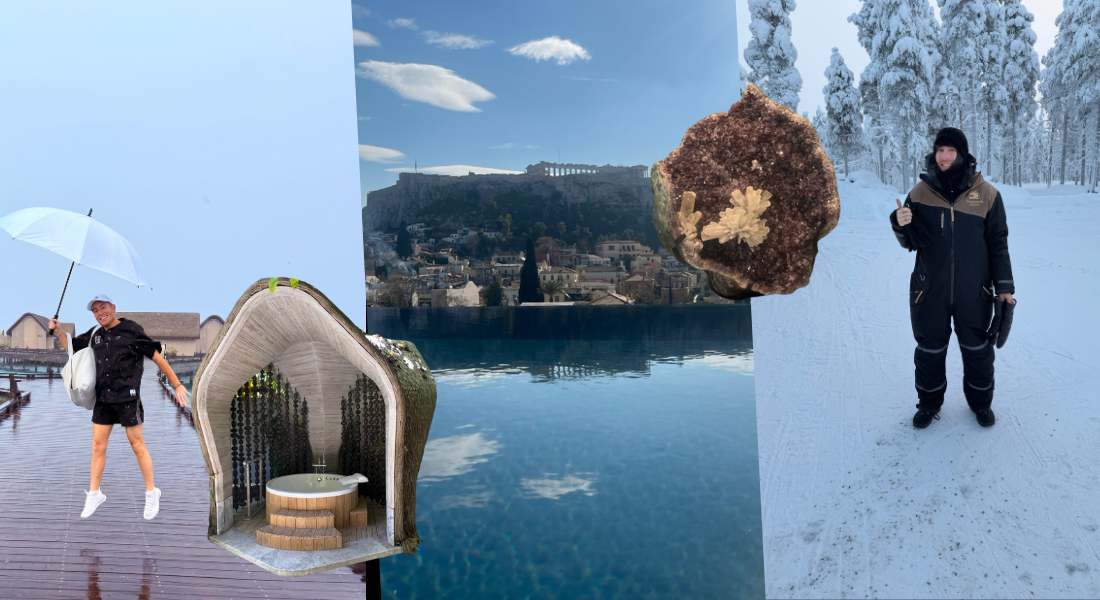
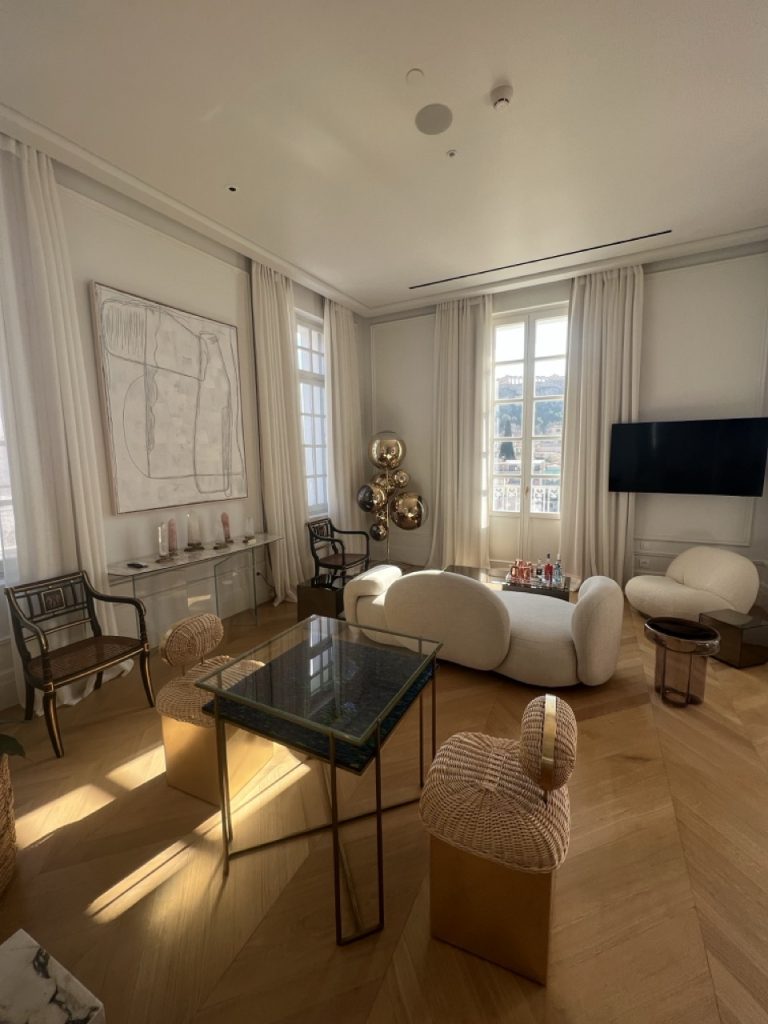
For a city, it is The Dolli in Athens without hesitation. The architecture alone stops you before you have even checked in. The design is considered in a way that larger hotels rarely manage, the views over the Acropolis are the kind you genuinely do not get used to, and the attention to detail throughout is the sort that only reveals itself over time. It does not feel like a hotel. It feels like someone’s very beautiful home that you have been fortunate enough to be invited into. The location is, quite simply, perfect.
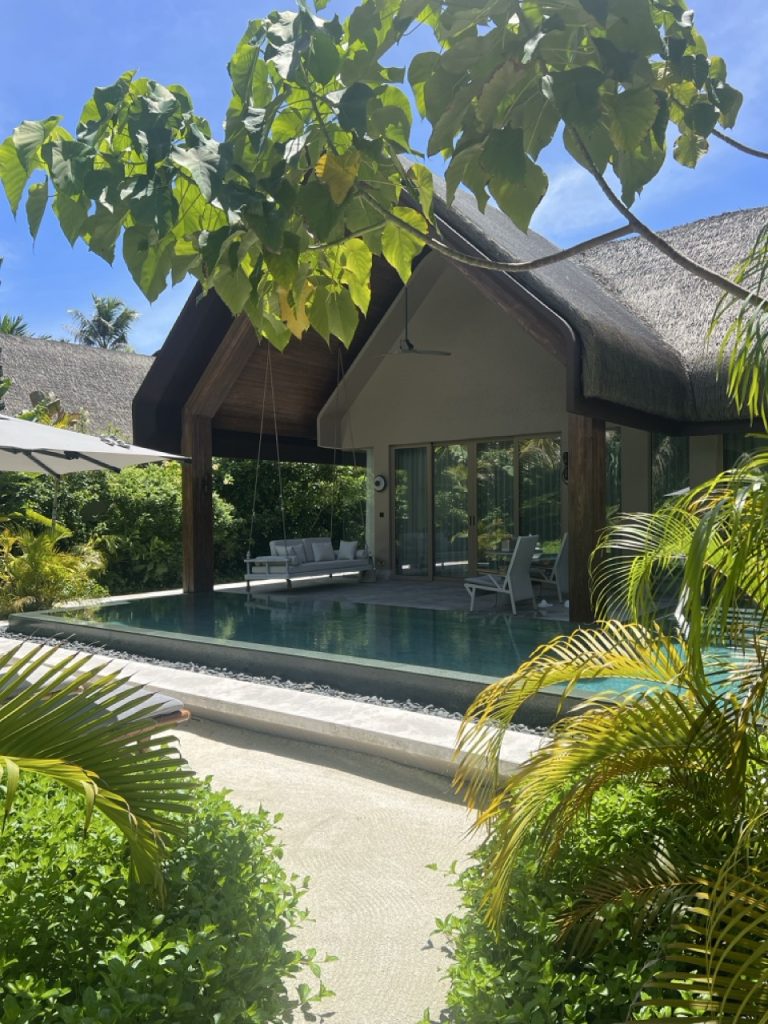
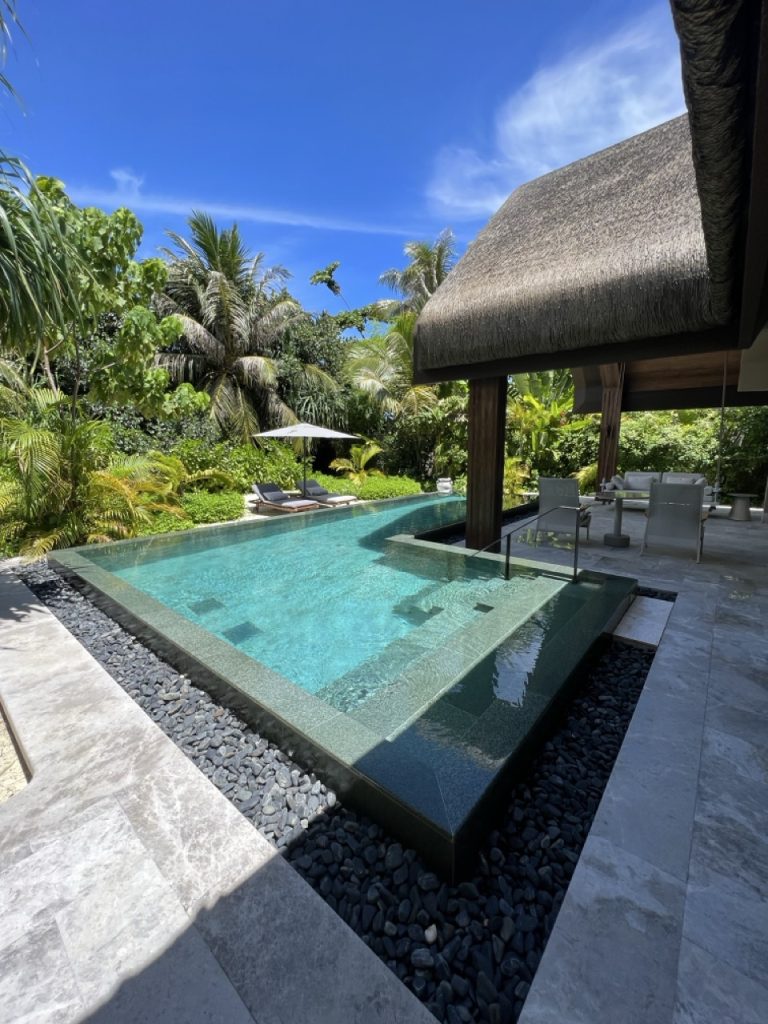
For a beach escape, it is Joali Being in the Maldives. I have been several times and it has yet to lose anything. The people, the food, the treatments, the flora and fauna, the gym, the teas, if you know, you know. My accommodation of choice is the Grand Beach Pool Villa. The pool, the interiors, your own stretch of beach. It is genuinely difficult to find a reason to leave, which is, of course, entirely the point. Two answers. That is as close to one as I can honestly get.
Is there a particular experience in Dubai that you feel reflects your signature style as a travel advisor?
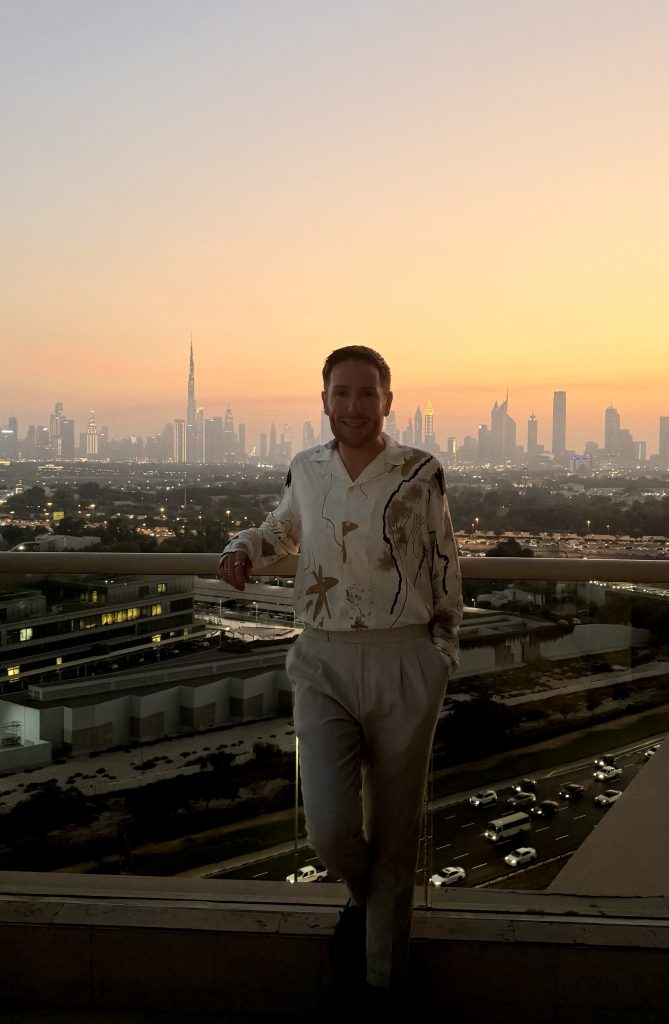
There is one I come back to more than almost anything else when I want to show someone what Dubai actually, is beneath the surface.
It starts before dawn. A vintage Land Rover collects you, which sets the tone immediately. There is something in that detail, the deliberate choice of something considered and characterful over something merely comfortable, that signals the rest of the morning. You head out into the conservation area near Al Maha as the city is still dark and the desert is beginning to shift colour, and then you rise above all of it in a hot air balloon as the sun comes up over the landscape.
The falcon display happens in the air. That moment, hovering above the dunes with a falcon moving around you and the silence of the early morning still intact, is one of those experiences that is genuinely difficult to describe to someone who has not been there. Then breakfast on the ground, in the conservation area, with the stillness of the desert around you and the city feeling very far away indeed. What I love about it is the layering. It is luxurious without being performative. It is educational without feeling like a lesson. It gives people a genuine window into Emirati culture and history in a way that lands softly but stays with them. Many people leave wanting to understand more, which to me is the best possible outcome of any experience.
It also represents a side of Dubai that a significant number of visitors never find. If your trip does not take you beyond the Palm or JBR, you could leave with an entirely incomplete picture of what this place actually is. This morning corrects that quietly and beautifully, without making a point of doing so. Platinum Heritage operate it with real care and authenticity. In a city where experiences can sometimes feel produced rather than genuine, that matters enormously.
What is a memory of planning an ultra luxury trip that still makes you smile whenever it comes to mind?
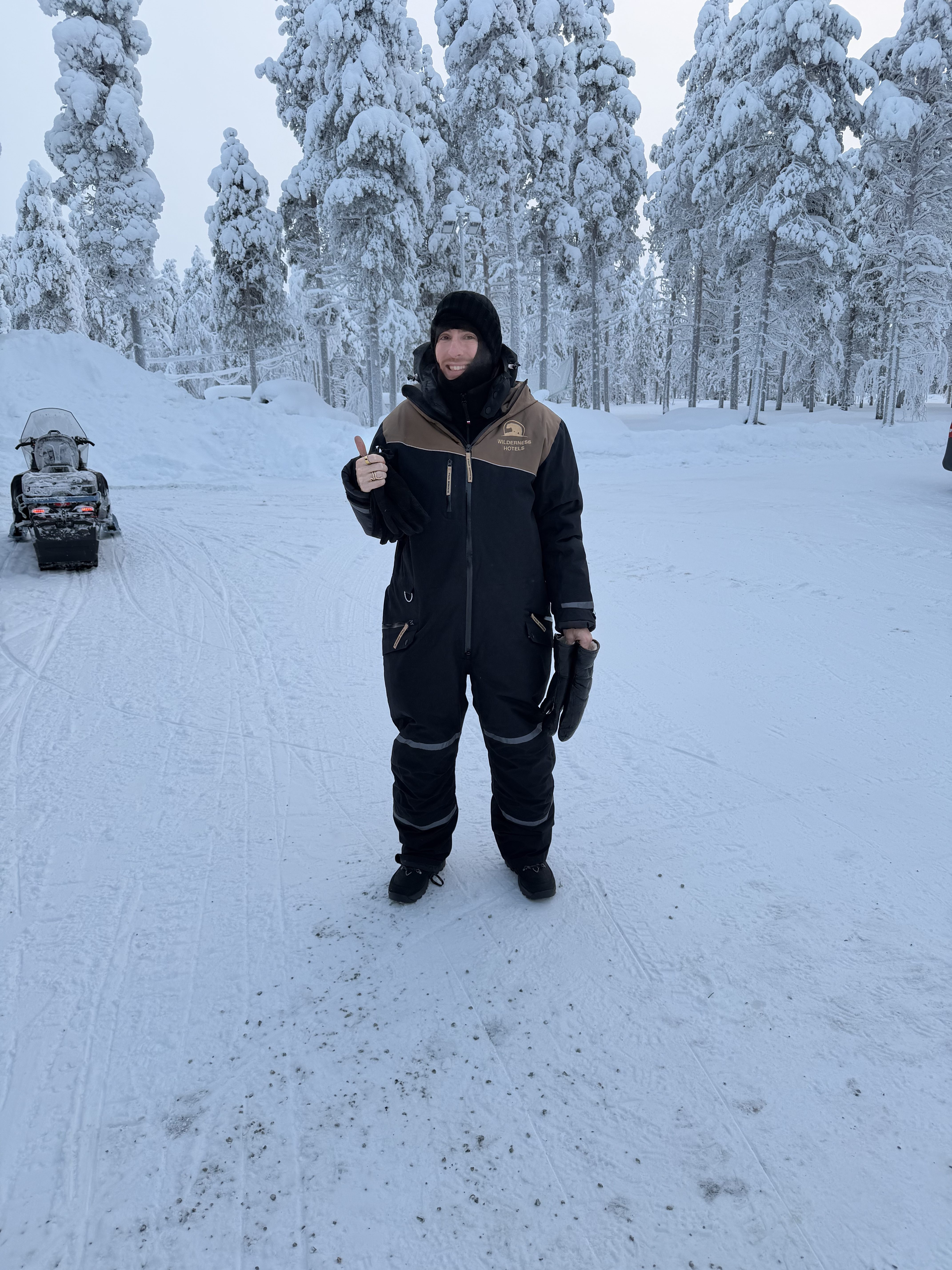
Thirty guests. The Arctic Circle. Minus 30 degrees. For some, the first snow they had ever touched. We flew them north on a private jet from the JETEX FBO in Dubai, and from the moment the doors opened onto that frozen landscape, something shifted. The cold hit them immediately. A few gasped. Several laughed out of pure shock. And then they looked up, and the world was white and vast and completely still, and nobody said anything for a moment.
Reindeer appeared out of the frost as if the landscape had conjured them. Snowmobiles carried the group across open plains, guests who had never done anything like it leaning into the cold with enormous grins visible even beneath their layers. Geysers erupted with a force that nobody quite expects until they are standing in front of one. Iceland delivered everything it promises, and then a little more.
The restaurants surprised people most. Intimate, warm, rooted in the landscape. Food that felt genuinely of the place. After days spent outside in conditions most of them had never experienced, sitting down together around a table felt earned in a way that a city restaurant rarely does.
What struck me most throughout was how completely they gave themselves to it. These were well-travelled people who had seen a great deal of the world. And yet not one of them held back. There was no performance of enjoyment, no polite appreciation. Just real, unguarded delight at every turn. That quality of reaction is not something you can engineer. You can plan the route, choose the right camps and restaurants, build the sequence carefully so the pace breathes. But the joy itself has to come from the place and the people meeting each other properly. This group and the Arctic found each other, and it was obvious from the first hour.
Months later, I still hear from many of them. The cold, the silence, the reindeer, the food, the feeling of being genuinely somewhere else. They are still talking about it. Honestly, so am I.
How do you ensure that even the most extravagant requests still feel warm, human and deeply personal?
The most useful education I ever received in this industry did not come from a course or a conference. It came from spending several years on a small team responsible for Sir Richard Branson’s portfolio of favourite properties worldwide. The standards in that environment were, as you might imagine, uncompromising. But what shaped me most was not the level of what was expected. It was the philosophy behind how you met it.
Three things were non-negotiable. Listening, honesty, and human detail.
Listening first, because without it you are simply executing a brief rather than understanding one. The most extravagant requests almost always have something quieter underneath them. Someone asking for the most extraordinary private island experience is really asking to feel completely free for the first time in years. Someone wanting every moment of a family trip to be perfect is really asking you to help them be present with their children in a way their normal life does not allow. If you chase the feeling rather than the logistics, you are already building something that will mean something.
Honesty, because that is the only basis on which real trust is built. Clients at this level have people around them who agree with everything. A travel advisor worth anything will push back when something is not right, suggest a different direction when the original plan is not serving the intention, and care about the outcome as much as the client does.
And then the human detail. The minutiae. The thing that tells a person you were genuinely paying attention. A book placed in the villa because of something mentioned in passing three weeks before arrival. A restaurant chosen because of a conversation that had nothing to do with the trip at the time. These details cost nothing in any meaningful sense and yet they are the things people remember long after everything else has faded.
The extravagance is, in many ways, the easiest part. What is harder, and what matters more, is making it feel as though it was arranged for one specific person, because it was. That is what I was taught to do, and I have never found a reason to do it any other way.
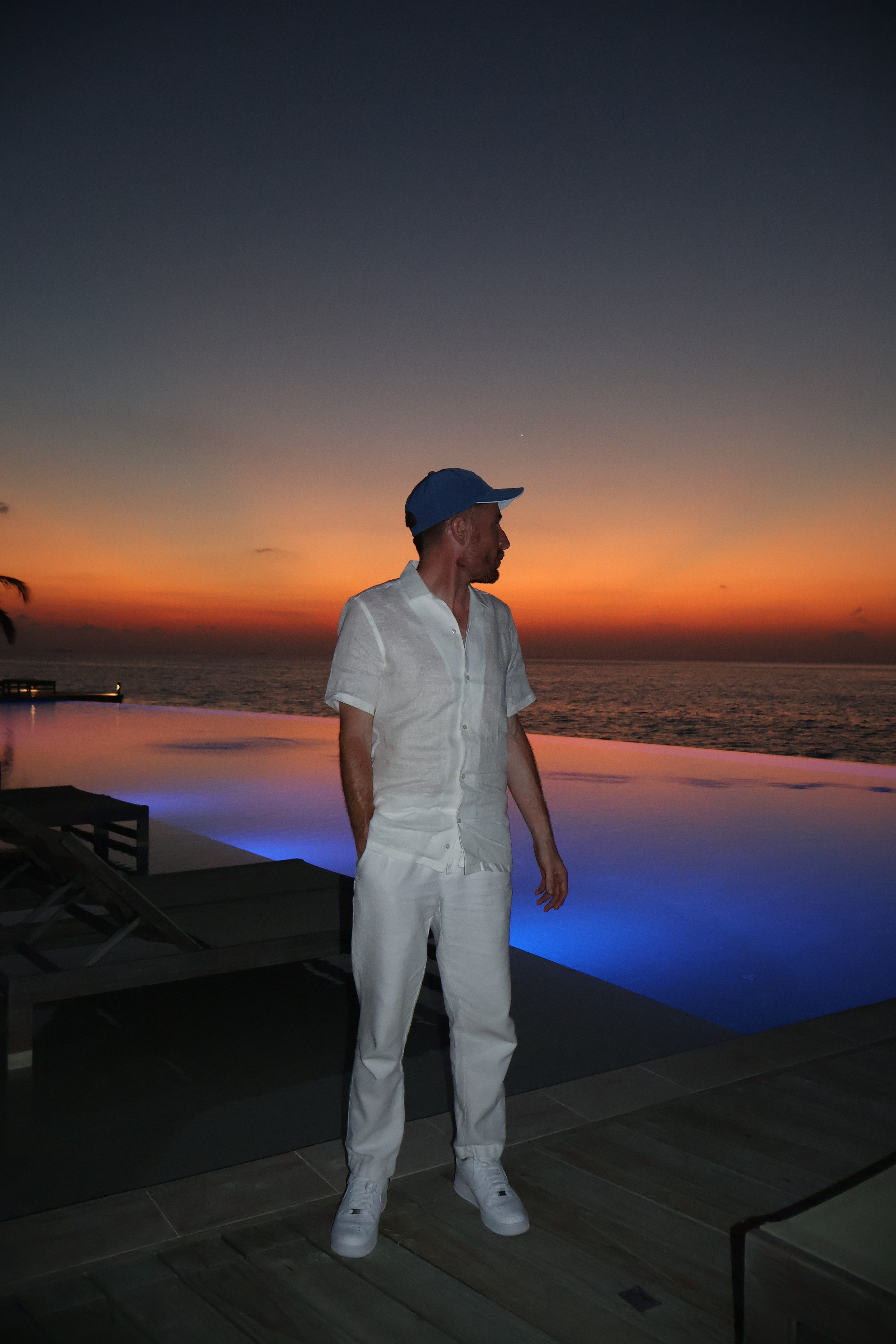
What shifts are you noticing in what inspires your UHNW clients, and how do those changes shape the experiences you create?
The shift has been gradual enough that it is easy to miss if you are not paying close attention, but over the last twelve months or so it has become impossible to ignore.
Clients still lead with destinations. That has not changed. But what has changed is everything that follows. A year or two ago, the next sentence was usually a property name. Now it is more likely to be a feeling, a reason, a question they are trying to answer through travel. A bucket list experience they have been deferring for too long. A family they want to immerse in something real before the children are grown. A relationship they want to tend properly, over a shared love of art or food or wilderness.
That shift changes what we do in a fundamental way. When the brief starts with a feeling rather than a postcode, the entire architecture of the trip has to be built around meaning rather than logistics. The property is still important. But it is in service of something now, rather than being the thing itself.
The role of a travel advisor has moved accordingly. A seamless journey with everything handled is no longer a selling point. It is the floor. The minimum standard clients expect, and rightly so. What sits above that floor is where the real work happens.
Wellness is perhaps the clearest example of how far expectations have moved. This is no longer a spa day appended to an itinerary. Clients are arriving with serious intentions. Longevity clinics, structured detox programmes, stem cell therapies, scientific regimes built around specific health goals. And the range of who is pursuing this has expanded well beyond what the industry anticipated. Groups of friends travelling together around a shared wellness focus. Solo travellers using time away to do something genuinely restorative. And yes, increasingly, men, who not long ago would not have framed a trip in these terms at all.
What inspires people to travel has always been personal. What has changed is how willing they are to say so out loud, and how much they expect the people arranging it to actually listen. We do.
There is an assumption that ultra-luxury travel is always about the grandest gesture, the biggest spend, the most visible extravagance. Is that a misconception you find yourself correcting?
Honestly, only with people who do not truly operate in this space, or who have never actually travelled this way. And that second group is not who you might assume. The ability to spend is not the same as the experience of knowing how.
There is a version of luxury travel that is led entirely by price tags and rankings. The top suite because a magazine declared it the finest in the world. The highest category because it carries the highest number. I understand the logic, but it has very little to do with what we do. Why spend fifteen thousand pounds a night on a suite if the view two categories below is the one that actually takes your breath away? Why accept a cavernous presidential living room if what you really want is to eat outside every evening and the terrace is not quite big enough to do that properly?
Our clients spend what they consider the right amount of money for what they want. That number can be significant. But it is never detached from meaning. It is always attached to something else, a feeling, a reason, an experience that could not have happened any other way.
Not everything we arrange is extravagant. Some of it is quietly simple. Some of it costs less than people assume and took longer to arrange than they will ever know. But everything we do is momentous, because the only measure that has ever mattered to us is how the client feels when they are in the middle of it.
Nobody else’s opinion enters into it. Not ours, not a magazine’s, not anyone else’s. Just theirs.