


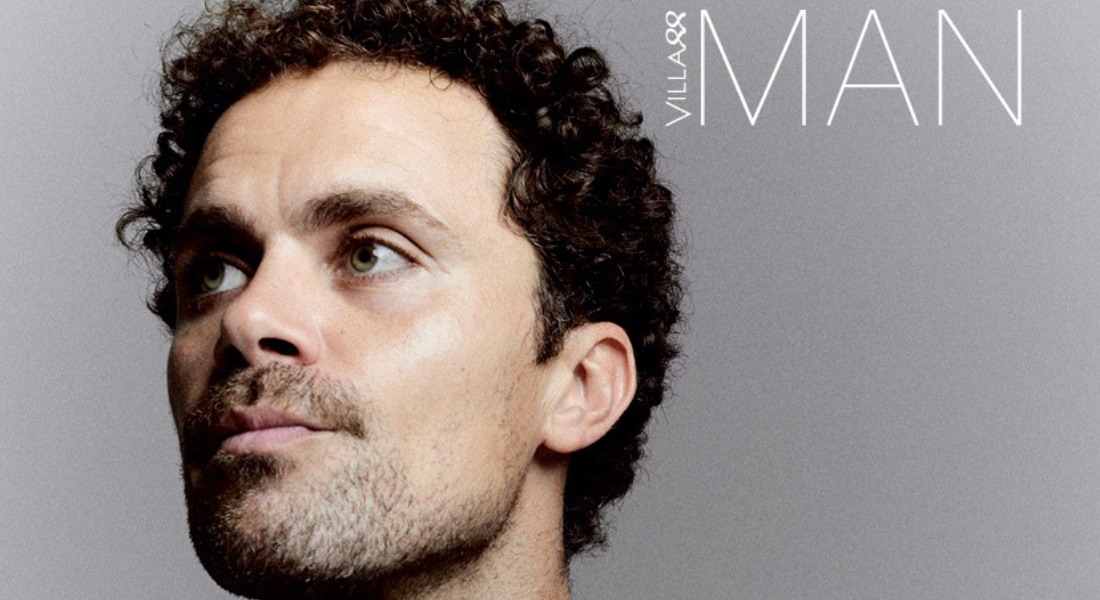
From intimate social dinners in Dubai to pop-ups across Europe, Palestinian chef Ahmad Halawa has built his culinary world around human connection and the flavours of home.
For the past seven years, the lines between Ahmad Halawa’s personal and professional lives have become increasingly blurred. It began quite deliberately in 2019, when the Palestinian chef swapped his Dubai apartment for a house twice the size – and twice the rent – to start hosting strangers for dinner.
At the time, Ahmad was still working full-time in advertising and marketing, the industry that had brought him to Dubai. But for 18 months, he sacrificed weekends and much of his social life to pursue his long-time passion for cooking, before eventually leaving his first career behind.
“It was the best thing that I’ve done for myself, that I took a leap of faith,” Halawa tells Villa 88 Man. “There’s been a lot of ups and downs, don’t get me wrong. But with calculated risk comes a lot of reward.”
The pay-off for Ahmad has taken the form of countless guests leaving with stomachs full and minds enriched. Today, his business extends well beyond those initial social dinners, though the original idea – strangers gathering in Ahmad’s home to eat Palestinian food – remains at its heart.
“I could have stopped hosting social dinners a long time ago, because the business has grown in different directions,” Ahmad explains. “But I would never stop it. I want as many people as possible to experience and taste and get to know about Palestinian food. This is the main reason why I started doing it – to introduce people to our cuisine and do my part in preserving it and making sure it’s highlighted.”
Feeling ‘at home’ is central to Ahmad’s offering. His pets wander around, people settle into couches and chairs, and those who arrive alone may find themselves sharing a table with people they have never met. “The food is only one element, really,” he says. “I feel I have a bit of a responsibility to get people together and just give them an experience.”
The approach feels particularly suited to Dubai, a city whose population has been shaped by people arriving from across the world. “We call Dubai home, but we all come from different countries,” Ahmad shares. “So I want to give this environment or this platform for people to feel like they’re at home.”
The food around which those encounters take place is deeply rooted in Ahmad’s own experiences and his family’s roots in Nablus. An invitation to define Palestinian cuisine is swiftly rejected, with the chef describing instead a patchwork of varied traditions.
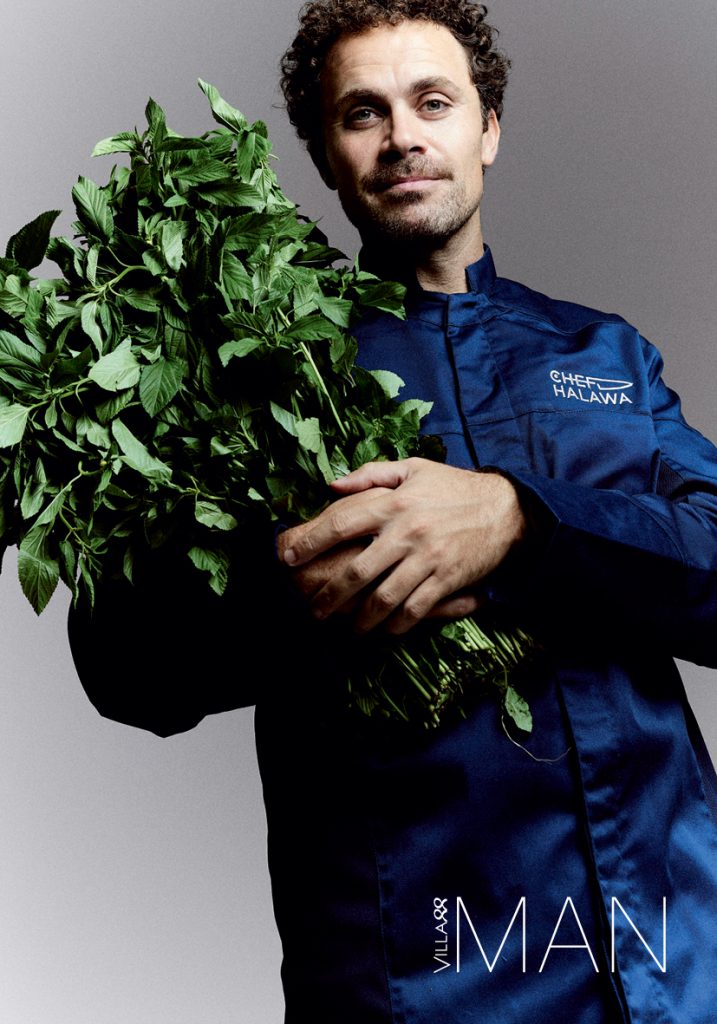
“Palestinian food is so diverse, seasonal, really rich,” he explains. “I cannot generalise. Every city has their own dishes and almost their own take on Palestinian food.”
Ahmad learned through his family rather than culinary school, absorbing recipes and techniques from parents, grandparents, aunts, and uncles. One of his favourite ingredients is akoub, a wild plant covered in spikes that appears for a short season each spring and is keenly foraged throughout the Levant.
Preparing it requires patience, but akoub’s ability to survive has given the ingredient a deeper significance for Ahmad. “If you don’t put it in boiling water, it will grow its spikes back again,” he reveals. “This plant really resembles us as Palestinians – no matter what happens, we’ll always spring back up again.”
Increasingly, Halawa has been taking these stories beyond his own dining room. His food has appeared in an array of settings, from private homes and restaurants to a collaboration with Cartier in Abu Dhabi and a fund-raiser in New York. This summer brought another significant step, as he spent five weeks in Ibiza hosting events with friends under the banner La Mesa Levantina. The change of scenery presented a fresh challenge as Ahmad established a new audience from scratch.
“It was a foreign land, uncharted for me,” he says. “I had to understand what suppliers are like, what ingredients they have. At first, it might feel like a limitation, but really it’s not. This is what’s available in season. This is what’s being farmed. So you work with what you have, which is how we were raised.”
Most gratifying for him was the opportunity to put Palestinian cooking in front of diners encountering it for the first time. “Some of them hadn’t ever tried Palestinian food, and didn’t even know anything about it,” Ahmad shares. “They might know hummus or tabbouleh, maybe from a Lebanese angle. I was in a unique position to share this cuisine and introduce people to the food and answer the questions and tell stories.”
Ahmad is already lining up other European cities to host similar events in the future, though the notion of a conventional restaurant is conspicuously absent from his plans. Instead, the chef is continuing to riff on his original idea, with one collaboration at Dubai’s Matcha Club even transforming a padel court into a dining space.
Wherever Ahmad Halawa’s next table happens to be, the intention is much the same – make people feel that, for a few hours at least, they have come home.
“What I’m building is something different,” he says. “Something that allows me to remain creative and not have to worry about all the headaches that come with a restaurant.”
“I just want people to forget about this fast-paced life we live,” he says in conclusion. “Put your phone away and just be present, meet people, and enjoy some good food.”
PHOTOS: COURTESY OF CHEF AHMAD HALAWA