


As Montblanc celebrates a century of leather craftsmanship, the Maison looks back at an archive shaped by writing, travel and objects designed to move through life.
Few objects tell the story of a century quite like those designed to travel through it. For Montblanc, that story began in 1926 with something relatively simple: a leather pouch made to protect a pen.
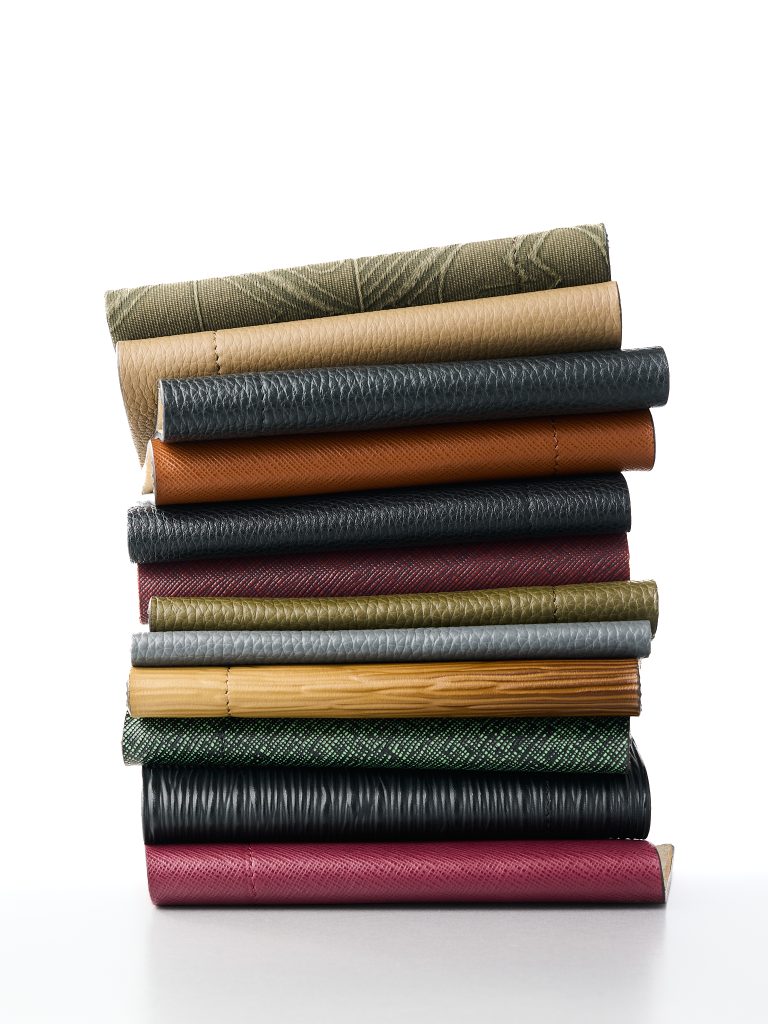
At the time, writing instruments were increasingly leaving the desk and travelling with their owners across cities, countries and continents. Montblanc’s move into leather was a natural response, creating pieces that could protect the tools of writing while making them easier to carry. The Maison’s first small leather goods were crafted in materials including Juchten and Saffiano leather, with the latter remaining part of Montblanc’s leather offering today. Even the early colour palette went beyond black and brown, with blue, red and green appearing among the collections.
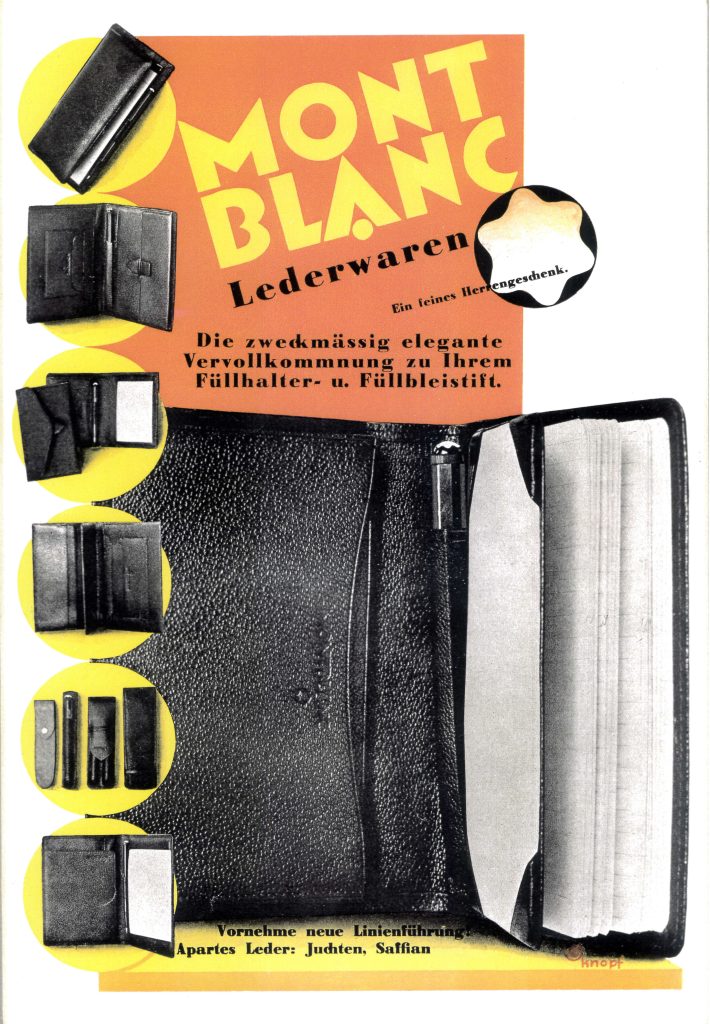
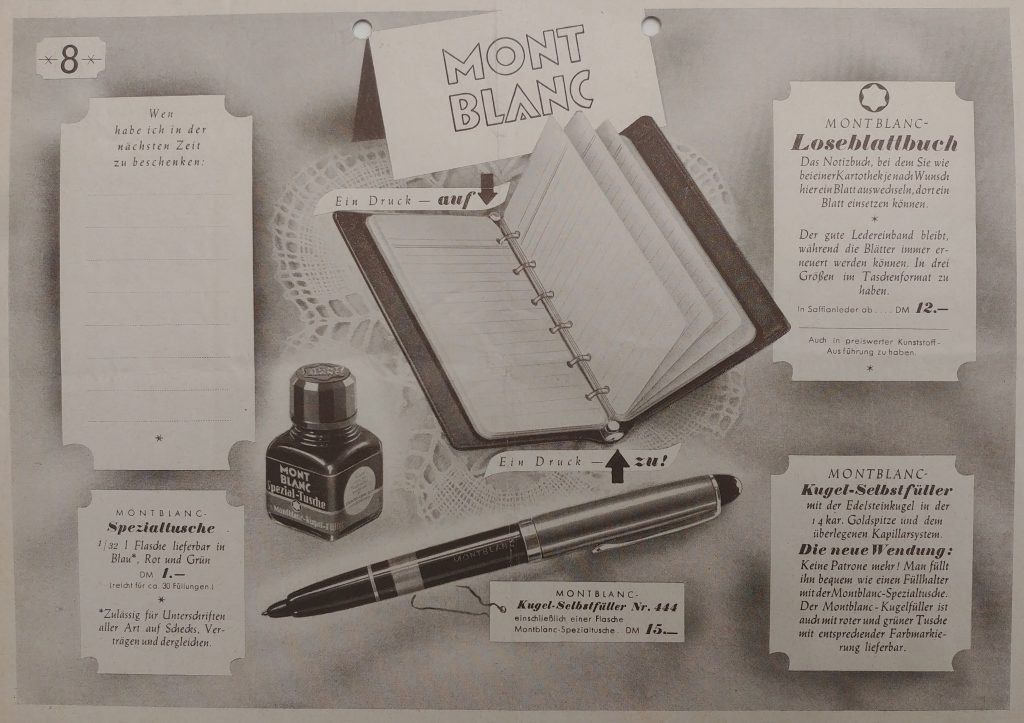
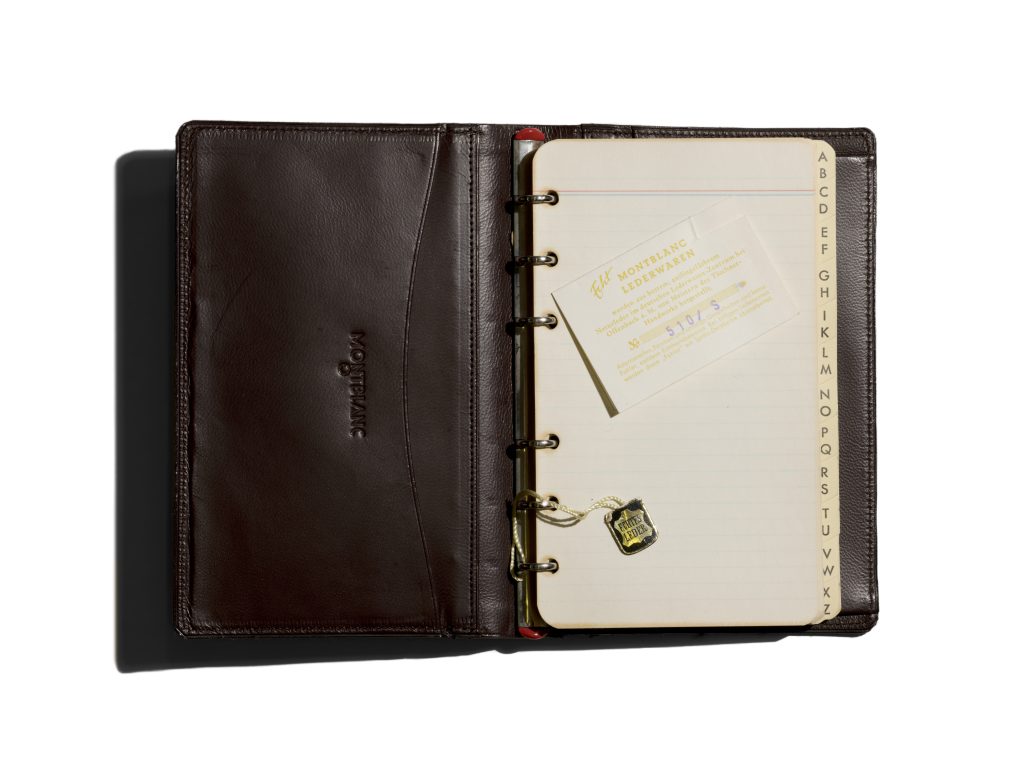
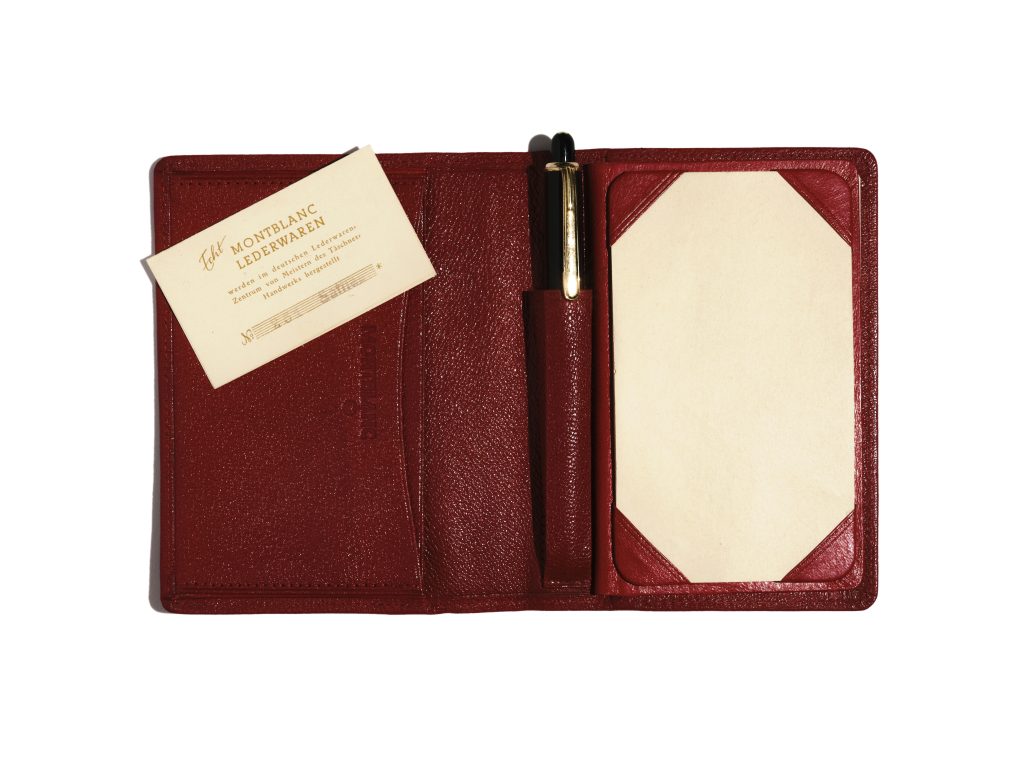
The archive offers a particularly good look at what came next. Early leather advertisements, notebooks and catalogues reveal just how closely the category remained connected to writing. A loose-leaf notebook from the 1950s, a red leather writing set from the same decade and colourful advertising from the 1960s all capture a period when leather goods were less about fashion accessories and more about creating a complete world around the act of writing.
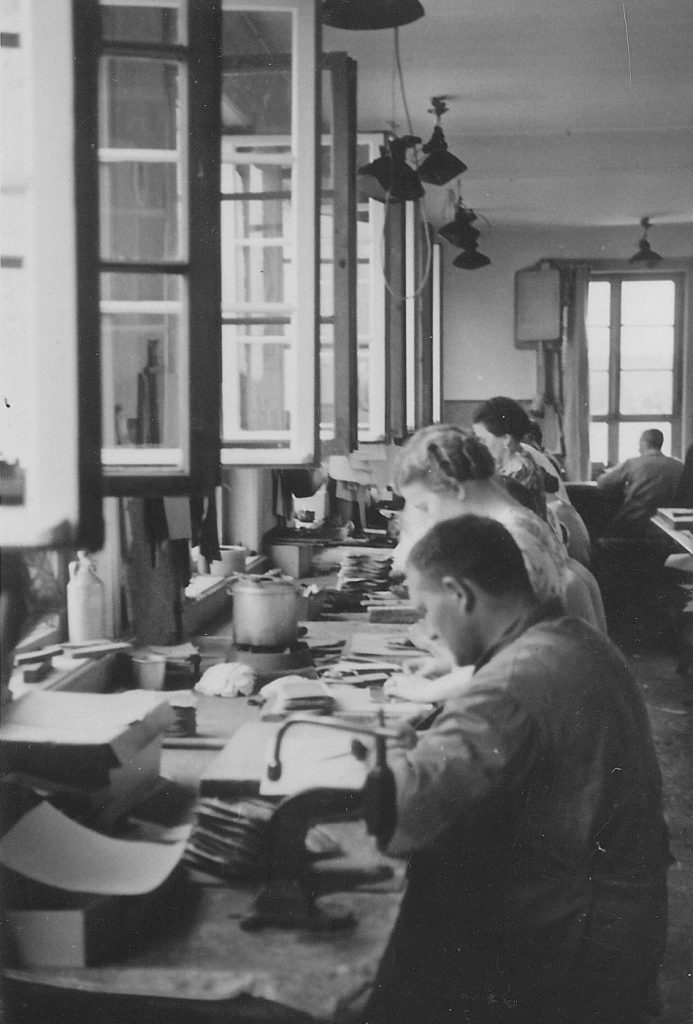
That world was initially developed near Offenbach, Germany, an area known for its leather expertise. Here, artisans produced everything from penholders to notebooks, laying the groundwork for what would eventually become Montblanc’s wider leather collections. For more than six decades, leather remained closely tied to writing before the Maison began expanding further into larger leather goods during the mid-1990s.
An archival travelling business case from 1995 makes that transition particularly clear. Opened up, it becomes almost a miniature desk, complete with space for writing instruments, cards, papers and correspondence. Seen alongside the Maison’s contemporary pieces, the connection feels surprisingly direct.
In 2006, the centre of Montblanc’s leather expertise moved to Florence, bringing together traditional craftsmanship, modern technology and the Maison’s evolving design language.
Today, the process begins in Artistic Director Marco Tomasetta’s Paris studio, where each design starts as a sketch before moving to Montblanc’s leather development team and artisans in Florence. Leather is selected according to qualities including suppleness, fineness, grain and durability, while proportions, colours and shapes are refined until the original idea becomes a finished object.
Since becoming Artistic Director in 2021, Tomasetta has continued to bring Montblanc’s leather collections back to their writing origins, but without treating the archive as something static. Instead, those familiar ideas have been reworked for contemporary life.
Perhaps the clearest example is the Writing Traveler.
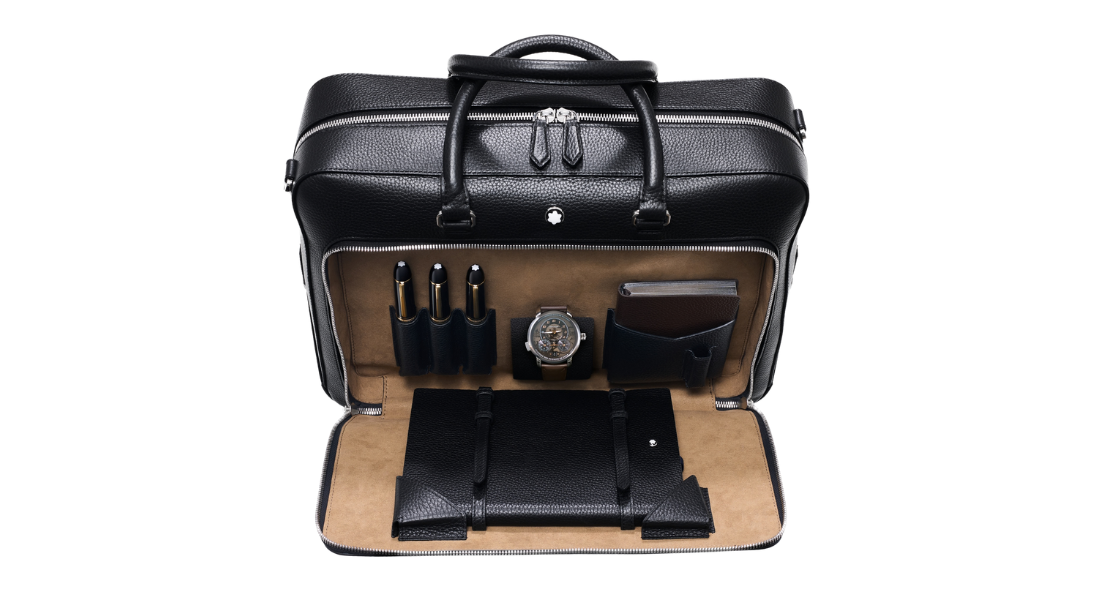
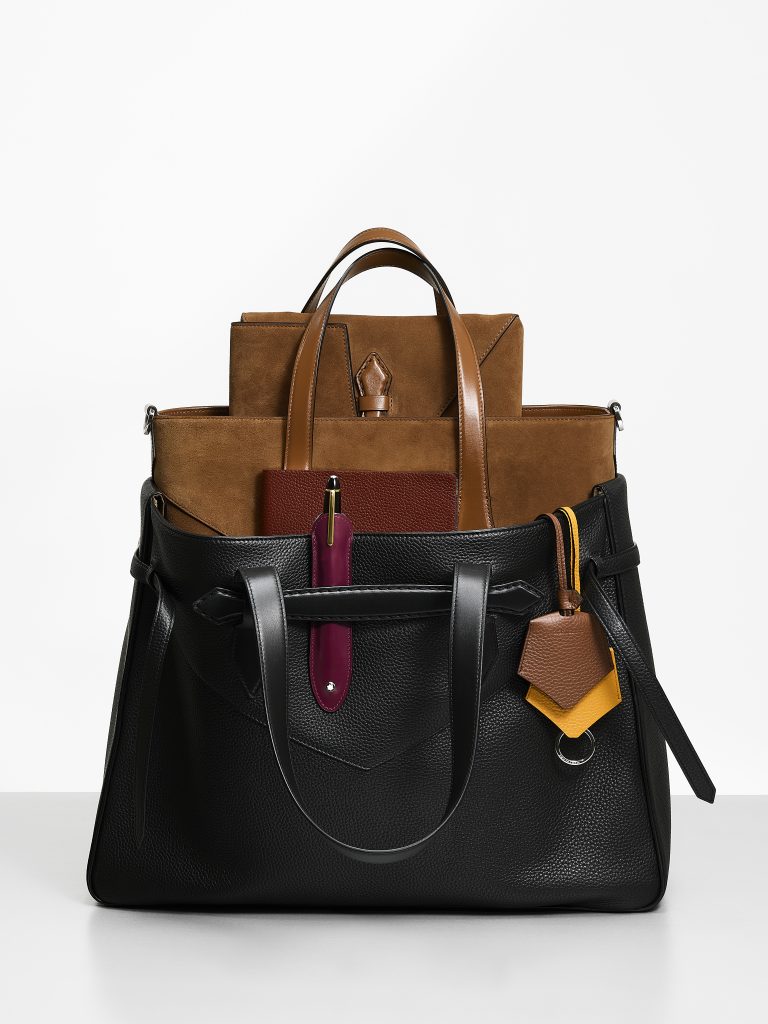
First introduced for Fall/Winter 2025, the bag was conceived by Tomasetta as a transportable desk and a modern interpretation of a cabinet of curiosities. Its large front pocket opens to reveal dedicated compartments for writing instruments, a notebook, small leather goods and even a watch, turning the bag into its own carefully organised workspace.
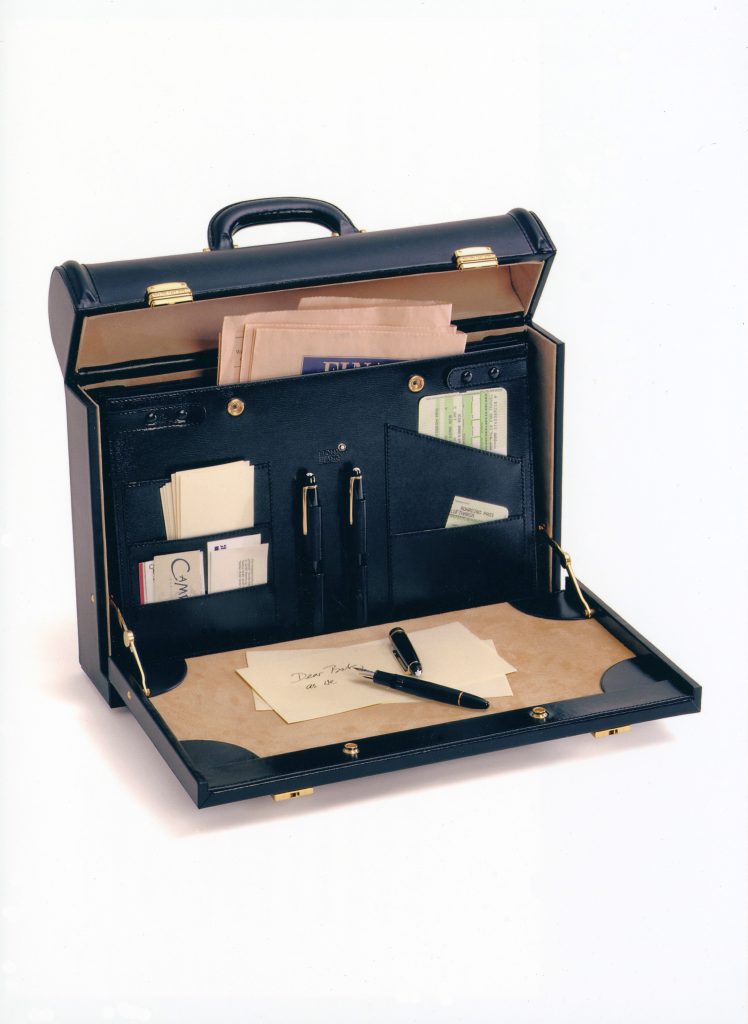
There is something particularly satisfying about placing it beside Montblanc’s archival business case. Decades apart, both pieces share the same basic idea: that the things we carry can be organised around creativity, travel and the rituals that accompany them.
The construction of the Writing Traveler is equally considered. Tomasetta’s sketches are first developed into precise blueprints before craftspeople create flexible paper models that allow the proportions to be adjusted. These are eventually translated into wooden moulds, around which the leather and metal components are assembled. Each Writing Traveler requires around eight hours of assembly, while versions featuring Montblanc’s sfumato effect are finished by hand using airbrushing to create a gradient inspired by the diffusion of ink across paper.
Since its debut, the idea has already expanded into new forms, including a more compact Crossbody version and the softer Soft Traveler line for Spring/Summer 2027.
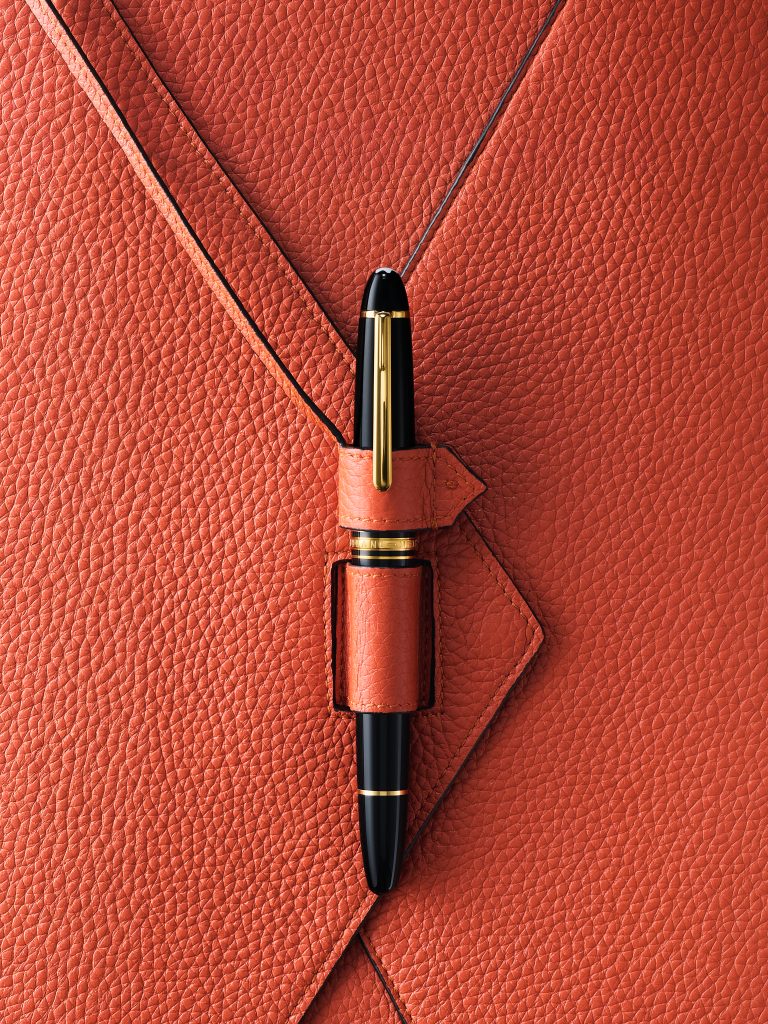
Look closely at Montblanc’s current leather pieces and references to writing continue to appear throughout. The white snowcap emblem remains a subtle signature, while handles and closures can take inspiration from the pointed shape of a fountain pen nib. Compartments are created specifically to protect writing instruments, and envelope-like pockets and leather flaps reference the familiar geometry of personal correspondence.
One hundred years after Montblanc created its first leather pen pouches, the objects themselves have changed considerably. What has remained is the idea behind them: leather designed not simply to be carried, but to accompany the things that matter to its owner.
From an early notebook slipped into a pocket to a Writing Traveler transformed into a portable desk, Montblanc’s leather history has always followed life beyond the desk. A century later, the journey continues.