


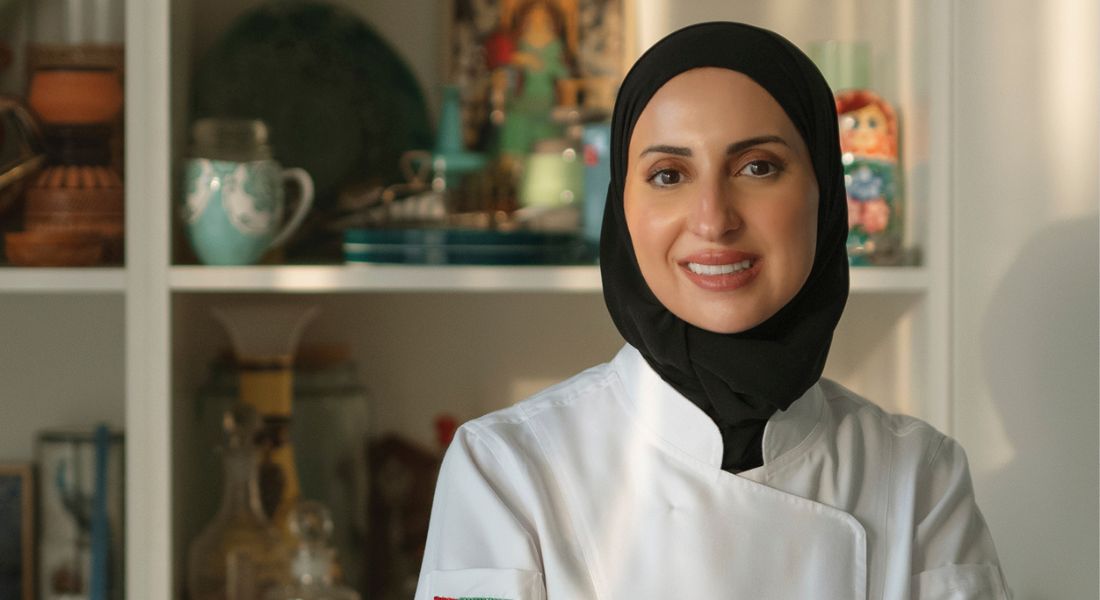
During Ramadan, Arwa Lootah’s kitchen is already working against the clock. Somewhere between memory and muscle instinct, a pot of cracked wheat and meat has been left to cook for hours, doing what it has done for decades, soften, thicken and surrender to time.
In earlier generations, the traditional Emirati dish known as Harees would have been cooked underground, sealed beneath hot sand before being unearthed. It would then be beaten by hand with wooden paddles, gradually absorbing the richness of the meat until turned into a velvety porridge-like consistency. Today, pits and wooden oars are often replaced with modern methods, but the ritual remains the same. For Emirati families around the world, the dish is a staple of the iftar table.
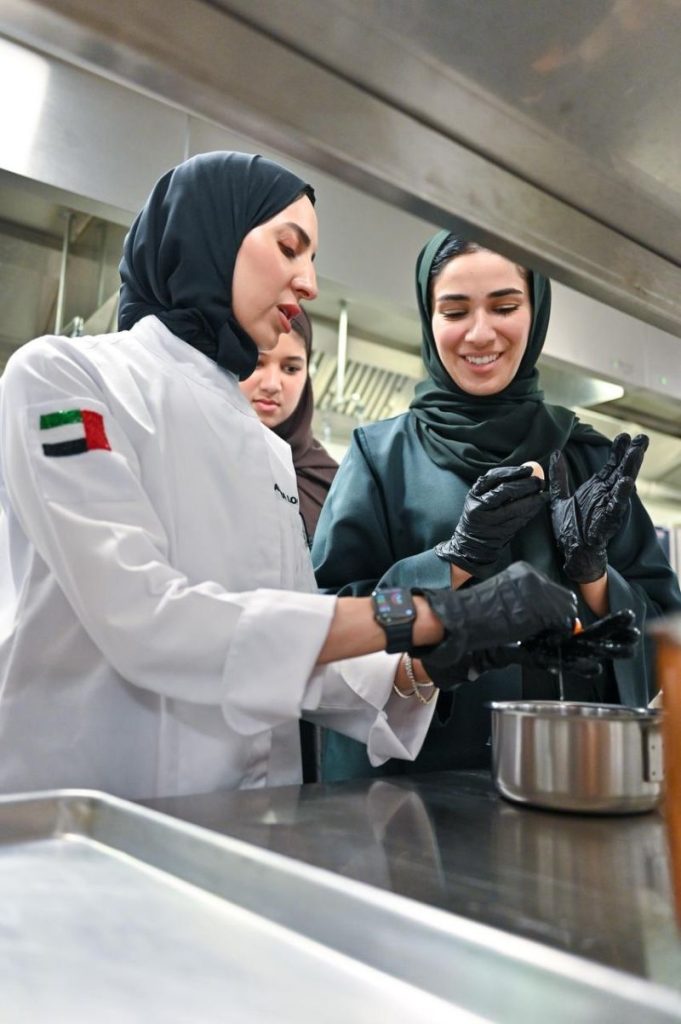
“Harees has to be in our household every single day during Ramadan,” Lootah says. “In any [Emirati] household you’re going to ask, that’s the first thing that they’re going to say.”
For Lootah, one of the United Arab Emirates’ leading female chefs, Ramadan is as much about inward reflection as it is a return to the dishes that have sustained communities long before the UAE became a global dining destination. Many of these Ramadan recipes, rooted in Bedouin culture, have never been documented. They were learned by watching, passed from one generation to the next without measurements or written instructions.
Today, the self-trained chef is on a mission to change that. Based in Dubai, she has spent the last few years documenting and recording age-old cooking methods and dishes while reimaging them for a modern palate. Her success has followed, with previous work including high-profile collaborations with the Museum of the Future and the World Government Summit. Yet her deeper aim has always been to share these traditions with the community.
“My main goal is to bring modern Emirati cuisine to the world,” says Lootah. “I feel like we travel to other countries to try their food, and I would like people to travel here to try our food, be it traditional or even modern.”
That ambition feels especially relevant to Ramadan, when the month’s most familiar dishes reveal the layered history of the nation’s cuisine. At Knead Bakery in Abu Dhabi, her latest collaboration places those traditions firmly on its iftar menu – one that aims to showcase its depth and diversity.
“Emirati cuisine is influenced by so many cultures, but specifically Indian and Iranian,” she explains, noting that the UAE’s position along historic maritime trade routes meant traders returned with spices and grains that gradually became integrated in local cooking.
You can trace that history across her Ramadan menu, not in an overt way, but in the ingredients that anchor each plate.
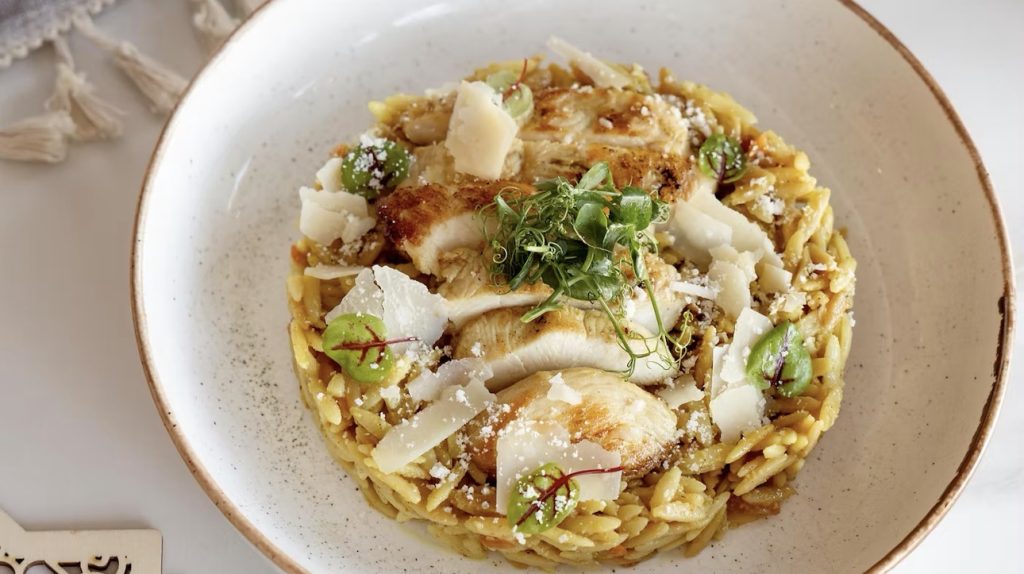
Chicken fogah, traditionally a slow-cooked, spice-laced poultry dish, is reimagined here as creamy orzo simmered with dried lime, ginger, chillies and bzaar, the Emirati spice blend that forms the backbone of many stews. The dried lime, or loomi, with its sharp tang, is a small reminder of the Iranian influence and preservation techniques used by Bedouins.
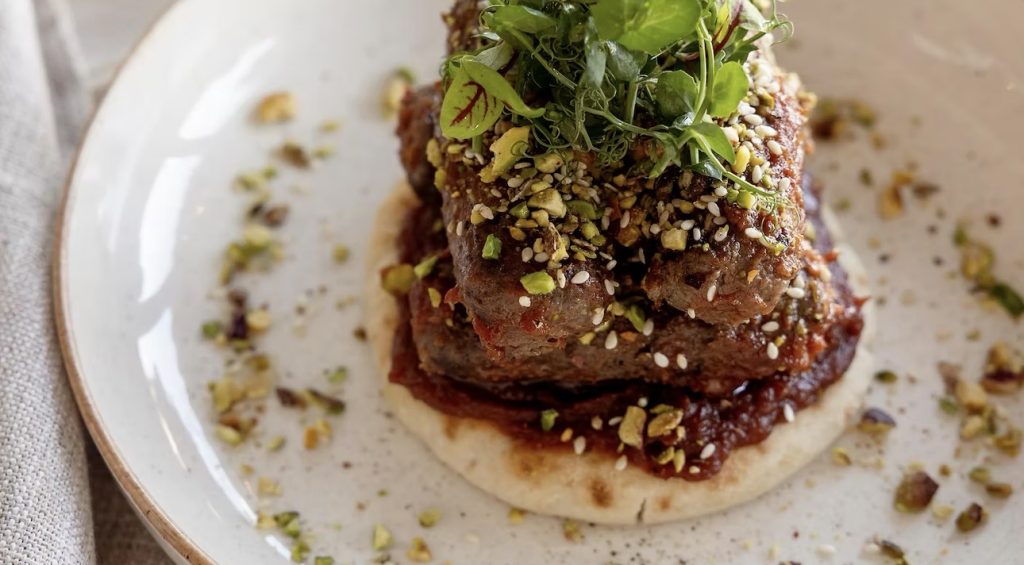
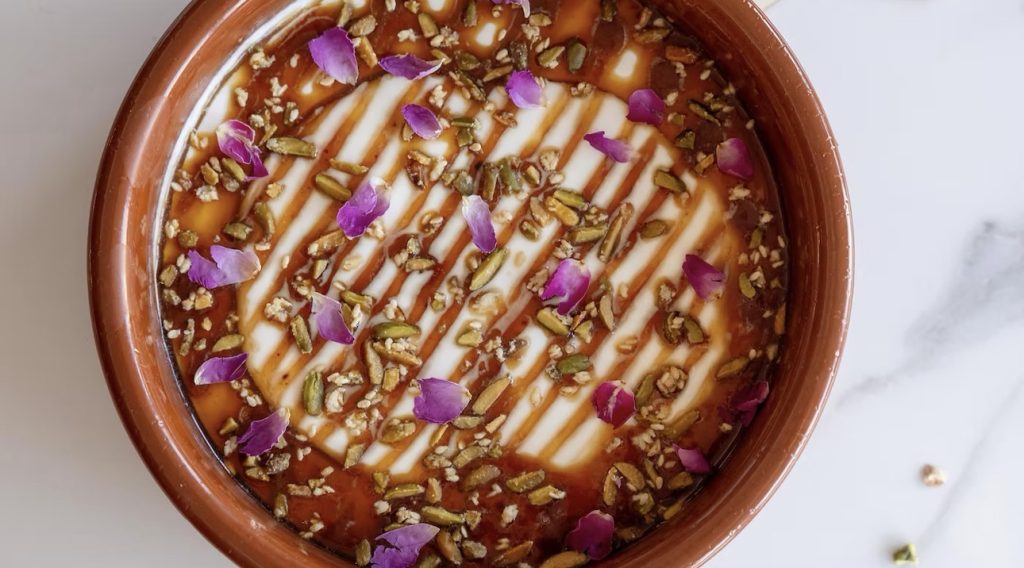
Her menu also turns its attention to dates, one of the country’s most beloved ingredients and central to Ramadan. It is used almost as a condiment across the menu. For her wagyu kebabs, she transforms the dates into a tangy vinegar sauce to glaze the meat and give subtle flavor. For dessert, the dates are cooked into a syrupy molasses for a caramel-like flavor.
The menu also revisits traditional ways the Bedoins use to preserve ingredients, which could be anything from drying, fermenting, salting and pickling ingredients to protect them from the heat. In her milk pudding, she chose to highlight the method of smoking milk, a preservation technique used to avoid spoilage of dairy and camel milk. The result is a dish reminiscent of crème brulé, creamy and sweet with a subtle savory depth from the smoke.
It is these subtle modern enhancements that she aims to bring to the Emirati culinary scene, something she describes as “culinary diplomacy.”
“When I create a dish, I think about it from two perspectives,” she says. “From the Emirati perspective, I want someone to taste it and immediately recognise what it is, even if it looks different from the original. And from a visitor’s perspective, I want them to simply enjoy the flavours, even if they are discovering them for the first time.”
Still, beyond reinterpretation, the heart of her cooking returns to something simpler. Sharing. The act of gathering for a meal and sharing it together remains central to Emirati life.
“These things bring us closer together,” she says, highlighting the importance of putting in the effort to spend time with family and friends. During Ramadan, she says her spirit extends beyond the home. A dish prepared for one table often finds its way to another, sent to neighbours as a gesture of care.
In many ways, that is what she has done with the recipes themselves. Lootah did not set out to become a custodian of Emirati cuisine. Yet, by documenting dishes and old traditions, she has helped secure them beyond memory. She cooks them differently, presents them in new ways, but the purpose remains the same. Culinary traditions are meant to be shared. They connect people to their heritage while inviting other cultures to the same table.