



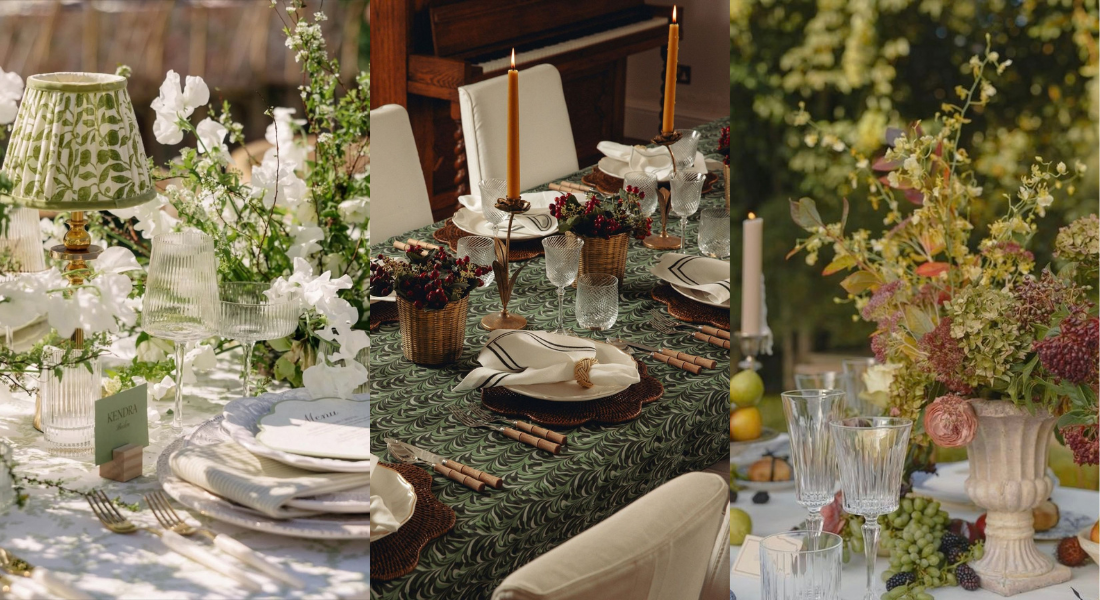
From delicate spring florals to candlelit winter settings, changing a few considered details can give the dining table an entirely new mood throughout the year.
A beautifully set table has the ability to shape an entire evening. Long before the first course arrives, the combination of flowers, linens, glassware and tableware sets the tone, whether dinner is relaxed and intimate or calls for something a little more elaborate.
Seasonal tablescaping does not have to mean replacing everything quarterly. The most versatile tables begin with pieces that work regardless of the season. Good glassware, polished cutlery and quality linens can remain at the centre, while flowers, colour and smaller decorative details change around them.
In the Gulf, where the traditional four seasons are less clearly defined, this approach feels particularly fitting. A seasonal table can be more about atmosphere than temperature, allowing rich textiles to signal autumn or a lighter palette to introduce spring without needing to follow the weather too closely.
Spring: Keep it Light
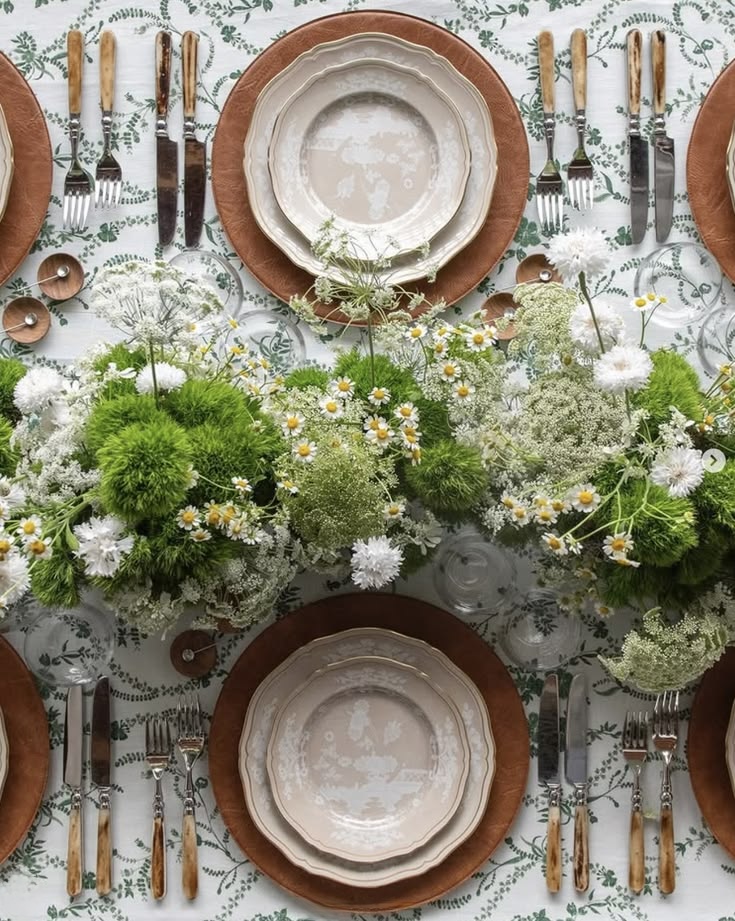
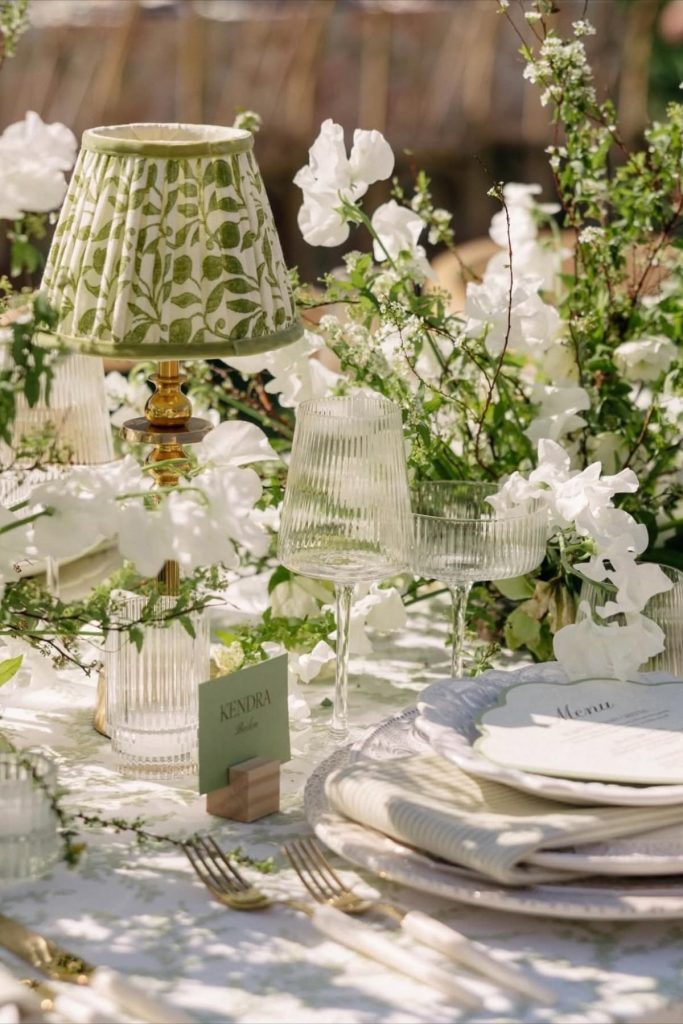
Spring is the time to introduce softness back to the table. Pale green, blush pink, butter yellow and fresh white all work well, particularly when layered rather than matched too closely. Flowers can take the lead in the table setting. Tulips, sweet peas, ranunculus and delicate garden-style arrangements bring enough colour without overwhelming the table. Low arrangements also allow guests to see one another easily, which is always worth considering when styling a dinner.
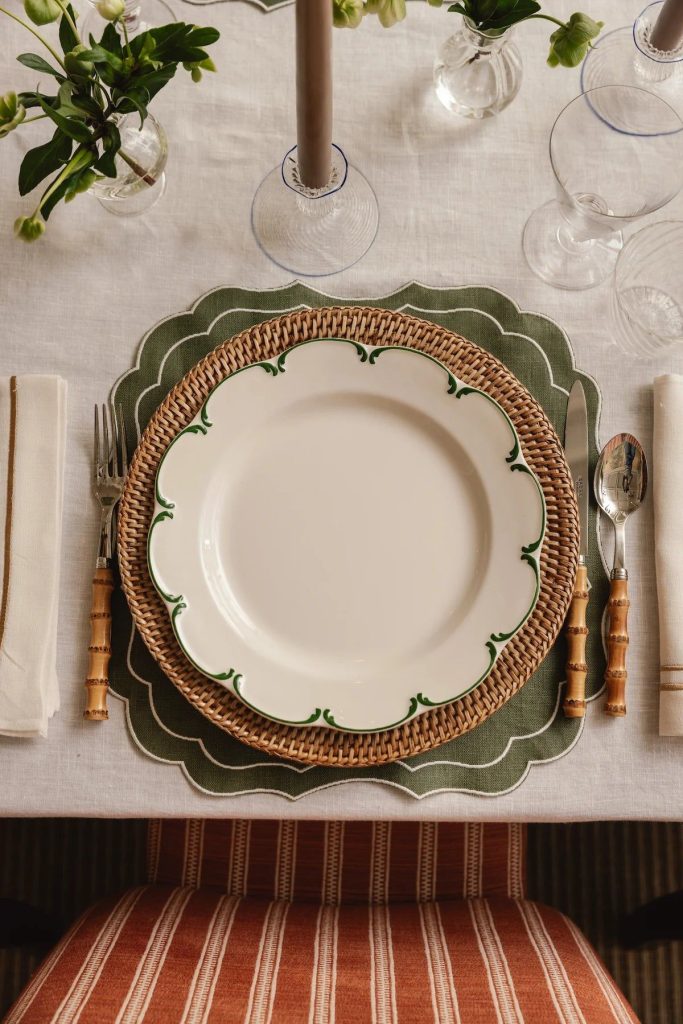
This is also a good season for bringing out finer details. Embroidered napkins, scalloped linens and delicate glassware add interest while keeping the overall look light. Classic white tableware sets can sit comfortably alongside coloured side plates or hand-painted pieces, giving the table a more collected feel.
Summer: Make it Relaxed
Summer tables work best when they feel effortless. Linen can be left slightly more relaxed, flowers can become less structured and tableware can introduce a little more colour. Blue and white will always feel at home here, but citrus yellow, soft green and terracotta can bring warmth without making the table feel overly themed. Hand-painted ceramics and woven placemats are particularly good additions, especially for lunches or early evening dinners. Fresh fruit can also become part of the decoration. Bowls of lemons, figs or peaches offer colour while keeping the centre of the table simple. Paired with clear glassware and white flowers, the result feels considered without looking too formal.
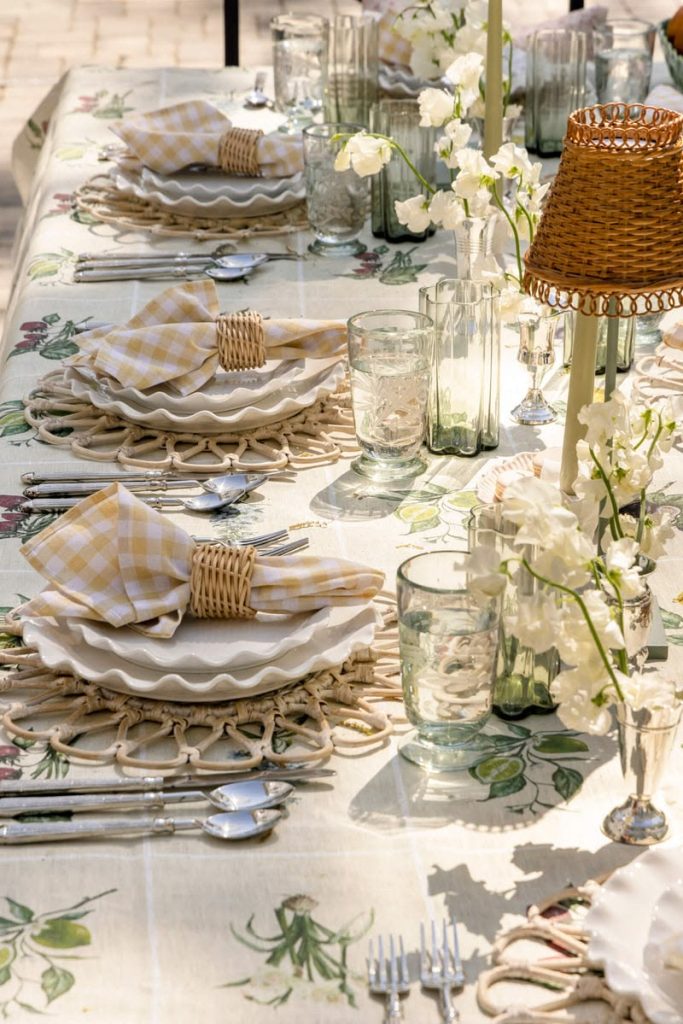
For summer entertaining, the table should feel as though people can relax around it. The best settings leave space for serving dishes, conversation and the small imperfections that come with a long lunch.
Autumn: Add Depth
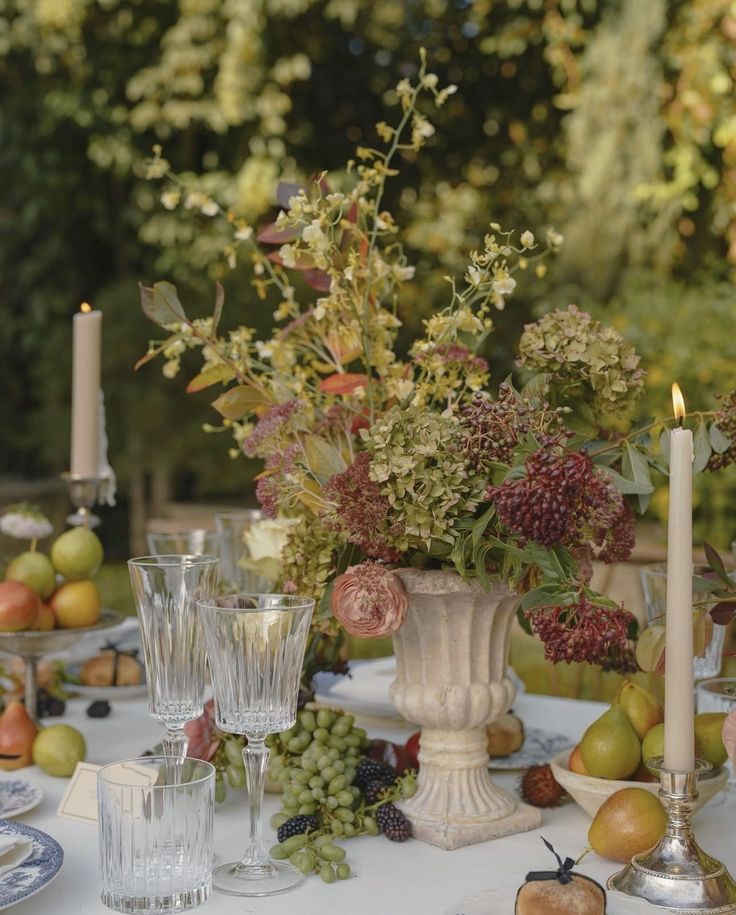
Autumn is where colour can become richer. Burgundy, olive green, chocolate brown and amber bring depth to the table, while natural textures keep the palette from feeling too heavy. There is no need to rely on the usual orange tones. Deep red flowers, dark fruits, branches and sculptured greenery can create an autumnal feeling in a more understated way. Figs, pears and grapes can work beautifully when placed in low browns or arranged loosely between candles. Texture becomes particularly important at this time of year. Heavier linen, darker wood and coloured glass can completely change the appearance of tableware that has been used throughout spring and summer.
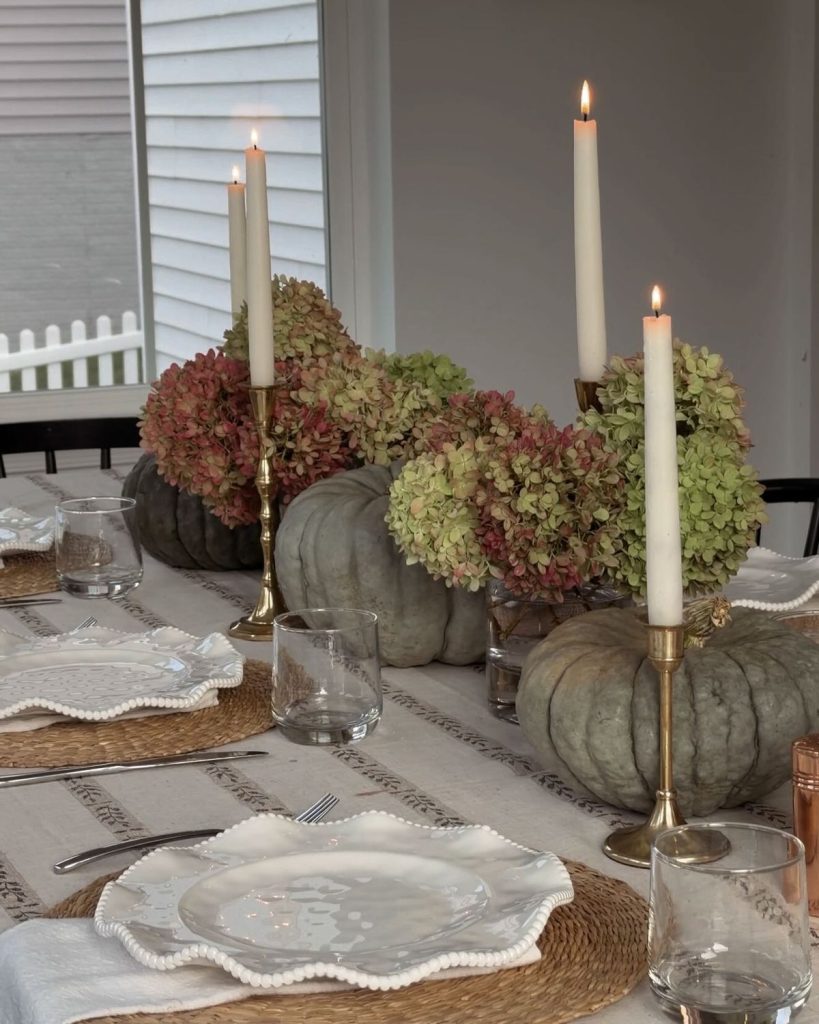
Candlelight also starts to play a larger role. Tall tapered candles bring height while smaller votives scattered across the table create a softer glow. Mixing the two can make even a simple dinner feel more intimate.
Winter: Bring in a Little Drama
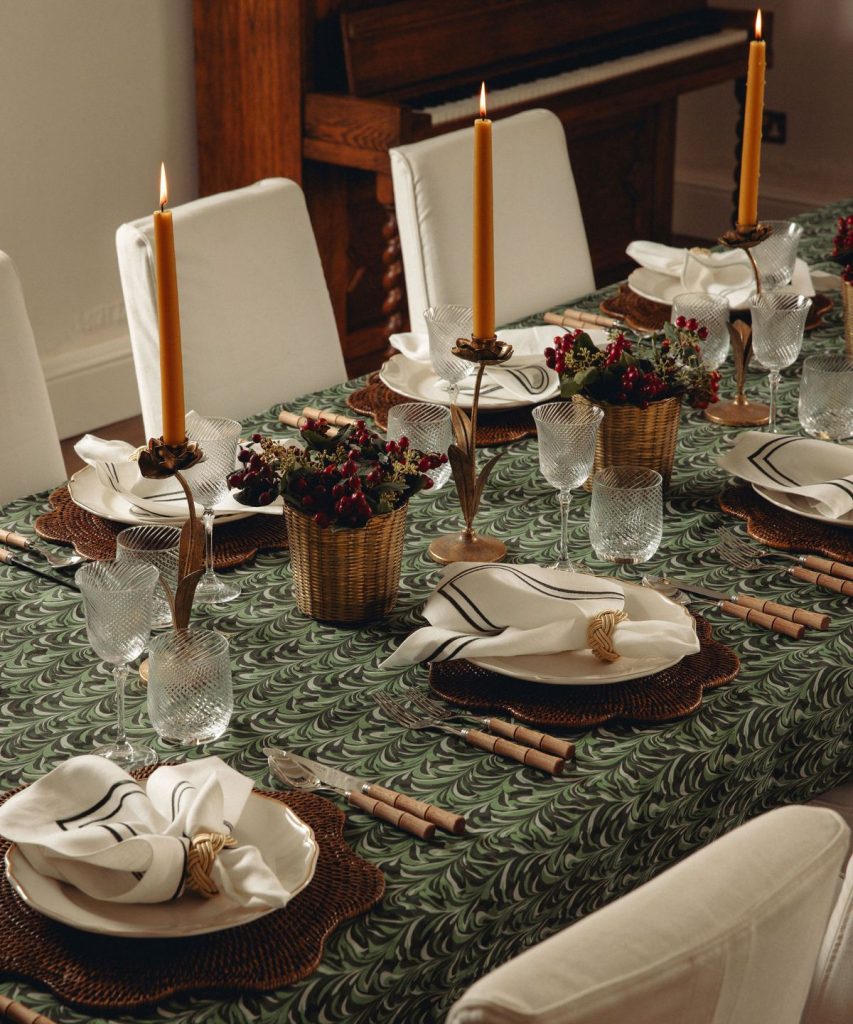
Winter allows the table to become more polished. Crisp white, deep green, rich red, silver and touches of black work particularly well, especially when combined with candlelight and reflective surfaces. This does not need to become a Christmas table. White flowers, polished silverware and crystal can create something suitably seasonal while still working for dinners throughout the colder months.
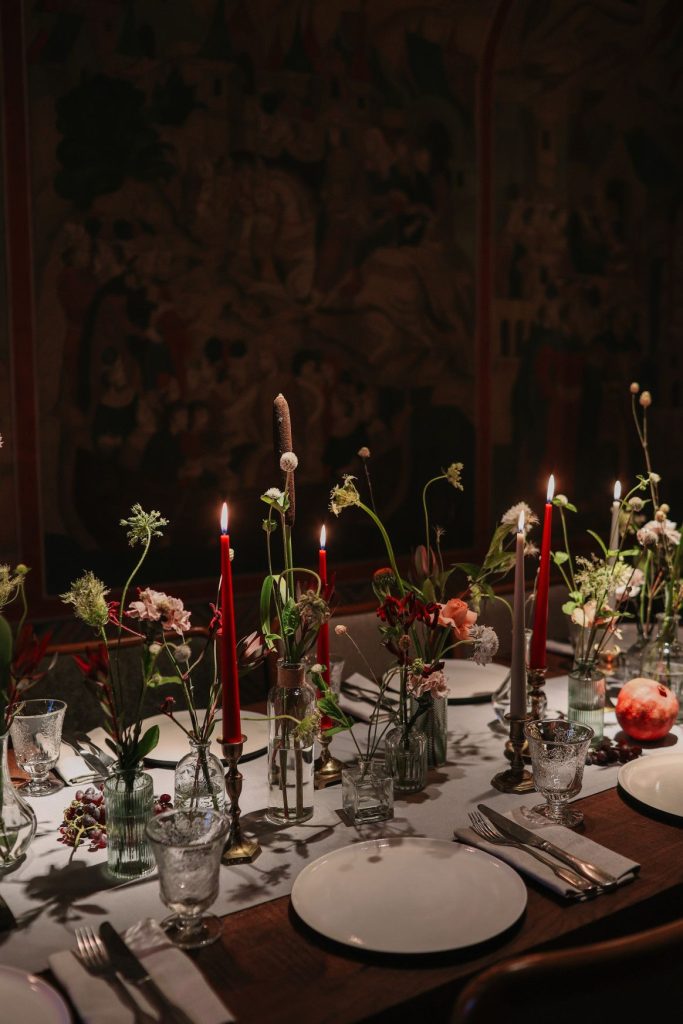
For a more dramatic setting, black or deep burgundy napkins can be paired with white china, while silver serving pieces add brightness. Forest green works beautifully too, particularly alongside warm candlelight and natural foliage. Winter is also a good time to bring out the pieces that can sometimes feel too formal for everyday dining. Crystal glasses, decorative serving dishes and beautiful candlesticks all earn their place when evenings become a little more celebratory.
The Pieces That Stay
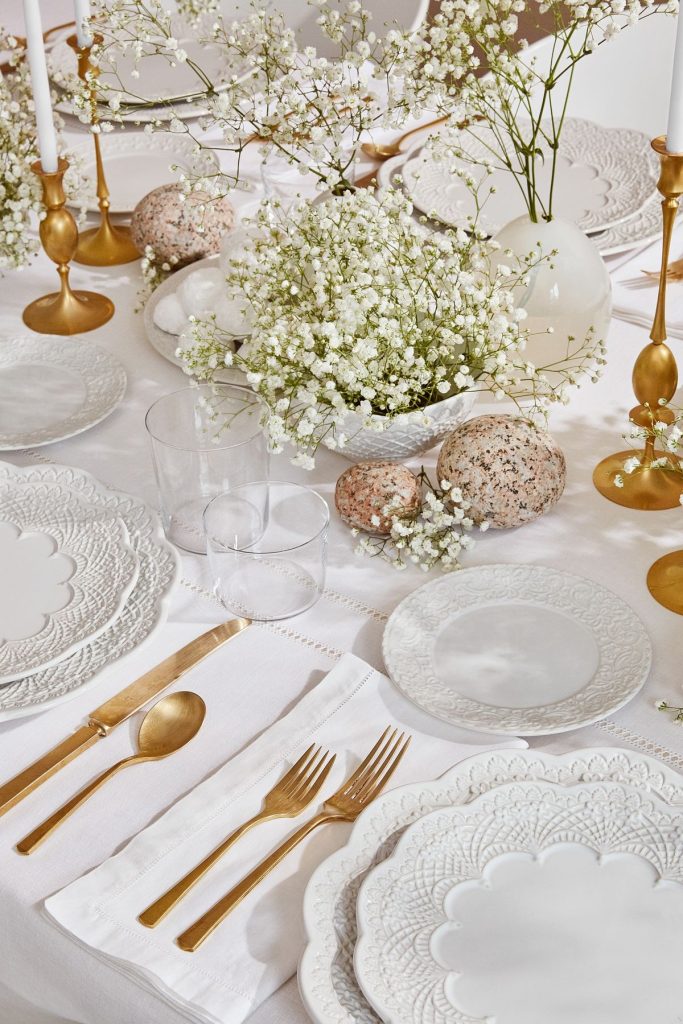
The secret to a table that changes well with the seasons is having a strong foundation. Beautiful white or neutral china can more easily change between every setting, while clear glassware and classic cutlery rarely need to change. From there, smaller details can do most of the work. A different napkin, a new flower arrangement, coloured candles or a single piece can shift the mood without turning seasonal decorating into an entirely new project.
Houses such as Bernardaud, Ginori 1735, Hermes Maison, Dior Maison, Christofle, Baccarat and L’objet offer the kind of tableware and decorative pieces that can be collected over time rather than brought for one occasion.
Ultimately, seasonal tablescaping is less about following a set of rules and more about noticing the details that make a table feel right for the moment. A few thoughtful changes are often all it takes to make the same dining room feel entirely new.
By Sayhrah Noor Asif-Ali