



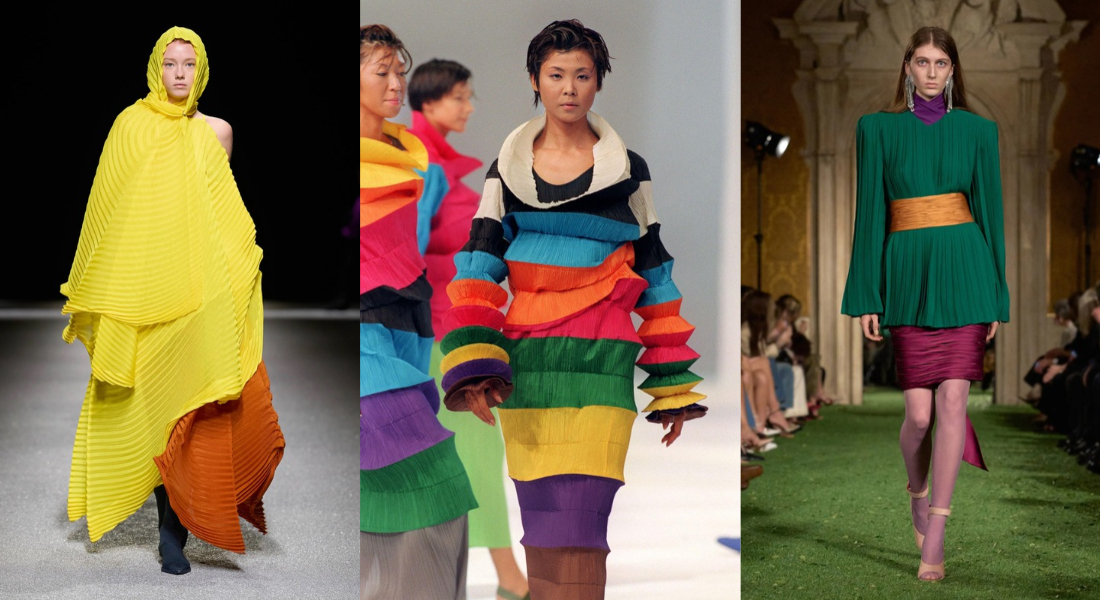
An ancient technique with an extraordinary fashion history, pleating continues to inspire designers, with fresh interpretations appearing throughout the Autumn/Winter 2026 collections.
Pleating has been part of fashion for thousands of years, yet designers still find new possibilities in the simplest folds. The precision of a sharply pleated skirt, the movement of finely folded silk and the sculptural potential of manipulated fabric have made it one of fashion’s most enduring techniques. This autumn, pleating remains firmly in the picture.
Its origins trace back to ancient Egypt, where surviving garments show remarkably sophisticated pleating techniques. Classical Greek dress would later provide an important reference for designers fascinated by the relationship between fabric and the body.
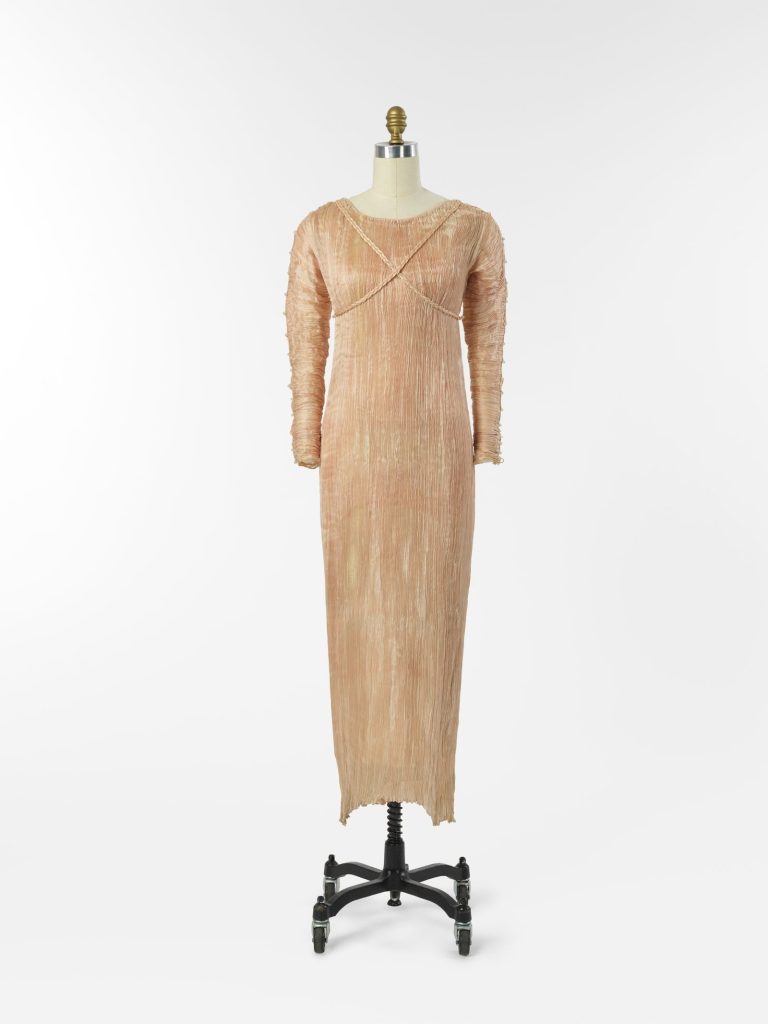
In 1909, Mariano Fortuny and Adèle Henriette Nigrin developed the Delphos gown, inspired by ancient Greek clothing. Made from exceptionally fine pleated silk, it followed the body’s natural contours, offering a striking alternative to the period’s structured garments. Its intricate construction remains one of fashion’s great technical achievements.
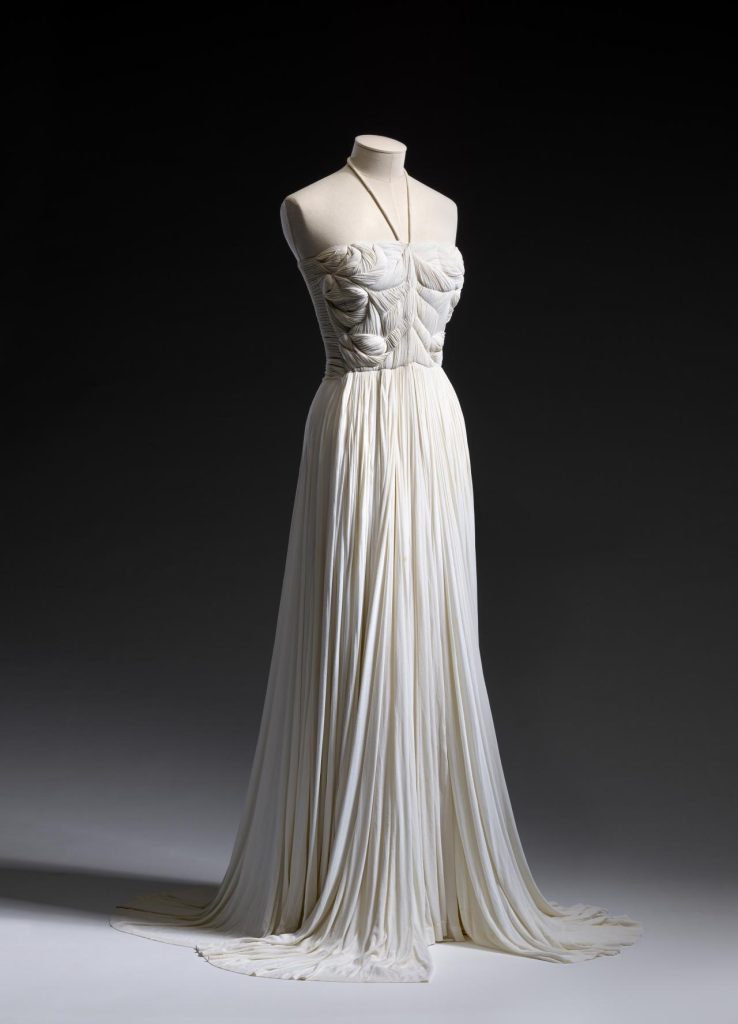
French couturier Madame Grès approached pleating as a form of sculpture. Working directly on the mannequin, she created gowns with meticulously arranged folds, often inspired by classical drapery. Her work showed how precise fabric manipulation could achieve extraordinary results.
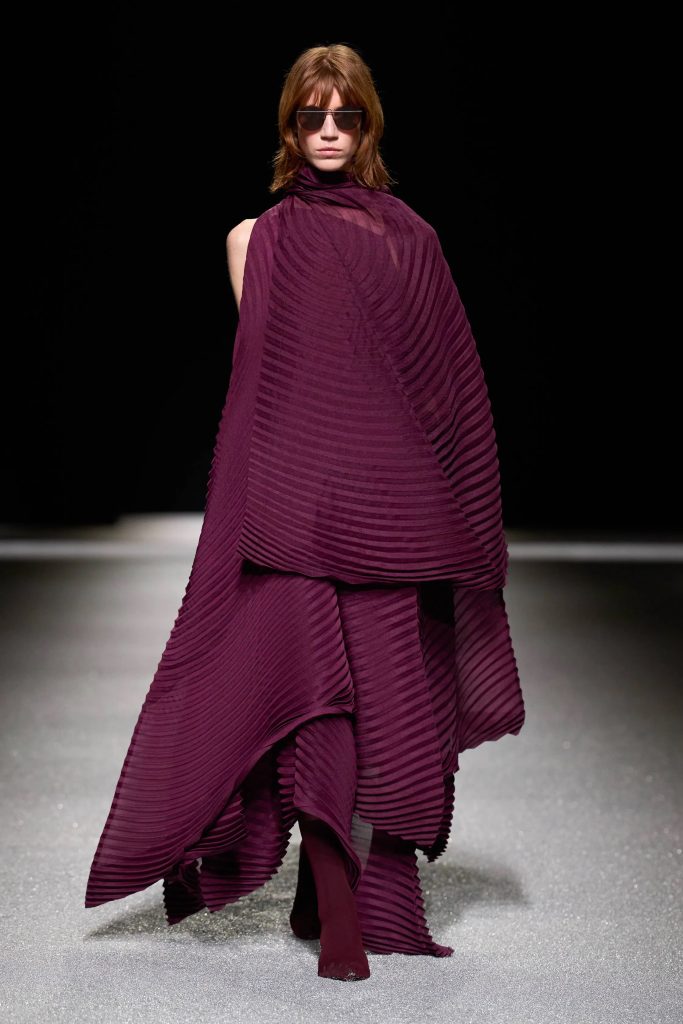
Decades later, Issey Miyake revolutionised the technique. Introduced in 1993, Pleats Please employed an innovative process in which garments were cut and sewn before being permanently heat-pleated, producing lightweight, flexible clothing that retained its shape.
For Autumn/Winter 2026, the Japanese house continued its experimentation under creative director Satoshi Kondo. The collection included Wring Pleats, combining linear machine pleating with hand-twisted folds to create richly textured fabrics that responded to movement. The result demonstrated the possibilities of bringing traditional craftsmanship together with technical innovation.
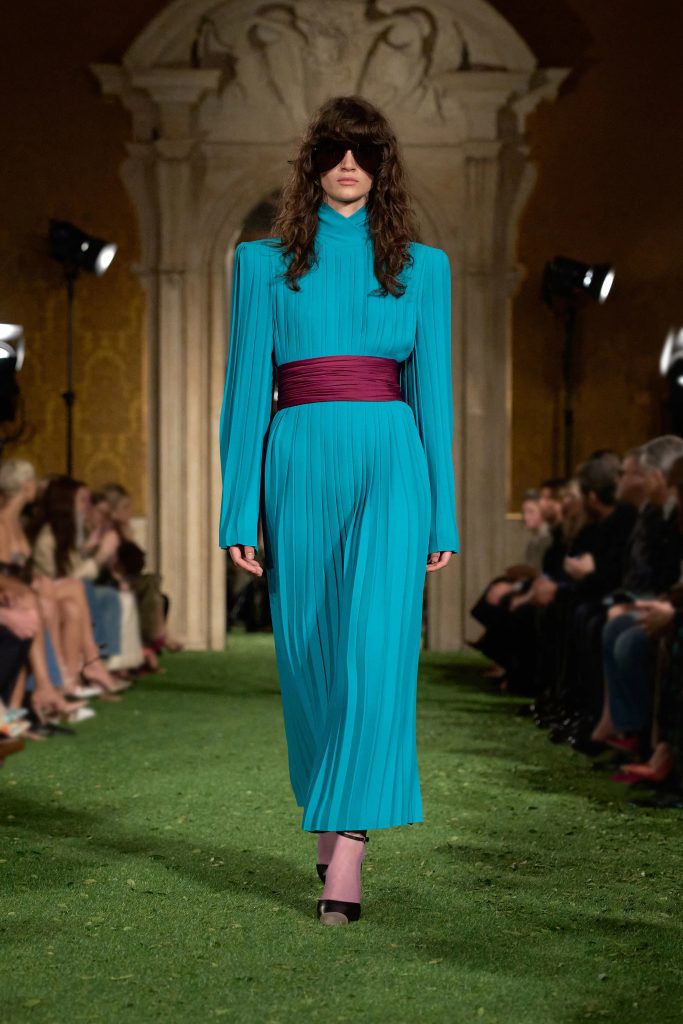
At Valentino, Alessandro Michele explored pleating within the house’s Autumn/Winter 2026 collection, Interferenze. Precisely folded couture tops offered a structured approach to the technique, demonstrating its ability to introduce architectural detail to contemporary eveningwear.
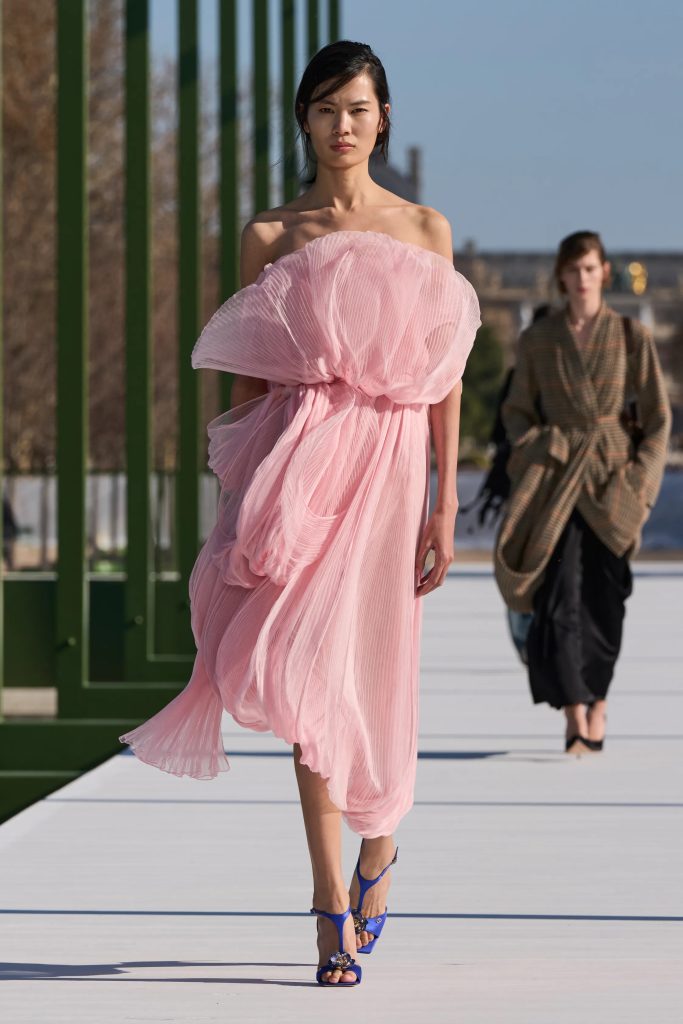
Pleating also remains an important element of Dior’s design vocabulary, with Jonathan Anderson’s Autumn/Winter 2026 collection exploring volume, fabric manipulation and the relationship between structured silhouettes and fluid movement.
Its enduring appeal lies in its versatility. Pleating can be architectural or fluid, dramatic or understated, with each designer finding a different way to work with the technique.