


Words by Sayhrah Noor Asif-Ali
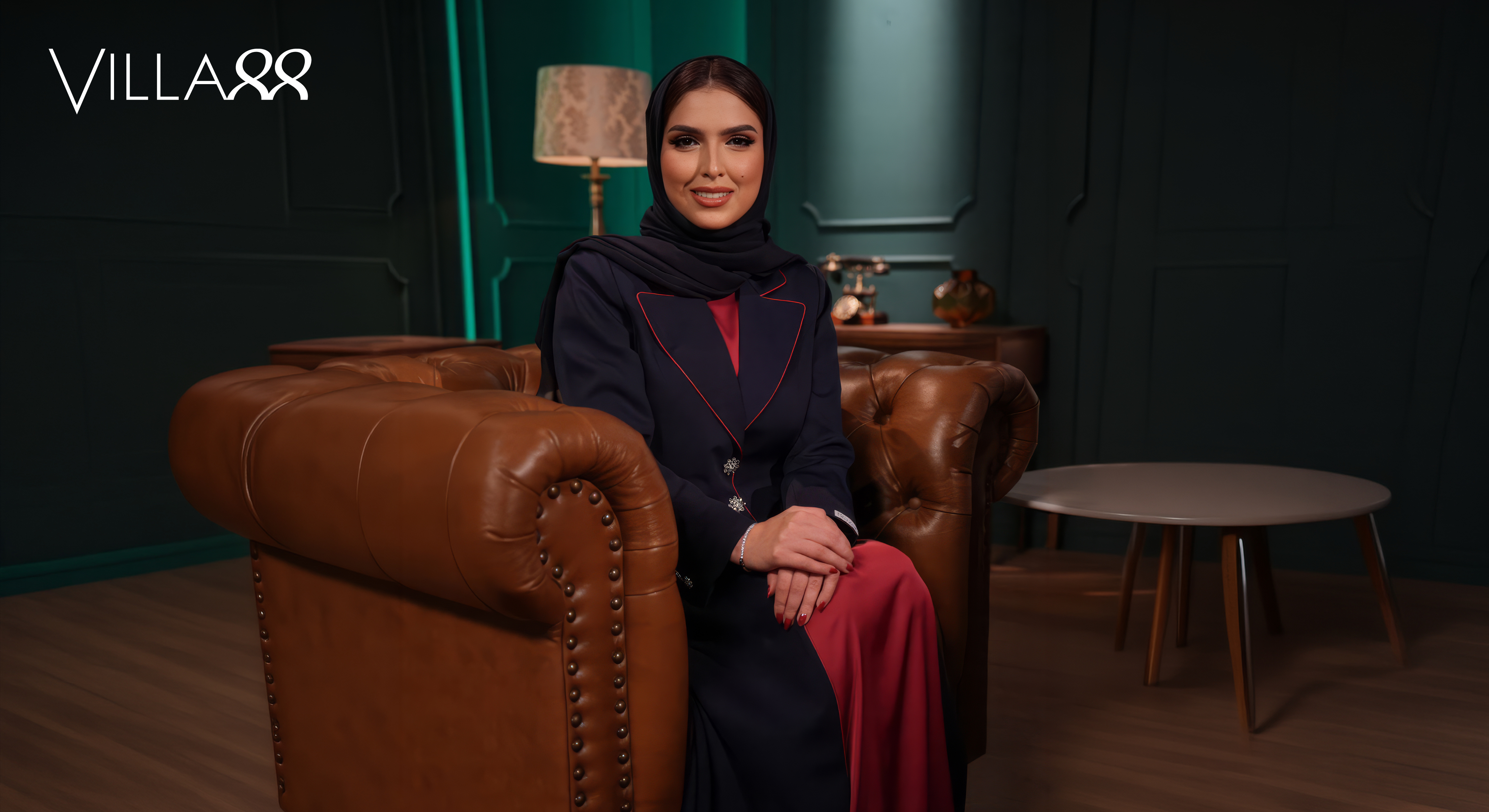
From artificial intelligence to space exploration, journalist and presenter Amira Mohammed has built a career around making complex ideas meaningful. Here, she reflects on the responsibility that comes with having a voice.
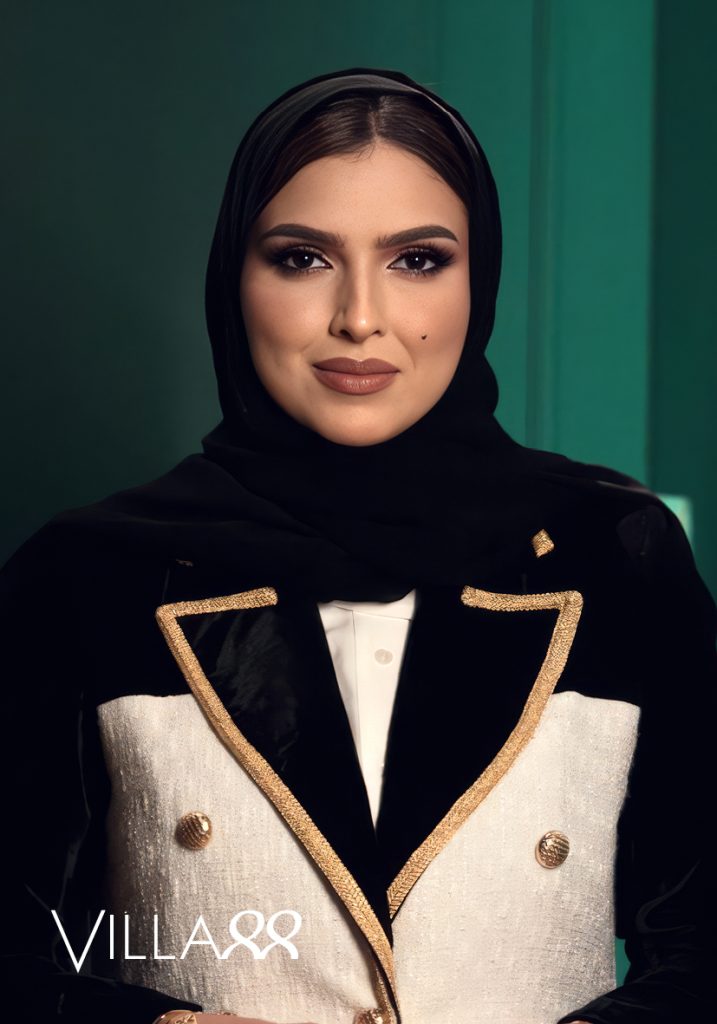
Amira Mohammed has built a career around curiosity and the desire to understand the unknown. The journalist and television presenter has developed a reputation for approaching subjects that can appear complicated or technical, then finding the questions that make them relevant to everyday life.
Since joining Abu Dhabi Media in 2015, Amira has presented cultural and scientific programmes including Space and the Future, Abu Dhabi Translates, Artificial Intelligence: The Future Now, and The Promise of Fifty.
Amira’s reporting has also placed her at the centre of defining moments in the country’s recent history, from the Emirates Mars Mission’s Hope Probe to Expo 2020 Dubai and the opening of the Museum of the Future.
“I think curiosity has been behind almost every direction I have taken in my career,” she tells Villa 88. “I have always felt that there is so much happening around us that deserves to be questioned, understood, and shared with people.”
For Amira, journalism is not simply about communicating information. It is about creating access to knowledge. Technology, artificial intelligence (AI), and space exploration increasingly influence ordinary life, she argues, making understanding them a public concern rather than a specialist one. “That is where I see the role of journalism,” she shares. “We build a bridge between knowledge and people.”
Making complexity accessible, however, requires more than simplification, so Amira begins with questions an ordinary viewer might ask. Then, she works backwards through research, context, and competing perspectives.
“The challenge is to simplify an idea without reducing its meaning,” she says. “And I think the only way to simplify something well is to first understand it deeply yourself.”
That intellectual rigour is reflected in her academic path. Alongside a journalism degree from the Mohammed bin Rashid School for Communication, she took up Middle Eastern Studies at the American University in Dubai and later completed a master’s degree in diplomacy and security at the American University in the Emirates. Her extensive studies helped her in her role today, she notes.
“Journalism taught me to ask questions. Diplomacy taught me to pay much greater attention to context,” she says, explaining how history, culture, international relationships, and differing perspectives can all change the significance of an answer. “Sometimes, the difference between an ordinary question and a meaningful one is simply knowing enough about the context to recognise what really matters at that particular moment.”
Her work on Arabic cultural talk-show Mawjat takes that philosophy into a more intimate form. Across multiple seasons, the Abu Dhabi TV programme has brought experts and influential voices into conversations around family, society, and contemporary life, while Amira’s own interviews move across psychology, medicine, leadership, technology, and human relationships.
Mawjat has become a platform for influential voices and conversations that engage directly with society’s concerns. The subjects vary, but Amira sees a common line of enquiry beneath them.
“What can this teach us about being human?” Amira asks. “What I love about speaking with experts is that you are not only meeting a person – you are gaining access to years of knowledge, experience, observation, successes, and mistakes.” Yet, she is equally interested in what remains unresolved. “A good conversation is not necessarily one that gives you all the answers,” she smiles. “Sometimes, its greatest value is that it leaves you with a better question.”
As AI becomes increasingly widespread and part of our day-to-day lives, this is particularly relevant. “The more capable machines become, the more valuable certain human qualities become,” Amira says, naming curiosity, empathy, context, intuition, and attentive listening as uniquely human traits. “AI can help you find information very quickly. But information is not the same as understanding.”
Listening has also become central to the way she understands leadership. Amira’s experience as a woman, she says, has taught her that “strength does not always need to be loud”. In interviews, for example, she notes how the most revealing thought can arrive after someone appears to have finished answering. “Over time,” she adds, “I have learned to listen more and interrupt less.”
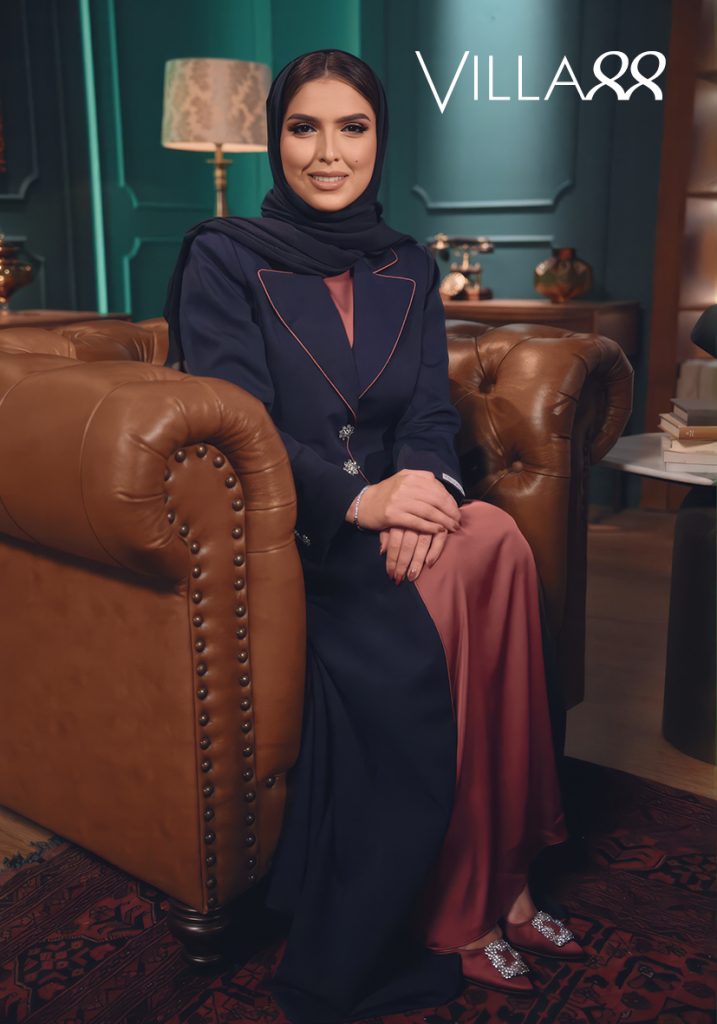
That perspective carries particular resonance around Emirati Women’s Day. For Amira, the significance of the occasion lies not only in celebrating achievement, but in what those achievements make imaginable for the women who follow.
“When you grow up or work in a society where you regularly see women leading ministries, building companies, working in science, diplomacy, space, culture, and representing their country internationally, ambition begins to feel normal,” she says. “You stop asking, ‘Can a woman reach that position?’ and start asking, ‘What knowledge, skills and experience do I need to get there?’”
This is perhaps one of the clearest expressions of Amira’s philosophy. Opportunity, in her view, is meaningful when met with preparation and purpose.
“For me,” she says, “Emirati Women’s Day is both a celebration of how far women have come and a reminder that opportunity carries responsibility – when doors are open to you, you should try to walk through them with knowledge and purpose.”
After more than a decade in broadcasting, Amira is increasingly interested in work that can outlast the speed of the media cycle. Her ambition is to create programmes that combine journalism, ideas, storytelling, and human inquiry, and will remain useful even after the immediate moment has passed.
“I want to create work that has a life beyond the moment in which it is published,” she says. “For me, success is becoming less about simply reaching the largest number of people and more about whether something stays with them.”
It is a fitting ambition for a journalist whose career has been shaped less by the certainty of having answers than by the discipline of continuing to ask. Whether the subject is AI, diplomacy, space, or human behaviour, Amira Mohammed returns to curiosity as both professional method and personal compass. In a media landscape increasingly defined by speed and abundance, her work makes a compelling case for something more enduring – understanding.
PHOTOS: COURTESY OF AMIRA MOHAMMED