


Art Basel’s arrival in Doha is a significant milestone for art in the Middle East. Bringing together 87 galleries from 31 countries to present the work of 84 artists, the event runs until Saturday, February 7. Staged across Msheireb Downtown Doha and M7, exhibitions are unfolding with a strong emphasis on solo presentations and site-specific projects, offering plenty to discover. Here we offer an insight into what to expect if you’re planning to visit this weekend.
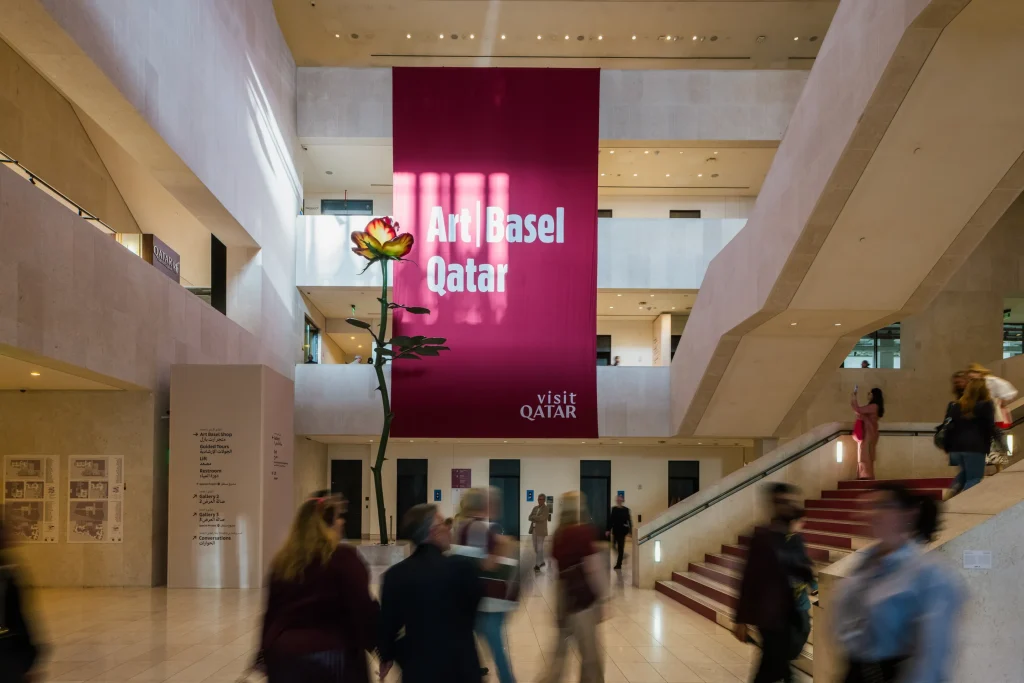
Under the artistic direction of Egyptian artist Wael Shawky, working alongside Art Basel’s chief artistic officer and global director, Vincenzo de Bellis, the fair centres on the theme Becoming. The concept reflects on transformation and transition, exploring how ideas, identities and forms shift through moments of tension and renewal.
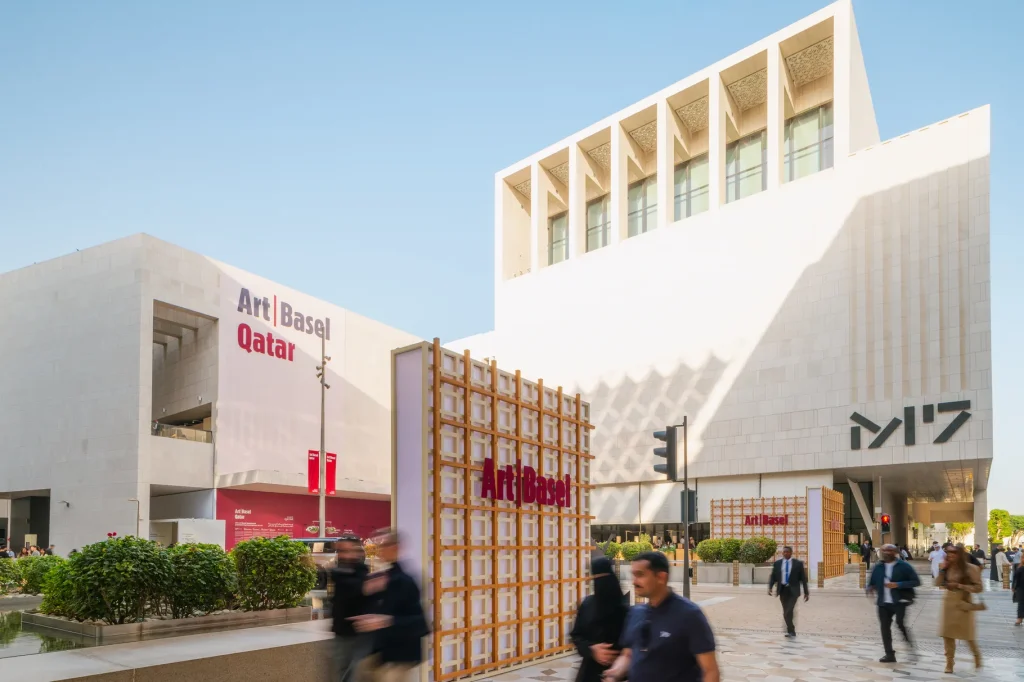
Unlike traditional aisle-driven fairs, Art Basel Qatar is conceived as a city-wide experience. Exhibitions are woven into the urban fabric, encouraging visitors to move between historic architecture, contemporary design districts, and public spaces. Begin your visit in Msheireb Downtown Doha, the cultural heart of the fair. Its restored heritage buildings and pedestrian-friendly layout set the tone for the fair’s curatorial direction. From there, make your way to M7, Doha’s creative hub for fashion, design, and art. This is where the dialogue between regional and international practices feels most alive.
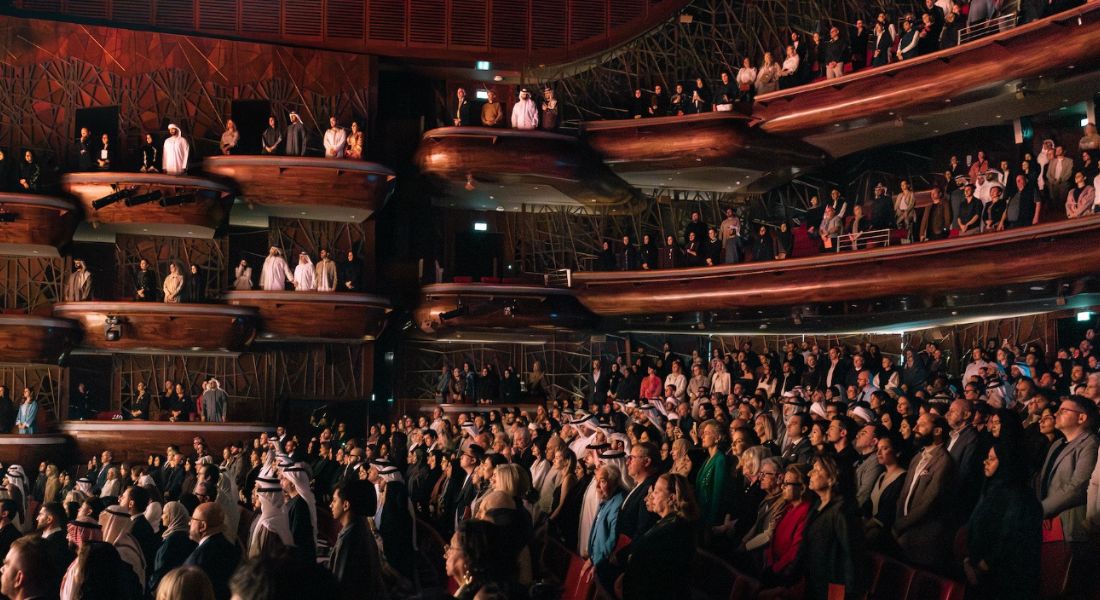
The Art Basel Conversations × Qatar Creates Talks series brings an international roster of thinkers and practitioners to Doha for three days of dialogue and debate. Drawing on the reach and influence of both platforms, the programme examines how artists, institutions and patrons are shaping the cultural moment, while positioning Qatar as an active force within global creative discourse.
Taking place at the Sky Theatre at M7 in Msheireb, the talks feature voices including Sheikha Al Mayassa bint Hamad bin Khalifa Al Thani, Glenn Lowry and Sumayya Vally. Together, the sessions offer insight into the evolving cultural ecosystems, from institutional leadership and patronage to architecture, authorship, and creative responsibility today.
One of the defining features of Art Basel Qatar’s inaugural edition is its commitment to solo presentations. Unlike the sprawling, aisle-led format of other fairs, Doha offers a more focused experience, allowing visitors to engage deeply with individual artistic practices. Both regional and international galleries participate, with a notable emphasis on voices from the Gulf and the wider Middle East, who make up more than half of the artists presented.
Among the regional highlights, Cairo’s Gallery Misr, Beirut’s Saleh Barakat Gallery and Dubai’s Tabari Artspace are well worth prioritising. Tabari Artspace’s presentation of Palestinian artist Hazem Harb stands out for its quiet intensity. Harb’s layered works draw on archival photographs and archaeological imagery, including scanned fragments of mosaic tiles from the former Palestinian airport, referencing the language of preservation while questioning who gets to author history.
From Morocco, Loft Art Gallery presents Mustapha Azeroual, whose lenticular sunset works are created from hundreds of horizon photographs taken across different locations and times. Bombay-based gallery Chemould takes a similarly confident approach by showcasing a single monumental work by Pakistani artist Rashid Rana, reinforcing the fair’s emphasis on depth over density.
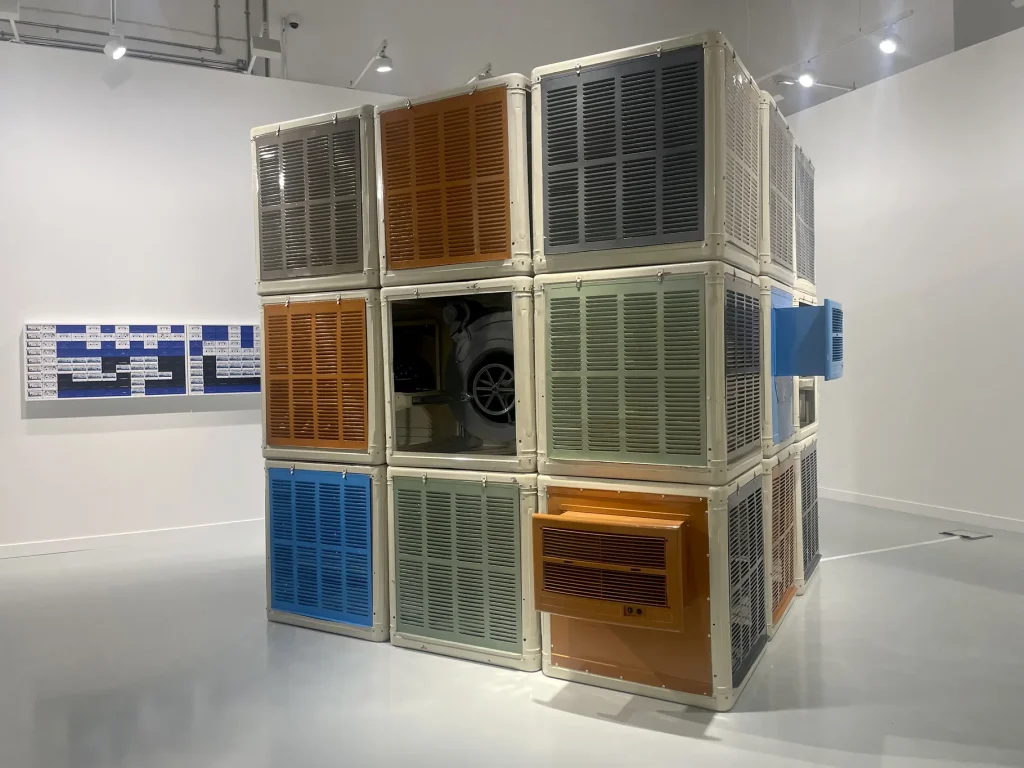
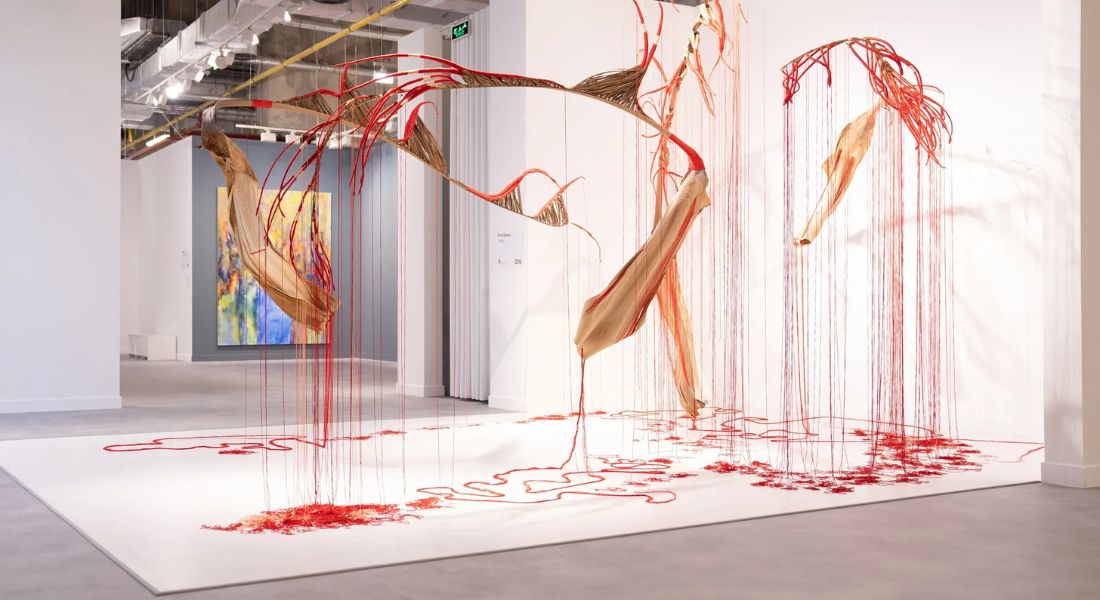
Sculpture and installation play a powerful role across the fair. Galerie Krinzinger presents Saudi artist Maha Malluh’s imposing sculpture composed of 27 stacked “desert cooler” air-conditioning units, a work that balances humour with sharp commentary on climate and consumption. At Hafez Gallery, Lina Gazzaz’s suspended installation, Tracing Lines of Growth, uses discarded palm crownshafts, hand-stitched with red thread, evoking fragility, resilience, and the body’s relationship to the land.
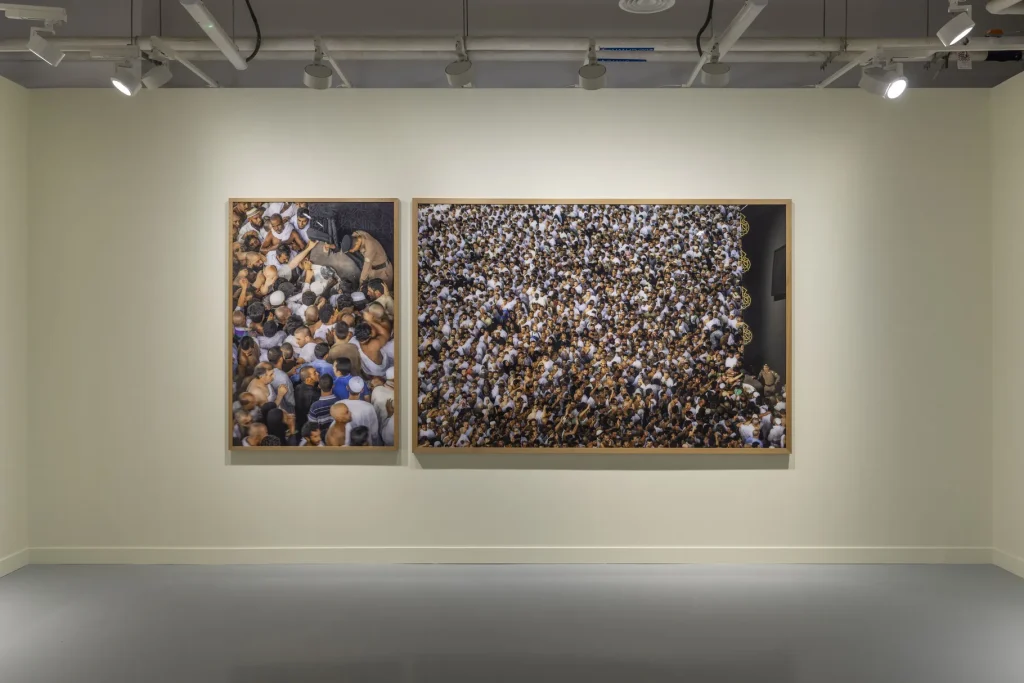
Photography also features prominently, notably at Saudi gallery ATHR, which presents works from Ahmed Mater’s ongoing Temporal Migration series. Focusing on Makkah, the images capture a city in constant transformation, shaped by construction, pilgrimage and mass movement.
Alongside its core presentation, Art Basel Qatar showcases a unique Special Projects program: a wide-ranging series of ten large-scale, site-specific sculptures, architectural installations, film and moving-image works, and performances staged across key cultural venues and public spaces in Msheireb Downtown Doha. These landmark projects respond to the fair’s central theme, Becoming, and together form the most extensive group of public works ever realized for an Art Basel show.
There are many events and artistic happenings across the city. Here are a few more to look out for.
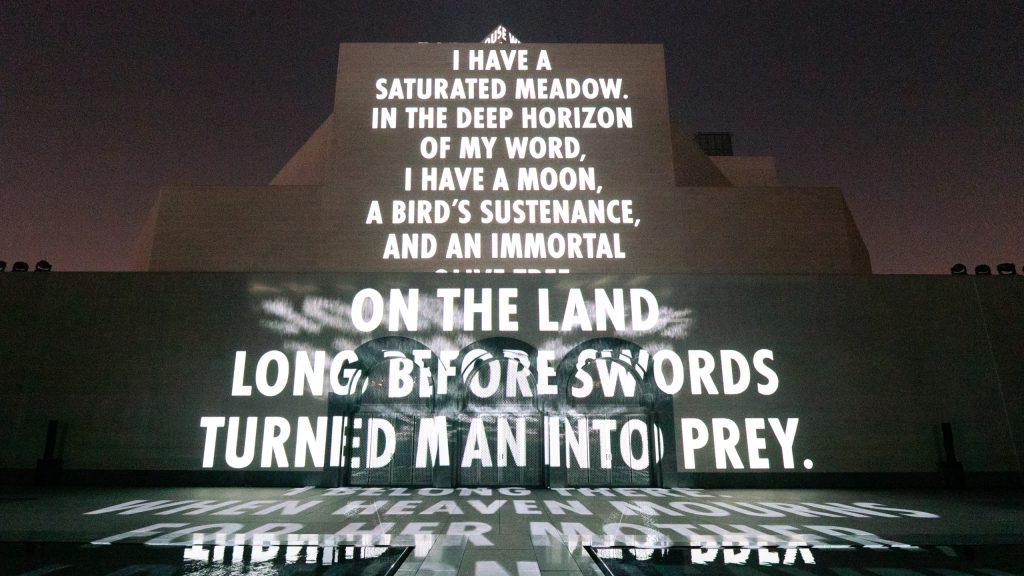
A highlight of the programme is Jenny Holzer’s SONG (2026), commissioned especially for the fair and unveiled ahead of the VIP opening. Projected nightly onto the façade of the Museum of Islamic Art, the work transforms one of Doha’s most recognisable landmarks into a luminous public canvas from dusk until dawn throughout the fair, offering a powerful reminder of how art can inhabit shared civic space.
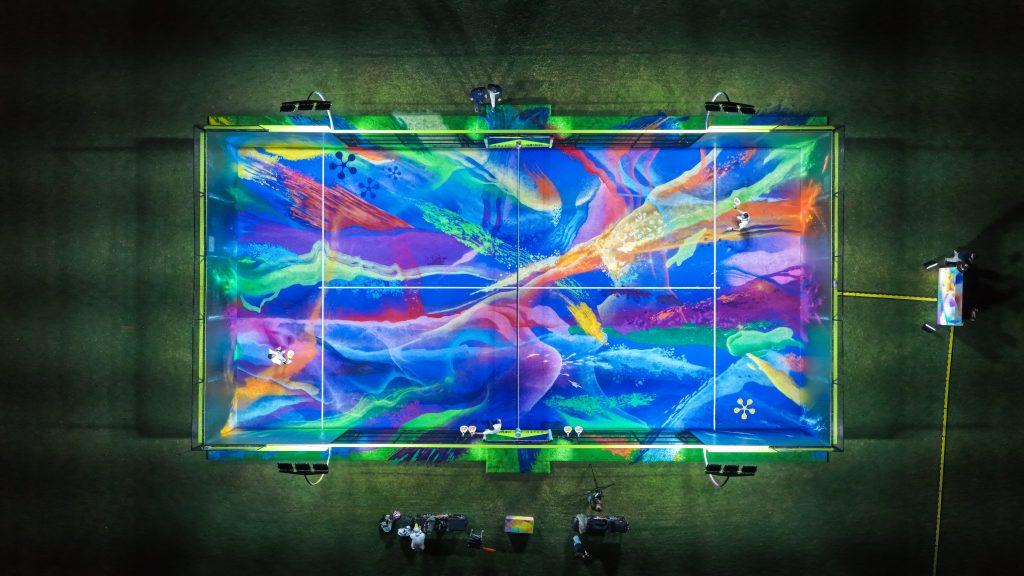
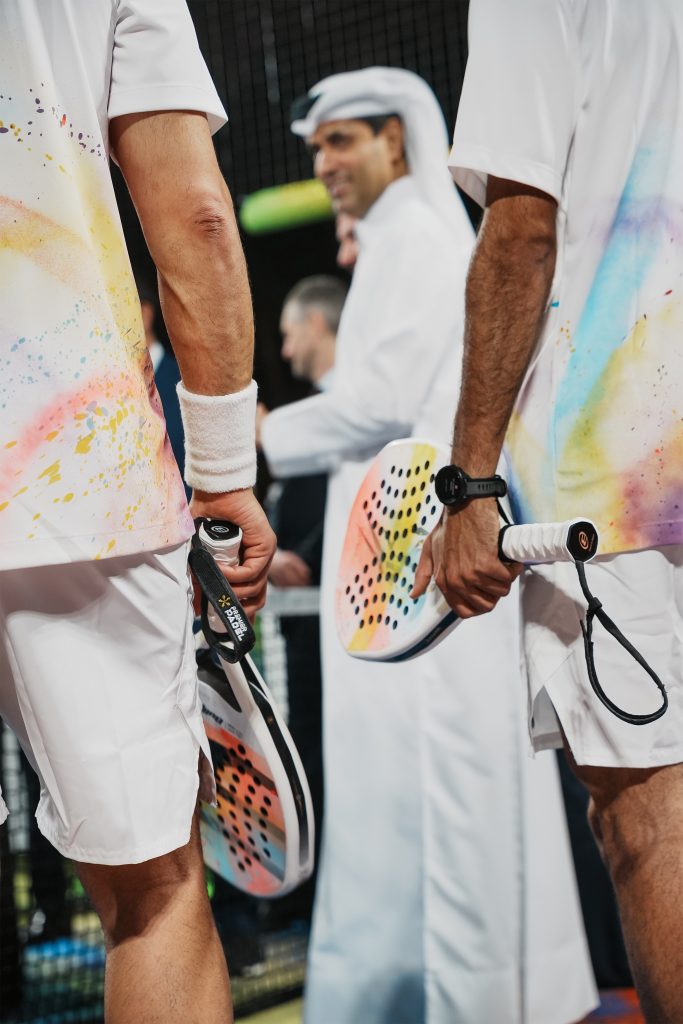
Premier Padel unveiled a one-of-a-kind padel court reimagined as a work of art at the inaugural Art Basel Qatar, created in collaboration with French artist Mr D 1987. Commissioned specifically for the fair, the installation transforms the court into a cultural expression inspired by Doha’s illuminated skyline. Designed to be both played on and experienced, the court is open to the public throughout the fair.
Art Basel Qatar runs at Downtown Doha from February 5 to 7