


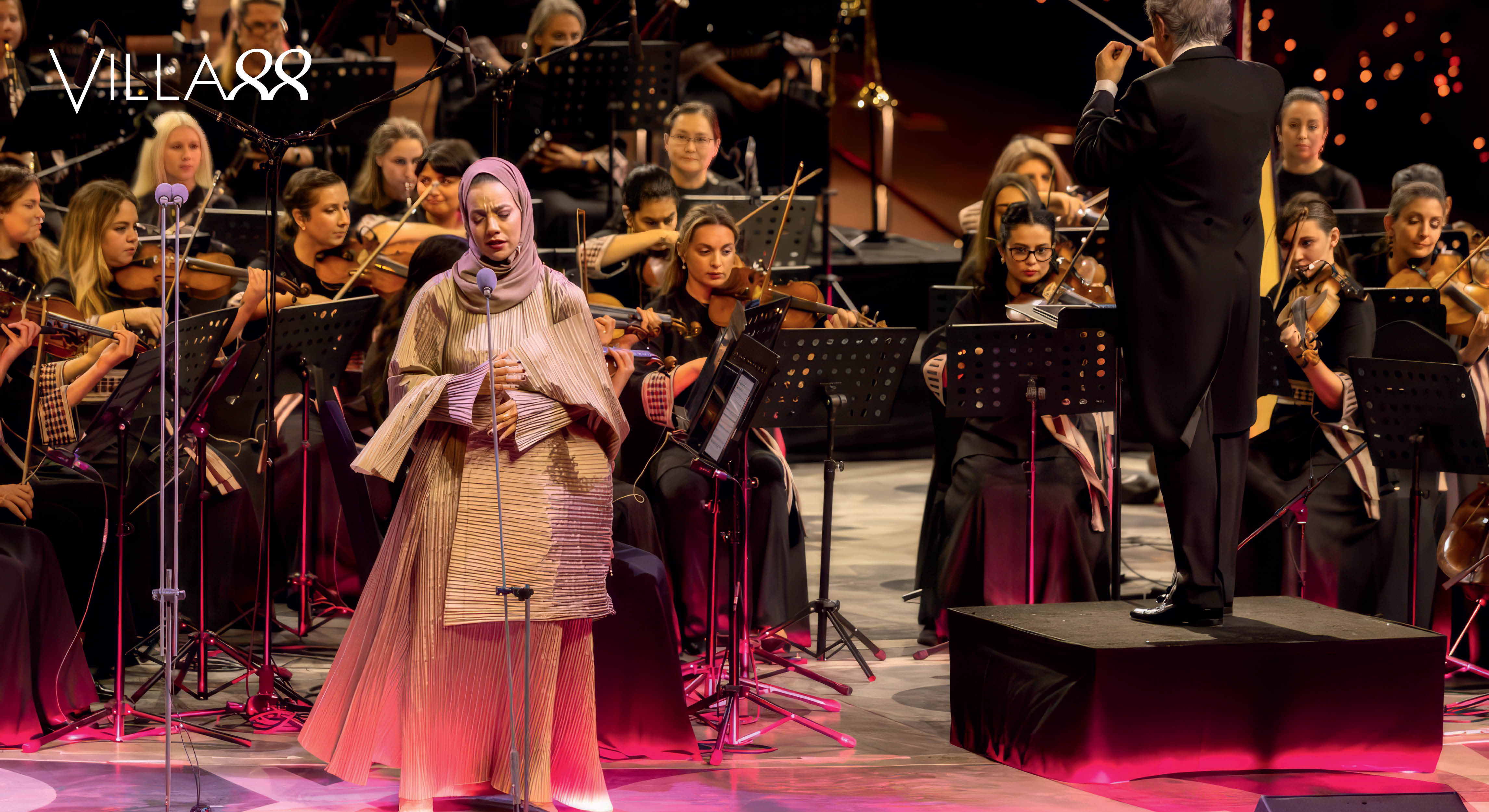
Two Emirati women, an opera soprano and a qanun virtuoso, are rewriting what it means to carry a culture into sound. As they prepare to take the Abu Dhabi Festival stage in October, they speak about language, healing, heritage, and the weight of being first.
My dream is to see the qanun recognised and appreciated from the East to the West, just as it was known historically during the time of Al-Andalus.” Dr. Noura Al Marzouqi
There is a moment that Fatima Alhashmi returns to often. She was young, seated in the audience at a recital, when an Emirati woman walked onto a concert stage to sing opera. “Seeing someone from my own culture performing opera made the art form feel both accessible and inspiring,” she recalls. “At the time, I never imagined that I would one day become an opera singer myself, but that moment certainly planted the seed.”
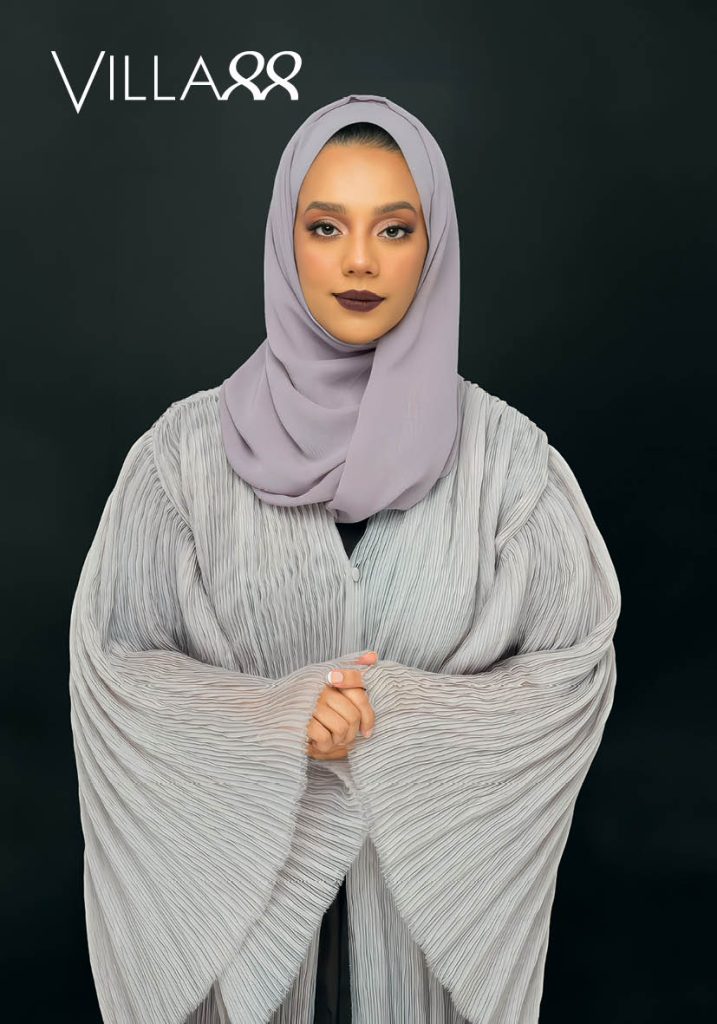
Seeds, of course, take time. And what grew from that singular afternoon is now a voice that has been heard across stages from the Bolshoi Theatre to Enescu Hall, in more than twenty languages, transforming into a form of cultural diplomacy that no one could have scripted.
Dr. Noura Al Marzouqi had a different kind of beginning, though it shares the same quality of arrested attention. As a child in Abu Dhabi, she would hear the qanun and simply stop in her tracks. “I was always fascinated by its sound,” she says.
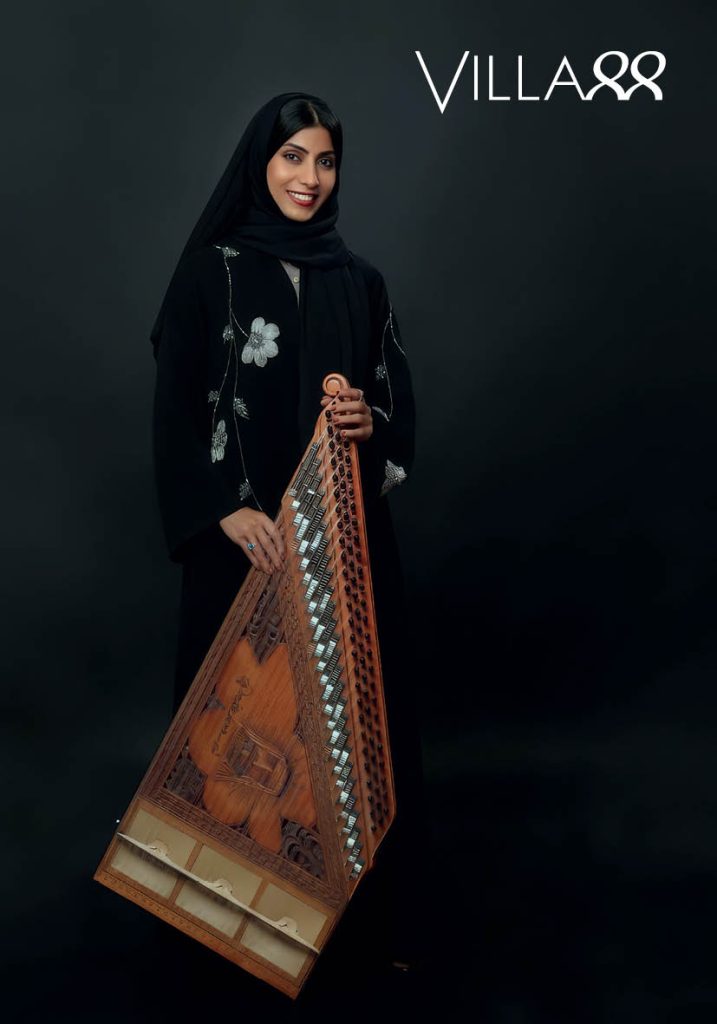
The qanun, a plucked zither of extraordinary complexity, strung with around 76 strings spanning three and a half octaves, is the instrument that captured her imagination. In October this year, both Fatima and Dr Noura will perform at the Abu Dhabi Festival, one of the Arab world’s most significant cultural platforms, bringing to that stage something more than musical accomplishment.
Fatima performs in Italian, French, German, Arabic, Russian, and more – a polyglot voice that is, she says, far more than a technical feat. “Language is a powerful gateway into the psychology of a character,” she says. “Each language carries its own rhythm, emotional colour, and cultural nuance.” It influences both phrasing and physical presence – how she moves and breathes, how a phrase resolves on stage.
“Understanding the language deeply allows me to embody the character more authentically,” she adds. “In that sense, language becomes an essential part of storytelling. My voice became a bridge connecting my homeland with audiences around the world.”
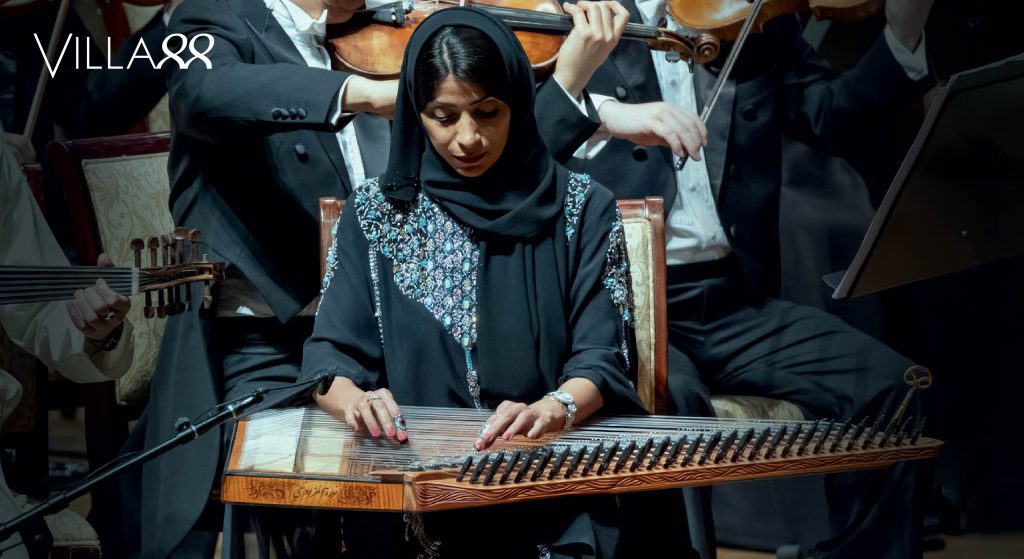
Dr Noura is also preoccupied with bridges, though hers are built from older materials. The qanun, she notes, is not only an instrument but an archive that travelled the trade routes between the Gulf, India, and Southeast Asia, carrying with it musical rhythms, dances, and Arabic singing traditions that took root in distant soils. Today, it is rarely heard in Gulf orchestras – it has been better preserved in Malaysia and parts of Southeast Asia than in the region of its medieval flowering.
“This shows why documentation and research are essential,” Dr Noura says. “They allow us to rediscover these stories, understand our musical history, and make sure these traditions are not lost but passed on to future generations.”
Her academic background in Gulf studies is not incidental to her practice as a performer – it is the very thing that makes her performance more meaningful. After one of her lectures and qanun recitals, a man with limited movement, seated in a wheelchair, began moving his fingers for the first time. “He told me, ‘I feel my body moving while you are playing’,” she says.
“That moment was incredibly emotional and showed me how music can reach people in ways words cannot.”
Fatima too recognises a version of this gravity in her own practice. Opera is an art form that asks its performers to be simultaneously athlete and psychologist, as the voice must be maintained with the precision of a competitive sport while the interior life must remain open, permeable, alive to chance.
“Physically, I maintain a disciplined vocal routine that includes breathing exercises, vocal warm-ups, and careful attention to technique,” she explains. “Mentally, I spend time reconnecting with the character and the emotional world of the music.” The discipline is total, but the goal is to make it invisible and to walk onto the stage technically prepared but, as she puts it, “emotionally open to the moment”.
She is currently Artist-in-Residence at the American University of Sharjah, where she speaks about mentorship with the same clarity she brings to her own artistic development. “By sharing my experiences and guiding students through their artistic journeys, I hope to encourage them to believe in their
abilities,” she says.
For Fatima, the meeting of East and West is not a tension to be managed but a condition of her identity. “Opera is historically a European art form, but when I perform it as an Emirati artist, I bring with me my cultural background, my perspective, and my musical heritage,” she says, seeing her work as dialogue “celebrating classical music while also representing the richness of Arab culture and identity”.
For Dr Noura, who is currently developing fusion projects with European musicians, the qanun is her argument – a living instrument whose historical reach from Córdoba to Kuala Lumpur speaks for itself. “My dream is to see the qanun recognised and appreciated from the East to the West, just as it was known historically during the time of Al-Andalus,” she sums up.
In a sense, both pursue the same cause – to show that a country’s artistic identity isn’t fixed at the moment of its founding, but is built, phrase by phrase, in every masterclass, every time a woman walks onto a stage…and begins.
“My voice had become a bridge connecting my homeland with audiences around the world…” Fatima Alhashmi