


Words by Sayhrah Noor Asif-Ali
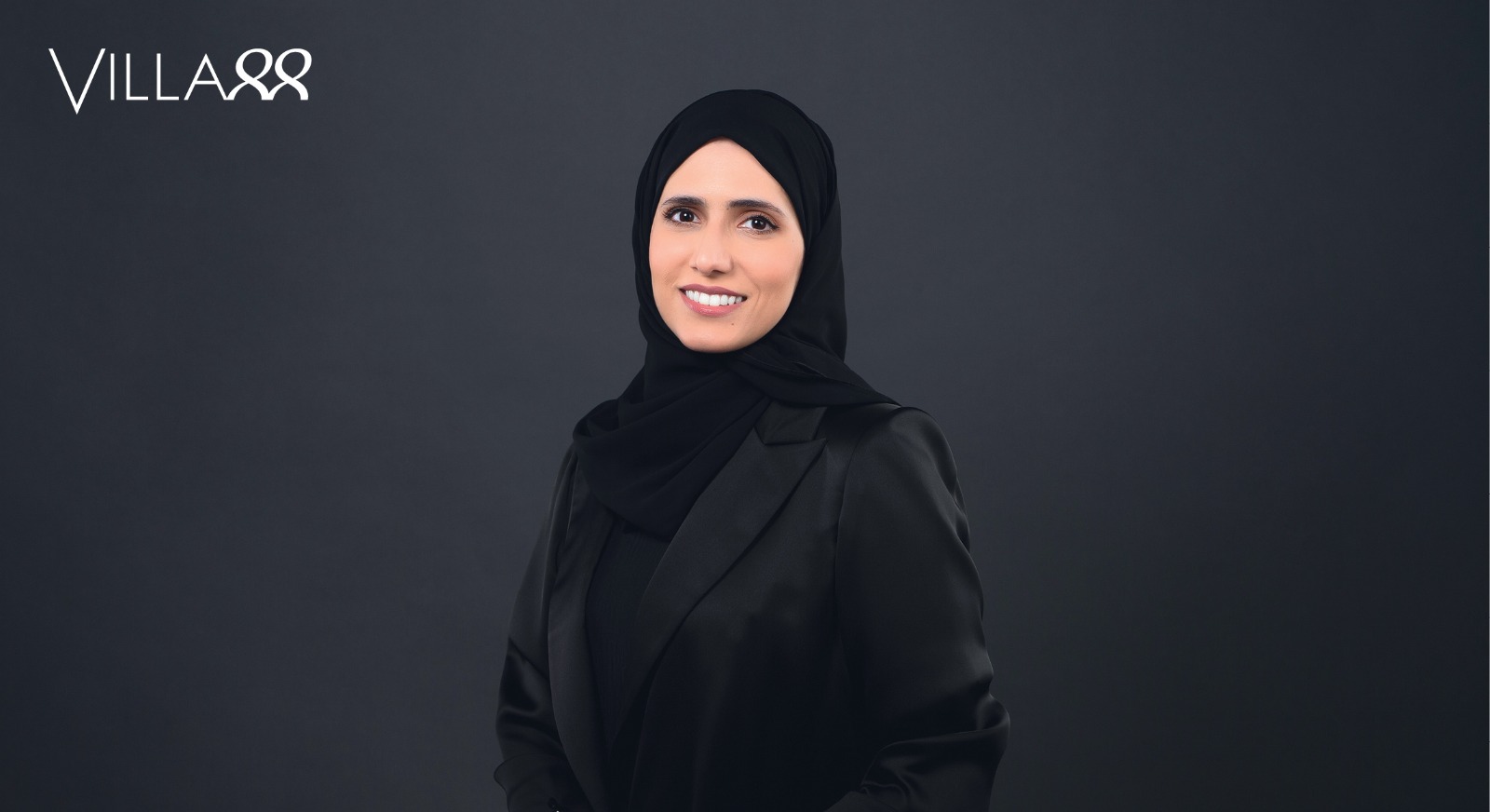
From the classroom to award-winning children’s literature, Emirati writer and illustrator Hessa Almehairi has built a career around curiosity, imagination, and seeing the world from a different perspective.
Long before Hessa Almehairi became an award-winning children’s author, she had a feeling that books were where she belonged. While studying Early Childhood Education, a university project required her to write and illustrate her own children’s story. Supported by the Emirates Literature Foundation, the book were published and displayed at the Emirates Airline Festival of Literature.
Seeing hers among hundreds of titles, Hessa quietly made a promise to herself. “I will be here one day as a presenter,” she remembers thinking. “I didn’t know how and when, but I just had a feeling – that this is the place that I should be in, this is my field.”
Life, however, took her somewhere else first. After graduating, Hessa spent years immersed in early childhood education, so much so that she “almost forgot” about that earlier ambition. Yet what seemed like a departure from writing would eventually become the foundation for it. And in fact, her academic path reflects the same intersection of interests. Alongside a bachelor’s degree in Early Childhood Education and a double master’s in Education and Management Policy, Hessa later completed a Master of Fine Arts specialising in illustration.
But a moment in the classroom brought storytelling back into focus. Hessa wanted to help her students understand tolerance and how to accept people who may look or think differently. As a teacher, she already understood the power of stories to approach difficult ideas without making children feel as though they were being lectured.
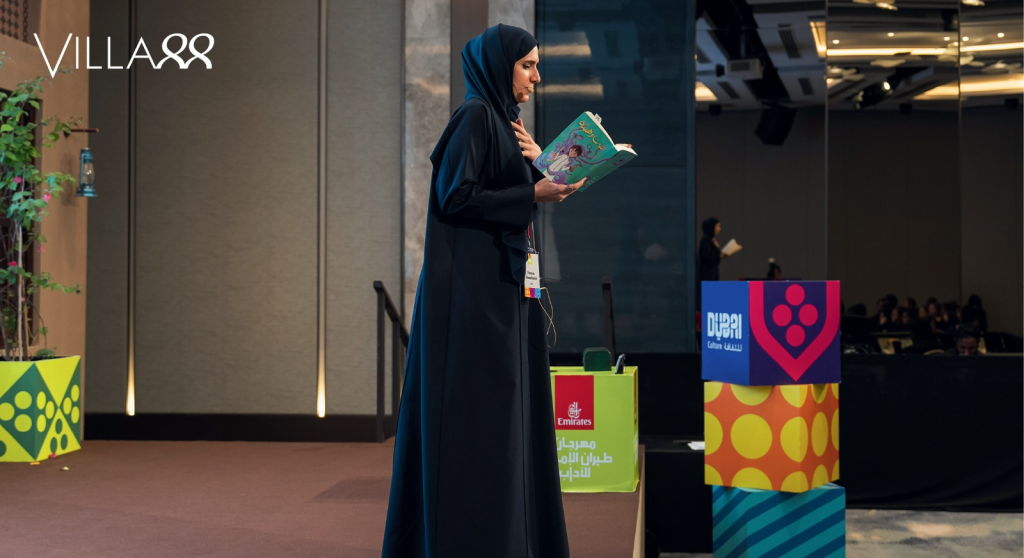
When she could not find precisely the story she wanted, she decided to write it herself. A creative writing programme organised by the Mohammed Bin Rashid Al Maktoum Knowledge Foundation provided the opportunity, and her first book Dinoraf was born.
The story went on to win the Sheikh Zayed Book Award for Children’s Literature in 2018, a category celebrating work for young readers that enriches Arab cultural, literary, and social life. It was subsequently translated into English, Italian, and French, and introduced to international audiences, including at the Frankfurt International Book Fair in 2019.
For Hessa, its journey carried particular significance. Even when choosing the title – a combination of “dinosaur” and “giraffe” – she had briefly considered whether it might one day need to work in English. “At that time, it was merely a thought! I never imagined the book would be translated into three different languages,” she says.
At its heart, Dinoraf carries a message of acceptance, but Hessa is careful never to allow the lesson to overwhelm the story. Her years working with young children taught her that they are far more perceptive than adults sometimes assume. “The first thing – and the most important of all – is writing a story that children will enjoy reading,” she explains. “If the child is not interested in a book, whatever message we want to deliver will not reach the child.”
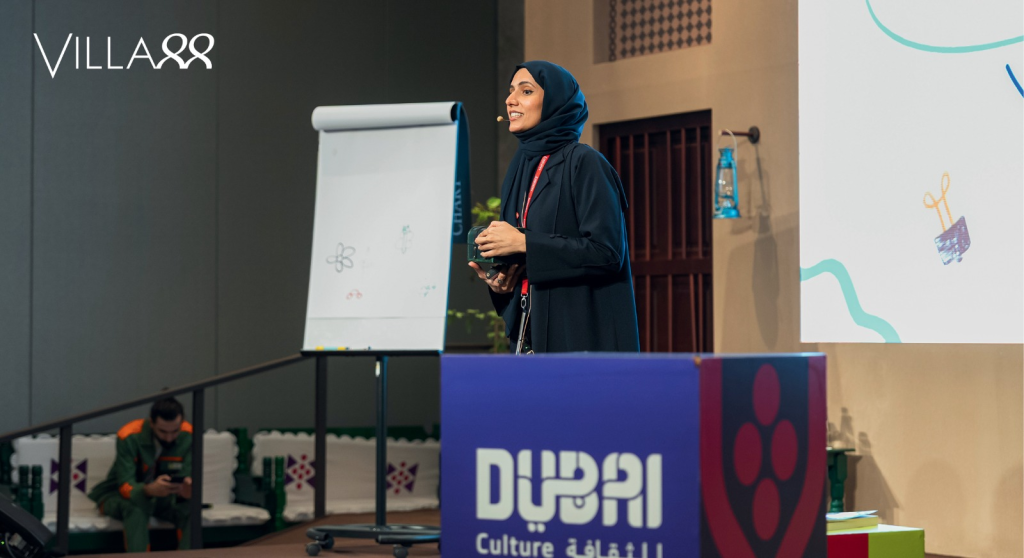
Instead, she allows meaning to emerge through character. Children, she says, notice differences naturally, but they are equally interested in similarities and the things they share with those around them. Her characters are therefore given their own strengths, weaknesses, interests, and challenges, allowing young readers to recognise something of themselves within them. “In this way, the character becomes the theme itself and not just representing a role in the story,” she says.
The classroom also gave Hessa something less tangible – access to a way of seeing the world that adults often lose. She spent years observing the questions children ask, how they react to unfamiliar situations, what sparks their curiosity, and the ease with which they find wonder in ordinary things.
“My previous experiences gave me the opportunity to see the world from the children’s perspective,” she explains. That perspective now informs not only what she writes, but how she creates the worlds around her characters.
As both writer and illustrator, words and images rarely exist separately in Hessa’s imagination. A new story might begin with an unanswered question, a touching incident, a single word, or an image that captures her attention. From there, characters and plot gradually take shape, while the visual world develops alongside them.
She already imagines expressions, atmosphere, and environment as she writes. That dual perspective has continued across her work, including Whose Footprints Are These?, allowing storytelling and illustration to operate as parts of the same creative language.
In an age when children have almost limitless entertainment at their fingertips, Hessa remains convinced that the physical book still offers something technology cannot entirely replicate. For her, reading is not only about absorbing a story. It is the pausing, the questions shared between a child and an adult, the interpretation of an illustration, and the anticipation of what might happen on the following page.
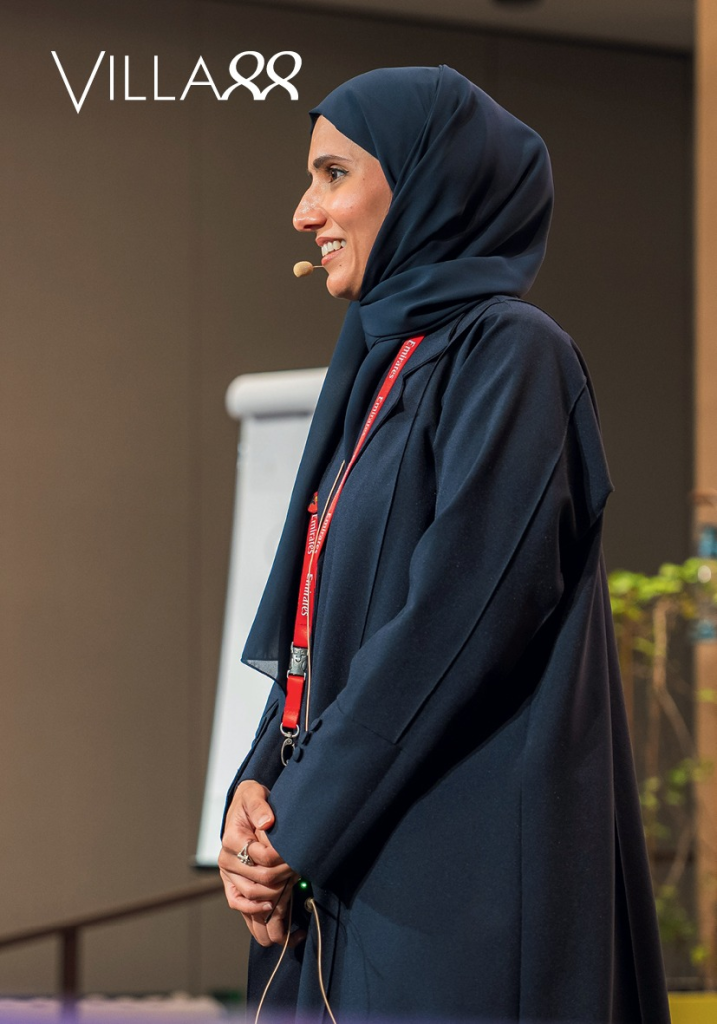
There is also something irreplaceable about “holding a book, turning the pages, feeling the pictures, finding the little details, and visiting the book over and over again until the pages are worn”, she shares.
That belief comes at a moment of considerable growth for literature in the UAE. Hessa points to the expanding network of literary events, writing workshops, competitions, publishing houses, and cultural initiatives that now offer emerging writers and illustrators opportunities to develop their work.
Children’s literature, in particular, has received increasing attention, alongside greater possibilities for Emirati and Arab books to travel through translation. “I think we have come a long way,” she says, “and we’ll keep moving forward as we now know that we have the needed environment to dream bigger.”
For Hessa, that opportunity also carries responsibility. As the UAE celebrates Emirati Women’s Day, she considers the role female writers and illustrators play in preserving cultural identity while creating work for children growing up in a rapidly changing world.
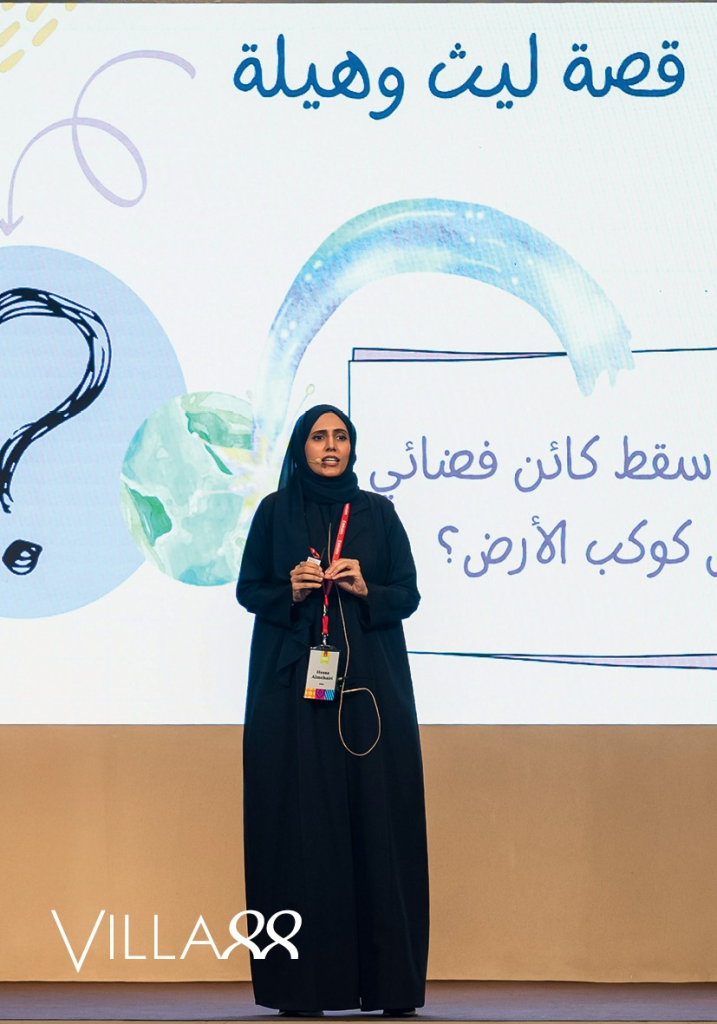
“We are naturally raised to be proud of our past and heritage,” she shares. “We try to find ways to introduce children to their heritage, while also caring for the world they are growing up in today.”
Her own career is perhaps proof that progress rarely follows a straight line. To Emirati women contemplating a change of direction, she argues that the experience gathered along the way should never be dismissed.
“Never regret your previous experiences – they might be the solid foundation you need for your new career,” she says. In her case, the career she once thought had carried her away from writing ultimately gave her the understanding of children that defines her work today.
And she is still exploring what comes next. Hessa is working across several literary and artistic projects, continuing her workshops for children, and beginning to explore chapter books for young readers.
She recently co-wrote Laith & Haila with author Maha Al Khalawi, and hopes to develop further cultural projects that reflect the experiences of children growing up in the UAE. “I’m still learning and experimenting with my creative voice,” she says, “and I’m looking forward to seeing where this journey takes me.”
Perhaps that is what makes the story of her career so fitting. Teacher, writer, and illustrator were never entirely separate paths after all. Each simply taught Hessa another way of looking at the world – and ultimately, how to see it through a child’s eyes.
Photos: Courtesy of the Emirates Literature Foundation