


Dear Asma,
I landed in Seychelles today. The weather was pleasant, even with the rain. Residents told me it’s typical for this time of year and that it would clear soon. I didn’t mind. I missed the rain.
Jelena waited for me at arrivals in a flowery red dress. “You’ve become a local,” I told her, “you’ve embraced the colours.” We fell into a hug so big and familiar it felt as if the line between us dissolved. If you tried breaking us apart, you wouldn’t know where to start, as my end melted with her beginning. With Jelena, silence is airy and natural. With most people, silence can be thick enough to cut through. With her, it simply exists. It’s not too much, not too little, but just right.
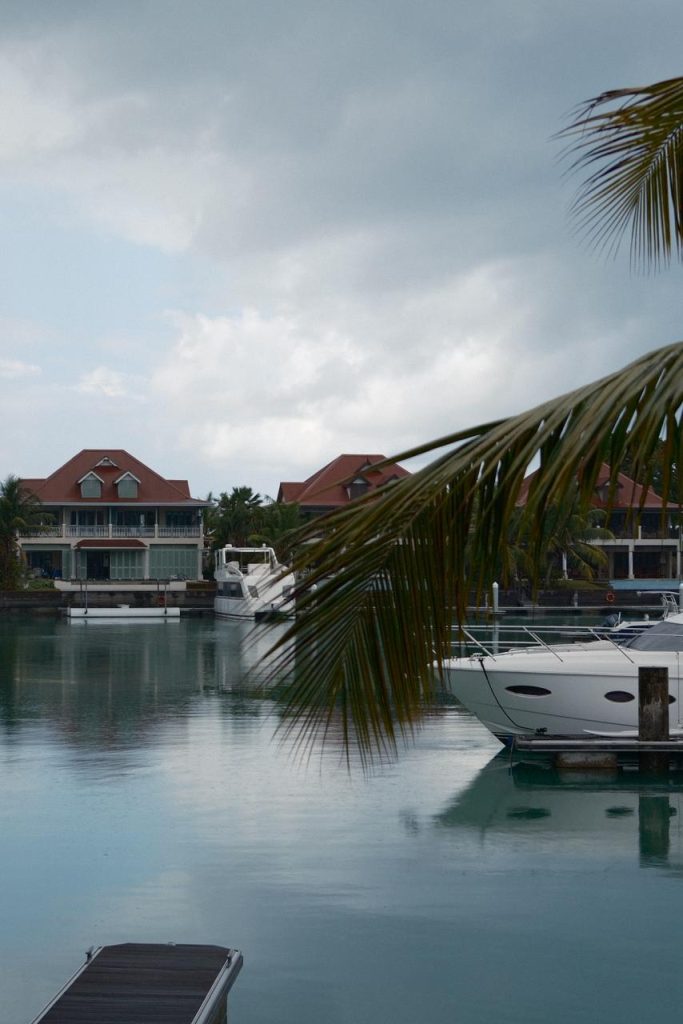
From the airport, we went straight to Milana and Oliver’s home. Three Balkan personalities and one Mauritian gathered in Seychelles over a barbecue. I caught myself thinking, When did we become this? Are we the change generation? A decade ago, today’s reality would have felt centuries away. Yet here we were, nibbling on grilled vegetables and beef sausages, overlooking the lagoon.
I met Milana on my last visit. She’s one of those people who feel easy to be around, someone you instinctively trust, even as strangers. Or maybe meeting “your own” on the other side of the world turns them into instant friends.
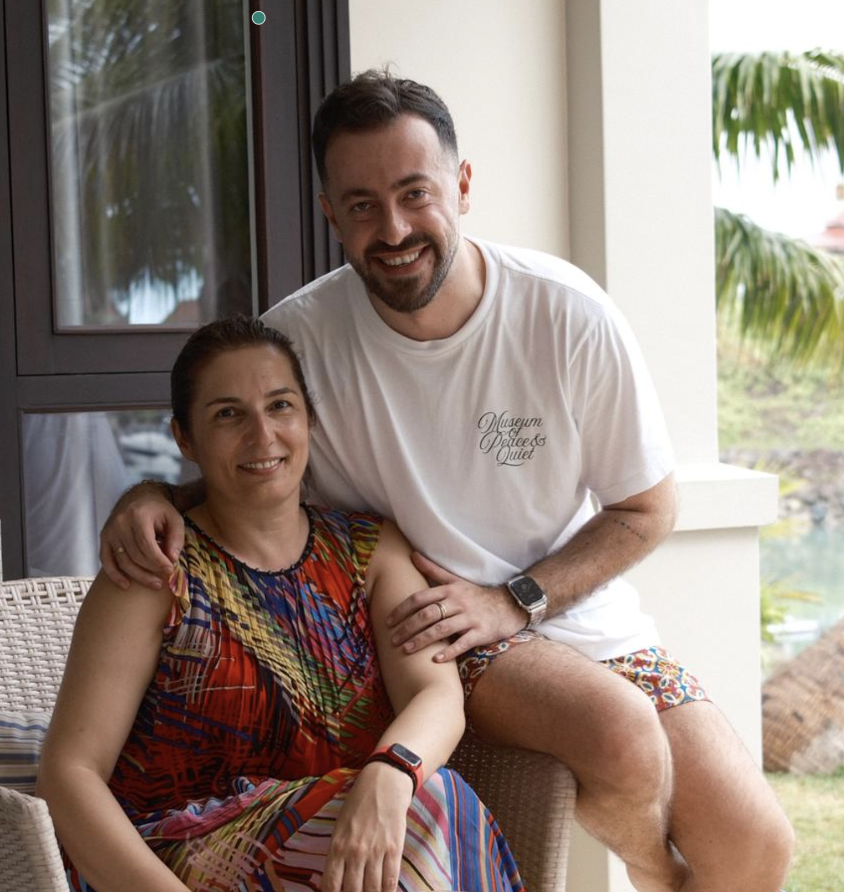
At some point, somewhere between the laughter and the slow island rhythm, I thought of belonging. And I felt it, that quiet certainty of being exactly where I’m meant to be. In a place where time softens, and nothing needs another meaning beyond what it already is – pure and simple.
We booked a day at the Kempinski. I felt proud watching Jelena almost dance through the lobby, greeting her former colleagues one by one. She used to be a General Manager at one of the island’s most beautiful resorts, where we stay now, and in a place as small as this, both the island and the industry, people cross paths often. Those unexpected encounters bring back memories, and the kind of joy only hotel life can provide.
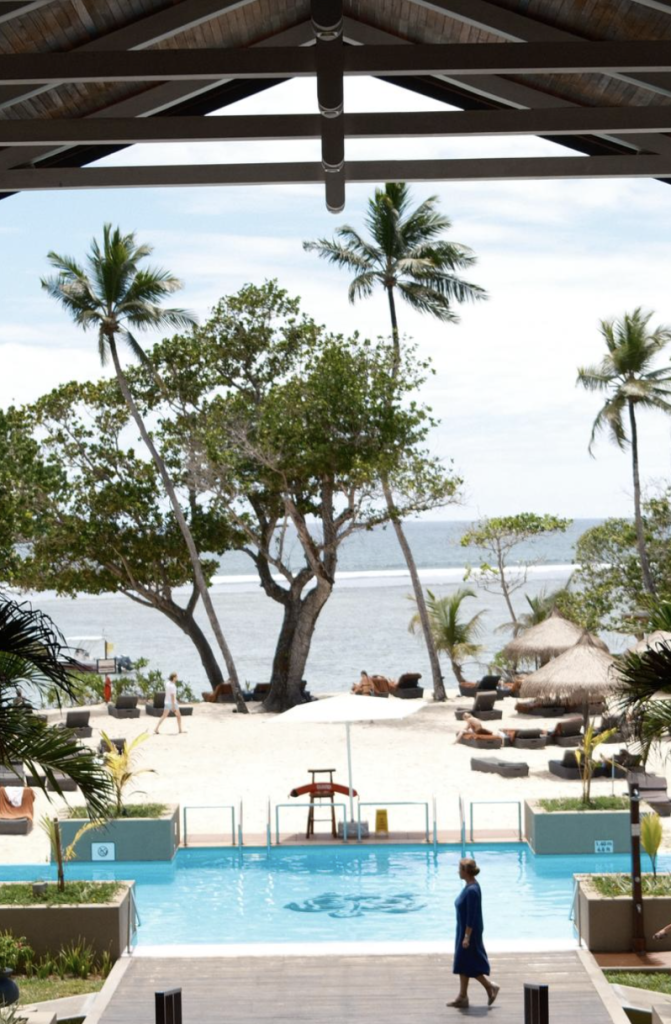
At the beach restaurant, we were served by lovely Babrah. Local lady, warm, joyful, skilled. Years of experience revealed themselves in the simplest welcome, one that felt as warm as the midday sun.
Jelena is reading Lana Bastašić’s “Crveni Kofer”(“Red suitcase”) the same book I read during my stay at the Burj. I watch her face as her eyes swallow the lines, and I recognise that excitement, the passion for someone else’s passion, carried through their words.
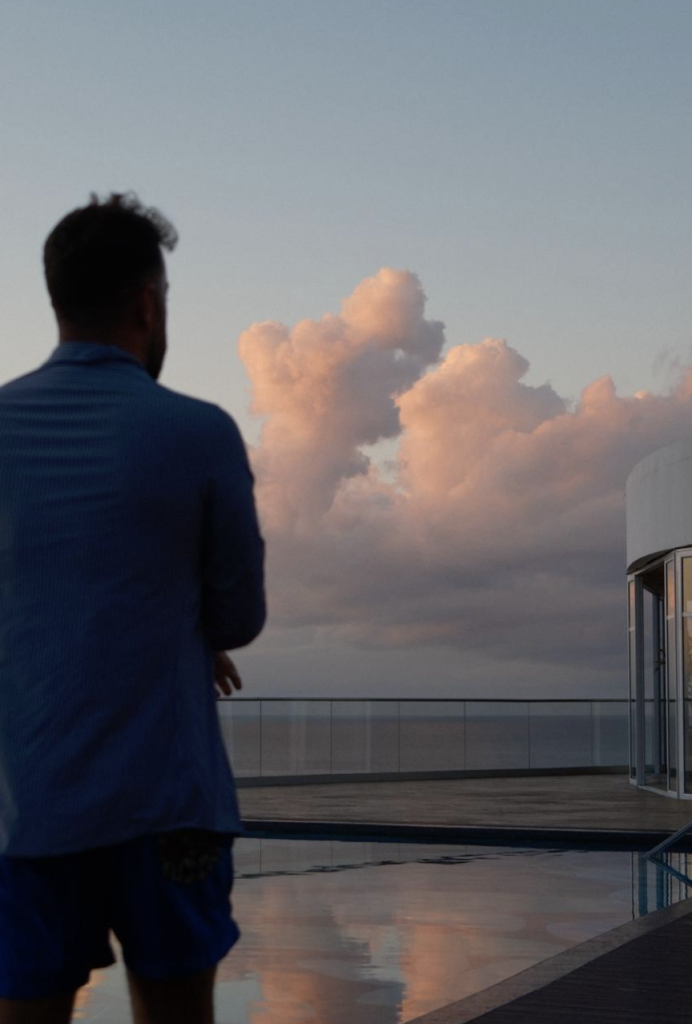
The sun began to set. I thought of a person I am convinced has been here before. It feels as if we share the same spaces, but not the same time. Always in the same place, just never together. I wonder if our paths will ever cross, or if we’re meant to keep chasing each other’s shadows. I’m certain we won’t meet in Seychelles, though. Nothing really happens here besides long-planned marriage ceremonies. And God knows I’m not a planner. The sun sat.
Later, we met Dr. Todorović and his lovely wife Nataša for dinner. I admired their passion for life. Their experienced youth. And the way they saw each other – gently, attentively, entirely. They have lived on the island for almost 40 years now.
I’m in the middle of the Indian Ocean, Asma. I opened Apple Maps, thinking there wouldn’t be any signal. But there it was, and I was a blue dot perfectly centred between Saint Anne, Île Moyenne, Long Island and Cerf Island.
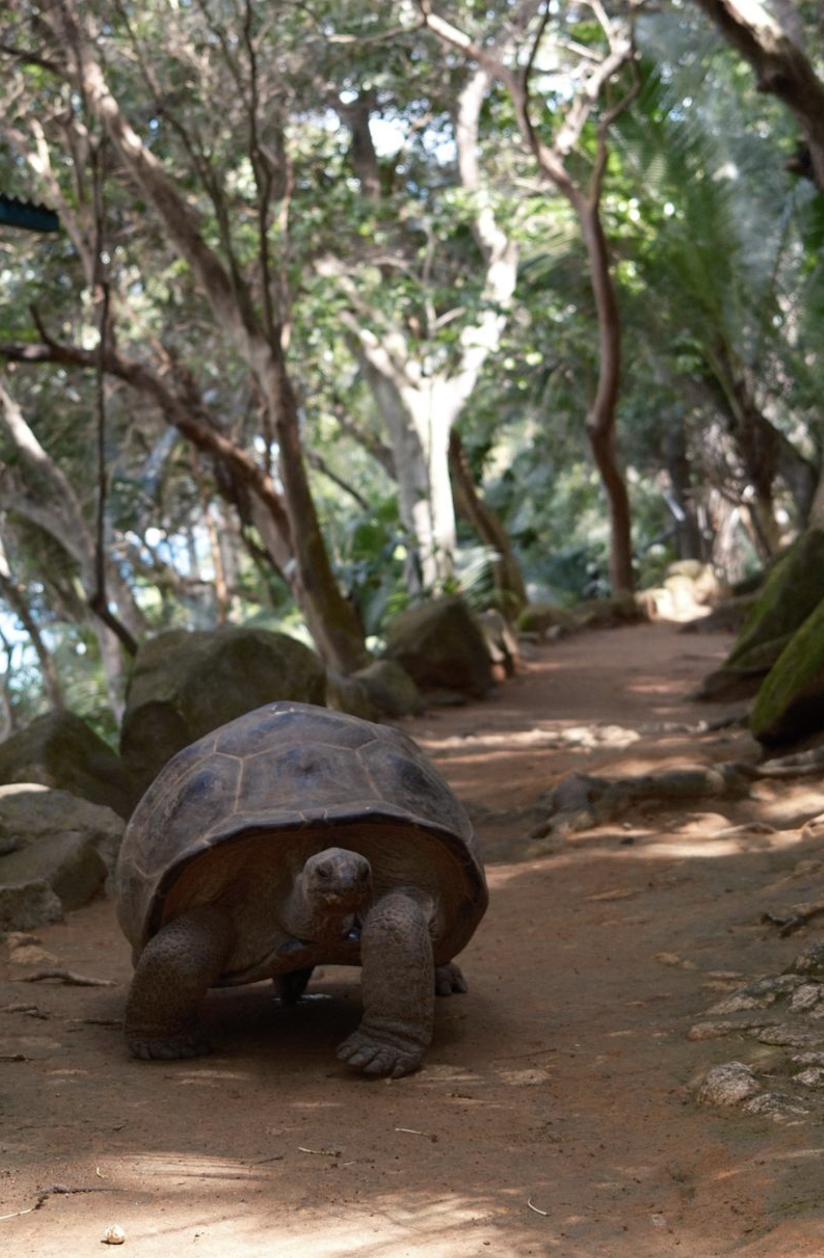
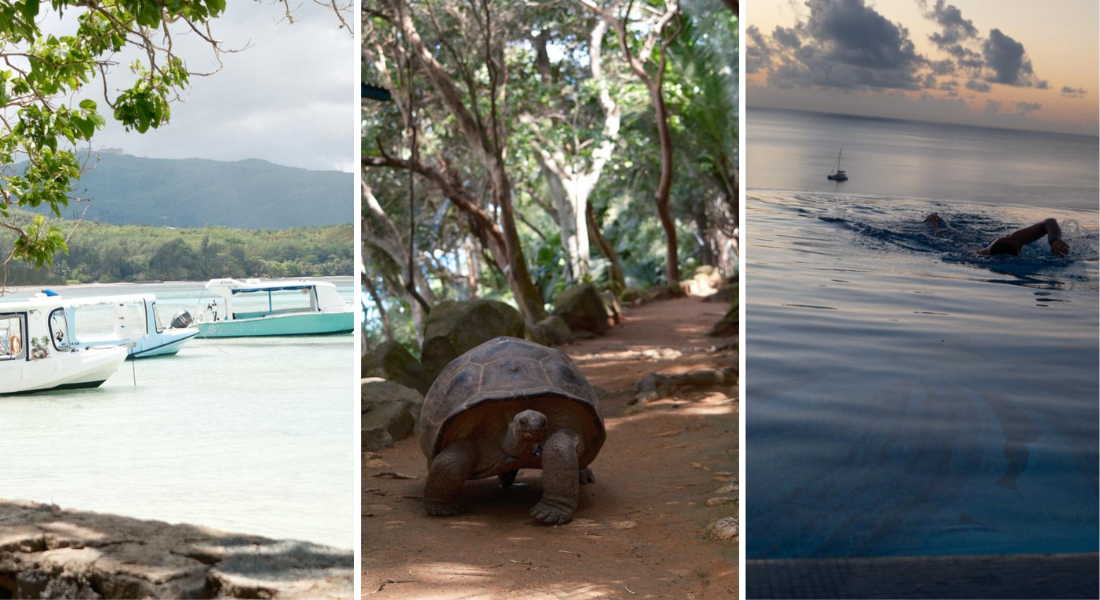
Moyenne is an island with a deep soul. Wild and free, yet shaped by a visionary mind. It stands as a testament to Brendon Grimshaw’s devotion to conservation, as how he transformed it from a waterless land into a thriving natural sanctuary. Legends say pirates once hid here, leaving behind stories of lost treasure Grimshaw never found. Visitors can wander past pirate graves, an open-air museum, and ancient ruins, all part of the island’s quiet mystery. And then there are the Aldabra tortoises, hundreds of them, moving slowly and freely across the land. As if they owned every inch of it.

Our skipper, Alex, brought us there. While speaking about the coral, he was really telling his own story, almost performing. He said he had been married three times: first to a German woman, then an Italian one, and finally to someone from Seychelles. As he grew older, he said, his heart kept gravitating back home.
That thought stayed with me as I snorkelled in the middle of the Indian Ocean. I found myself thinking of my beautiful Montenegro. And of my mother. I suddenly knew I wanted to see her soon. I’ll book a trip as soon as I’m back in Dubai.
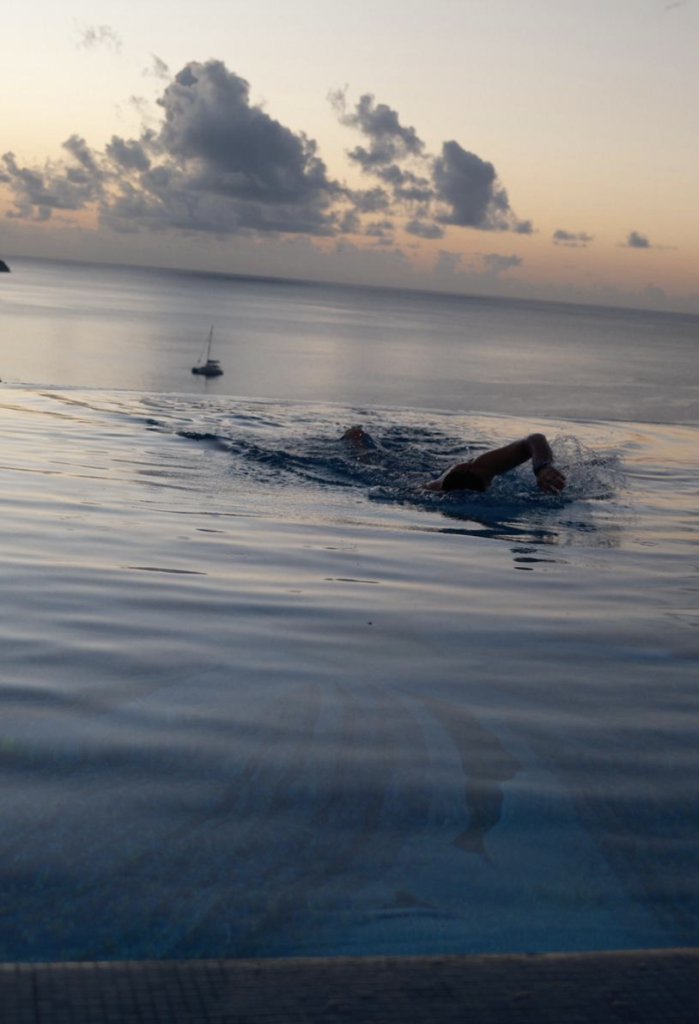
There are travels that are wants, and others that are needs. I need to go home for a while. I’m craving home.
Books in our hands, no earphones in our ears. The ocean floor offered acoustics for the perfectly synchronised waves. Glasses full, plates even fuller. On the horizon, “less is more.” On our table, “more is more.”
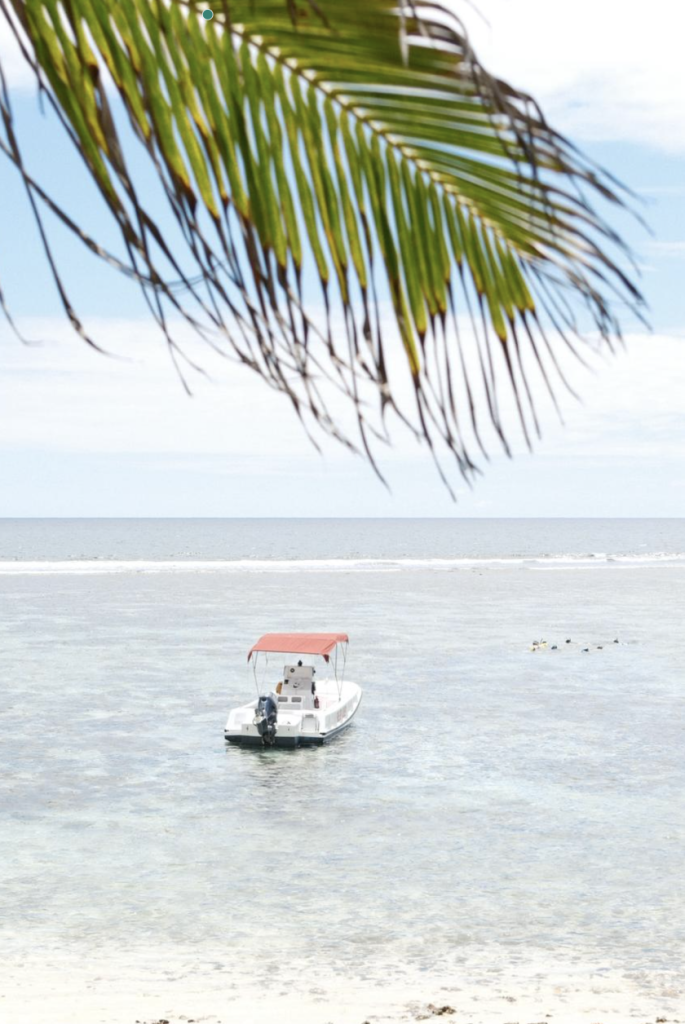
A group of three guys sat at the table in front of us. Jelena and I watched them, how engaged they were, how passionate and expressive.
“Where do you think they’re from?” she asked.
“I’d say Switzerland. They sound German, but not quite,” I answered. Jelena guessed the one with the cap did something a biologist would do, something with a microscope, probably. I agreed and added that the one on the left must be an accountant, as he barely spoke. The one in the middle sat with his back to us, so we couldn’t give him a life in our little play. “Guys, where are you from?” Jelena finally asked. “Austria!” the one with the cap replied. “We both lost! We guessed you speak German, that’s not really German,” I said. They all laughed. They were software developers.

After our little performance at the table, I asked Jelena to share one of her favourite poems, and I’d reciprocate. Her eyes lit up. We both get easily high on poetry. She chose Miroslav Antić’s “Besmrtna pjesma” (“Immortal poem”), the line, “Ako ti jave umro sam, a bio sam ti drag, možda će i u tebi odjednom nešto posivjeti.” (“If they tell you that I’m gone, yet I was dear to you, maybe something in you suddenly turns grey.”) I thought about how everything passes, and how nothing is as significant as we think it is. I responded with Sandra Cisneros’ One Last Poem for Richard: “There should be stars for great wars like ours.” We immediately knew what we would do tomorrow: stargazing, just like a few years ago, in this same place.
Seychelles rests so near the equator that the sky feels lower here, almost intimate, as if the stars lean in to listen. At Beau Vallon, the lava rocks looked glorious, glowing softly in the night. Reaching them required a driver who understood these narrow, winding roads, where cars appear suddenly and vanish just as fast. We were fortunate as we met only one, and its driver waited with the same patience we carried within us. For a moment, it felt as if every door along our path had quietly opened.
Between us and the moon stretched only a shallow sky. We came for the moon, yet somehow, I remained for the stars.
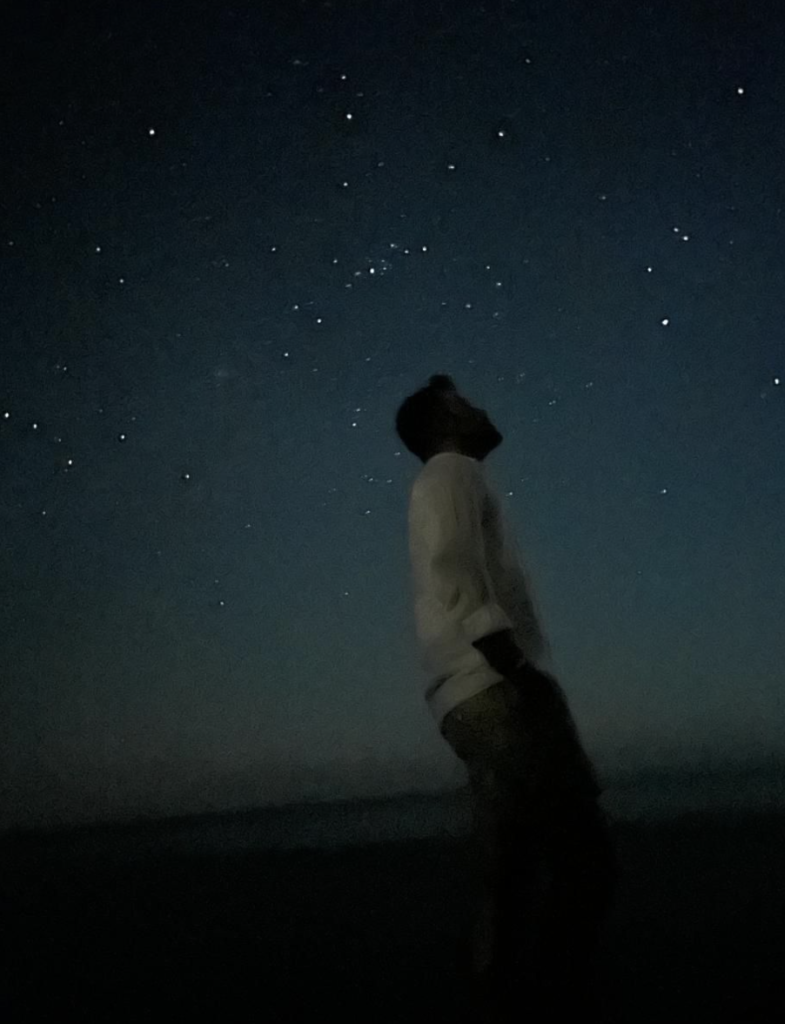
In my mind, a refrain looped without asking permission, Bosnian artist Božo Vrećo’s voice, revolutionary, tender and wounding at once:
“Kad kažem ti da sav moj svijet si ti,
i kažem ti da duša moje duše zauvijek si,
al’ sve je laž od tebe mi bila,
i ova moja mala krila je slomila.”
(“When I tell you that you are my entire world,
I say that you are the soul of my soul forever,
But it was all a lie from you,
and it broke my small wings.”)
I had been speaking about Božo recently with the aunt of the one who shaped my heart for years, and in quiet ways, still shapes it now. They were the core of my youth, its pulse and texture. And here I was, years later, under a Seychellois night sky, thinking of that same youth that refuses to loosen its grip, years after departure.
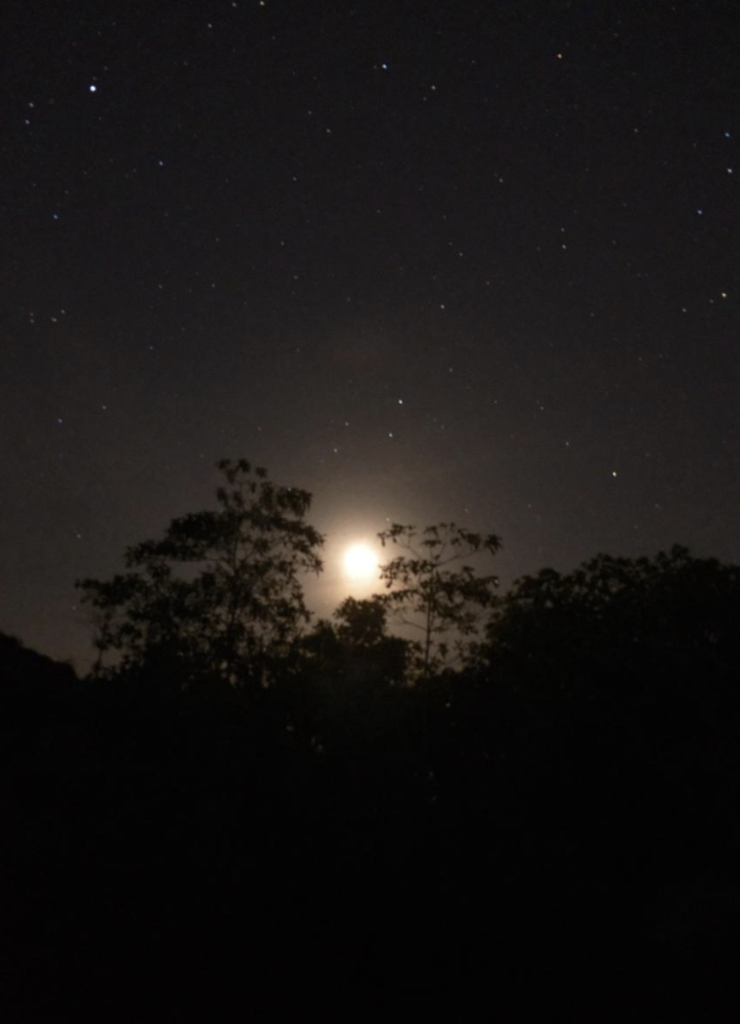
I closed my eyes, already attuned to the darkness, and felt the warmth of the lava stones beneath me. Instantly, I was transported to Žabljak in Montenegro, to that small, unnamed field behind a house with no number, that seemed modest from the outside but carried a vast warmth within. I remembered the feel of the freshly cut grass, the sharpness of the mountain air. I turned to the side and saw the stars reflected in a pair of round, brown eyes. I like to believe they were the same stars I saw tonight in Seychelles, as if the sky in its generosity, chose to weave my memories together across continents.
The stars in their eyes years ago felt like the stars above me now. And in that gentle realisation, my heart felt at home, Asma, as long as it beats beneath this same sky, whether in Seychelles, Montenegro, or anywhere in this wide and beautiful world.
Today is all about on-resort experiences, Asma, as I’ll be leaving Seychelles tomorrow. You know I usually begin with the resort, but this time I wanted the destination to take centre stage. Still, the resort I’m staying in shone quietly, gracefully, allowing the story to unfold at its own pace. Its name is “Story”. A coincidence, perhaps, but one that made me smile, inside and out.
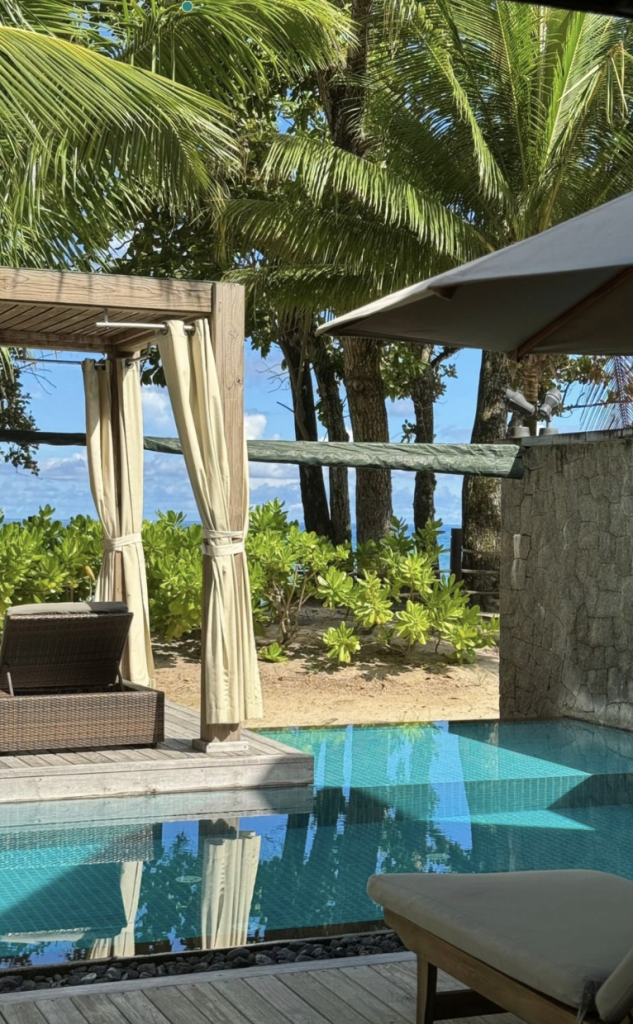
The villas are beautifully crafted, cocooned within a natural lagoon. Mine feels spacious, modern, yet unmistakably local. Mornings wake me with the soft breeze from the fan above my bed. I open the curtains toward the ocean; between the water’s edge and me lies my private pool. Morning showers have become morning dips. A small ritual, a gentle indulgence. A version of la dolce vita I wasn’t expecting, but welcomed.
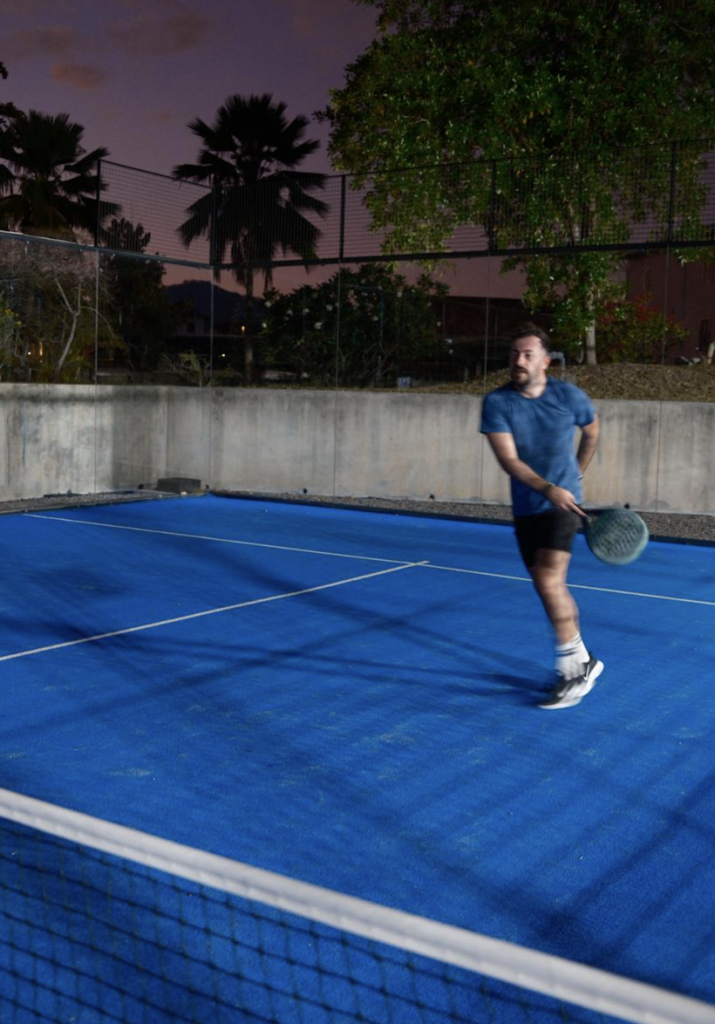
I snorkelled in Seychelles. I promised myself I’d do things I rarely do, so I booked a private tennis lesson. “I’ll do my best to hit the ball,” I told the coach. His expression was somewhere between doubt and curiosity. “You’ll do well,” he said, not talkative at first. His method was simple: throw you into the fire to see how you move. Oddly enough, that sort of challenge always motivates me. Not only did I hit the ball, but at times it felt as if I was dancing across the court. “Not bad, Radonjić!” he said. “Good enough never is,” I replied.
Dinner was at Trader Vic’s. Glenda was performing Shakira as I walked in:
“No fue culpa tuya ni tampoco mía,
Fue culpa de la monotonía”.
(“It wasn’t your fault, not mine,
It was monotony’s fault.”)
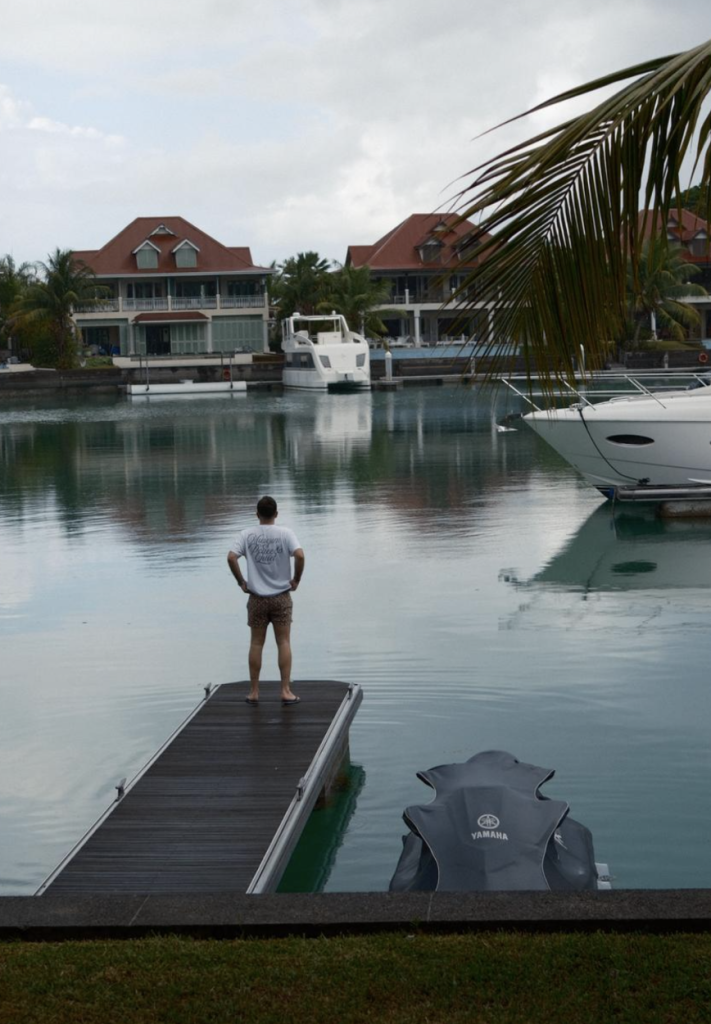
There’s a mood here that feels cinematic, as if the next scene of my oceanic adventure was about to unfold. Instead of joining Glenda and the dancing tables, I chose a seat overlooking the lagoon. The meal was one of the best I’ve had in a long time. I rarely order dessert, but Jeanette, who served me, insisted I try the snowball. “Who wouldn’t want a snowball in Seychelles?” I joked. What arrived was a symphony of vanilla and roasted coconut, shaped into a frozen ball. I’ll remember it for a long time. I might even come back for it. Third time’s a charm, after all.
Sentimentally yours,
Milo